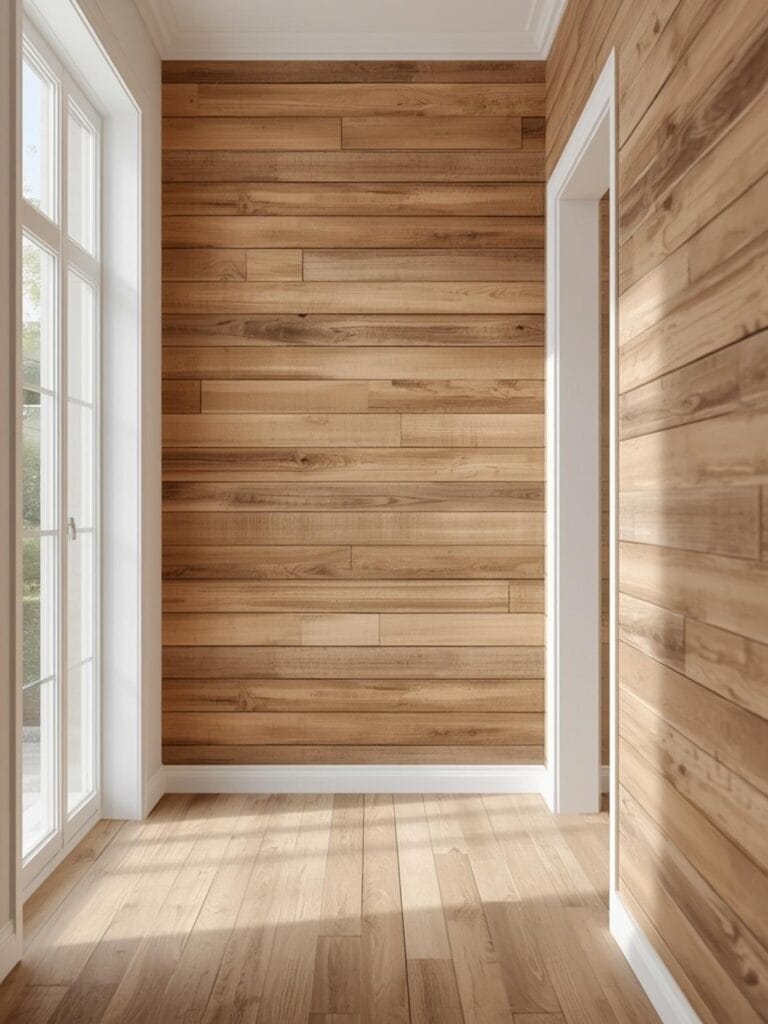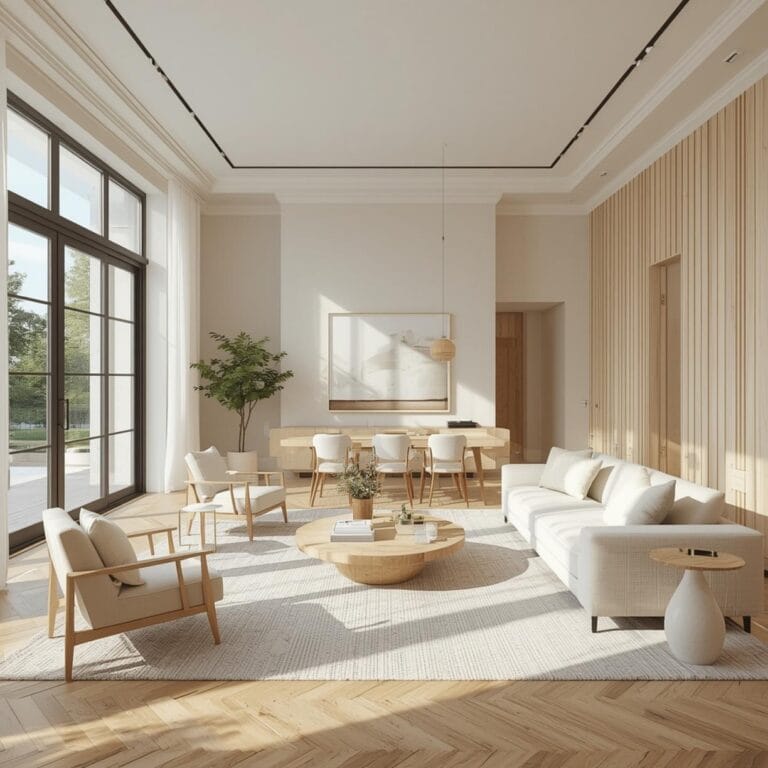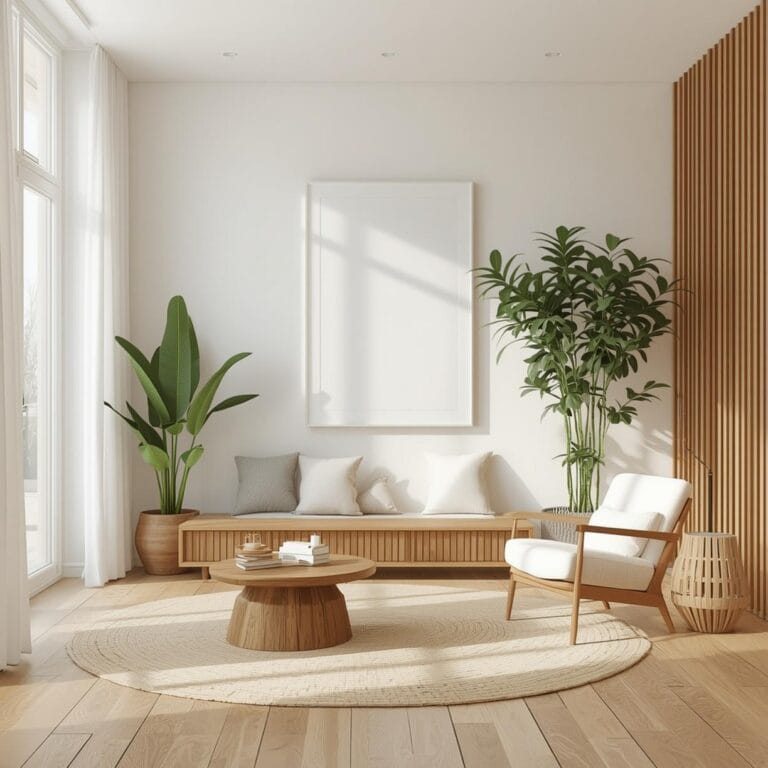
How to Choose Small Entryway Decor That Maximizes Space
You walk through your front door after a long day, and instead of feeling welcomed home, you’re greeted by a cramped, cluttered space that somehow collects shoes, bags, and mail like a magnet. Sound familiar? Your entryway might be tiny, but it’s the first thing you and your guests see, and it deserves to feel just as thoughtful as the rest of your home.
The good news is that small entryway decor doesn’t require a massive budget or a complete renovation. With the right combination of furniture, lighting, and clever styling tricks, even the narrowest hallway or tiniest foyer can become a functional, beautiful space that sets the tone for your entire home.
Whether you’re dealing with an apartment entry that’s barely three feet wide or a narrow corridor that leads straight into your living room, you can create a welcoming first impression without sacrificing precious square footage.
Table of Contents
What You’ll Need to Get the Look
Creating a stylish small entryway starts with choosing pieces that work hard without taking up too much visual or physical space. Here’s what to consider adding to your shopping list:
Furniture pieces:
– Narrow console table (8–12 inches deep maximum)
– Wall-mounted floating shelf
– Slim bench with storage underneath
– Over-the-door hooks or wall-mounted coat rack
Decorative elements:
– Large wall mirror (rectangular or round)
– Table lamp or wall sconce
– Small tray for keys and mail
– Indoor plant in a compact pot
– Artwork or framed prints
Storage solutions:
– Woven baskets for shoes
– Decorative boxes for gloves and accessories
– Wall-mounted mail organizer
– Umbrella stand (slim profile)
Textiles:
– Runner rug (measure your space carefully)
– Small doormat for inside the door
The key is selecting pieces that serve multiple purposes. A bench with hidden storage gives you a place to sit while putting on shoes and hides clutter at the same time. A mirror reflects light and makes your space feel larger while also being practical for last-minute appearance checks.
Finding Your Style and Season
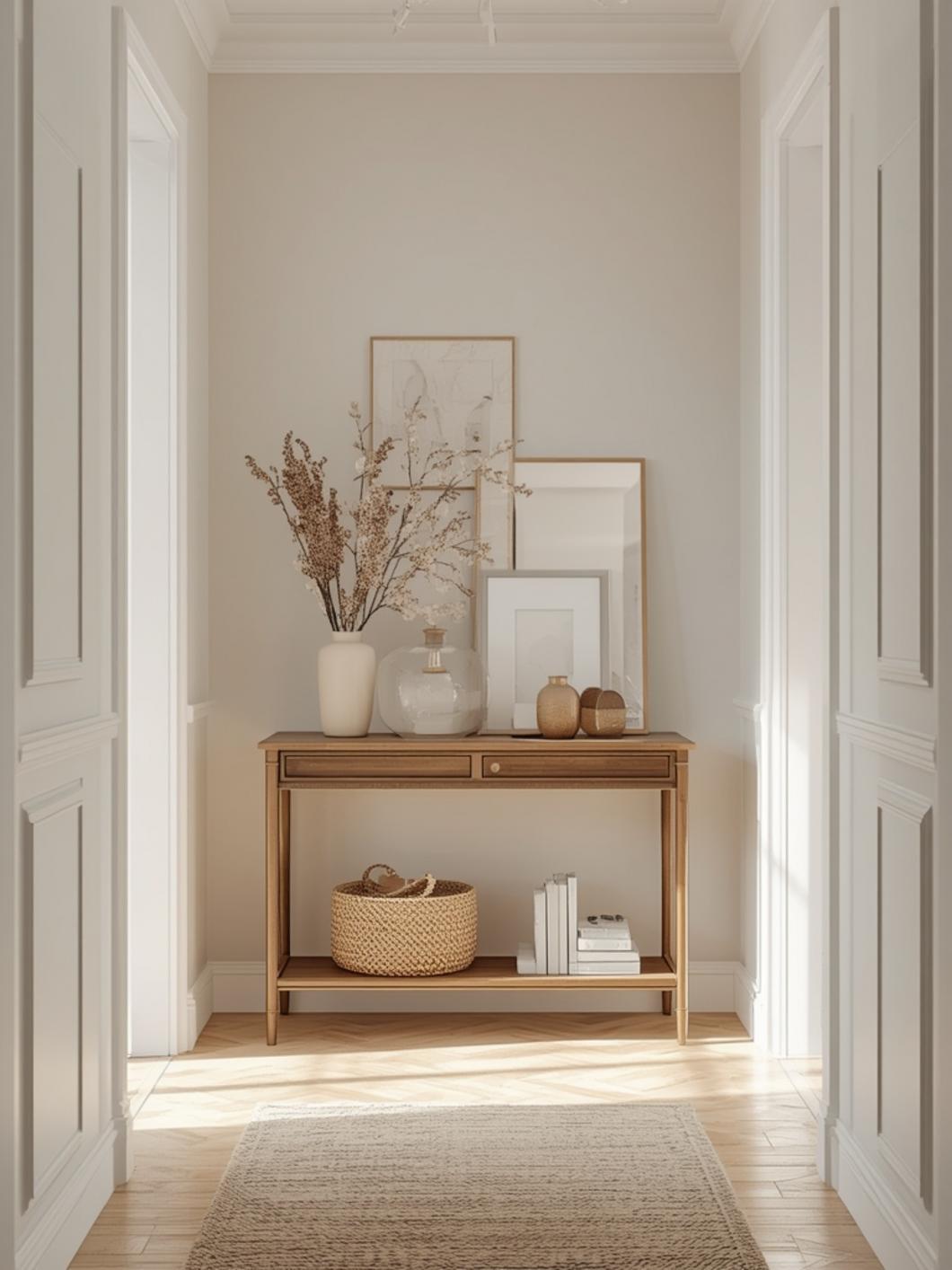
Your entryway decor can evolve with the seasons without requiring a complete overhaul every few months. Think of it as having a base layer that stays consistent year-round, with small accent pieces you can swap out.
Your year-round foundation should include your main furniture pieces, mirror, and primary lighting. These anchors stay put because they’re functional necessities that also happen to look good.
Seasonal touches are where you get to have fun. In spring and summer, swap in lighter colors through fresh flowers, a new doormat, or lightweight throw pillows on your bench. Fall and winter invite richer tones like burgundy, navy, or forest green through small decorative pumpkins, pine branches, or cozy textiles.
The beauty of a small space is that these seasonal updates cost very little. You’re not trying to fill a massive foyer with expensive seasonal decor. A single vase with fresh branches, a new candle, or switching out your key tray for something seasonal makes a noticeable impact.
Holiday decorating in a small entryway requires restraint. Choose one focal point—maybe a wreath on the wall or a small decorated tree on your console—rather than trying to cram in multiple festive elements. Less truly is more when you’re working with limited square footage.
7 Ideas to Try in Your Home
Create vertical visual interest: When floor space is scarce, look up. Install floating shelves at varying heights to display small plants, picture frames, or decorative objects. This draws the eye upward and makes your ceiling feel higher. Paint the back of each shelf in a contrasting color for extra dimension.
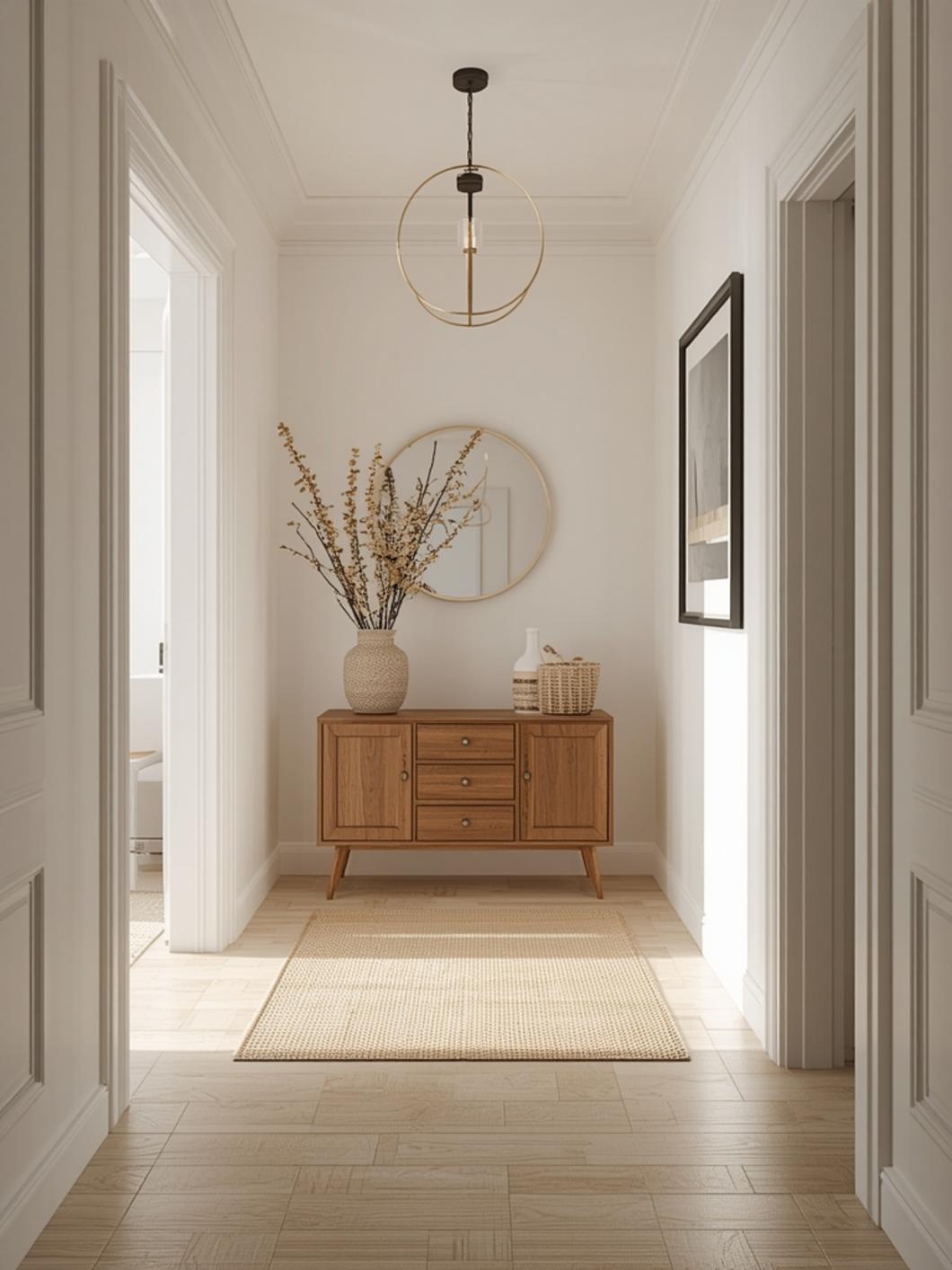
Master the mirror placement: One of the most effective ways how to make a small entryway feel larger is positioning a large mirror opposite or adjacent to your door. The reflection instantly doubles your visual space and bounces natural light throughout the area. Choose an oversized mirror that takes up significant wall space rather than several small ones.
Embrace the mini gallery wall: You might think a small entryway can’t handle a gallery wall, but a tight collection of frames actually works beautifully. Keep frames in the same color family and vary the sizes slightly. Aim for coverage of about 60% of your wall space rather than spreading frames too far apart.
Install a slim console with purpose: Look for consoles specifically designed for narrow spaces—they’re usually 8–10 inches deep. Style the surface with just three elements: a lamp, a small tray, and one decorative object or plant. This “rule of three” keeps things visually balanced without looking cluttered.
Layer your lighting: Overhead lighting alone creates harsh shadows in a small space. Add a table lamp on your console or install wall sconces flanking your mirror. Warm-toned bulbs (2700K–3000K) make your entryway feel cozy rather than cold and unwelcoming.
Use the back of your door: Over-the-door organizers aren’t just for dorm rooms. Modern versions come in sleek designs with hooks for bags, pockets for mail, and racks for shoes. This keeps essentials accessible without eating into your floor space.
Paint an accent wall: If your entryway opens directly into another room, painting the entry wall a different color creates a visual boundary that defines the space. Darker colors can actually make a small entryway feel more intentional rather than like an afterthought. Deep navy, charcoal gray, or forest green work particularly well.
Add unexpected texture: A small jute rug, rattan basket, or wooden bowl introduces natural texture that makes your space feel more collected and layered. These organic materials also hide dirt and wear better than stark white or smooth surfaces.
Create a landing zone: Designate a specific spot for everyday essentials—a hook for your keys, a specific basket for incoming mail, a tray for your wallet. When everything has a home, your small entryway stays functional instead of becoming a dumping ground.
Benefits of Thoughtful Small Entryway Design
A well-designed small entryway completely changes how your home feels the moment you walk in. Instead of stress about where to put your coat or shoes, you have a system that works automatically.
This organization extends beyond just looking nice. When you’re rushing out the door in the morning, knowing exactly where your keys, bag, and sunglasses live saves precious minutes and reduces daily frustration. Your entryway becomes a launching pad rather than an obstacle course.
Guests immediately feel more welcome when they enter a thoughtfully designed space, even if it’s small. It signals that you care about your home and have put intention into every corner. This sets a positive tone that carries throughout the rest of your house.
From a practical standpoint, a proper entryway protects the rest of your home. A designated spot for dirty shoes means less dirt tracked through your living areas. A coat rack means wet jackets don’t end up draped over your dining chairs.
The mental benefit shouldn’t be underestimated either. Coming home to an orderly, beautiful entry—no matter how small—creates a sense of calm that helps you transition from the outside world into your personal sanctuary.
Budget-Friendly Options and Styling Alternatives
Budget-conscious approach (under $200): Shop secondhand for your console table or bench—vintage pieces often have narrower profiles than modern furniture. Use command hooks instead of installed coat racks. Print your own artwork and use inexpensive frames from discount stores. A large mirror from a home goods store and a simple table lamp will still achieve the spacious feel you’re after.
Mid-range investment ($200–$500): Purchase a quality console table with drawers for hidden storage. Invest in a statement mirror with an interesting frame—this becomes your focal point. Add a proper bench with cushioning and under-seat storage. Choose a coordinating table lamp and maybe one original piece of art. These pieces should last you many years and move with you to future homes.
Premium selections ($500+): Consider custom-built solutions like a narrow floating shelf system designed specifically for your wall dimensions. Invest in designer lighting fixtures that double as art pieces. Choose a high-quality wool runner rug that will last decades. Splurge on a large antique mirror that becomes an heirloom piece.
For extremely tight spaces (under 3 feet wide): Skip the console entirely and mount a narrow floating shelf instead. Use the vertical space above it for hooks. Choose a tall, slim umbrella stand rather than a wide shoe basket. Mount your mirror directly above your floating shelf to create one cohesive vertical arrangement.
For renters: Focus on temporary solutions like over-the-door organizers, command hooks, and furniture that can move with you. Use a freestanding coat rack instead of wall-mounted hooks. Choose lightweight decor that packs easily. Stick to neutral furniture colors that will work in multiple future spaces.
Common Mistakes to Avoid
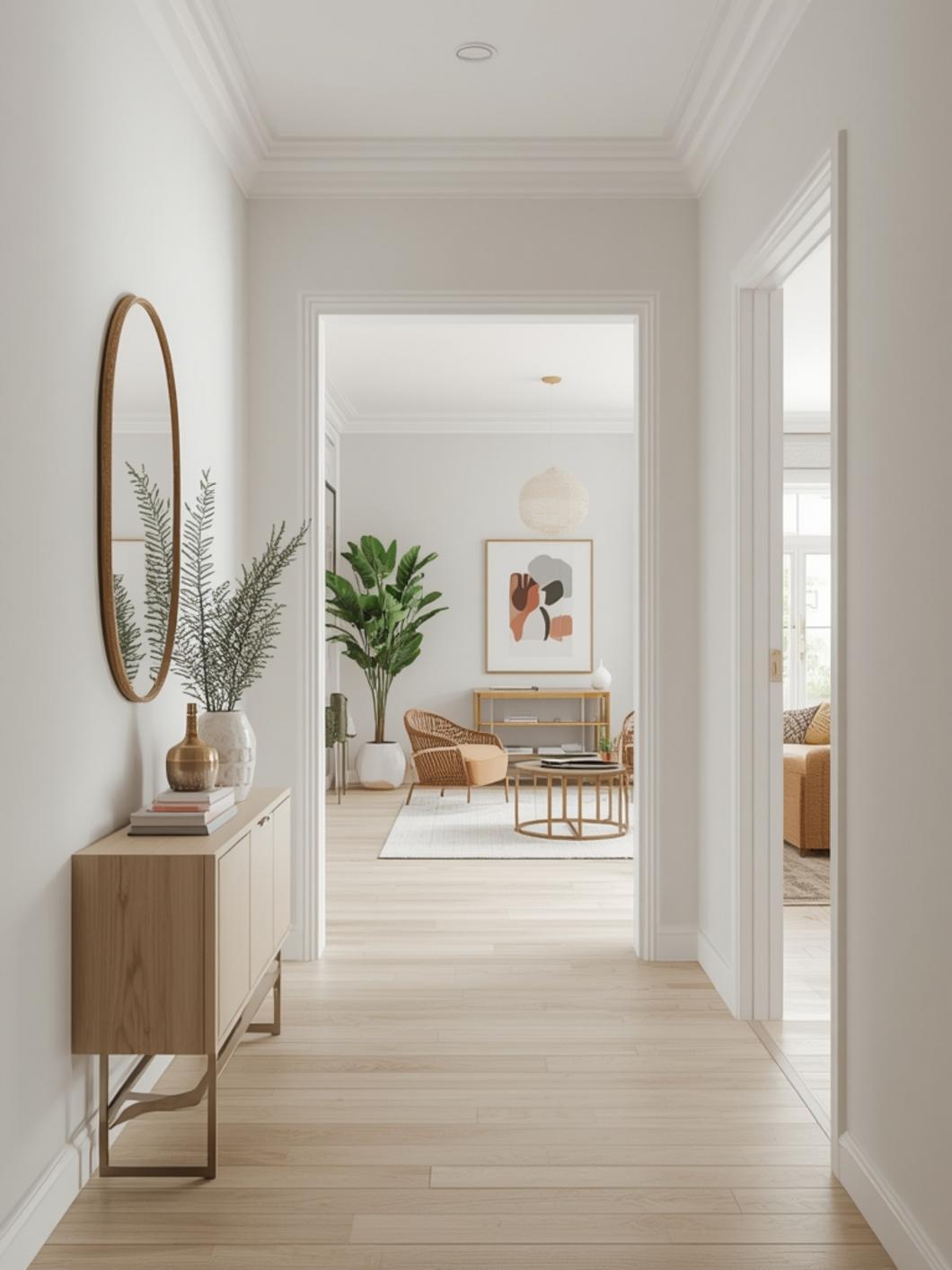
Choosing furniture that’s too large: A console that extends more than 12 inches from your wall will make your entryway feel cramped rather than functional. Measure your space carefully and look for pieces specifically marketed as “slim” or “narrow.”
Overlooking the power of paint: Many people leave their entryway walls builder-white because they worry color will shrink the space. Actually, a thoughtfully chosen paint color creates definition and can make your small entry feel intentional rather than overlooked.
Skipping the rug: Some homeowners avoid rugs in small entryways thinking they’ll make the space feel smaller. The opposite is true—a rug anchors your decor and defines your entry as its own zone rather than just a hallway.
Using too many small decorative items: Five tiny picture frames and three little trinkets on your console create visual clutter. Instead, use fewer, larger items that make a statement without looking busy.
Forgetting about lighting layers: Relying solely on overhead lighting creates harsh shadows and makes small spaces feel unwelcoming. Add at least one additional light source at eye level through a table lamp or wall sconce.
Ignoring the vertical space: When you only decorate at eye level, you miss valuable opportunities to use your full wall height. Install hooks near the ceiling for bags, use tall narrow artwork, or stack shelves to draw the eye upward.
Maintenance and Seasonal Refresh
Keep your small entryway looking its best with a simple weekly routine. Every Sunday evening (or whatever day works for your schedule), spend five minutes clearing surfaces of accumulated mail and miscellaneous items. Wipe down your console and shake out your doormat.
Your mirror will need cleaning weekly to remove fingerprints and dust. Use a microfiber cloth with glass cleaner or just a damp cloth for a streak-free shine. This makes the biggest visual difference with minimal effort.
Vacuum or sweep your entryway floor twice weekly since it catches all the dirt from outside. If you have a rug, take it outside and shake it out monthly, and vacuum it weekly. Consider rotating your rug seasonally to ensure even wear.
Dust your light fixtures monthly. Table lamps accumulate dust on their shades and bases, while wall sconces collect dust in their crevices. This keeps your lighting bright and your space looking fresh.
Rotate your decorative items every season to keep things feeling current. This doesn’t mean buying all new decor—simply swap items from other rooms, switch out throw pillows, or change your table lamp shade. Fresh flowers or branches every couple weeks make your entry feel cared for without any permanent changes.
Check your storage solutions monthly. Empty that key tray of random receipts and business cards. Sort through the mail organizer. Clean out your shoe basket and donate pairs you no longer wear. Small spaces only stay functional when you actively prevent clutter buildup.
Your Entry, Perfected
Your small entryway has enormous potential to become one of your favorite spaces in your home. It just needs the right combination of smart furniture choices, thoughtful styling, and organization systems that actually work for your daily routine.
Start with one or two changes rather than trying to transform everything at once. Maybe that’s finally hanging the mirror you’ve been meaning to install, or adding a small console table you’ve been eyeing. Small improvements compound quickly in a compact space.
Ready to tackle more home transformations? Browse more inspiring ideas and practical guides at DecorKingdom, where we help you create a home you love, one room at a time.
FAQs
How do you decorate a small entryway on a budget?
Focus on one larger impact piece like a mirror from a discount home store, then add hooks and a small shelf instead of a full console. Shop your own home first—repurpose a small bookshelf or side table you already own. Print artwork yourself and use inexpensive frames, or create a gallery wall with family photos you already have.
What furniture works best in a narrow entryway?
Look for console tables specifically labeled as “slim” or “narrow,” typically 8–12 inches deep. Floating shelves work even better in extremely tight spaces since they have zero depth at floor level. Choose benches with storage underneath to maximize functionality, and consider wall-mounted coat racks instead of freestanding ones that take up floor space.
Should you put a rug in a small entryway?
Absolutely—a rug actually makes a small entryway feel more intentional and defined. Choose a runner that fits your space with a few inches of floor showing on each side. Stick with low-pile rugs that won’t bunch up when the door opens, and select darker colors or patterns that hide dirt between cleanings.
How can you make a small entryway look bigger?
Install a large mirror to reflect light and create the illusion of depth. Paint walls a lighter color or use the same color as adjacent rooms to create flow. Keep furniture slim and avoid overcrowding surfaces with small decorative items. Use vertical storage solutions and draw the eye upward with tall artwork or stacked shelves.
What’s the best lighting for a small entryway with no windows?
Layer your lighting with at least two sources—overhead lighting plus either a table lamp on your console or wall sconces flanking your mirror. Choose warm-toned bulbs (2700K–3000K) to make the space feel welcoming rather than cold. If you have very limited surface space, wall-mounted lighting becomes essential for creating a well-lit, inviting entry.
—
Meta Title: Small Entryway Decor Ideas That Actually Work (2026)
Meta Description: Transform your cramped entry into a stylish welcome zone. Smart small entryway decor tips for tight spaces on any budget.