How to Choose Mudroom Floor Ideas for Durability
Your mudroom works harder than almost any other space in your home. It catches dirt, snow, wet boots, and everything your family drags in from outside. The wrong floor turns this high-traffic zone into a constant cleaning headache, but the right choice makes your life so much easier.
Choosing the best mudroom floor ideas means finding a surface that looks great while standing up to serious daily wear. You need something that won’t stain, crack, or show every scuff mark within a week. The good news? You have more stylish, durable options than ever before.
This guide walks you through the smartest flooring choices for real mudrooms in real homes. You’ll discover which materials actually deliver on their promises and how to pick the perfect floor for your family’s lifestyle.
Table of Contents
What You’ll Need to Get the Look
The right mudroom floor starts with selecting a material that matches your home’s style and your family’s needs. Here’s what different flooring options require:
Porcelain or Ceramic Tile:
– Large-format tiles (12×24 or larger reduce grout lines)
– Non-slip rated surface (look for a matte or textured finish)
– Grout sealer for stain protection
– Transition strips for doorways
Luxury Vinyl Plank (LVP):
– Waterproof core planks (not water-resistant)
– Underlayment with moisture barrier
– Quarter-round or baseboards for edges
– Cleaning products safe for vinyl
Natural Stone:
– Slate, bluestone, or travertine tiles
– Stone sealer (applied annually)
– pH-neutral cleaning solution
– Grout in darker shades to hide dirt
Sheet Vinyl or Linoleum:
– Single-piece or seamed sheets
– Adhesive appropriate for your subfloor
– Seam sealer if multiple pieces needed
– Vinyl-safe floor cleaner
Each material brings different visual warmth to your space. Tile offers crisp, clean lines that work beautifully in modern or traditional homes. LVP gives you realistic wood looks without the water damage worries. Stone delivers natural texture and earthy tones that hide dirt remarkably well.
Finding Your Style and Season
Your mudroom floor needs to work year-round, but certain seasons put different demands on the surface. Winter brings salt, slush, and constant moisture that can ruin floors not up to the challenge. Summer means sandy shoes and muddy paw prints tracking through daily.
Seasonal Considerations:
Cold-climate homes benefit from darker tile or stone that won’t show salt stains. The natural texture of slate or textured porcelain provides grip when boots are wet. These materials also handle the temperature swings that come with opening and closing exterior doors constantly.
Warm-climate mudrooms can embrace lighter colors since harsh winter salt isn’t a concern. You might prefer the softer feel of luxury vinyl underfoot, especially if family members often walk barefoot through the space. The key is selecting something that won’t fade in direct sunlight from nearby windows.
Style Direction:
Modern farmhouse aesthetics pair beautifully with wide-plank luxury vinyl in weathered gray or whitewashed oak tones. The waterproof quality makes these planks smarter than real hardwood in a mudroom setting.
Traditional homes shine with classic checkerboard tile patterns in black and white or diagonal-laid stone. These timeless looks add character while proving incredibly practical for hiding dirt between cleanings.
Contemporary spaces look sharp with large-format concrete-look porcelain tiles. The minimal grout lines create a sleek, industrial feel that complements metal hooks and modern storage solutions.
7 Ideas to Try in Your Home
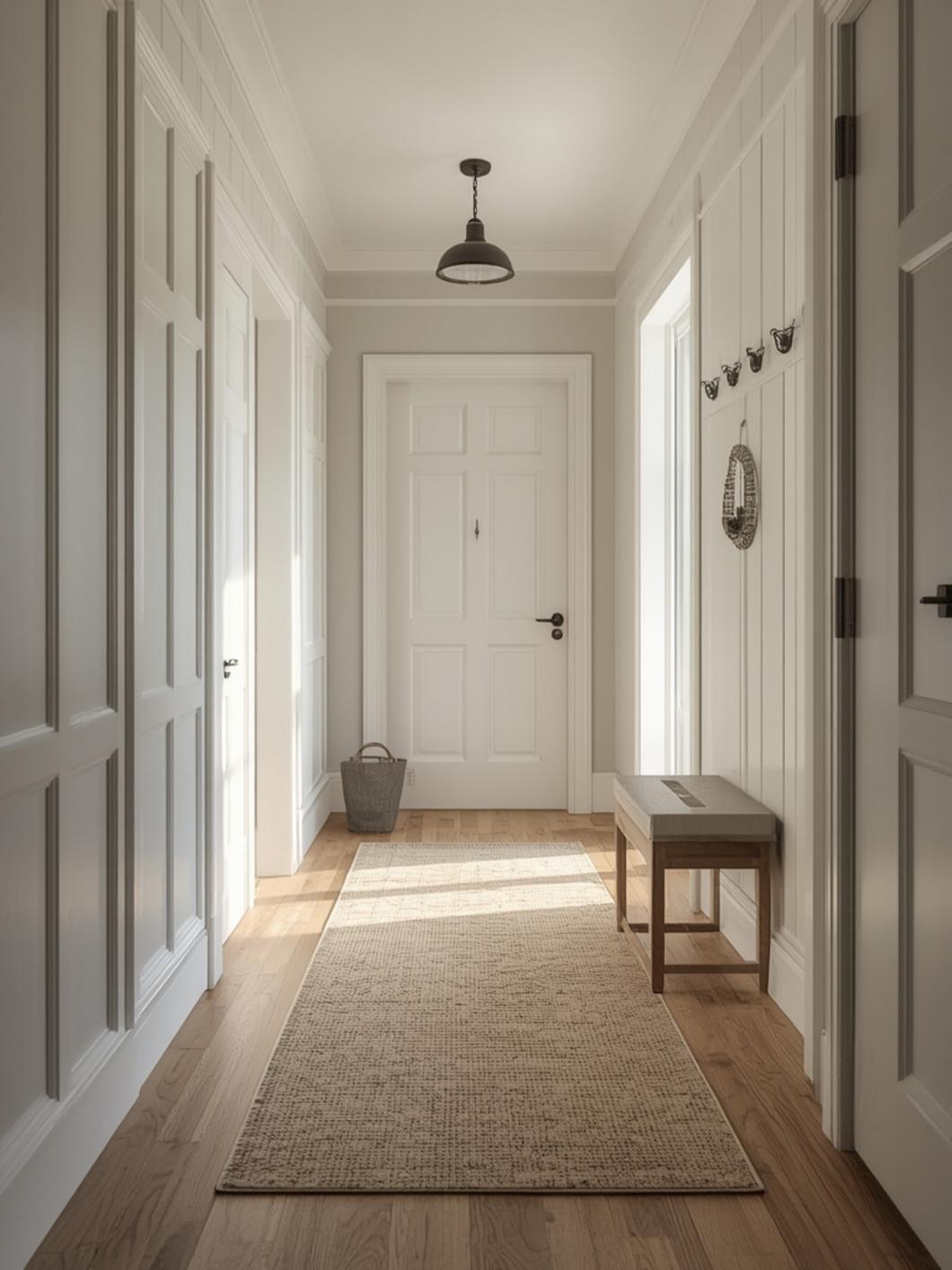
1. Patterned Cement Tile Look
Porcelain tiles that mimic decorative cement tile give you bold pattern without the maintenance headaches. These water-resistant tiles won’t stain like authentic cement, but they deliver the same eye-catching geometric or floral designs. The busy pattern cleverly disguises dirt and scuff marks.
Place this look in a defined entryway zone, then transition to simpler flooring in adjacent spaces. The visual pop creates an intentional “drop zone” feeling that tells family members exactly where shoes belong.
2. Rustic Wood-Look Luxury Vinyl
Wide planks in distressed hickory or reclaimed oak tones bring warmth that real wood can’t safely offer in mudrooms. Quality LVP feels surprisingly realistic underfoot and handles water splashes without warping or cupping. The textured surface adds grip when wet.
Install planks in the same direction as your main living spaces for visual flow. This creates the illusion of continuous hardwood throughout your home while protecting high-traffic entries with waterproof technology.
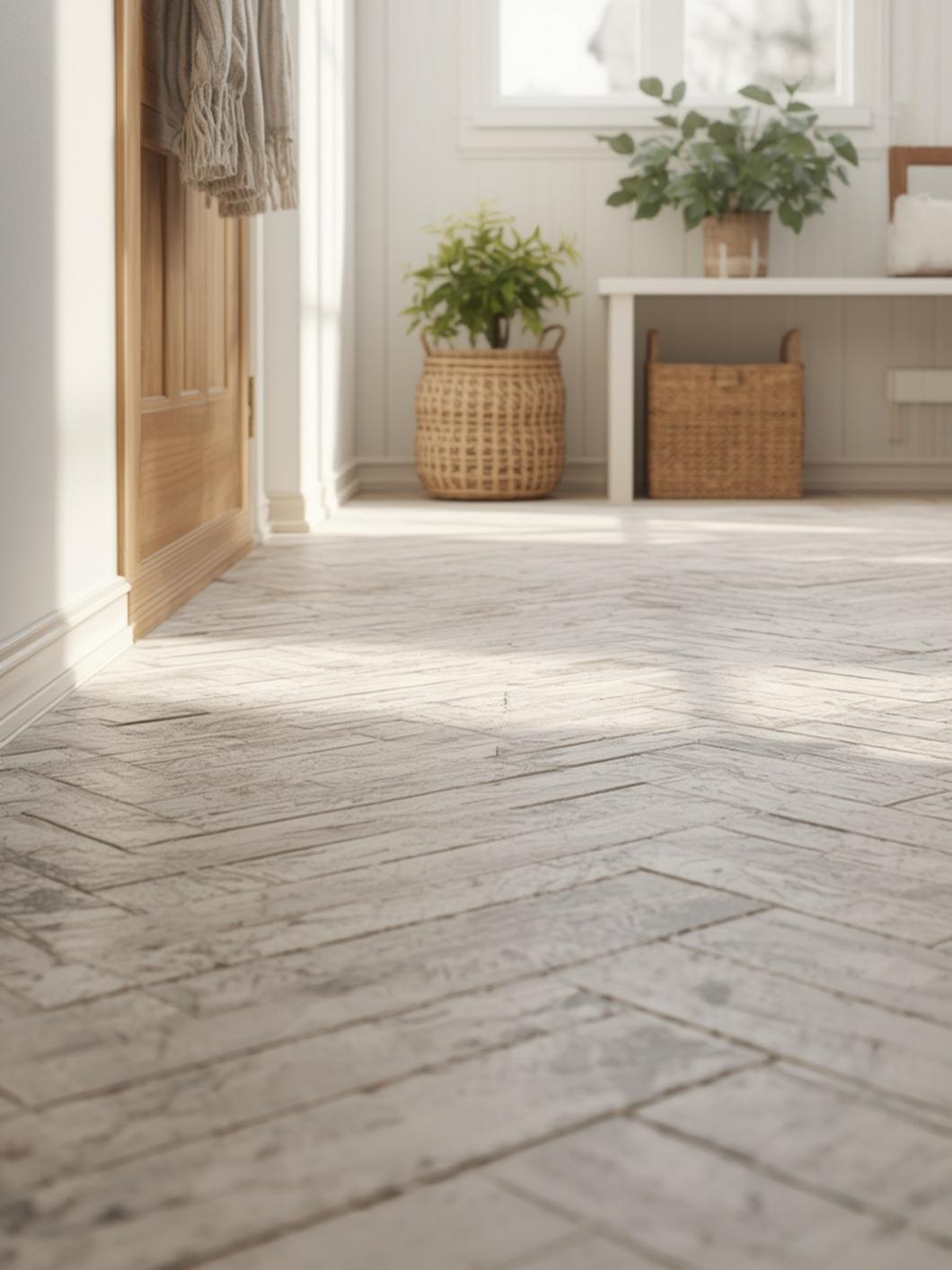
3. Classic Herringbone Tile
Rectangular porcelain tiles laid in herringbone pattern add timeless elegance to any mudroom. This installation style works equally well with marble-look tiles for upscale homes or matte black tiles for modern spaces. The diagonal lines make narrow mudrooms appear wider.
Pair herringbone floors with simple wall colors and storage to let the pattern shine. The detailed layout provides enough visual interest that your mudroom feels designed rather than purely functional.
4. Slate Tile with Varied Tones
Natural slate delivers unmatched durability with color variations that make every tile unique. The rough texture provides excellent traction even when soaking wet. Dark gray or multicolor slate hides dirt so effectively you’ll clean less frequently.
When comparing flooring options through a mudroom flooring durability comparison, slate consistently ranks at the top for scratch resistance and longevity. Properly sealed slate can last the lifetime of your home without needing replacement.
5. Charcoal Hexagon Porcelain
Small hexagon tiles in charcoal or deep gray create a honeycomb pattern that feels both modern and vintage. The geometric shape adds personality without overwhelming your space. Darker grout in matching tones ensures muddy footprints vanish visually.
This look works particularly well in compact mudrooms where larger tiles might feel out of scale. The repeating pattern draws the eye across the floor, making the space feel more expansive.
6. Brick-Pattern Luxury Vinyl
Luxury vinyl designed to look like aged brick pavers brings indoor-outdoor appeal to mudroom floors. The running bond pattern mimics traditional brick pathways while offering cushioned comfort underfoot. This option costs significantly less than real brick or stone.
The subtle texture and earthy red-brown tones create a welcoming transition from outside to inside. Waterproof vinyl means snow and rain won’t damage the surface like they would with genuine brick pavers.
7. Large-Format Concrete-Look Tile
Oversized porcelain tiles (24×48 or larger) in concrete gray offer industrial-chic style with minimal grout lines to clean. The smooth surface wipes clean in seconds, making daily maintenance effortless. Subtle color variation within the tiles adds depth without showing dirt.
This modern choice pairs beautifully with metal storage cubbies and minimalist design elements. The neutral backdrop allows colorful coats, bags, and boots to pop visually.
Benefits of the Right Mudroom Floor
Investing in proper mudroom flooring transforms your daily routine in ways you’ll appreciate every single day. The right surface eliminates that sinking feeling when someone tracks in mud because cleanup becomes genuinely quick.
Waterproof floors mean never worrying about damage. Wet umbrellas, soaked boots, and melting snow puddles won’t warp or stain your surface. You can relax knowing your floor handles whatever weather throws at it.
Durable materials save money long-term. Quality tile, stone, or luxury vinyl outlasts cheaper options by decades. You’ll avoid the cost and disruption of premature replacement. Many of these floors look even better with age as they develop natural patina.
Easy-clean surfaces reduce your workload. Most mudroom-appropriate floors clean with a quick sweep and damp mop. No special products or scrubbing required. Stains wipe away rather than soaking in, keeping your entrance looking fresh with minimal effort.
Stylish design makes you proud of your mudroom. The right floor elevates this hardworking space from purely functional to genuinely attractive. Guests see a well-designed entryway rather than a messy drop zone.
Non-slip textures provide peace of mind. Textured tile, stone, or embossed vinyl grips wet shoes, reducing slip risks for kids and elderly family members. Safety combines with style in a single smart choice.
Tips, Alternatives, and Styling Advice
Budget-Friendly Option:
Sheet vinyl or vinyl tile offers waterproof protection at the lowest price point. Modern designs convincingly mimic stone, wood, or tile at a fraction of the cost. Quality vinyl can last 10-15 years in a mudroom with proper care.
Look for peel-and-stick vinyl tiles if you want a DIY-friendly installation. These self-adhesive squares go down over most existing floors without professional help. Choose textured finishes for better traction and a more realistic look.
Mid-Range Option:
Luxury vinyl plank represents the sweet spot for most homeowners. You get genuinely waterproof construction, realistic wood or stone appearance, and comfortable underfoot feel. Prices typically range $3-6 per square foot installed.
Select planks with rigid cores rather than flexible ones for mudroom durability. The rigid construction resists denting from heavy items and maintains its shape better in temperature fluctuations. Pair your new floor with smart storage to maximize functionality.
Premium Option:
Natural stone tile or high-end porcelain delivers luxury that appreciates with your home’s value. Expect to invest $8-15 per square foot installed, but these materials can last 30+ years. The authentic look and feel of natural materials can’t be fully replicated.
Large-format porcelain slabs create a seamless, modern look with almost invisible grout lines. These premium tiles resist staining better than natural stone while offering similar visual impact.
Small Space Adaptation:
Diagonal tile layouts make tiny mudrooms feel more spacious by drawing the eye across the room rather than emphasizing its shortness. Light-colored floors bounce natural light around, brightening cramped entryways.
Skip busy patterns in very small mudrooms—they can feel overwhelming. Instead, choose solid colors with subtle texture variations. Your floor becomes a neutral foundation rather than competing with storage and decor.
Common Mistakes to Avoid
Choosing water-resistant instead of waterproof materials. These terms aren’t interchangeable, and water-resistant options can still suffer damage from standing water. Always verify your flooring is rated as waterproof for mudroom installation.
Selecting smooth, glossy tile. Beautiful in photos but dangerously slippery when wet in real life. Look for textured, matte, or honed finishes specifically rated for slip resistance.
Ignoring grout color choice. Light grout in mudrooms shows every speck of dirt and stains quickly. Choose grout in medium to dark tones that hide grime between cleanings.
Forgetting about transitions. The change from mudroom flooring to adjacent rooms needs proper transition strips or thresholds. Without them, edges curl up, creating trip hazards and looking unfinished.
Skipping floor sealer on porous materials. Natural stone and some tile must be sealed to resist staining. Apply sealer immediately after installation and reapply annually for maximum protection.
Maintenance and Upkeep Tips
Daily sweeping or vacuuming keeps grit from scratching your floor’s surface. Small particles of sand and dirt act like sandpaper underfoot, gradually dulling even the toughest materials. A quick sweep takes 30 seconds and prevents long-term damage.
Weekly damp mopping removes stuck-on dirt. Use warm water with a pH-neutral cleaner appropriate for your floor type. Avoid harsh chemicals, vinegar, or steam cleaners on natural stone—these can etch the surface or break down sealers.
Place absorbent mats strategically. Use a rough outdoor mat before the entry door and a softer indoor mat just inside. This two-mat system traps the majority of dirt and moisture before it reaches your floor. Shake out and launder mats weekly.
Wipe up water promptly. Even waterproof floors can develop water spots or streaks if puddled water dries naturally. Keep a towel handy during rainy or snowy weather to quickly blot up excess moisture.
Reseal natural stone annually. Apply fresh sealer to slate, travertine, or granite once per year. This simple task takes less than an hour and dramatically extends your floor’s life while maintaining its stain resistance.
Check grout condition yearly. Cracked or missing grout allows water to seep underneath tiles, potentially causing damage. Repair any grout issues immediately to protect your investment.
Making Your Choice with Confidence
Your mudroom floor sets the foundation for an organized, functional entryway that serves your family well for years to come. The right material handles daily wear while looking better than you expected in this hardworking space.
Whether you choose the timeless appeal of tile, the warm realism of luxury vinyl, or the natural beauty of stone, you’re making a smart investment in your home’s functionality. Your new floor will simplify cleaning, protect against water damage, and create an entryway you’re genuinely proud to show.
Explore more practical home solutions and stylish design ideas at DecorKingdom. Your dream home starts with smart choices in every room.
FAQs
What is the most durable flooring for a mudroom?
Porcelain tile and natural slate consistently outperform other options for long-term durability. Both resist scratching, staining, and water damage while lasting 20-30+ years. Luxury vinyl plank runs a close third with excellent waterproofing and a 15-20 year lifespan at a lower cost.
Can I install mudroom flooring myself?
Luxury vinyl plank and peel-and-stick vinyl tiles are genuinely DIY-friendly for homeowners with basic skills. Ceramic tile installation requires more experience but is manageable for confident DIYers. Natural stone installation is best left to professionals due to the material’s weight and cost.
How do I choose between tile and luxury vinyl for my mudroom?
Consider your budget and comfort preferences. Tile feels harder and colder underfoot but lasts longer and adds more home value. Luxury vinyl costs less, feels warmer and softer, and installs easier, but may need replacement sooner. Both handle water equally well when properly installed.
Should mudroom flooring match the rest of my home?
Mudroom floors can either match adjacent spaces or intentionally contrast to define the entry zone. Matching creates visual flow and makes spaces feel larger. Contrasting flooring clearly marks the “drop zone” area and can be more practical for hiding dirt. Both approaches work beautifully—choose based on your home’s layout and style.
How much does mudroom flooring typically cost?
Basic vinyl flooring runs $2-4 per square foot installed, while quality luxury vinyl plank costs $3-7 per square foot. Ceramic tile ranges from $5-10 per square foot installed, and premium porcelain or natural stone reaches $8-15 per square foot. For an average 50-square-foot mudroom, expect to invest $250-750 depending on materials chosen.
—
Meta Title: 7 Mudroom Floor Ideas That Actually Last (2026 Guide)
Meta Description: Discover mudroom floor ideas that handle wet boots and daily chaos. Compare durability, style, and maintenance for your hardest-working space.