Transform Your Closet Into a Laundry Haven: 9 Brilliant Ideas
You’re staring at your cluttered bedroom, wondering why your beautiful walk-in closet can’t pull double duty. Your laundry room is cramped, your closet has wasted space, and you’re tired of hauling baskets across the house every week.
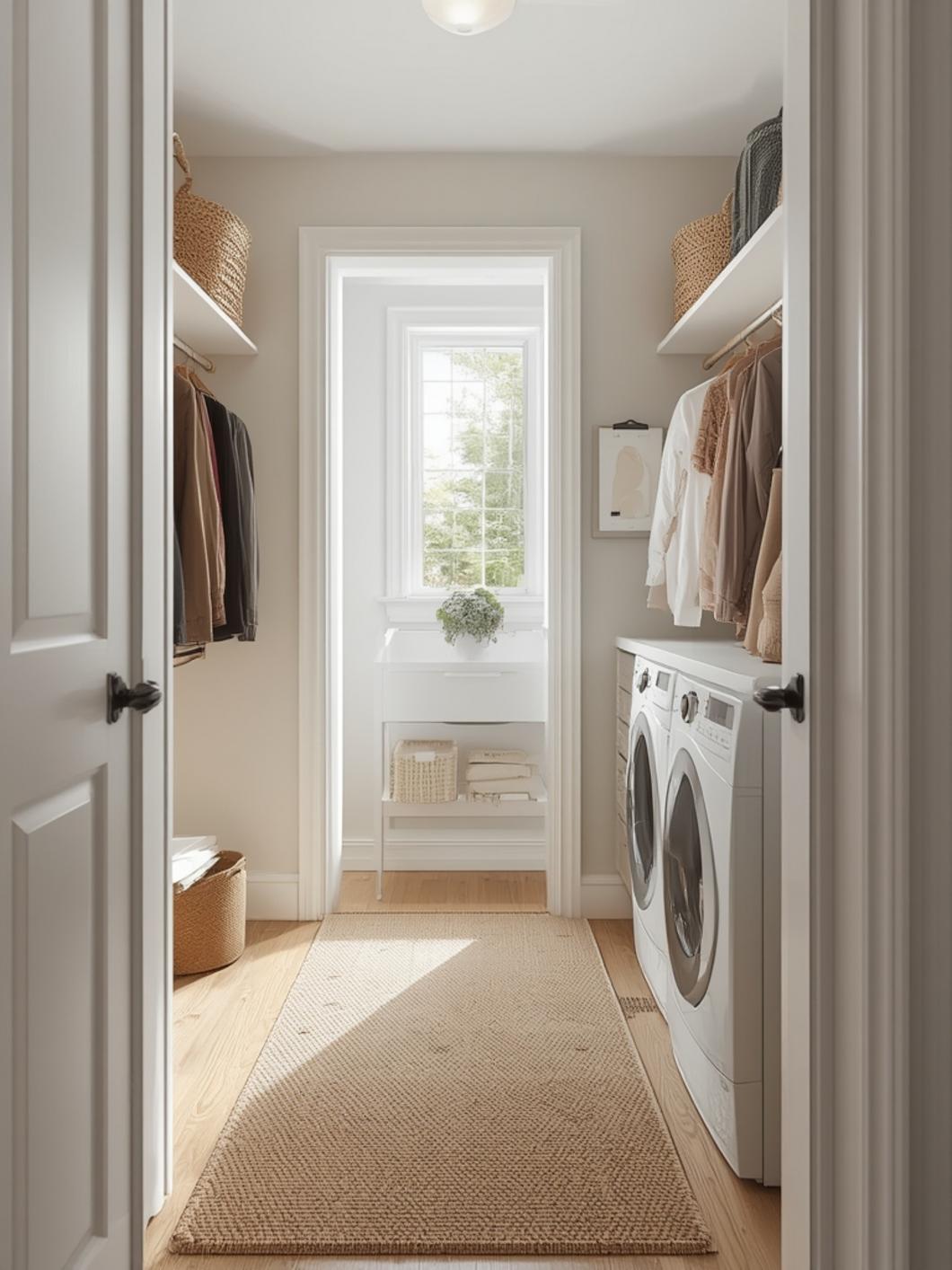
What if you could combine both spaces into one beautiful, functional room? Walk in closet laundry room ideas are trending for good reason—they save space, simplify your routine, and create a private retreat for all your clothing care needs. No more fighting for square footage in tiny homes or awkwardly placed washer-dryer units in hallways.
The best part? You don’t need a massive home or a contractor to make this work. With smart planning and creative design, your walk-in closet can become the multitasking dream space you’ve always wanted.
Table of Contents
What You’ll Need to Get the Look
Creating a combined closet-laundry space requires thoughtful selection of compact, efficient pieces. Your shopping list should include stackable or compact washer-dryer units that fit your closet dimensions—measure twice before buying anything.
You’ll need sturdy shelving systems that can handle detergent bottles, folded clothes, and laundry baskets. Closed cabinets hide supplies beautifully while keeping dust away from your hanging garments.
Essential items include:
– Compact or stackable washer and dryer (24-inch models work in most closets)
– Moisture-resistant flooring or waterproof mat
– Ventilation solution (window, vent fan, or door louvers)
– Hanging rods and closet organizers
– Pull-out hamper or sorting bins
– Countertop or folding surface
– Moisture-absorbing products or small dehumidifier
– Lighting fixtures (overhead and task lighting)
– Storage baskets for supplies
Choose materials that can handle humidity. Powder-coated metal shelving, sealed wood, or laminate surfaces resist moisture better than raw wood. Your hanging clothes need protection from laundry room steam, so proper spacing and air circulation matter.
Small decor touches make the space feel intentional rather than cramped. A pretty rug, matching hangers, labeled containers, and fresh paint turn a functional combo room into a space you actually enjoy using.
Finding Your Style and Season
This project works year-round, but spring and fall are ideal times to reimagine your space. Spring brings energy for decluttering and fresh starts, while fall prepares your home for cozy winter organization.
Your style preference shapes everything from cabinet colors to hardware choices. Modern minimalist designs favor sleek white machines, floating shelves, and hidden storage. Farmhouse styles embrace open shelving, woven baskets, and warm wood tones. Traditional spaces might include paneled cabinets and classic brass fixtures.
Consider your daily rhythm before planning. Morning people might prioritize good lighting and coffee-station vibes. Evening laundering types need quiet machines and soft ambiance. Families need sorting systems and stain-treatment stations, while couples might focus on shoe storage and jewelry organization.
Seasonal wardrobe rotation becomes incredibly easy with this setup. Store off-season items on higher shelves while keeping current clothes at eye level. Your winter coats and summer dresses can swap places without leaving the room.
Budget matters too. A basic setup with used appliances and wire shelving costs under $1,500. Mid-range designs with new compact machines and custom closet systems run $3,000–$6,000. Luxury versions with custom cabinetry and high-end appliances reach $10,000 and beyond.
9 Ideas to Try in Your Home
Creating a dual-purpose space requires clever design thinking. These ideas solve real problems while maximizing every inch of your closet.
Stack Your Machines Vertically
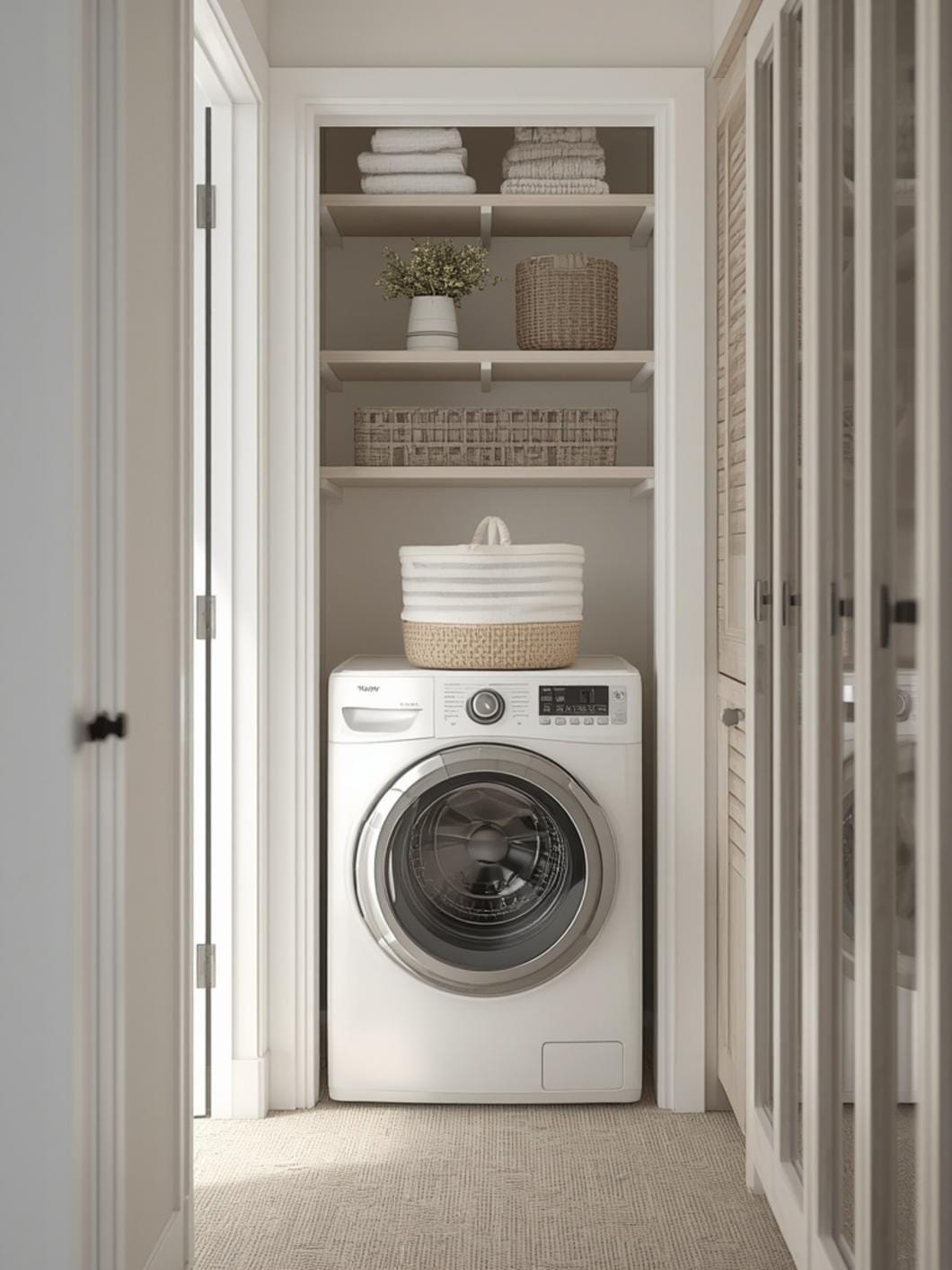
Stackable washer-dryer units free up precious floor space for storage or folding areas. Place them at the back of your closet and build shelving or rods around them. This layout works brilliantly in narrow closets where width is limited but ceiling height is generous.
Create a Folding Station Above Front-Loaders
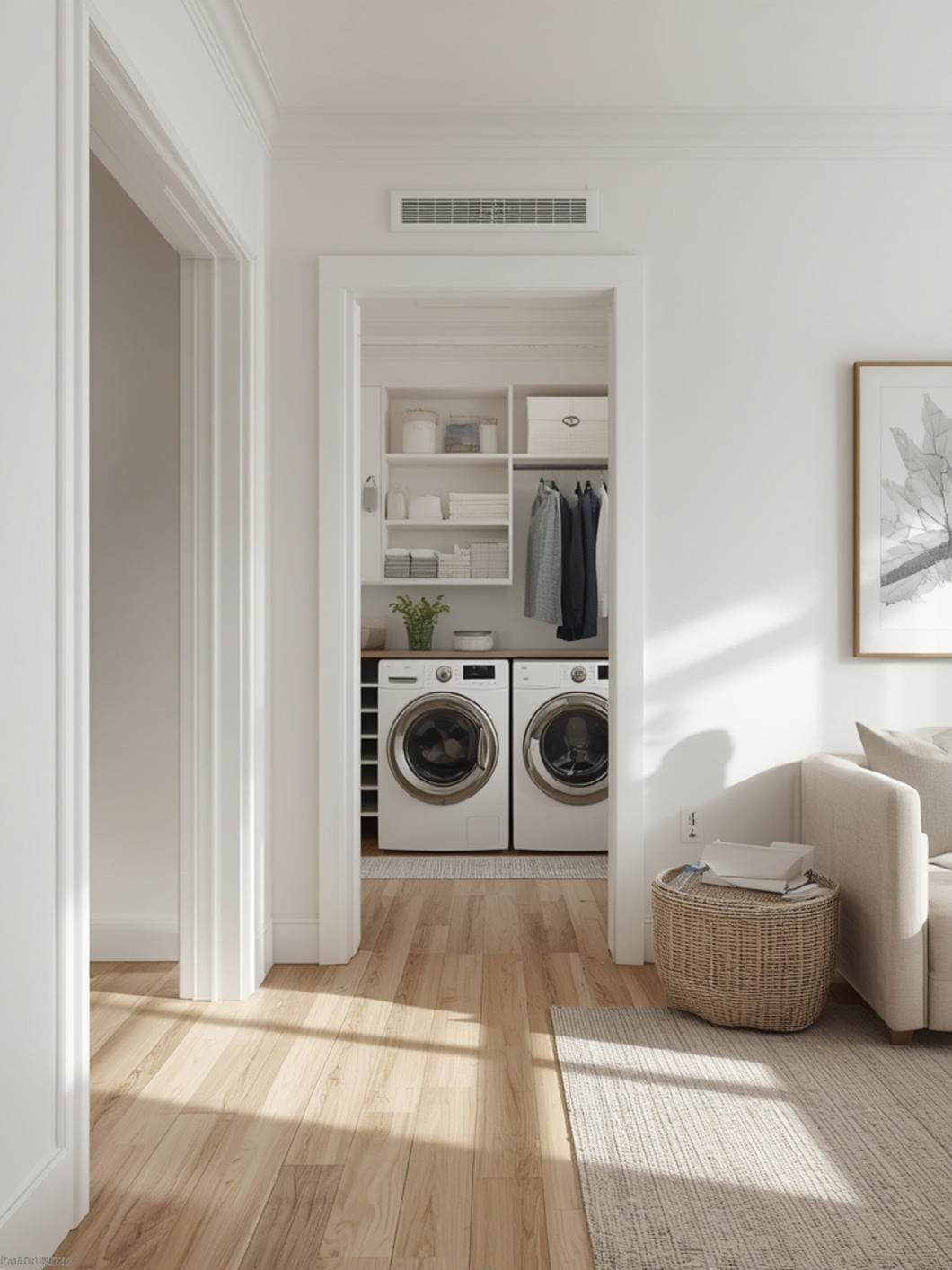
Front-loading machines offer a built-in countertop opportunity. Add a custom wood top or sturdy shelf across both units to create a folding surface. Store detergent and supplies underneath in rolling drawers that pull out easily. This setup makes folding clothes immediately after drying a breeze.
Install a Curtain or Sliding Door
Hide your machines behind a floor-length curtain or modern sliding barn door. This visual trick keeps your closet looking polished when machines aren’t running. Choose moisture-resistant fabrics or waterproof options that won’t absorb steam or odors over time.
Build Around Your Machines
Frame your washer and dryer with floor-to-ceiling cabinetry for a built-in look. Upper cabinets hold supplies while lower drawers organize socks, underwear, or accessories. This approach makes machines look intentional rather than squeezed into available space.
Maximize Vertical Storage
How to combine laundry room and closet in small spaces relies heavily on using walls and vertical space. Install shelving all the way to the ceiling for items you rarely need. Use the middle zones for everyday supplies and hanging clothes. Reserve lower areas for hampers and frequently accessed items.
The key is creating zones—laundry supplies on one side, clothing storage on the other, with machines positioned to serve both functions.
Add Pull-Out Hampers
Built-in hamper systems with multiple bins make sorting whites, colors, and delicates effortless. Place these near your machines for easy loading. Some designs include removable bags that you can carry directly to the washer without lugging a heavy basket.
Use the Inside of Doors
Over-the-door organizers hold cleaning supplies, lint rollers, and stain removers without taking up shelf space. Hooks on the back of your closet door provide spots for hanging clothes to air-dry or items waiting to be ironed.
Create a Steaming Station
Dedicate one corner to a handheld steamer or small ironing board. A wall-mounted board folds flat when not in use, while a nearby outlet makes quick touch-ups convenient. This setup eliminates trips to other rooms for clothing maintenance.
Install Mood Lighting
Overhead fixtures provide general illumination, but add under-cabinet LED strips for a spa-like atmosphere. Dimmer switches allow you to adjust brightness based on task and time of day. Good lighting makes folding and sorting less of a chore and more of a peaceful ritual.
Benefits That Change Your Daily Life
A combined walk-in closet and laundry space eliminates the back-and-forth between rooms that eats up your time. You can sort, wash, dry, fold, and put away clothes without ever leaving one room. That efficiency adds up to hours saved each month.
Privacy matters more than most people realize. Your laundry doesn’t sit in a shared hallway or visible kitchen corner. Guests don’t see your underwear drying or your laundry pile growing. Everything happens behind your bedroom door in your personal space.
This setup protects your clothes better too. You can grab garments straight from the dryer and hang them immediately, reducing wrinkles and extending fabric life. Delicates air-dry near your hanging clothes instead of in a damp basement or awkward bathroom.
Small homes gain significant functionality without sacrificing livable space. That cramped corner of the kitchen or hallway becomes available for actual living. Your bedroom stays cleaner because dirty clothes go straight into the hamper in your closet rather than piling on furniture.
Property value gets a boost too. Homebuyers love innovative space-saving solutions, especially in urban markets where square footage comes at a premium. A thoughtfully designed combo room signals smart design throughout your home.
Tips, Alternatives, and Styling Advice
Budget-Friendly Approach: Buy a used stackable washer-dryer set and install basic wire shelving from home improvement stores. Use fabric curtains to hide machines and affordable baskets for organization. Total cost: $1,200–$2,000 with mostly DIY installation.
Mid-Range Design: Purchase new compact appliances with Energy Star ratings and install modular closet systems with adjustable components. Add laminate countertops and semi-custom cabinetry. Include a small dehumidifier for moisture control. Budget: $3,500–$5,500 including professional installation.
Premium Experience: Invest in European-style compact washer-dryers with advanced features like steam cycles and Wi-Fi connectivity. Commission custom cabinetry with soft-close drawers and specialty lighting. Add luxury vinyl flooring with waterproof backing and designer hardware. Cost: $8,000–$12,000+ with full professional design and installation.
Small Space Adaptation: If your closet barely fits machines, remove lower hanging rods and install a single high rod for long items. Use the freed-up floor space for stacked appliances. Utilize the back of your closet door and walls intensively with hooks, slim shelving, and magnetic strips.
Style Variations: Coastal designs use white machines with light blue cabinets and rope baskets. Industrial styles feature exposed pipes, metal shelving, and Edison bulbs. Scandinavian approaches emphasize natural wood, white surfaces, and minimalist organization systems.
Common Mistakes to Avoid
Ignoring ventilation needs creates mold and mildew problems fast. Your machines produce heat and moisture that can damage clothes and walls. Install a vent fan, keep your door open after use, or add a dehumidifier to maintain healthy air quality.
Forgetting about door swing and clearance ruins functionality. Measure your machines with doors fully open, not just their closed dimensions. Front-loaders need space to swing open, and you need room to stand while loading. Allow 30 inches of clearance in front of machines for comfortable use.
Placing machines directly against drywall causes vibration damage over time. Use rubber anti-vibration pads under each appliance foot. Leave a one-inch gap between machines and walls to prevent banging during spin cycles. This simple step protects your walls and reduces noise significantly.
Mixing moisture-sensitive items with laundry areas damages leather and fabrics. Keep leather shoes, bags, and delicate fabrics away from the humid zone near your machines. Use closed cabinets for items that need protection from steam and moisture exposure.
Choosing the wrong flooring leads to water damage nightmares. Carpet absorbs spills and grows mold. Choose waterproof vinyl plank, sealed tile, or waterproof laminate instead. Place a waterproof mat under machines even on water-resistant floors for extra protection.
Maintenance and Upkeep Tips
Clean your dryer’s lint trap after every single load without exception. Monthly, vacuum behind and underneath machines to prevent dust buildup and maintain air circulation. This simple habit prevents fires and keeps machines running efficiently.
Run an empty hot water cycle with vinegar through your washer monthly to prevent odor and residue buildup. Leave the washer door open between uses to allow moisture to evaporate rather than creating mold inside the drum.
Check hoses and connections every few months for cracks, bulges, or loose fittings. Replace washing machine hoses every five years even if they look fine—internal deterioration happens before visible damage appears. This prevents flooding disasters.
Wipe down surrounding surfaces weekly to remove detergent residue and prevent sticky buildup on shelves and counters. Moisture-resistant doesn’t mean maintenance-free. Regular cleaning keeps your combined space looking fresh rather than grimy.
Organize seasonally by rotating your wardrobe and deep-cleaning your space. Move winter items to higher shelves in spring, and reverse the process in fall. This natural rhythm prevents neglected corners and keeps everything accessible and visible.
Make Your Dream Space Reality
A combined walk-in closet and laundry room solves multiple problems with one smart design move. You’ll reclaim wasted space, simplify your routine, and create a private area where clothing care becomes easier and more enjoyable.
The key is planning for both functions from the start rather than cramming machines into an existing closet as an afterthought. With proper ventilation, smart storage, and thoughtful layout, your new dual-purpose room will serve you beautifully for years.
Ready to reimagine your home’s most hardworking spaces? Explore more innovative storage and organization ideas at DecorKingdom to make every room in your home work smarter.
FAQs
Can I really fit a washer and dryer in my walk-in closet?
Yes, if your closet is at least 5 feet wide and 6 feet deep. Stackable units need about 27 inches of width and 32 inches of depth, leaving room for surrounding storage. Measure your space carefully and choose compact or combination washer-dryer units designed for small spaces.
How do I prevent my clothes from getting moldy or musty?
Install proper ventilation through a window, door louvers, or a small exhaust fan. Keep your closet door open after running machines to allow moisture to escape. Use a small dehumidifier if your space feels damp, and never store damp laundry in closed hampers.
Do I need special permits to add a washer and dryer to my closet?
Check your local building codes—requirements vary by location. Most areas require proper venting, electrical outlets, and water connections. If you’re moving plumbing or electrical lines, you’ll likely need permits and professional help. Simple installations using existing connections typically don’t require permits.
Will running machines in my closet make my bedroom too noisy?
Modern front-loading machines run much quieter than older top-loaders. Place rubber anti-vibration mats under machines to reduce sound transmission. Run laundry during waking hours rather than at night, and consider adding sound-dampening materials to walls if noise bothers you.
How much does it typically cost to convert a walk-in closet into a laundry space?
Basic conversions using existing plumbing and outlets cost $1,500–$3,000 including machines and simple shelving. Mid-range projects with some custom work run $4,000–$7,000. High-end conversions with custom cabinetry, new plumbing, and luxury appliances can exceed $10,000. Most homeowners spend around $4,500 for a functional, attractive result.
—
Meta Title: Walk In Closet Laundry Room Ideas That Work in 2026
Meta Description: Transform wasted space with walk in closet laundry room ideas. 9 brilliant layouts for small homes—save time, add privacy, boost home value.