How to Choose Home Office Wallpaper Ideas That Boost Productivity
Your home office should inspire productivity, not bore you to tears. Yet so many of us stare at blank, lifeless walls day after day, wondering why motivation feels hard to find.
The good news? A stunning accent wall can completely change how you feel about your workspace. Home office wallpaper ideas range from bold geometric patterns that energize your mornings to soft botanical prints that keep you calm during stressful deadlines. Whether you work from home full-time or just need a functional space for paying bills, the right wallpaper sets the tone for everything you do there.
The best part is that wallpaper has come a long way. Peel-and-stick options mean you can refresh your office in an afternoon without committing forever or dealing with messy paste.
Table of Contents
What You’ll Need to Get the Look
Before you start browsing patterns, gather these essentials to make your wallpaper project smooth and stress-free:
– Peel-and-stick wallpaper in your chosen pattern (measure your wall first and order 10% extra)
– Smoothing tool or credit card wrapped in a soft cloth
– Sharp utility knife or precision scissors
– Measuring tape and pencil
– Level to keep patterns straight
– Step stool or small ladder for upper sections
– Painter’s tape to protect trim and outlets
– Lint-free cloth for smoothing out bubbles
Most modern wallpapers come with easy application systems that work perfectly for homeowners. You won’t need professional tools or expensive equipment. Just patience and a steady hand make all the difference.
If you’re papering around a desk area, consider adding picture ledges or floating shelves afterward. They break up large expanses of pattern and give you functional display space.
Finding Your Style and Season
Choosing wallpaper feels overwhelming when you see thousands of options online. Start by thinking about how you want your office to feel, not just how it should look.
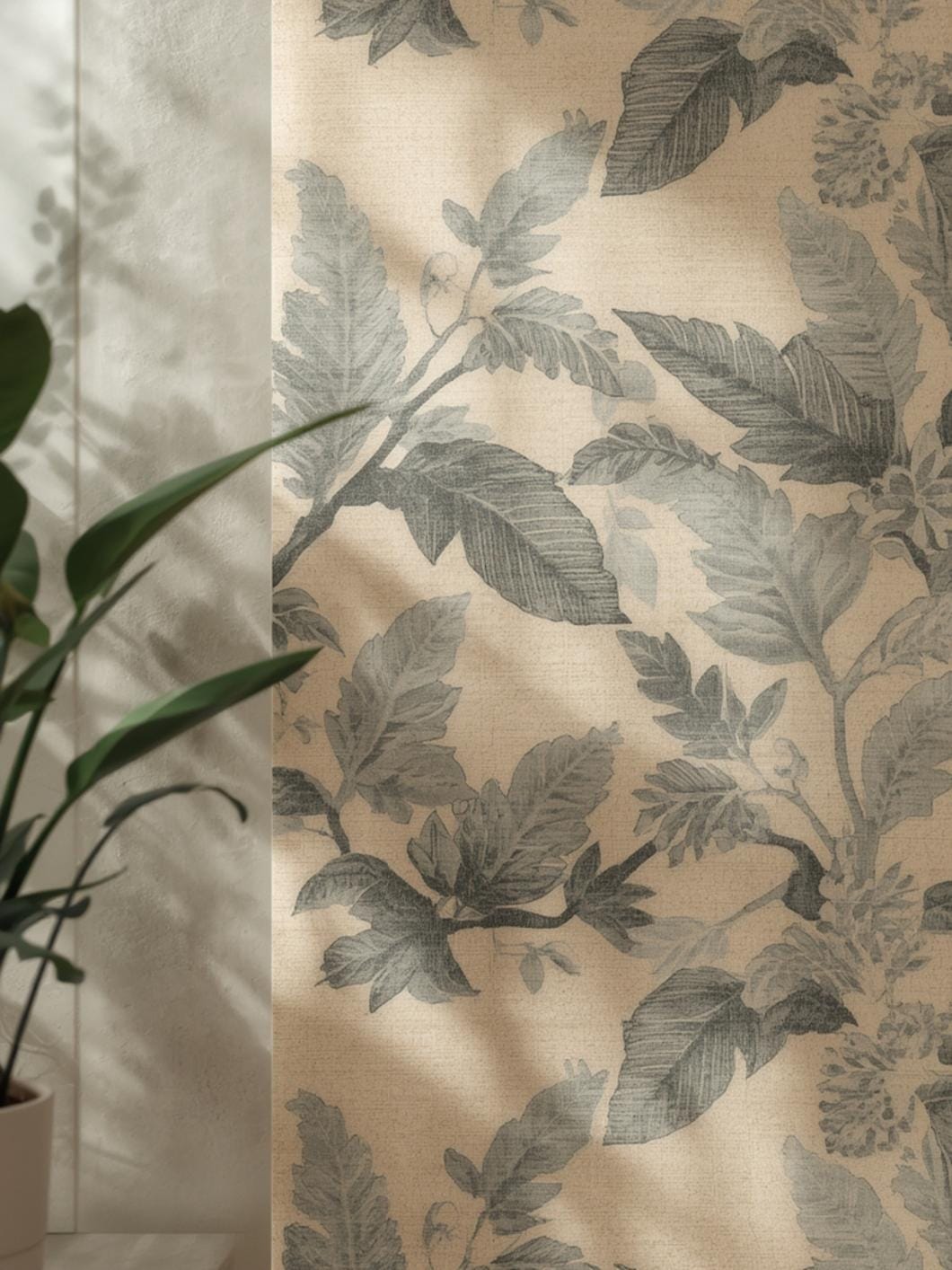
Spring and summer call for lighter, airier patterns. Think pale blues, soft greens, or cream backgrounds with delicate line drawings. These patterns keep your space feeling fresh when natural light pours in through your windows.
Fall and winter work beautifully with richer, moodier wallpapers. Deep navy geometrics, forest green botanicals, or charcoal abstract prints create cozy cocoons perfect for focused work during darker months.
Your work style matters too. Creative professionals often love bold, artistic patterns that spark inspiration. If you take a lot of video calls, consider whether busy patterns will distract viewers or if a subtle texture looks more professional on camera.
Budget plays a role in timing as well. Peel-and-stick wallpaper typically costs $30-$80 per roll, with each roll covering about 28 square feet. A standard accent wall in a small office usually needs 2-3 rolls. Premium papers with metallic finishes or hand-drawn artwork can run $100+ per roll but create stunning focal points.
7 Ideas to Try in Your Home
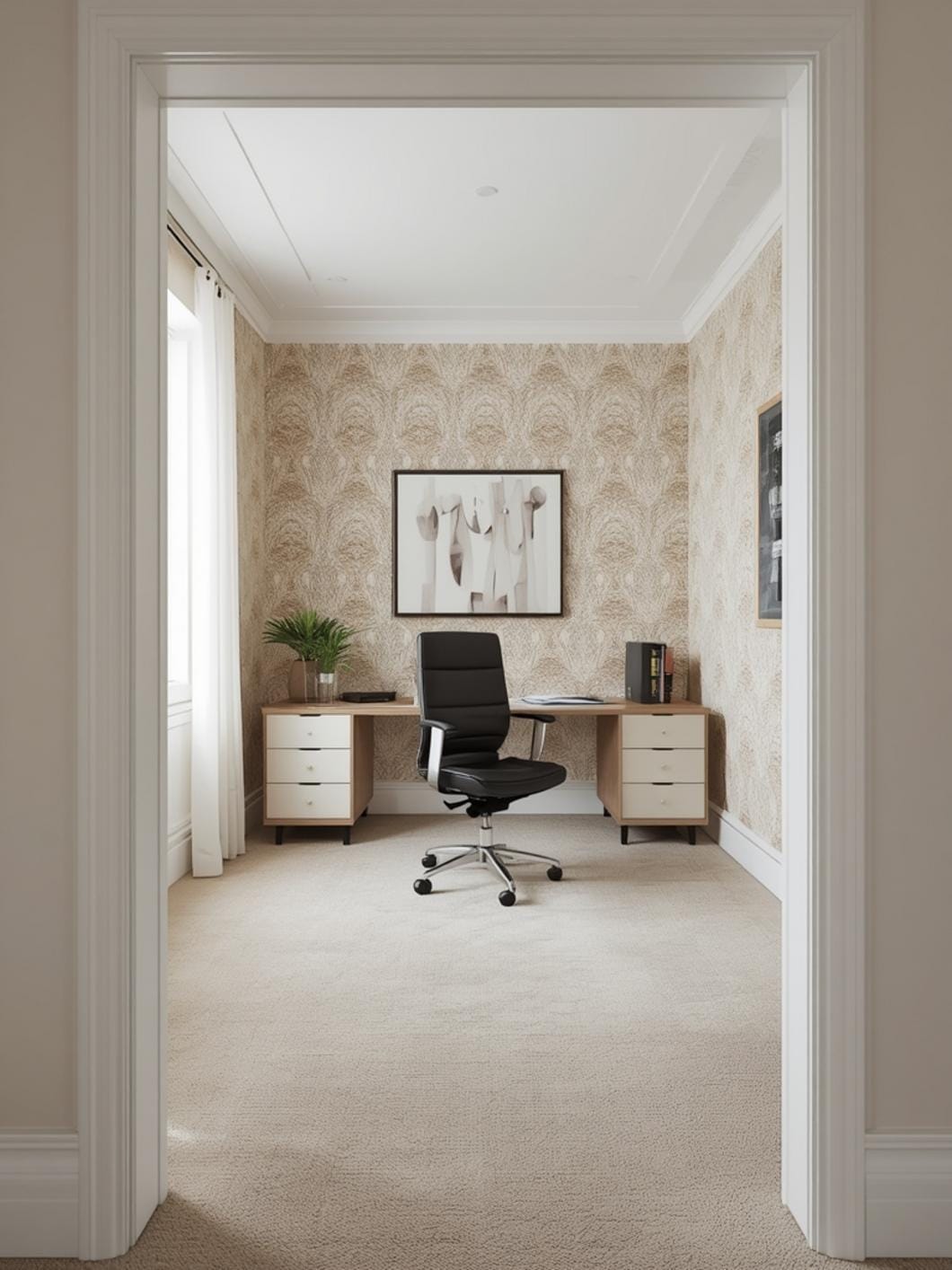
Ready to see what works in real homes? These proven ideas adapt to nearly any office style or size.
1. Classic Navy Geometric
Navy hexagons or chevron patterns bring sophisticated style without overwhelming your space. This works especially well behind floating desks where the pattern becomes a backdrop rather than the main event. Pair with warm wood tones and brass desk accessories for a modern traditional look.
2. Soft Botanical Line Drawings
Delicate leaf outlines or simple floral sketches in black on white create an organic, calming environment. These patterns scale beautifully in small offices because the open background keeps walls from closing in. How to install wallpaper in a small office becomes much easier with simple, forgiving patterns that don’t require precise matching at seams.
3. Textured Grasscloth Look
Grasscloth-inspired wallpapers (available in peel-and-stick) add subtle dimension and warmth. The vertical texture draws eyes upward, making low ceilings feel higher. This works particularly well in windowless offices where you need visual interest without competing patterns.
4. Abstract Watercolor Wash
Soft color gradients create dreamy, artistic backgrounds perfect for creative work. Choose colors that complement your existing furniture. A dusty rose gradient pairs beautifully with white desks and natural wood, while a sage green wash grounds spaces with lots of metal and glass.
5. Bold Stripe Variations
Vertical stripes make cramped offices feel taller and more spacious. Mix widths for visual interest—try alternating thin and thick stripes in complementary tones. Horizontal stripes work too but save them for walls you don’t face directly while working, as they can feel busier during long days.
6. Subtle Dot or Grid Patterns
Tiny dots or fine grid patterns add texture without screaming for attention. These work wonderfully in shared spaces or multipurpose rooms where your office occupies just one corner. The pattern provides definition without clashing with other decor in the room.
7. Dramatic Dark Florals
Moody florals on charcoal or midnight blue backgrounds create intimate, focused environments. This bold choice works best on a single accent wall behind your desk. Balance the drama with plenty of warm lighting and lighter furniture to prevent the space from feeling too heavy.
Each style creates a different mood for your workday. Visit different times of day to see how natural light affects your wallpaper choice before committing.
Benefits Beyond Beauty
Wallpaper does more than just look pretty on your walls. The right choice genuinely improves your daily work experience.
Mental clarity improves when you create distinct zones in your home. An accent wall clearly defines where “work” happens, helping your brain shift into productive mode when you enter and relax when you leave. This psychological boundary matters more than ever for remote workers.
Professional appearance elevates your video presence. A thoughtfully designed background shows clients and colleagues you take your work seriously. You’ll feel more confident on camera when you know your background looks polished and intentional.
Resale flexibility increases with removable wallpaper. Unlike permanent changes that future buyers might hate, peel-and-stick options let you personalize boldly now and remove everything later without damaging walls or losing your security deposit.
Acoustic benefits surprise many homeowners. Textured and fabric-backed wallpapers absorb some sound, reducing echo in hard-surfaced rooms. While not a replacement for proper soundproofing, every bit helps when you’re on important calls.
Tips, Alternatives, and Styling Advice
Not every wallpaper suits every budget or every office. Here’s how to adapt the look to your situation.
Budget-Friendly Approach
Start with a single accent wall using affordable peel-and-stick paper from major home retailers. Stick to simple patterns without metallic finishes to keep costs around $60-$100 for a small office wall. Save even more by papering just the upper half of your wall and adding a chair rail or painted wainscoting below.
Mid-Range Option
Invest in premium peel-and-stick from specialty wallpaper companies. These papers typically offer better color depth, more sophisticated patterns, and easier application. Budget $150-$250 for one accent wall. Add coordinating fabric for window treatments or a desk chair cushion to tie everything together.
Premium Choice
Traditional paste-the-wall wallpaper in designer patterns creates truly custom looks. While application takes more skill, the results last longer and often look more luxurious. Expect to spend $200-$400 for materials on a small office accent wall. Consider hiring a professional installer for the cleanest finish.
Small Space Adaptation
Tiny offices benefit most from vertical patterns and light backgrounds. Paper just the wall behind your desk rather than the whole room—this creates a focal point without overwhelming limited square footage. Choose patterns with at least 60% white or light neutral space to keep walls from closing in.
Rental-Friendly Alternative
If wallpaper feels too permanent even in removable form, try large-scale wall decals or temporary wallpaper panels that frame your desk area. These give you pattern and personality with even easier removal when you move.
Common Mistakes to Avoid
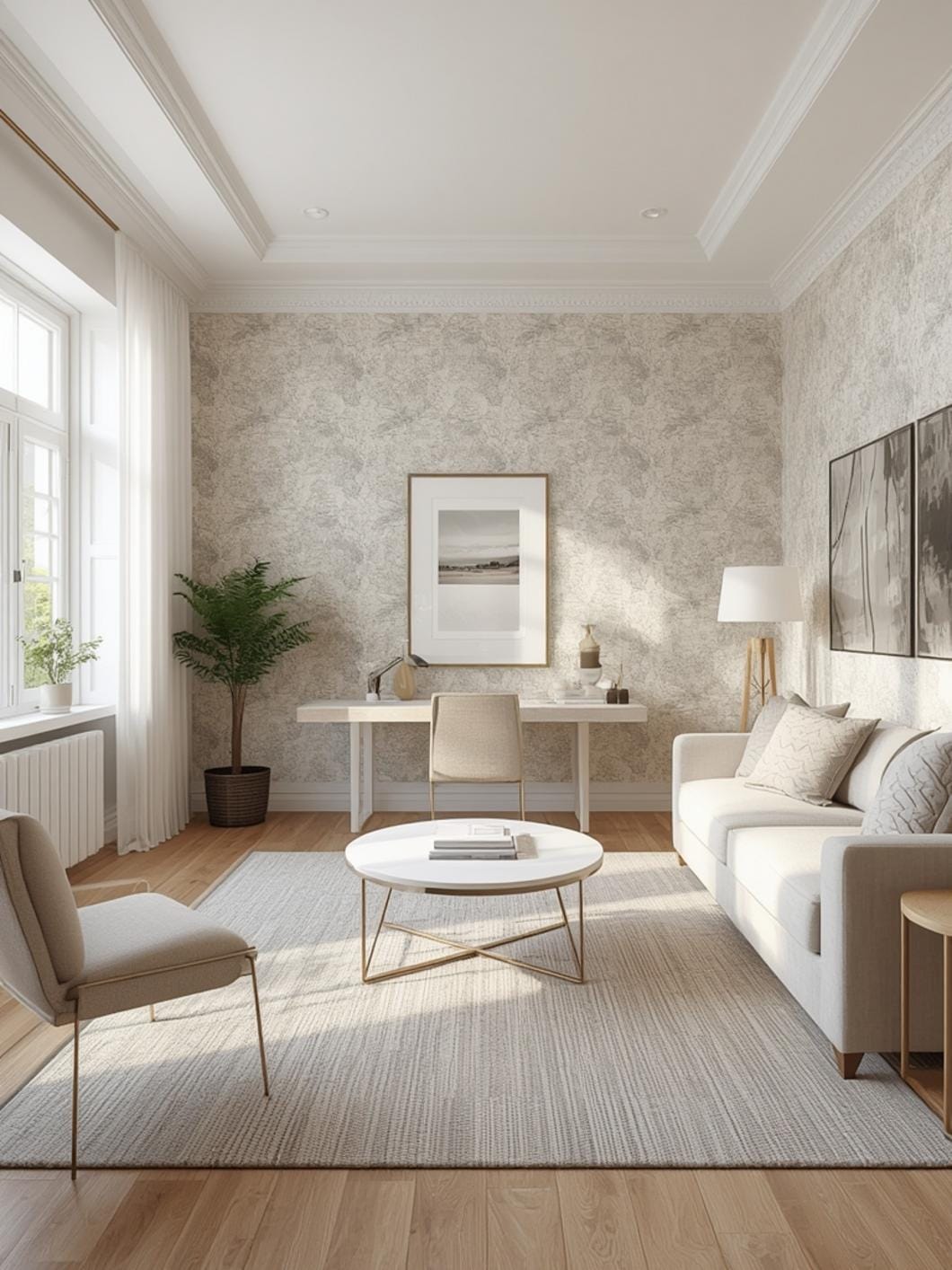
Even experienced DIYers make these wallpaper mistakes. Here’s how to sidestep the most common issues.
Skipping wall prep creates bubbles and poor adhesion. Clean your walls thoroughly with mild soap and water, let them dry completely, and smooth any rough patches with fine sandpaper before applying wallpaper.
Measuring once means running short or having ugly seams. Measure your wall height and width three times, account for pattern repeats, and always order one extra roll beyond what calculations suggest you need.
Starting in the wrong spot throws off your pattern. Begin at the least visible corner of your room and work toward the most prominent wall so any pattern mismatch happens where eyes naturally don’t look.
Rushing the smoothing process traps air bubbles. Work slowly from the center outward with your smoothing tool, taking time to press firmly along edges and in corners where bubbles hide.
Ignoring pattern direction ruins the final look. Check each strip before application to ensure patterns align correctly—some wallpapers have subtle directional elements that only become obvious once you’ve already stuck them to the wall.
Maintenance and Upkeep Tips
Keeping your office wallpaper looking fresh requires minimal effort but makes a big difference over time.
Dust regularly with a microfiber cloth or vacuum brush attachment. Wallpaper collects dust just like any other surface, and buildup dulls colors over time. A quick wipe-down every few weeks prevents this.
Spot clean gently when needed using a barely damp cloth with mild soap. Test your cleaning method on a hidden corner first to ensure it won’t damage the finish. Never scrub aggressively or use harsh chemicals.
Protect from direct sunlight where possible. While most modern wallpapers resist fading better than older styles, UV rays still take their toll over years. Consider light filtering shades if your office gets intense afternoon sun.
Address peeling edges immediately before they spread. A tiny dab of wallpaper adhesive (or even clear nail polish in a pinch) pressed under lifting corners prevents bigger problems later.
Monitor humidity levels in your office space. Excessive moisture can loosen adhesive over time, while very dry air can cause edges to curl. A small humidifier or dehumidifier maintains ideal conditions.
Make Your Office Truly Yours
Your workspace deserves the same design attention you give the rest of your home. Wallpaper transforms bland walls into inspiring backdrops that make you actually want to sit down and work.
Whether you choose calming botanicals or energizing geometrics, the key is selecting patterns that genuinely speak to you. Your office becomes a place of possibility rather than just another room when walls reflect your personal style.
Ready to explore more ways to create the perfect work-from-home environment? Browse DecorKingdom for hundreds of practical ideas that make your whole house feel like home.
FAQs
Can I wallpaper just one wall in my home office?
Absolutely, and one accent wall often works better than papering the entire room. Choose the wall behind your desk or the one you face while working for maximum impact. This approach costs less and prevents pattern overload in small spaces.
How long does peel-and-stick wallpaper actually last?
Quality peel-and-stick wallpaper typically lasts 3-5 years or longer when properly applied and maintained. The adhesive remains strong but still removes cleanly when you’re ready for a change. Lifespan depends mostly on wall prep quality and humidity levels in your home.
Will wallpaper work on textured walls?
Smooth or lightly textured walls work best for wallpaper application. Heavy orange peel or popcorn textures prevent proper adhesion and create visible bumps under the paper. You can lightly sand textured walls or apply primer-sealer to create a smoother surface first.
What’s the easiest wallpaper pattern for beginners?
Small repeating patterns, subtle textures, and designs without large-scale motifs forgive minor alignment mistakes. Avoid wallpapers requiring precise matching at seams or those with large individual elements that must line up perfectly between strips.
Can I put wallpaper behind open shelving?
Yes, wallpaper creates beautiful contrast behind floating shelves and open storage. Apply wallpaper to the full wall first, then install shelving over it. This layered look adds depth and makes displayed items pop visually against the patterned background.
—
Meta Title: Home Office Wallpaper Ideas That Inspire (2026 Guide)
Meta Description: Discover stunning home office wallpaper ideas that boost productivity and style. From bold geometrics to soft botanicals—find your perfect pattern.