The Best Laundry Room Tile Floor Ideas to Keep Your Space Stylish and Dry
Your laundry room takes a beating. Between wet towels, detergent spills, and constant foot traffic, the floor endures more moisture than almost any other room in your home. You need a surface that can handle the chaos while still looking good enough to make laundry day feel a little less like a chore.
That’s where smart laundry room tile floor ideas come in. The right tile doesn’t just protect your floor from water damage—it transforms a purely functional space into one you actually enjoy spending time in. Whether you’re refreshing an outdated laundry area or planning a new build, choosing the perfect tile sets the foundation for a room that works as hard as you do.
From classic porcelain patterns to trendy cement looks, there’s a tile style that fits your home’s personality and your practical needs.
Table of Contents
What You’ll Need to Get the Look
Before you start picturing your dream laundry floor, here’s what goes into creating a durable, beautiful tiled space:
Tile Materials:
– Porcelain tiles (the most water-resistant ceramic option)
– Ceramic tiles (budget-friendly and available in endless styles)
– Luxury vinyl tile (LVT) that mimics real stone or wood
– Natural stone tiles like slate or travertine (sealed properly)
– Cement-look tiles for an industrial vibe
Prep and Installation Basics:
– Underlayment appropriate for your subfloor type
– Tile spacers for consistent grout lines
– Grout (epoxy grout works best in wet areas)
– Grout sealer to prevent staining and moisture penetration
– Floor leveling compound if needed
Finishing Touches:
– Transition strips between rooms
– Area rug or runner for comfort underfoot
– Waterproof caulk for edges along walls and cabinets
Most homeowners hire a tile installer for the actual laying and grouting, but you can absolutely handle the design selection and prep work yourself.
Finding Your Style and Season
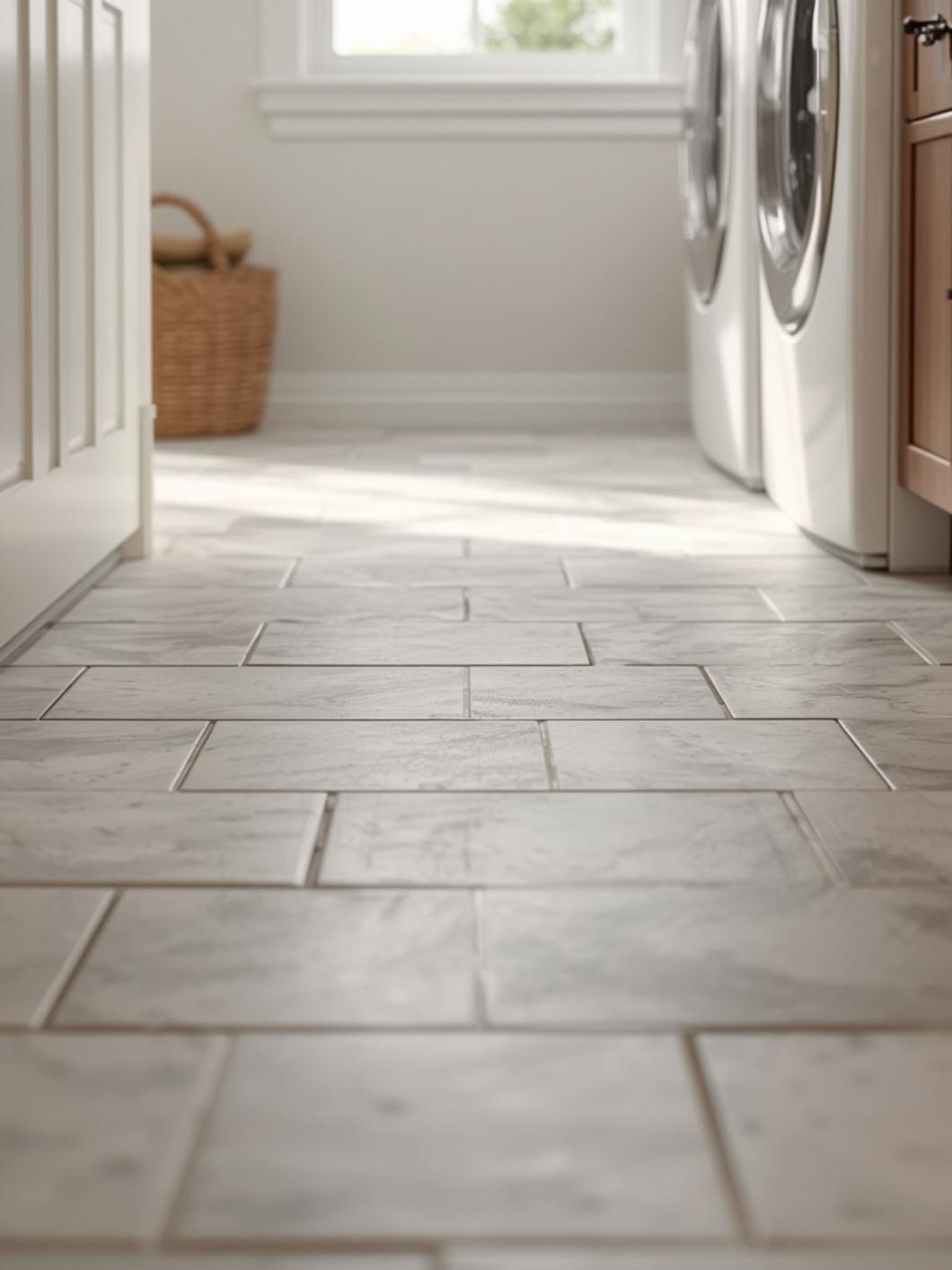
Tile is a year-round project, but timing matters for comfort and convenience. Spring and fall offer moderate temperatures that help adhesives cure properly without extreme heat or cold affecting the installation.
If you’re living in your home during the work, consider that tile installation typically takes 2-3 days for an average laundry room, plus another 24-48 hours before you can walk on it. Plan around your laundry schedule so you’re not stuck without access to your washer and dryer during a crucial week.
Style Considerations by Home Type:
In modern farmhouse homes, consider classic subway tiles in white or soft gray with contrasting grout for that timeless appeal. Coastal-style homes look stunning with sea glass-inspired blue-green tiles or natural stone that echoes beach pebbles.
For contemporary spaces, large-format tiles in concrete gray or matte black create clean, seamless looks with minimal grout lines. Traditional homes benefit from smaller mosaic patterns or classic checkerboard designs that honor the home’s architectural roots.
Your laundry room’s natural light also guides your choice. Darker tiles add drama but can make a windowless room feel cave-like, while lighter tiles reflect what little light you have.
7 Ideas to Try in Your Home
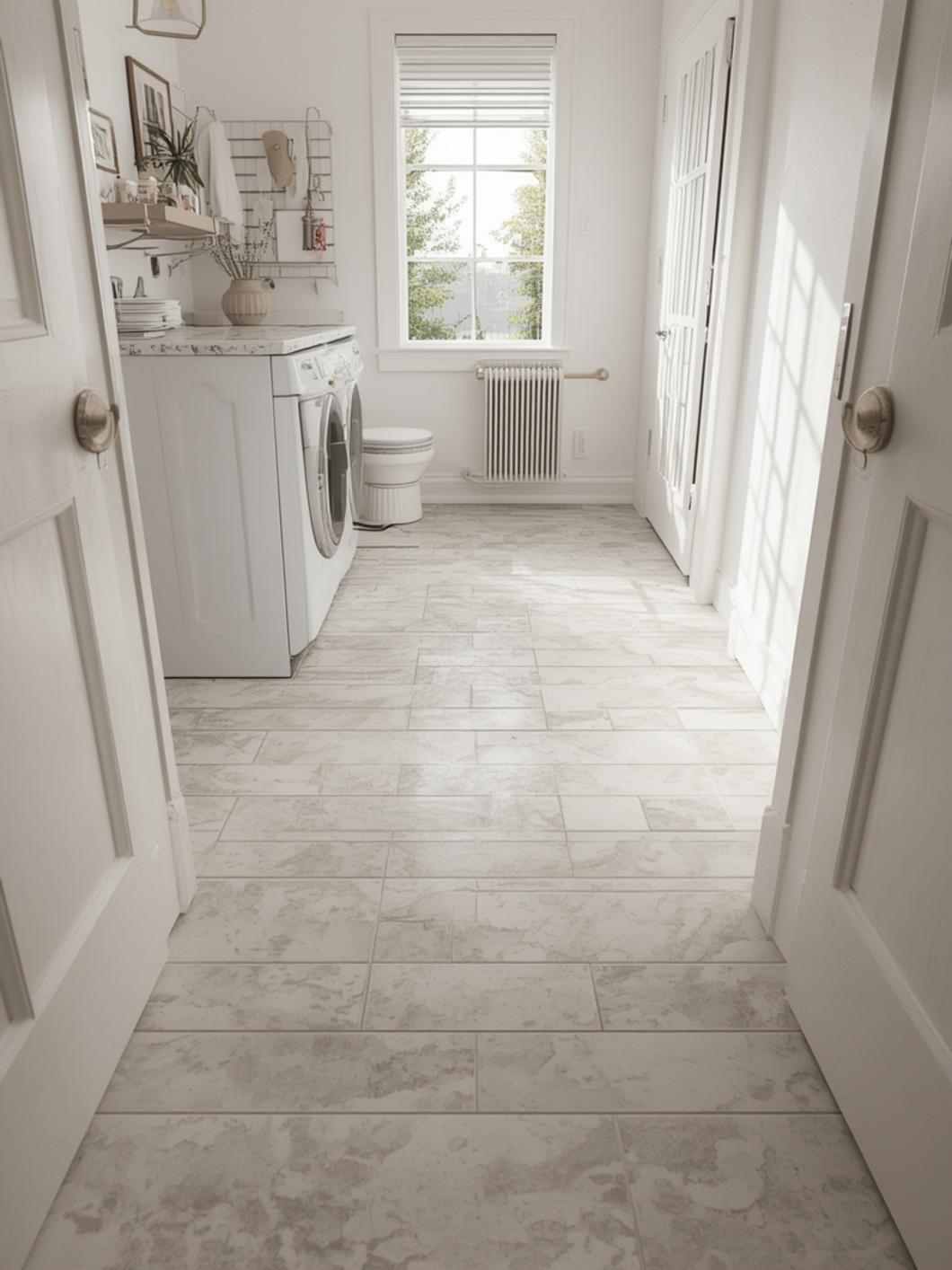
1. Classic White Subway Tile
Lay rectangular subway tiles in a traditional brick pattern for a clean, bright foundation. This look never goes out of style and makes small laundry rooms feel more spacious. Choose dark gray or navy grout to add subtle definition and hide inevitable dirt.
2. Patterned Cement Tile Look
Decorative cement-look porcelain tiles bring personality without the maintenance headaches of real cement. These waterproof flooring options for wet areas resist moisture while delivering the bold geometric or floral patterns that make your laundry room feel less utilitarian and more intentional.
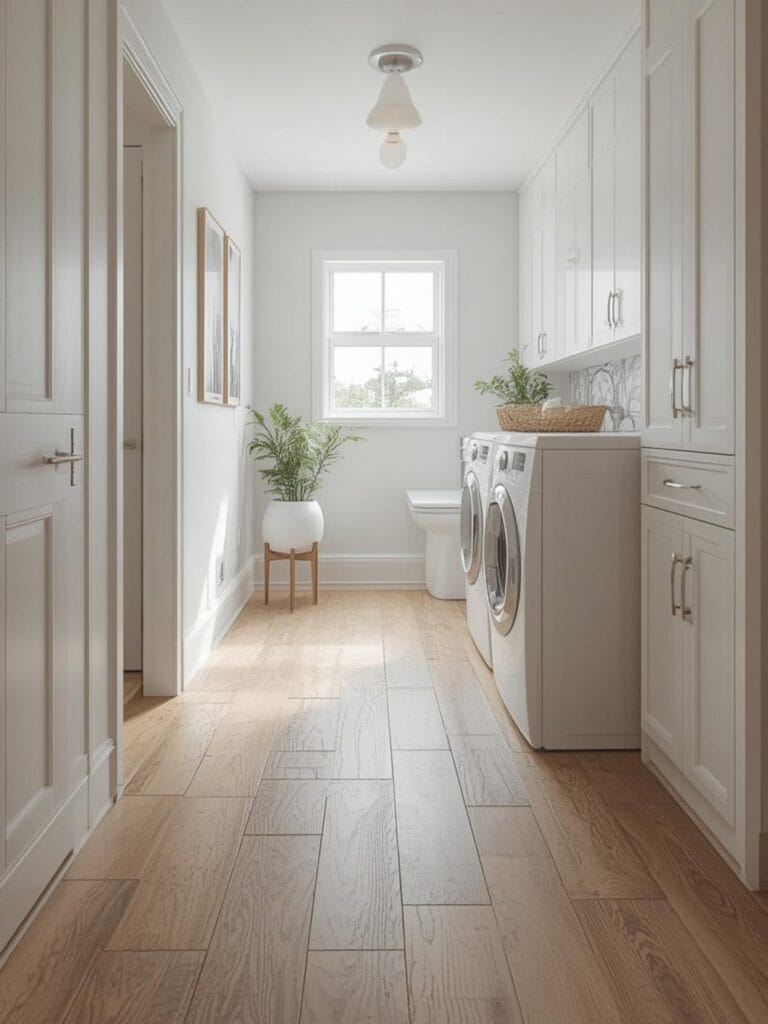
3. Wood-Look Luxury Vinyl
Get the warmth of hardwood without the water damage risks. Modern LVT perfectly mimics oak, maple, or reclaimed barn wood, complete with realistic grain patterns and texture. This option feels softer underfoot than ceramic and installs more affordably than many tile types.
4. Large-Format Gray Porcelain
Choose oversized tiles (24×24 inches or larger) in matte gray for an upscale, contemporary feel. Fewer grout lines mean less maintenance and a more seamless appearance. This style pairs beautifully with white cabinets and stainless steel appliances.
5. Hexagonal Marble-Look Tiles
Small hexagon tiles arranged in a honeycomb pattern add visual interest to the floor without overwhelming the space. Marble-look porcelain delivers elegance at a fraction of real marble’s cost, and the busy pattern helps hide the occasional detergent drip.
6. Classic Black and White Checkerboard
This retro-inspired pattern works in everything from Victorian homes to modern spaces with vintage touches. The high contrast creates energy and pairs perfectly with colorful walls or cabinets if you want to add more personality.
7. Natural Stone Slate
Real slate tiles bring organic texture and subtle color variation that hides wear beautifully over time. The slightly rough surface provides excellent slip resistance when wet. Just make sure your installer applies a quality sealer to protect against stains from laundry products.
Each of these styles comes in various sizes and finishes, so you can adapt the core concept to fit your specific taste and space dimensions.
Benefits of Choosing Tile for Your Laundry Room
Tile flooring fundamentally changes how your laundry room functions day to day. Unlike carpet or unsealed hardwood, tile doesn’t absorb spills or hold onto moisture that could lead to mold growth beneath the surface.
You’ll spend less time worrying about water damage when a hose leaks or detergent bottle tips over. A quick wipe with a mop restores your floor instead of requiring expensive repairs or replacements.
Practical Advantages:
Tile stands up to heavy appliances without denting or scratching the way softer flooring does. When you eventually replace your washer or dryer, you won’t discover permanent marks where the old machines sat.
The durability means you’re making a long-term investment. Quality tile easily lasts 20+ years with basic care, avoiding the replacement cycle of cheaper flooring options that wear out in less than a decade.
Lifestyle Improvements:
A beautiful floor elevates your entire laundry experience. When the room looks intentionally designed rather than forgotten, you’ll feel better about the time you spend there sorting, folding, and organizing.
Tile also offers unlimited design flexibility. You can match your laundry floor to adjacent rooms for flow, or make it a statement space that surprises guests who peek inside.
The water resistance extends beyond just the floor surface—properly installed tile with sealed grout protects your subfloor and home structure from moisture damage that could otherwise spread unseen.
Tips, Alternatives, and Styling Advice
Budget-Friendly Approach:
Standard ceramic tile in simple patterns starts around $2-4 per square foot. Stick with classic white or neutral colors that hide age well. You can add personality through peel-and-stick wall decals or colorful storage baskets instead of splurging on expensive decorative tiles.
Consider peel-and-stick vinyl tiles designed to look like ceramic. While not as durable as real tile, quality versions hold up well in laundry rooms and cost under $2 per square foot with DIY installation.
Mid-Range Option:
Porcelain tiles with subtle patterns or textures typically run $4-8 per square foot. This price point offers significantly better water resistance and wear characteristics than basic ceramic. You’re getting both style and substance without reaching luxury price tags.
Professional installation usually adds $5-10 per square foot depending on your location and pattern complexity, but it ensures proper waterproofing and grout application that protects your investment.
Premium Choice:
Natural stone tiles or designer porcelain collections can reach $10-20+ per square foot. These materials deliver unique character—no two natural stone tiles look exactly alike. High-end porcelain perfectly replicates expensive materials like Carrara marble or exotic hardwoods at lower price points than the real thing.
If budget allows, splurge on heated floors beneath your tile. Radiant heating systems make laundry rooms cozy in winter and help evaporate moisture faster.
Small Space Adaptation:
In compact laundry closets or corners, use lighter colored tiles to maximize the sense of space. Lay rectangular tiles horizontally to make narrow rooms feel wider, or run them lengthwise to elongate short spaces.
Skip busy patterns in tiny areas—they’ll just make the space feel chaotic. Simple subway tiles or solid colors work better when you’re working with limited square footage.
Common Mistakes to Avoid
Choosing the Wrong Grout
Many homeowners select standard cement-based grout that stains easily and allows moisture penetration over time. Switch to epoxy grout instead—it costs more upfront but resists stains, doesn’t need sealing, and prevents water from seeping through to your subfloor.
Skipping Proper Waterproofing
Installing tile directly over wood subfloors without a waterproof membrane creates hidden moisture problems that show up as rot years later. Always use an appropriate underlayment rated for wet areas, even if your installer suggests skipping it to save money.
Picking Fashion Over Function
That gorgeous white grout looks amazing in photos but turns dingy gray within months in a working laundry room. Choose grout colors one or two shades darker than your tile to hide inevitable discoloration from dirt and cleaning products.
Ignoring Slip Resistance
Glossy, polished tiles become dangerously slippery when wet—and laundry rooms get wet frequently. Select matte or textured finishes that provide traction even when you’re rushing through with wet hands and socks.
Installing Without Proper Slope
Flat floors allow water to puddle instead of draining toward a drain or doorway. Professional installers create subtle slopes you won’t notice while walking but that help water move away from walls and appliances where it could cause damage.
Maintenance and Upkeep Tips
Tile floors require minimal maintenance, but a few simple habits keep them looking fresh for decades.
Sweep or vacuum weekly to remove grit that can scratch the tile surface over time. Dirt acts like sandpaper when people walk over it, slowly dulling your floor’s finish.
Mop with warm water and a pH-neutral tile cleaner monthly—avoid harsh chemicals or acidic cleaners like vinegar that can break down grout and damage natural stone. A microfiber mop works better than traditional string mops because it doesn’t leave standing water.
Grout Care:
Reseal cement-based grout annually to maintain water resistance and prevent staining. This takes about 30 minutes for an average laundry room—just brush or spray on a grout sealer and wipe away excess.
If grout lines darken despite cleaning, use a grout pen to restore color rather than replacing entire sections. These inexpensive markers cover stains instantly and last for months.
Addressing Issues Quickly:
Wipe up spills immediately, especially bleach or harsh detergents that can discolor grout. Don’t let puddles sit—even waterproof tile benefits from quick cleanup to prevent slipping hazards.
Check along walls and around appliances annually for cracked grout or caulk. Water sneaks through tiny gaps and causes problems behind the scenes, so patch any damage as soon as you notice it.
Replace worn caulk around the perimeter every few years. Caulk is your first line of defense against water traveling into walls or under cabinets.
Bringing Your Laundry Room Floor to Life
The right tile transforms your laundry room from a purely functional space into one that feels intentional and well-designed. Whether you choose classic subway tiles for timeless appeal or bold patterns that showcase your personality, quality tile flooring protects your home while making daily chores feel a little less tedious.
Start by identifying which style speaks to your home’s overall aesthetic, then prioritize water resistance and durability as you narrow down specific products. Your laundry room works hard—give it a foundation that works just as hard while looking beautiful for years to come.
Ready to refresh more spaces in your home? Explore more flooring inspiration and practical decorating advice right here on DecorKingdom.
FAQs
What type of tile is most waterproof for laundry rooms?
Porcelain tile offers the best water resistance because it’s fired at higher temperatures than ceramic, making it denser with less than 0.5% water absorption. When paired with epoxy grout and proper sealing, porcelain creates a nearly impervious barrier against moisture. Glazed ceramic works well too, but porcelain’s through-body color means chips are less noticeable over time.
Can I install laundry room tile myself or should I hire a professional?
DIY tile installation is possible if you have experience with home projects and the right tools, but laundry rooms require careful attention to waterproofing that professionals handle routinely. Most homeowners find the cost of professional installation worthwhile to ensure proper substrate preparation, waterproof membrane installation, and correct grout application. One installation mistake can lead to expensive water damage repairs that far exceed what you’d save doing it yourself.
How do I choose between large tiles and small tiles for my laundry room?
Large-format tiles (12×24 inches or bigger) create fewer grout lines, which means less maintenance and a more contemporary look—ideal for modern homes or small spaces where you want a seamless appearance. Small tiles like mosaics or standard 4×4 inch squares offer better slip resistance and work well for creating patterns or traditional aesthetics. Consider that smaller tiles require more grout, which needs regular cleaning and sealing.
What’s the best grout color to hide dirt and stains in a laundry room?
Medium to dark gray grout conceals dirt, detergent residue, and discoloration far better than white or light colors while still complementing most tile choices. Choose a grout shade 2-3 tones darker than your tile for the best balance between hiding wear and maintaining visual interest. Black grout looks dramatic with white tile but shows dust and light-colored debris, so it’s not always as forgiving as gray.
Do I need special underlayment beneath laundry room tile?
Yes, laundry rooms need a waterproof or water-resistant underlayment between your subfloor and tile to prevent moisture from reaching the wood structure below. Standard cement backerboard works for most installations, but uncoupling membranes like Schluter-DITRA provide both waterproofing and crack prevention. Never install tile directly over plywood or OSB subfloors without proper protection—the inevitable moisture exposure will cause swelling, rot, and tile failure within a few years.
—
Meta Title: 7 Laundry Room Tile Floor Ideas That Last (2026)
Meta Description: Discover waterproof laundry room tile floor ideas that handle moisture beautifully. From subway patterns to wood-look options—find your style.