How to Choose Tile Ideas for Your Laundry Room
Your laundry room works harder than almost any other space in your home. Between spills, muddy footprints, and constant foot traffic, the floor takes a beating. If you’re tired of looking at worn linoleum or stained concrete every time you sort socks, you’re not alone. The right tile ideas for laundry room spaces can completely change how this hardworking area looks and functions.
Tile offers something no other flooring can match: beauty that actually gets tougher with time. Unlike carpet that traps odors or vinyl that peels at the edges, tile stands up to water, detergent spills, and everything your family throws at it. Plus, it looks gorgeous doing it.
Whether your laundry room is a cozy closet or a spacious mudroom combo, tile gives you endless ways to add personality without sacrificing practicality. From classic subway patterns to bold geometric designs, your floors can finally match the care you put into the rest of your home.
Table of Contents
What You’ll Need to Get the Look
Choosing tile for your laundry room means thinking beyond just the tile itself. You’ll want to consider these essential elements:
Tile options to explore:
– Porcelain tile in 12×24 or 18×18 sizes for easy cleaning
– Ceramic tile with textured surfaces for slip resistance
– Luxury vinyl tile (LVT) as a budget-friendly alternative
– Penny tile or mosaic sheets for accent areas
– Large-format tiles to minimize grout lines
Supporting materials:
– Non-slip rug pad for layering washable area rugs
– Grout in gray or darker tones to hide stains
– Grout sealer for water protection
– Transition strips for doorways
– Floor leveling compound if needed before installation
Decor elements that complete the space:
– Rolling laundry cart that won’t scratch tile
– Rubber-backed mats for high-traffic zones
– Wall-mounted drying rack to keep floors clear
– Storage baskets that sit flat on tile surfaces
Keep samples of your tile choices at home for a few days. Look at them in morning light, evening light, and with your washer and dryer in view. What looks crisp in the store might feel too stark in your actual space, or vice versa.
Finding Your Style and Season
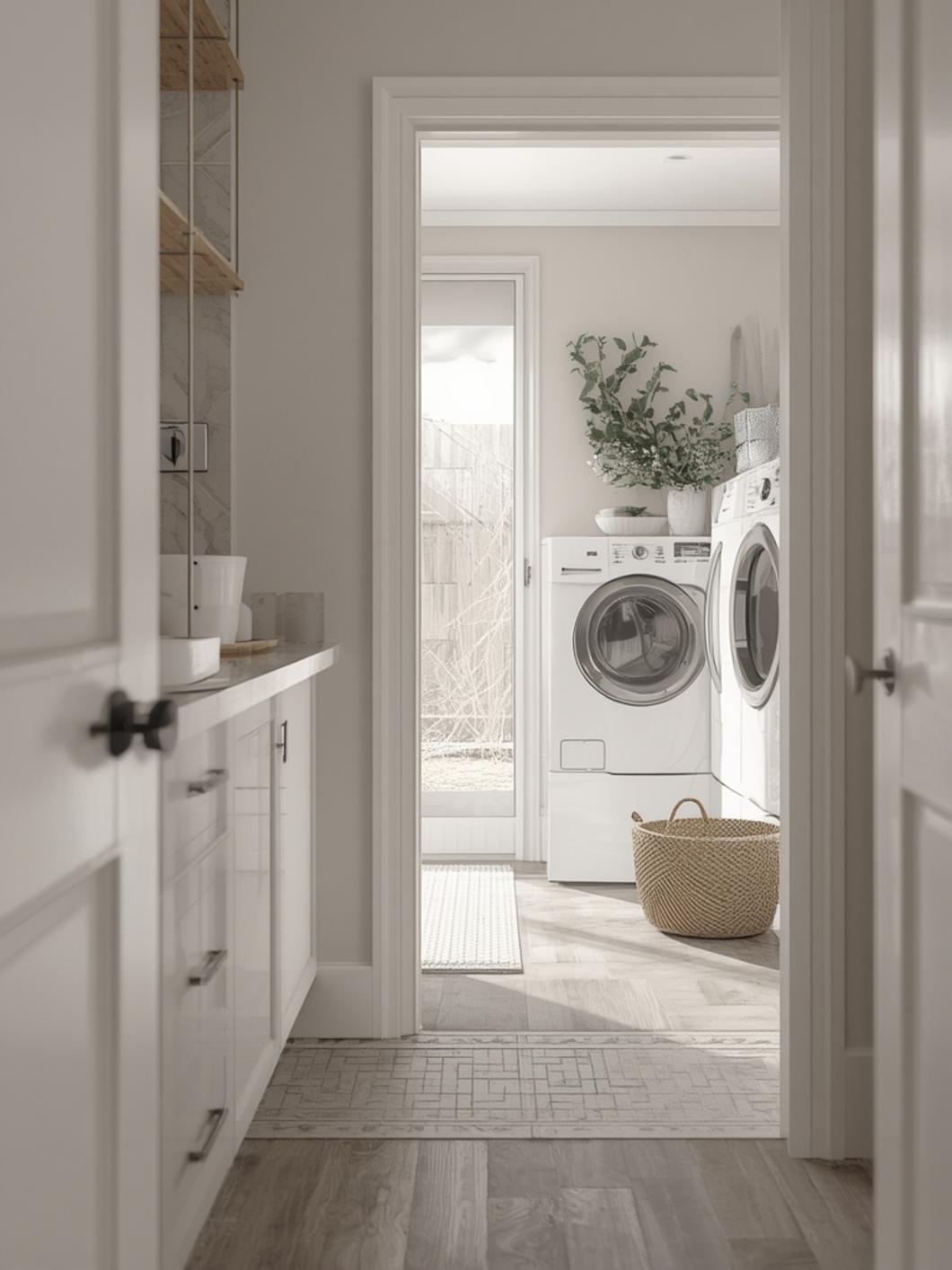
Tile installation works best during moderate weather when your home stays between 60-80°F. Extreme cold or humidity affects how adhesive sets, so spring and fall are ideal timing windows. That said, your laundry room is typically climate-controlled enough for year-round installation.
Style considerations by home aesthetic:
If your home leans traditional, consider classic subway tile in white or soft gray. The timeless pattern never looks dated, and it brightens even the smallest laundry closet. Herringbone or basketweave layouts add subtle visual interest without overwhelming the space.
For modern and contemporary homes, large-format porcelain in concrete gray or warm taupe creates that sleek, minimalist vibe. Minimal grout lines mean easier cleaning and a more seamless appearance. Consider running the same tile up the wall behind your washer for a custom look.
Farmhouse and cottage styles shine with patterned cement tile or classic checkerboard designs. Black and white penny tile feels vintage but fresh, especially when paired with open shelving and shiplap walls. These playful patterns turn laundry duty into something almost cheerful.
Seasonal decorating flexibility:
One major advantage of neutral tile? You can change your laundry room’s personality with seasonal rugs and accessories. Your durable floor stays put while you swap in cozy textures for winter or bright patterns for summer.
7 Ideas to Try in Your Home
1. Classic white subway with dark grout
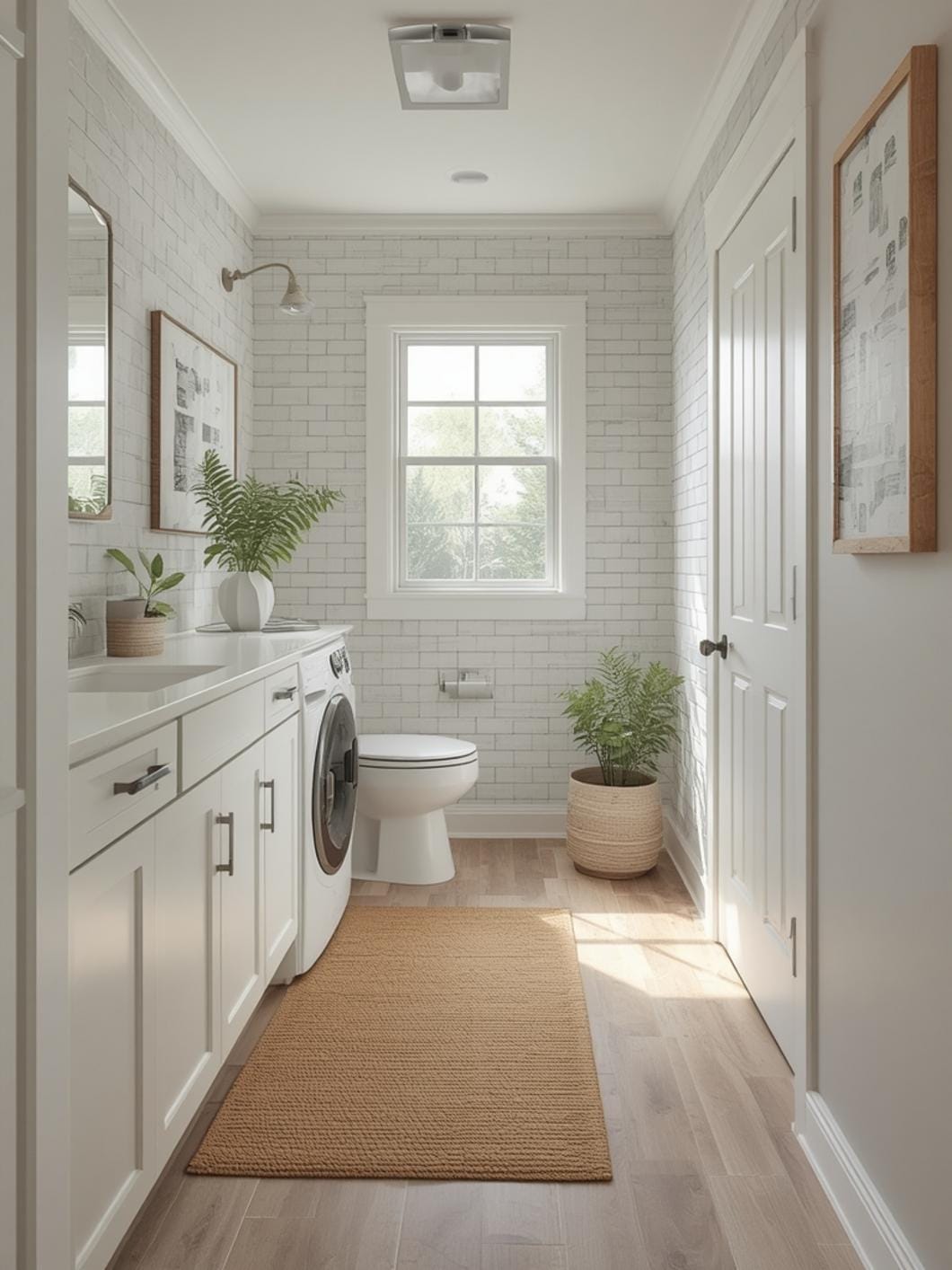
White 3×6 subway tile remains popular for good reason. It reflects light beautifully and makes small laundry rooms feel more spacious. The secret upgrade? Dark gray grout instead of white. It hides dirt and detergent residue while adding subtle definition. Run the tile in a traditional brick pattern or try a vertical stack for a modern twist.
2. Warm wood-look porcelain
Miss the warmth of hardwood but know it can’t handle laundry room moisture? Wood-look porcelain tile gives you the best of both worlds. Choose planks in weathered oak or driftwood tones for that natural feel. The texture mimics real wood grain while being completely waterproof and stain-resistant.
3. Bold geometric patterns
Patterned cement tile brings serious personality to your floors. Moroccan-inspired geometrics, Spanish encaustic designs, or modern hexagons transform your laundry room into a showpiece. Use them throughout a larger space or create a stunning “rug” pattern in the center with solid tile as a border.
4. Speckled terrazzo for forgiving floors
Terrazzo tile is making a major comeback, and laundry rooms are the perfect place to embrace this trend. The speckled pattern naturally camouflages dirt and minor stains between cleanings. Modern terrazzo comes in gorgeous colorways beyond the classic beige—think soft blush, sage green, or charcoal.
5. Large-format gray porcelain
For an ultra-modern, spa-like feel, go with large tiles in the 24×24 or 24×48 size range. Gray porcelain in a matte finish looks like polished concrete but cleans up in seconds. Fewer grout lines mean less scrubbing and a sleeker overall appearance. This works especially well in laundry rooms that double as mudrooms.
6. Classic checkerboard revival
Black and white checkerboard never really goes out of style—it just takes occasional breaks. This high-contrast pattern adds instant charm and works with both vintage and modern aesthetics. Use 12×12 tiles for a traditional scale or go smaller with 6×6 for a more intricate look.
7. Soft neutral stone-look tile
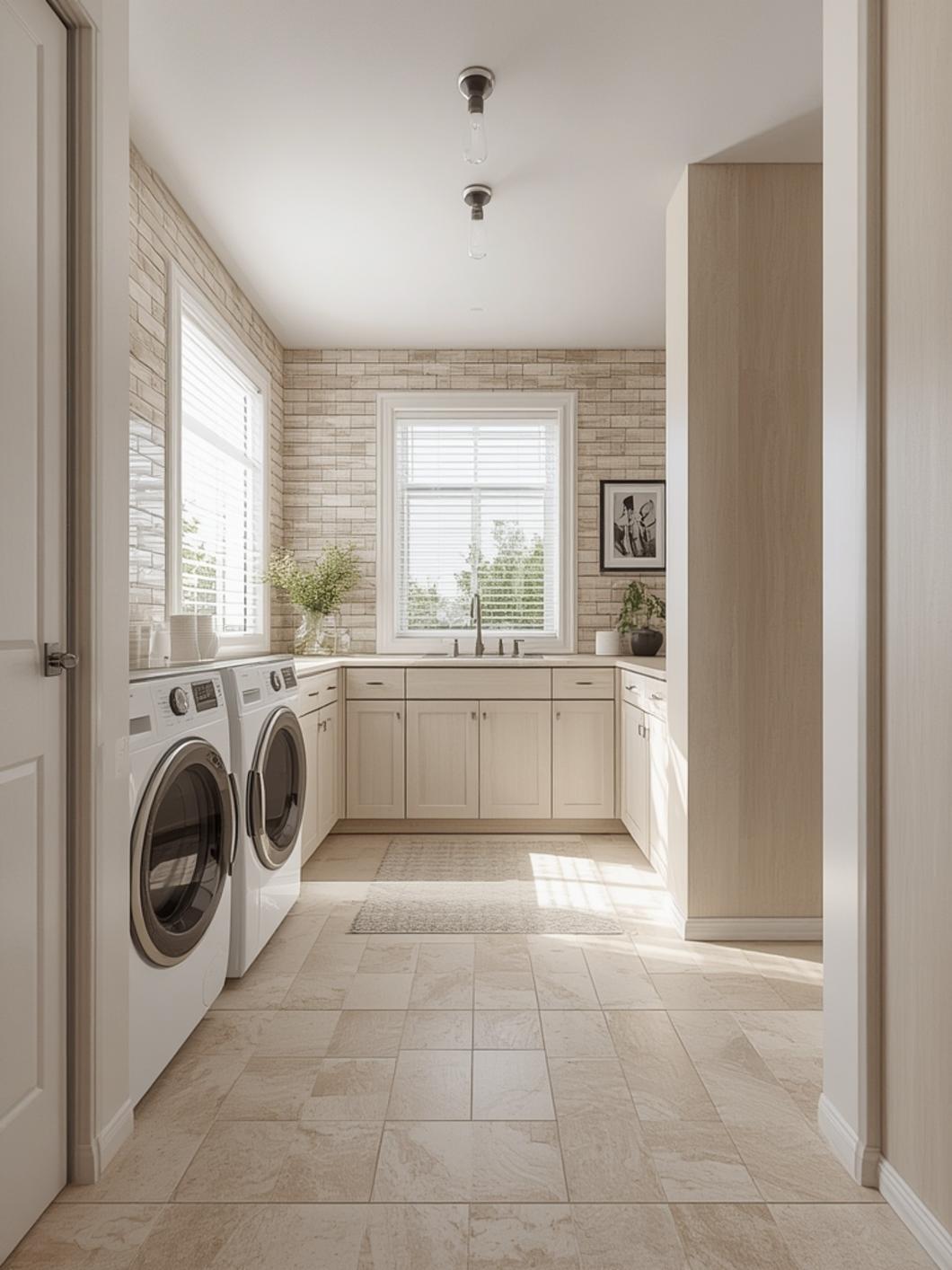
Porcelain that mimics natural stone like limestone or travertine brings organic beauty to your laundry room. These tiles offer the elegance of real stone without the maintenance headaches. Soft beiges, taupes, and warm grays create a calming backdrop that makes even folding laundry feel less like a chore.
When it comes to keeping your beautiful new floors looking fresh, simple habits make all the difference. That’s where laundry room tile maintenance and cleaning tips become your best friend. Sweep or vacuum regularly to prevent dirt from scratching the surface. Mop with warm water and a pH-neutral cleaner weekly. For grout, a soft brush and baking soda paste tackle stains without harsh chemicals. Reseal grout every 12-18 months to maintain water resistance.
Speaking of durability, can give you additional inspiration for high-traffic areas that need to look good and last.
Benefits Beyond Beauty
Tile flooring in your laundry room delivers advantages you’ll appreciate every single day. Water resistance tops the list—when the washer overflows or you knock over a jug of detergent, tile handles it without warping or staining. Just wipe it up and move on.
Durability means you won’t replace this floor in five years like you might with vinyl. Quality tile lasts decades, making it a smart investment even if you’re not planning to move soon. Future buyers love seeing tile in laundry rooms because they know it’s been protected properly.
Hygiene is another often-overlooked benefit. Tile doesn’t trap allergens, pet dander, or dust mites like carpet or rugs. For families with allergies or asthma, this makes a real difference in indoor air quality. A quick mop keeps things truly clean, not just surface-level tidy.
The style versatility cannot be overstated. Your tile choice sets the foundation for the entire room’s aesthetic. Whether you want your laundry room to disappear into the background or become an Instagram-worthy space, tile gives you that flexibility.
Temperature control is a practical bonus many don’t consider until they have it. Tile stays cool in summer and, with radiant heating underneath, can be warm and cozy in winter. That beats stepping onto freezing concrete or musty carpet any day.
Budget-Smart Choices for Every Style
Budget-friendly approach ($3-6 per square foot):
Ceramic tile in standard sizes offers excellent value without sacrificing quality. White or light gray in 12×12 or 12×24 formats keeps costs down while looking crisp and clean. Save even more by choosing ceramic over porcelain for this less-visible space. Consider luxury vinyl tile (LVT) for an even more economical option that still looks great and performs well.
Mid-range selection ($6-12 per square foot):
Porcelain tile opens up more design possibilities in this range. Wood-look planks, stone-look tiles, and basic patterned designs all fall here. You get better durability and more sophisticated finishes without breaking the bank. This sweet spot offers the best balance of style, performance, and investment value.
Premium investment ($12-20+ per square foot):
Handmade cement tile, large-format porcelain slabs, and authentic-looking natural stone reproductions live in this category. If your laundry room is part of an open floor plan or serves as your main entryway, these premium choices make sense. The visual impact justifies the cost when the space stays in constant view.
Small space adaptation:
In tiny laundry closets, consider running tile diagonally to visually expand the space. Light colors and large tiles (up to the size your space allows) prevent the floor from feeling choppy. Skip busy patterns in very small rooms—they can overwhelm. A simple, clean tile in a neutral tone makes the most of limited square footage.
For more inspiration on making small utility spaces work harder, check out
Common Mistakes to Avoid
Choosing glossy tile for the floor: Shiny tile looks beautiful but becomes dangerously slippery when wet. Stick with matte or textured finishes that provide traction even after spills.
Skipping floor preparation: Installing tile over an uneven or damaged subfloor leads to cracking and lippage. A professional should assess and level your subfloor before tile goes down, even if you’re hiring for install only.
Using white or light grout: It looks stunning for about two weeks, then shows every drop of detergent and footprint. Gray or darker grout tones stay looking cleaner with far less effort.
Ignoring transition strips: The spot where tile meets carpet or hardwood in the doorway needs proper transition pieces. Without them, you’ll stub toes and create tripping hazards while your flooring edges deteriorate faster.
Forgetting about door clearance: Tile adds height to your floor, which can prevent doors from opening properly. Measure carefully and plan to trim doors if needed before installation day arrives.
Simple Care for Lasting Beauty
Your tile floor needs surprisingly little maintenance to stay gorgeous for years. Daily or every-other-day sweeping prevents sand and grit from acting like sandpaper on your tile’s surface. A quick pass with a microfiber dust mop takes less than two minutes.
Weekly mopping with warm water and a tile-specific cleaner keeps everything fresh. Avoid harsh chemicals, vinegar, or anything acidic—they can damage grout over time. A few drops of dish soap in warm water works perfectly for routine cleaning.
Grout requires a bit more attention. Seal it after installation, then reseal annually or when you notice water soaking in rather than beading up. This simple step prevents stains and moisture damage. When grout does get dingy, a paste of baking soda and water with a soft brush brings it back to life.
Address spills immediately, especially laundry products. Bleach, fabric softener, and detergent can discolor grout if left sitting. A quick wipe prevents any issues and takes just seconds.
Keep a small grout pen handy for touch-ups. These inexpensive tools let you refresh grout lines between deep cleans, keeping your floor looking freshly installed.
Your Laundry Room Deserves Better
Beautiful, durable tile flooring transforms your laundry room from a space you rush through into one you actually appreciate. With so many style options available, you can match any aesthetic while gaining the practical benefits tile provides. The investment pays off in both daily enjoyment and long-term durability.
Ready to explore more ways to make your hardworking spaces beautiful? Browse our complete collection of home design ideas and practical advice at DecorKingdom. Your dream laundry room is closer than you think.
Frequently Asked Questions
What type of tile is best for a laundry room floor?
Porcelain tile is the top choice for laundry rooms because it’s completely waterproof, extremely durable, and available in countless styles. Ceramic tile works well too and costs less, though it’s slightly more porous. Both handle the moisture, temperature changes, and heavy use that laundry rooms demand. Choose matte or textured finishes over glossy for safety.
Can I install tile in my laundry room myself or should I hire a professional?
While confident DIYers can handle tile installation, laundry rooms present unique challenges like working around appliances and plumbing. If you have experience with tile and the right tools, a small laundry room makes a good DIY project. For larger spaces or if you’re new to tiling, professional installation ensures proper waterproofing and a level surface that won’t crack.
How much does it cost to tile a laundry room floor?
For a typical 6×8 foot laundry room (48 square feet), expect to spend $150-600 on tile alone, depending on your choice. Professional installation adds another $250-700, bringing the total to $400-1,300 for most projects. Larger spaces, premium tiles, or complex patterns increase costs. DIY installation saves the labor cost but requires tool rental or purchase.
Do I need to seal tile in my laundry room?
The tile itself usually doesn’t need sealing—porcelain and glazed ceramic are naturally water-resistant. However, you absolutely must seal the grout lines after installation and then reseal every 12-18 months. Unsealed grout absorbs water, detergent, and stains, leading to discoloration and potential mold growth. This simple maintenance step protects your investment.
What color tile should I choose for a small laundry room?
Light, neutral colors make small laundry rooms feel more spacious and brighter. White, light gray, beige, and soft greige all work beautifully. If you want pattern or color, use it sparingly—perhaps as an accent strip or in just the center area. Large-format tiles in light shades create the most open feeling because fewer grout lines mean less visual interruption.
—
Meta Title: Tile Ideas for Laundry Room: Fresh Designs 2026
Meta Description: Transform your hardworking space with stunning tile ideas for laundry room floors. Get style inspiration and practical tips for durable beauty.