How to Choose Laundry Room Vinyl Flooring Ideas
Your laundry room takes a beating. Between water splashes from the washer, detergent drips, and the occasional flood from a forgotten load, the floor in this hardworking space needs to be practically indestructible. But who says durable has to look boring?
Laundry room vinyl flooring ideas have come a long way from the dull, commercial-looking sheets your parents might have installed decades ago. Today’s vinyl options offer gorgeous wood-look planks, stylish tile patterns, and stone finishes that look expensive but perform like champions in wet conditions.
You deserve a laundry room that makes the chore of washing clothes just a little more pleasant. With the right flooring choice, you can create a space that’s both beautiful and resilient enough to handle whatever your family throws at it.
Table of Contents
What You’ll Need to Get the Look
Before you start shopping, it helps to know what’s actually available in the vinyl flooring world. Here’s what you’ll encounter:
Vinyl Plank Flooring (LVP)
These individual planks click together and mimic hardwood beautifully. They come in various wood tones from light oak to dark walnut, and the texture often feels surprisingly realistic.
Vinyl Tile Flooring (LVT)
Square tiles that resemble ceramic, porcelain, or natural stone. Perfect if you want a classic checkerboard pattern or a modern concrete look.
Sheet Vinyl
One continuous roll that covers your entire floor with minimal seams. This creates the most waterproof installation possible.
Peel-and-Stick Vinyl Tiles
Budget-friendly squares with adhesive backing that you can install yourself in an afternoon. Great for renters or quick updates.
Underlayment Padding
Some vinyl needs a separate cushion layer beneath it for comfort and sound reduction. Others come with padding already attached.
Transition Strips
These finishing pieces create a smooth edge where your vinyl meets carpet, tile, or hardwood in adjacent rooms.
Finding Your Style and Season
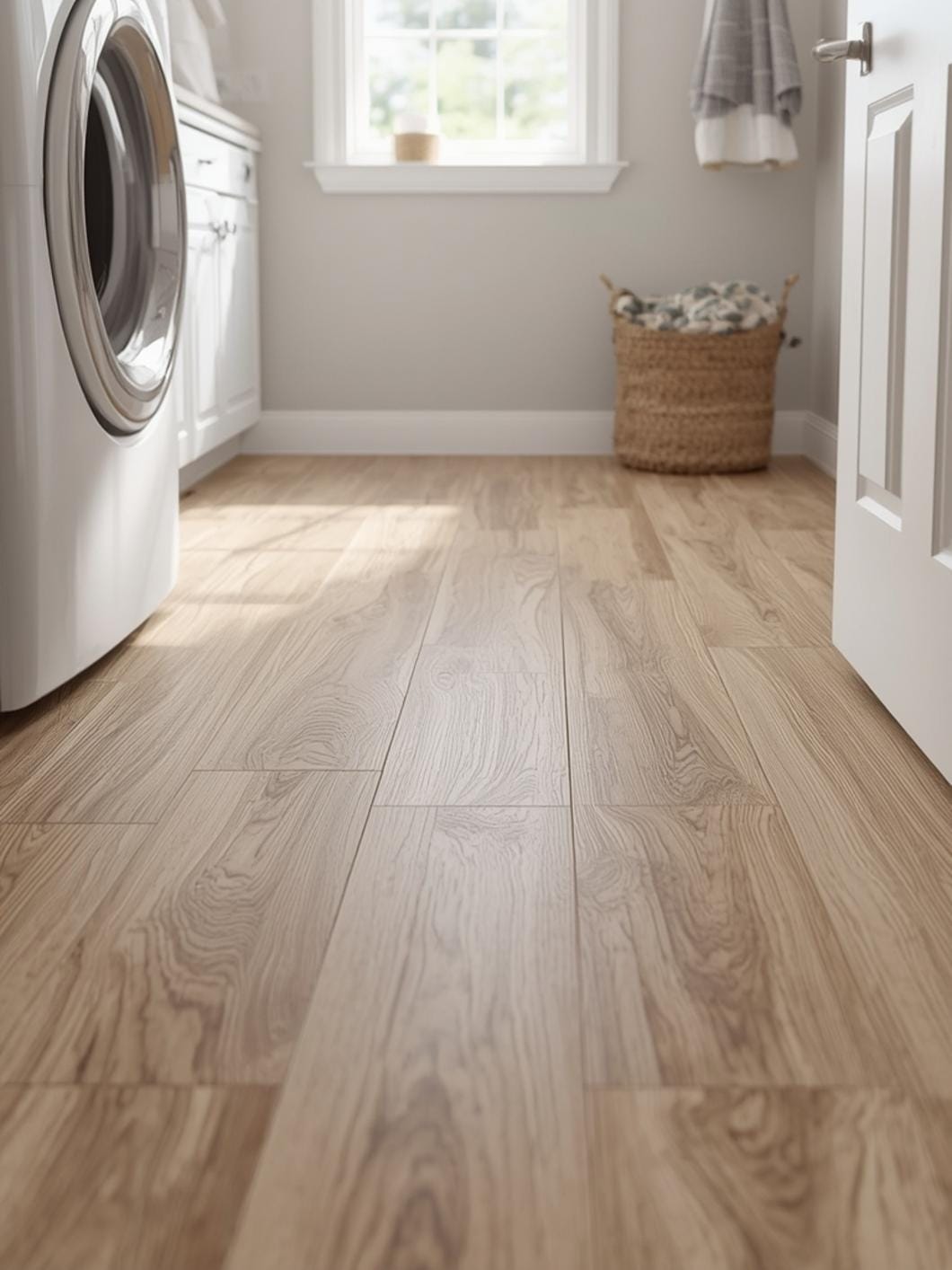
Choosing vinyl flooring isn’t just about durability. Your laundry room can reflect your personal style just like any other room in your home.
Think about the mood you want to create. Light, weathered wood-look vinyl makes a small laundry room feel larger and brings a coastal or farmhouse vibe. Darker planks add sophistication and hide dirt better between cleanings.
Pattern plays a role too. Herringbone vinyl planks add movement and visual interest to a narrow space. Classic black-and-white checkerboard tiles bring retro charm. Large-format tile-look vinyl in soft gray creates a modern, spa-like atmosphere.
Consider your home’s existing style. If you have hardwood floors in your kitchen, choosing vinyl planks in a similar tone creates a cohesive flow when doors are open. If your home leans traditional, classic stone-look tiles feel natural. Contemporary homes can handle bold patterns or concrete-look vinyl.
Timing matters less for vinyl installation than other flooring types. You can install it year-round since it doesn’t require special temperature conditions. However, if you’re coordinating with other laundry room updates like new cabinets or appliances, floor installation typically happens last to protect your new surface from damage.
7 Ideas to Try in Your Home
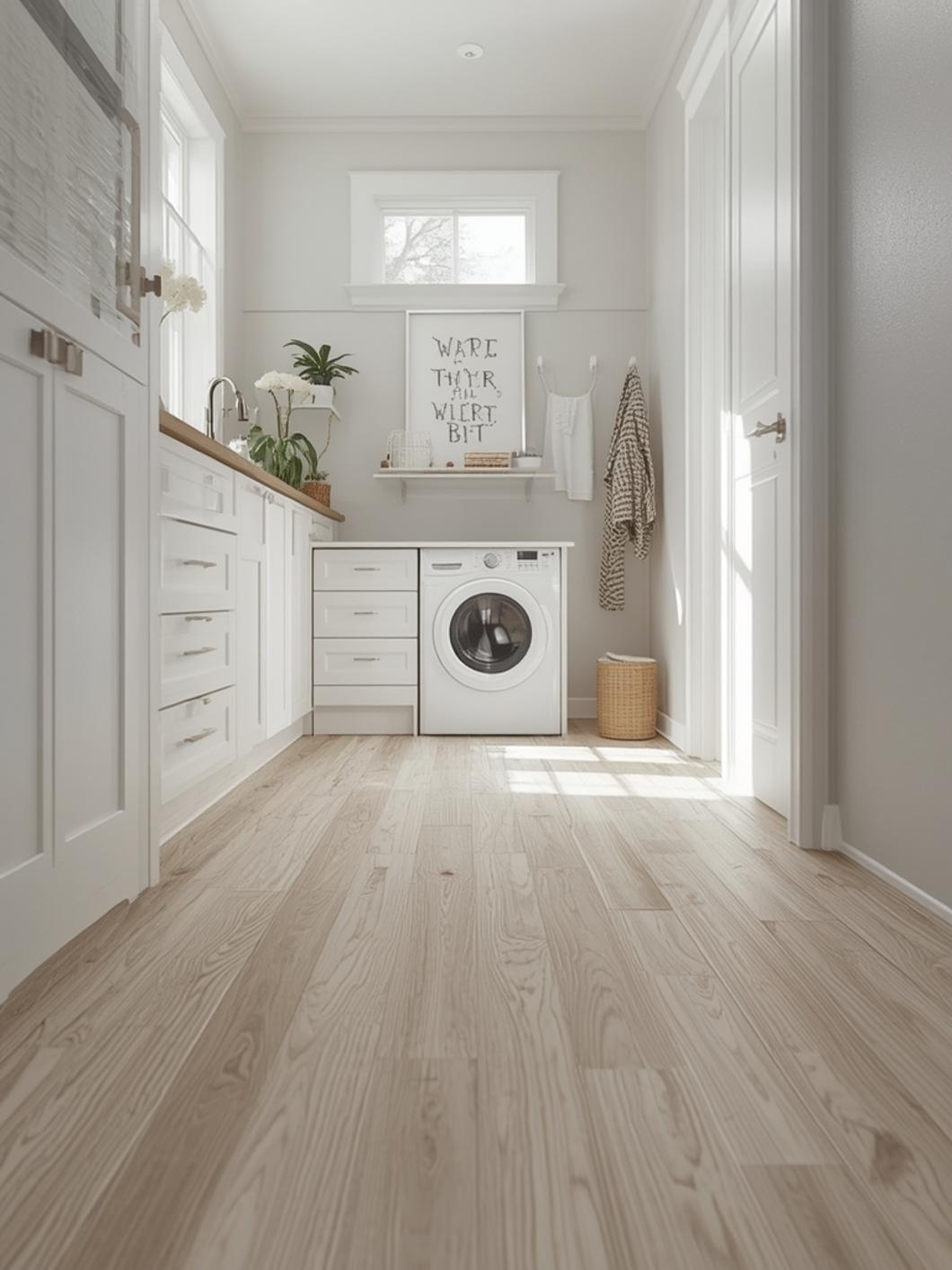
Whitewashed Wood-Look Planks
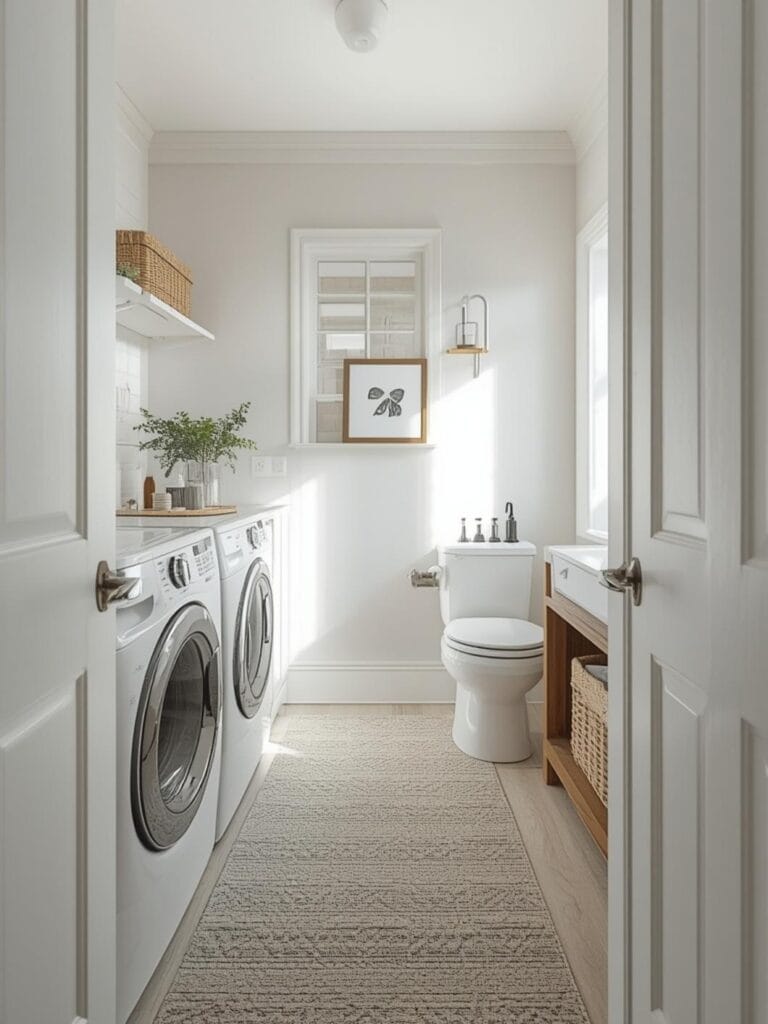
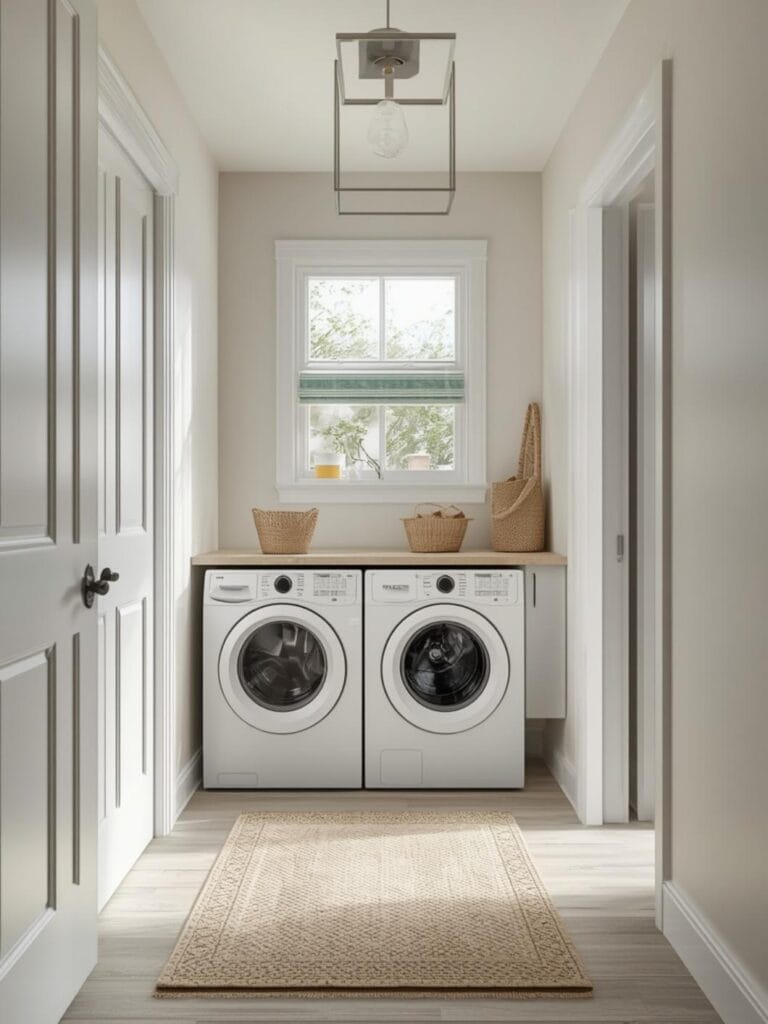
Install pale oak or driftwood-toned vinyl planks running perpendicular to your longest wall. This lengthens the space visually and pairs beautifully with white cabinets and open shelving. The light color brightens windowless laundry rooms and makes morning chores feel less dreary.
Charcoal Hexagon Tiles
Create drama with matte charcoal hexagonal vinyl tiles. This geometric pattern adds personality without overwhelming a small space. Pair with white or light gray walls to prevent the room from feeling cave-like.
Warm Walnut Herringbone Pattern
Arrange medium-toned wood-look planks in a herringbone pattern for instant sophistication. This works especially well in narrow galley-style laundry rooms where the diagonal lines draw the eye and create interest on the floor.
Black-and-White Checkerboard Classic
Nothing says timeless quite like alternating black and white tiles. This retro pattern works in homes from Victorian to mid-century modern. Keep the rest of your decor simple so the floor becomes the star.
Concrete-Look Luxury Vinyl
Modern industrial style comes home with gray concrete-look vinyl. The subtle variations in tone mimic real concrete but feel warmer underfoot. This pairs perfectly with open metal shelving and matte black fixtures.
Natural Stone Tile Pattern
Choose vinyl that mimics travertine or slate for an upscale look. Waterproof flooring options for wet areas like laundry rooms don’t have to sacrifice style, and stone-look vinyl brings natural elegance without the cold, hard feel of real stone.
Wide-Plank Farmhouse Oak
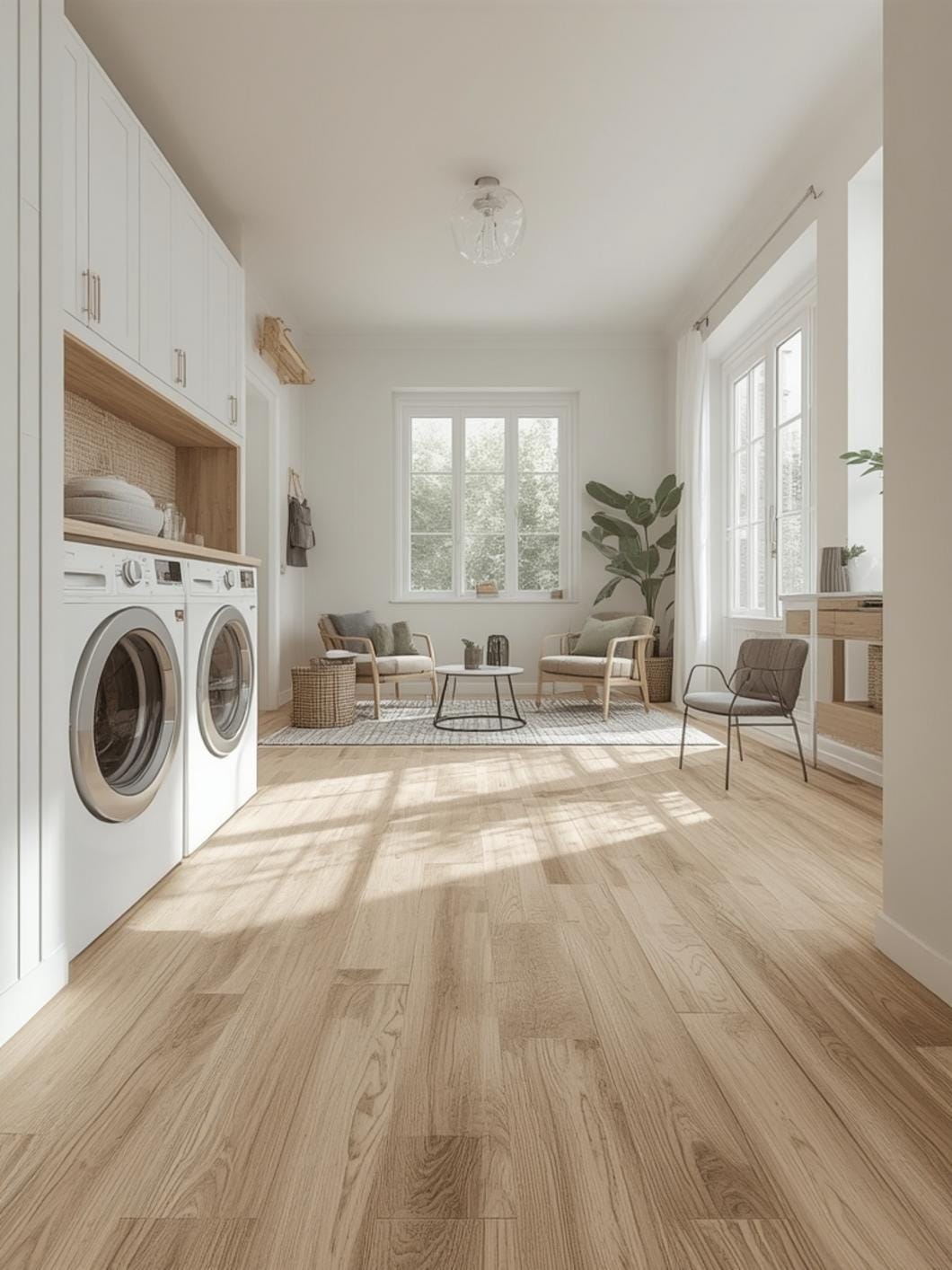
Install extra-wide planks in a honey oak or natural finish for authentic farmhouse charm. The wider planks make small rooms feel more spacious and require fewer seams, which means better water resistance.
When you’re ready to explore other moisture-prone spaces in your home, follows many of these same principles.
Benefits of Choosing Vinyl for Your Laundry Space
Your laundry room floor endures more moisture than almost any other room in your home. Vinyl handles this challenge better than hardwood, laminate, or carpet could ever dream of managing.
Water resistance ranks as vinyl’s superpower. When properly installed, vinyl creates a barrier that prevents water from seeping into your subfloor. This matters tremendously when your washing machine hose springs a leak or your laundry basket drips across the floor.
Comfort makes a real difference when you’re standing at the folding table for twenty minutes. Vinyl has natural give that’s gentler on your feet, back, and knees compared to tile or concrete. Some products include extra cushioning that makes the surface even more forgiving.
Maintenance couldn’t be simpler. You’ll never need to seal, wax, or refinish vinyl flooring. A quick sweep and damp mop keep it looking fresh. Spilled bleach or fabric softener? Just wipe it up without worrying about permanent stains or damage.
Sound absorption helps too. Vinyl dampens the noise from your washer and dryer better than hard tile surfaces. This matters especially if your laundry room sits near bedrooms or living spaces.
Budget flexibility means vinyl works for nearly every price point. You can find attractive options starting around two dollars per square foot, while premium products with advanced features might reach eight dollars per square foot. Either way, you’ll spend far less than hardwood or natural stone.
Tips, Alternatives, and Styling Advice
Budget-Friendly Approach
Peel-and-stick vinyl tiles let you create a custom look for under $200 in most laundry rooms. Choose a simple pattern you can install yourself over a weekend. Clean your existing floor thoroughly, and make sure it’s completely level before you start.
Mid-Range Investment
Quality click-lock vinyl plank flooring offers the best balance of price and performance. Expect to spend $3–5 per square foot for waterproof products with realistic wood grain and 20-year warranties. Professional installation adds another $1–2 per square foot if you prefer not to DIY.
Premium Experience
Top-tier luxury vinyl combines extra-thick wear layers, attached underlayment, and incredibly realistic textures. These products feel substantial underfoot and can fool even experienced contractors into thinking they’re seeing real hardwood or stone. Budget $6–8 per square foot plus installation.
Small Space Adaptation
In a tiny closet laundry area, use lighter colors and run planks toward the back wall to create depth. Avoid busy patterns that overwhelm the space. A simple wood-look vinyl in a light or medium tone works best.
For inspiration on coordinating your entire room design, check out that complement your new flooring choice.
Common Mistakes to Avoid
Skipping Floor Preparation
Installing vinyl over an uneven, dirty, or damaged subfloor leads to premature wear and visible imperfections. Clean thoroughly, repair any damage, and use a leveling compound if needed before you install.
Ignoring Expansion Gaps
Vinyl expands and contracts with temperature changes, so you need a small gap around the room’s perimeter. Skipping this space causes buckling and warping. Leave a quarter-inch gap and cover it with baseboards or quarter-round molding.
Choosing the Wrong Thickness
Ultra-thin vinyl may cost less upfront, but it shows every imperfection in your subfloor and wears out quickly in high-traffic areas. Choose products at least 5mm thick for durability, especially in a busy laundry room.
Mixing Different Product Lines
Trying to combine leftover vinyl from different manufacturers rarely works well. Even if the colors look similar, thickness and locking mechanisms vary. Stick with one product line for a single room.
Forgetting About Appliance Access
Installing permanent vinyl before considering whether you’ll ever need to remove your washer or dryer creates problems later. Make sure your appliances can still slide out over the finished floor, or use a removable platform system instead.
Maintenance and Upkeep Tips
Your vinyl floor stays beautiful with minimal effort. Sweep or vacuum regularly to remove grit that can scratch the surface over time. Use the hard floor setting on your vacuum, not the beater bar meant for carpet.
Mop with warm water and a pH-neutral floor cleaner designed for vinyl. Avoid harsh chemicals, abrasive scrubbers, or steam mops that can damage the wear layer. A microfiber mop works beautifully and dries quickly.
Place mats under your washer and dryer to catch vibration and prevent any potential water damage if hoses leak. Check these mats monthly and clean underneath them to prevent moisture buildup.
Address spills immediately, especially if you’re using bleach or other strong laundry chemicals. While vinyl resists most substances, leaving harsh chemicals sitting for hours isn’t ideal for any flooring material.
Protect your vinyl from scratches by using furniture pads under shelving units, laundry baskets, and hampers. When you need to move appliances for cleaning or repairs, use an appliance dolly rather than dragging heavy machines across the floor.
Inspect your floor every few months for loose planks or tiles. If you notice any separation, you can usually reattach them with vinyl flooring adhesive before the problem spreads.
Make Your Laundry Room Work Harder for You
Choosing the right flooring transforms your laundry room from a purely functional space into an area you actually enjoy spending time in. Vinyl delivers the perfect combination of durability, style, and budget-friendliness that makes sense for hardworking homes.
Your floor sets the foundation for the entire room’s design. Once you’ve got a beautiful, waterproof surface installed, you can build on that foundation with coordinating cabinets, lighting, and organization systems.
Ready to explore more ways to make your home beautiful and functional? Browse our collection of room-by-room design inspiration and practical advice at DecorKingdom.
Frequently Asked Questions
Can you put vinyl flooring directly on concrete in a laundry room?
Yes, vinyl flooring works beautifully over concrete as long as the surface is clean, dry, and level. You’ll want to test for moisture first using a plastic sheet taped down for 24 hours. If condensation appears underneath, you’ll need a vapor barrier before installing vinyl. Otherwise, most click-lock vinyl planks can go right over concrete with minimal preparation.
How long does vinyl flooring last in a laundry room?
Quality vinyl flooring typically lasts 15–25 years in a laundry room with proper care. The actual lifespan depends on the thickness of the wear layer, how much foot traffic your space gets, and whether you protect it from dragging heavy appliances. Higher-end products with thicker wear layers last longer than budget options.
Is luxury vinyl better than regular vinyl for laundry rooms?
Luxury vinyl plank (LVP) and luxury vinyl tile (LVT) offer several advantages over traditional sheet vinyl, including better appearance, easier installation, and superior durability. They’re completely waterproof rather than just water-resistant, making them ideal for laundry rooms. The higher upfront cost usually pays off in longevity and visual appeal.
Do I need underlayment for vinyl flooring in my laundry room?
This depends on your specific product. Many modern vinyl planks come with underlayment already attached, which simplifies installation. If yours doesn’t include padding, you’ll want to add underlayment for comfort, noise reduction, and minor subfloor irregularity correction. Always check your manufacturer’s requirements, as some warranties require specific installation methods.
Can vinyl flooring handle washing machine leaks?
High-quality waterproof vinyl flooring handles standing water quite well for short periods. However, you should still clean up leaks promptly to protect your subfloor and prevent moisture from seeping under baseboards. Proper installation with sealed seams and edges provides the best protection against water damage from appliance leaks or floods.
—
Meta Title: Laundry Room Vinyl Flooring Ideas That Wow (2026 Guide)
Meta Description: Transform your laundry space with stunning laundry room vinyl flooring ideas. Discover waterproof styles that handle spills beautifully.