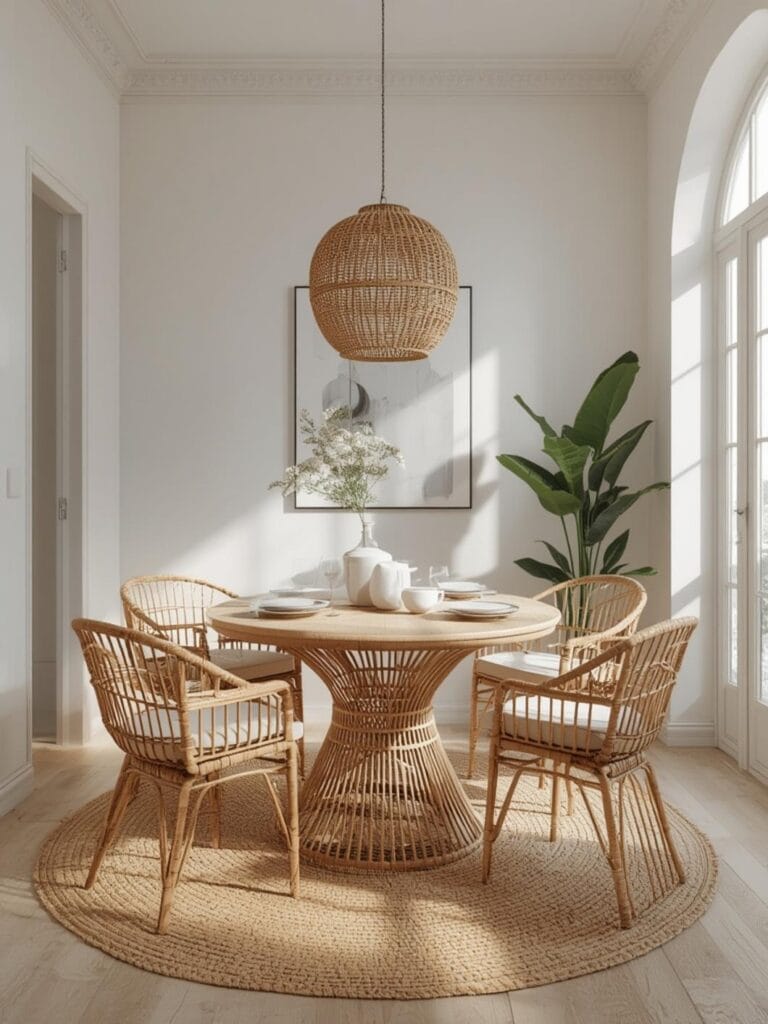
How to Style a Gallery Wall That Makes Your Dining Room Feel Like a Gallery
You’ve walked past that blank wall in your dining room dozens of times. Maybe you’ve even hung a single picture there, but it just doesn’t feel quite right. Something’s missing, and you’re not alone in feeling that way.
A thoughtfully curated gallery wall can turn that awkward empty space into the focal point of your dining room. Whether you’re hosting holiday dinners or enjoying weeknight meals with family, gallery wall ideas dining room displays can completely change how your space feels. The right combination of frames, artwork, and personal touches creates visual interest that makes every meal feel special.
Your dining room deserves more than bare walls or a lonely picture frame. With a few smart choices and some creative planning, you can create a gallery wall that reflects your personality and elevates every gathering around your table.
Table of Contents
What You’ll Need to Get the Look
Creating your gallery wall starts with gathering the right pieces. You don’t need to buy everything at once, and mixing what you already own with a few new finds creates the most authentic look.
Essential items include:
– Picture frames in various sizes (start with 5–9 frames for a medium wall)
– Artwork, photographs, or prints that match your style
– Painter’s tape for planning layout before you commit
– Picture hanging strips or picture hooks rated for your wall type
– Level tool to keep everything straight
– Measuring tape for accurate spacing
Optional decorative elements:
– Decorative mirrors to add depth and reflect light
– Small shelves to break up the frame pattern
– Three-dimensional objects like vintage plates or small sculptures
– Fabric art or textile pieces for texture variation
The beauty of a gallery wall is that you can start small and add to it over time. Many homeowners begin with family photos they already have framed, then gradually introduce art prints or decorative pieces that complement their dining room’s color scheme.
Finding Your Style and Season
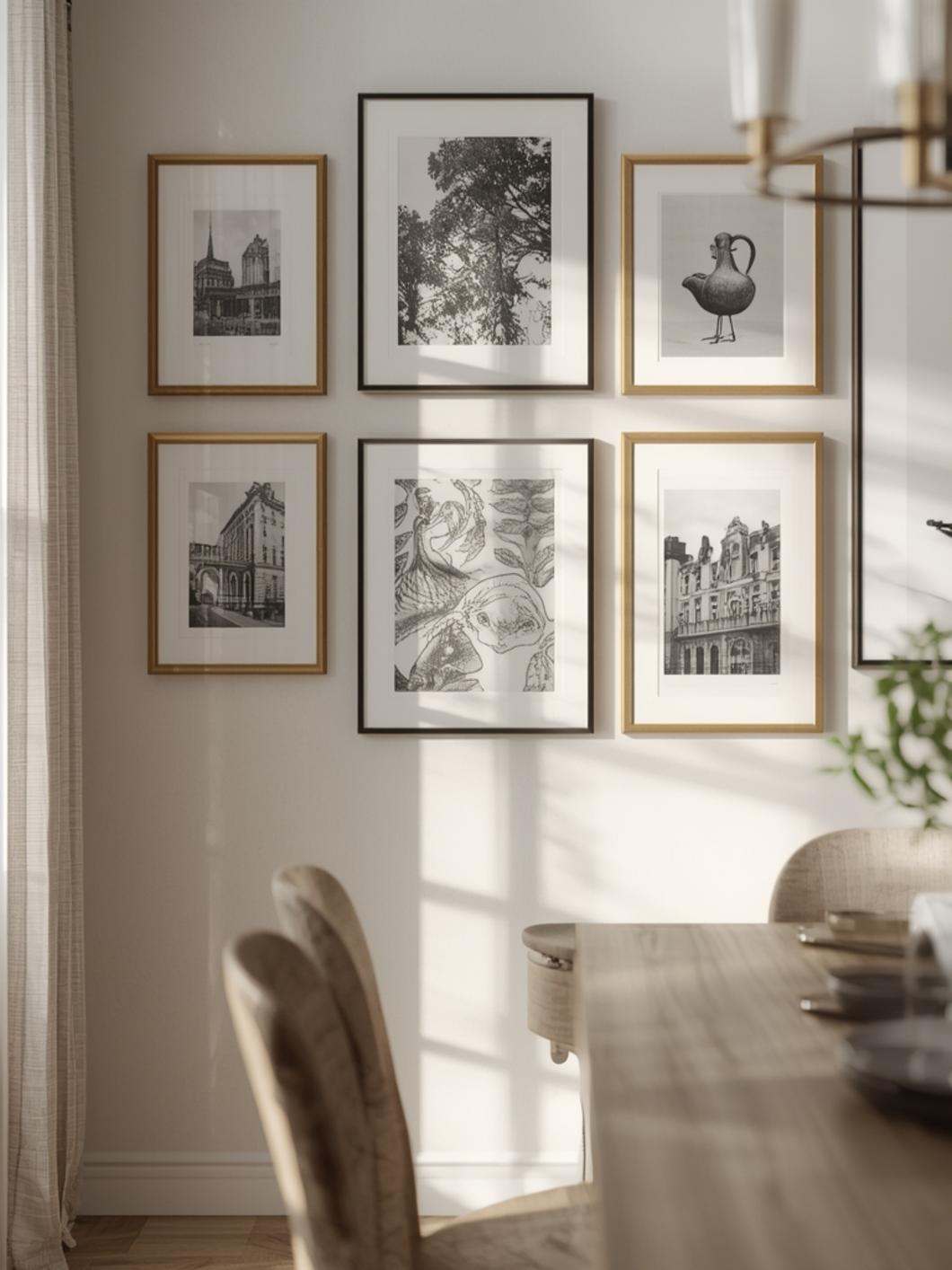
Your gallery wall should feel authentic to your home and lifestyle. The style you choose sets the mood for every meal and gathering in your dining room.
Consider your home’s existing aesthetic. If your dining room features farmhouse furniture, lean toward vintage frames with botanical prints or black-and-white family photos. Modern spaces pair beautifully with sleek black frames and abstract art or photography.
Think about seasonal flexibility. Some homeowners love swapping out a few pieces throughout the year to keep their gallery wall fresh. Lightweight frames make this easy, letting you rotate in holiday-themed prints during December or bright florals in spring.
The best time to plan your gallery wall is before a major gathering or celebration. Many people tackle this project in late summer before fall entertaining season begins, or in early spring when natural light returns and everything feels fresh again.
Your dining room lighting matters too. If your space gets lots of natural light, you can use deeper frame colors and bold artwork. Darker dining rooms benefit from lighter frames and artwork with bright tones that help reflect available light.
7 Ideas to Try in Your Home
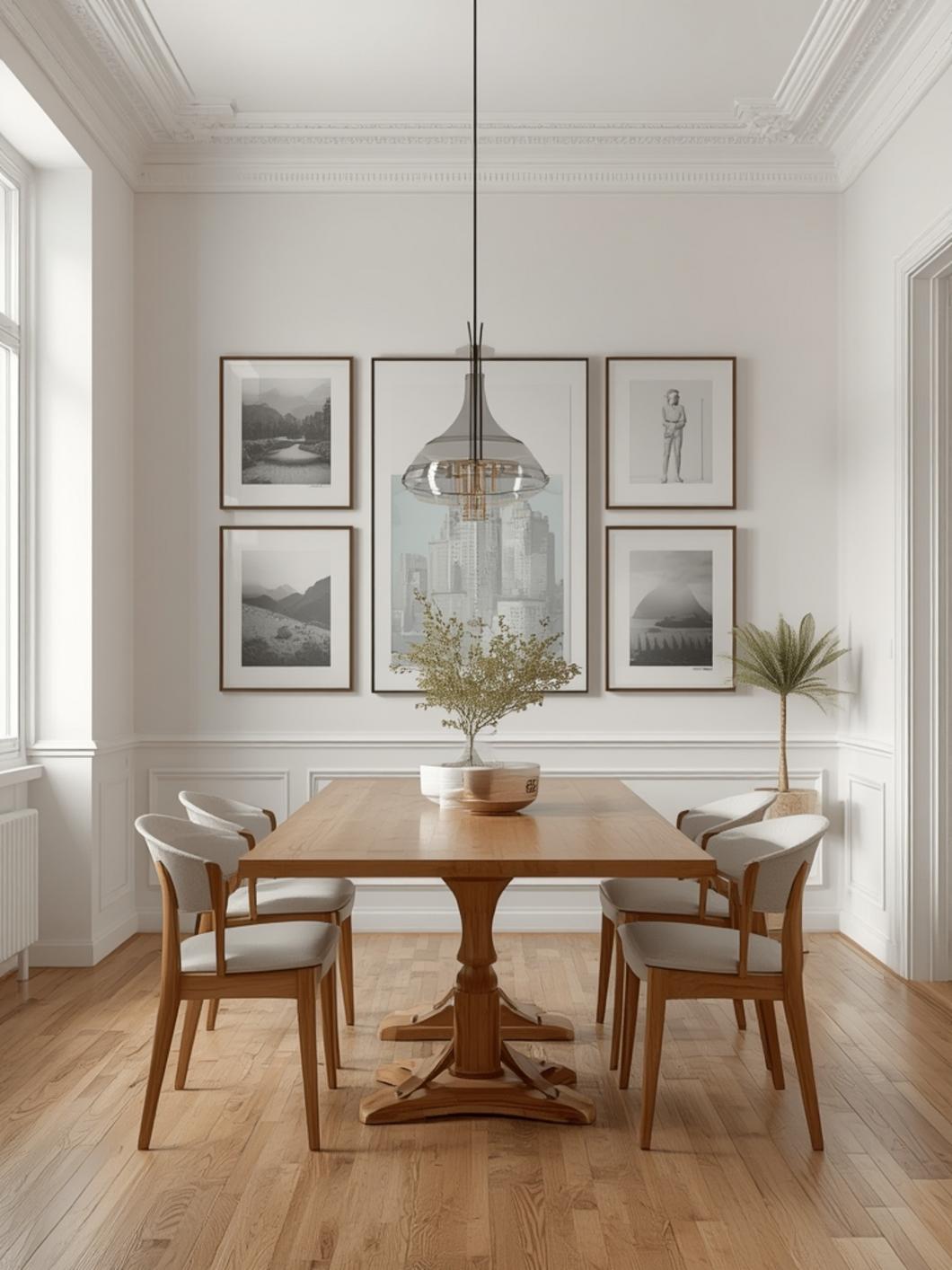
Understanding how to arrange artwork in dining room spacing and layout makes the difference between a professional-looking display and one that feels off-balance. These seven approaches give you proven starting points for creating your own stunning arrangement.
The Symmetrical Grid
This classic approach uses identical frames arranged in perfect rows and columns. Start with a 3×3 grid of same-sized frames for a clean, organized look that works beautifully in formal dining rooms. Keep 2–3 inches of space between each frame for visual breathing room.
The Salon-Style Scatter
Mix different frame sizes and styles for an eclectic, collected-over-time appearance. Hang your largest piece first at eye level (typically 57–60 inches from floor to center), then build outward with smaller frames. Maintain roughly 2–3 inches between frames throughout.
The Horizontal Line
Perfect for the wall space above a buffet or console table, this arrangement keeps all frames aligned along their bottom edges or centers. This creates a strong horizontal line that grounds the display and makes lower ceilings feel more spacious.
The Vertical Statement
Stack frames vertically to draw the eye upward in rooms with tall ceilings. This works especially well on narrow wall sections between windows or doorways. Keep the vertical column no wider than 24–30 inches for maximum impact.
The Arch or Curved Layout
Arrange frames to follow a gentle arch shape, with your largest pieces at the center and smaller frames tapering toward the ends. This organic arrangement softens rectangular rooms and adds visual flow. The curve should feel natural, not forced.
The Corner Wrap
Don’t let corner walls go to waste. Extend your gallery wall around the corner, creating visual continuity that makes your dining room feel more cohesive. This approach works especially well in open-concept spaces where the dining area flows into other rooms.
The Mixed-Media Collection
Combine flat artwork with three-dimensional elements like decorative plates, small mirrors, or floating shelves. This adds depth and texture that makes your gallery wall more interesting from every angle around the dining table.
Benefits of a Gallery Wall in Your Dining Room
A well-designed gallery wall does more than fill empty space. It transforms your dining room into a space that feels intentional and personal.
It creates instant atmosphere that makes every meal feel more special. Your guests have something beautiful to admire during dinner conversations, and family meals gain a backdrop that feels curated and thoughtful.
Gallery walls tell your story. Mix family photos with art you love, and suddenly your dining room becomes a reflection of your life and experiences. This personal touch makes your home feel warm and welcoming to everyone who enters.
The visual interest balances your room. Large dining tables and substantial furniture can make walls feel empty by comparison. A gallery wall provides the visual weight needed to create harmony in your space.
They’re remarkably flexible. Unlike permanent wallpaper or built-in features, you can rearrange, add to, or completely refresh your gallery wall whenever inspiration strikes. This adaptability means your dining room can evolve with your changing tastes.
Gallery walls also solve practical decorating challenges. They disguise imperfect walls, add color without painting, and create focal points in rooms that lack architectural interest.
Tips, Alternatives, and Styling Advice
Your budget and space size shouldn’t limit your gallery wall dreams. These approaches work for different price points and room dimensions.
Budget-Friendly Approach
Print your own photos and artwork at home or through affordable online services. Use identical basic frames from discount retailers for a cohesive look that won’t break the bank. Thrift stores often have frames you can paint or refinish to match your style. Focus on creating a strong layout rather than investing in expensive pieces.
Mid-Range Option
Mix affordable frames with a few statement pieces that anchor your gallery wall. Invest in one or two larger, quality frames for your focal points, then surround them with less expensive options. Consider mat boards in nice colors to elevate simple frames. This balanced approach gives you professional results without premium prices.
Premium Choice
Custom framing, original artwork, and designer pieces create a truly one-of-a-kind gallery wall. Professional art consultants can help you select pieces that complement your dining room’s color palette and style. Museum-quality matting and conservation glass protect valuable prints and photographs while looking stunning.
Small Space Adaptation
Even compact dining areas can accommodate gallery walls. Use smaller frames (5×7 or 8×10) in a tight grid pattern. A vertical arrangement of 3–5 frames makes narrow walls feel taller. Choose lighter frame colors to keep small spaces from feeling cramped or heavy.
Common Mistakes to Avoid
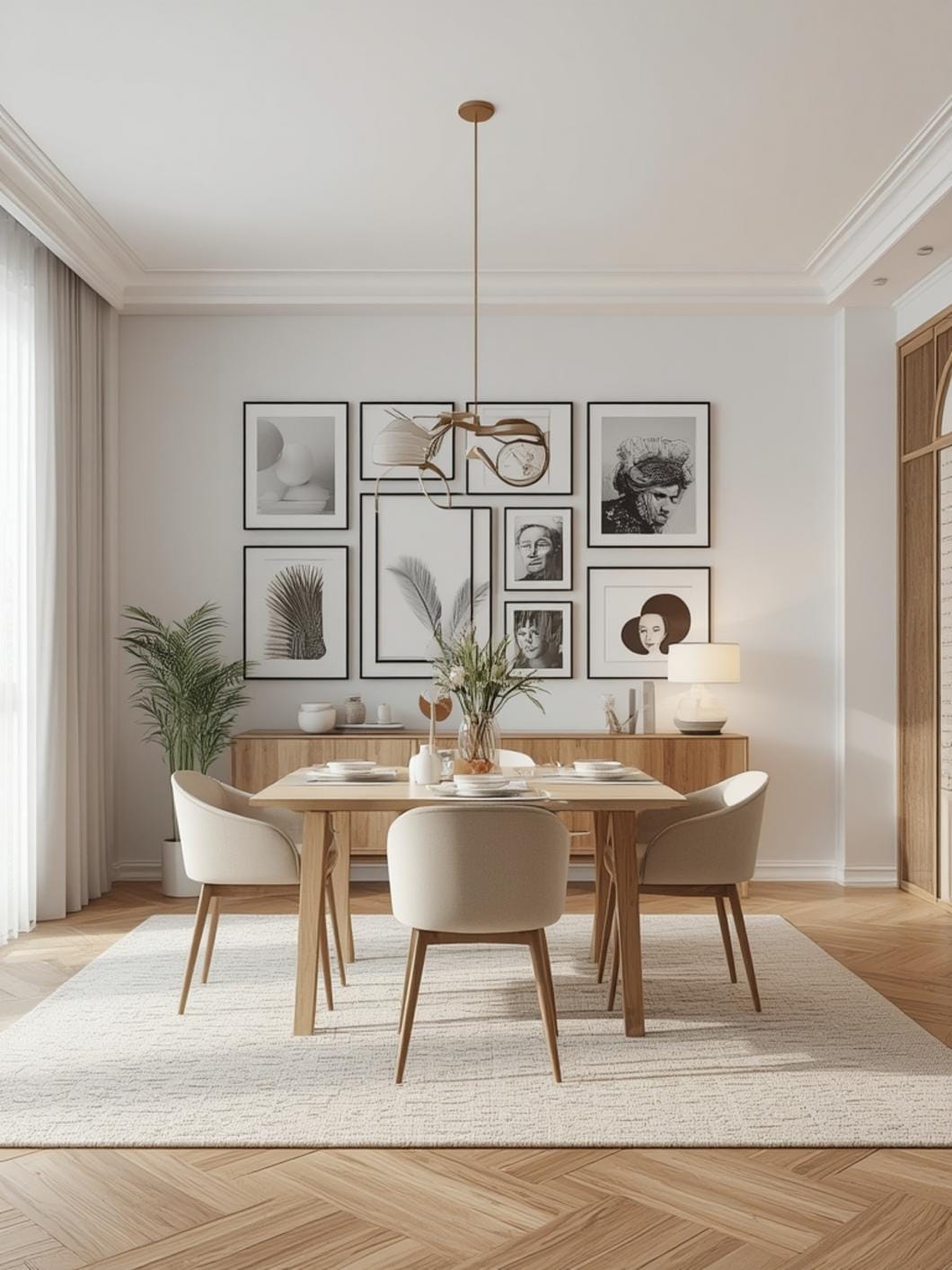
Hanging everything too high makes your gallery wall feel disconnected from your furniture. The center of your display should sit around 57–60 inches from the floor, which places it at average eye level when you’re standing.
Starting without a plan leads to unnecessary wall holes and frustration. Arrange your frames on the floor first, or tape paper templates to the wall to visualize the layout before making any permanent decisions.
Using frames that are too small for your wall creates a scattered, unfinished appearance. Your entire gallery wall arrangement should fill at least two-thirds of your available wall width, and individual frames should be substantial enough to hold their own from across the room.
Ignoring your dining room’s color scheme creates visual chaos. Pull colors from your existing decor—upholstery, curtains, or rugs—to guide your artwork and frame selections so everything feels cohesive rather than random.
Spacing frames too far apart breaks the visual connection between pieces. Keep 2–3 inches between frames consistently throughout your arrangement, treating the entire collection as one cohesive design element rather than separate pictures.
Maintenance and Upkeep Tips
Gallery walls need minimal maintenance, but a few simple habits keep them looking fresh and intentional.
Dust your frames monthly using a soft microfiber cloth or duster with an extendable handle. This prevents buildup that dulls glass and frames over time. Work from top to bottom so dust falls away from already-cleaned frames.
Check for levelness every few months. Frames can shift slightly over time, especially if you have active kids or live in an area with temperature fluctuations. A quick adjustment with a small level takes just minutes and keeps your gallery wall looking professionally installed.
Rotate artwork seasonally if you enjoy variety. This is also the perfect time to clean glass thoroughly with glass cleaner and a lint-free cloth. Remove each frame carefully, clean it, and rehang it securely.
Tighten loose hardware when you notice frames starting to tilt. Picture hooks and hanging wires can loosen over time. Addressing this immediately prevents frames from falling and protects both your wall and your artwork.
Avoid direct sunlight on valuable prints and photographs. If your dining room gets strong afternoon sun, consider UV-protective glass for frames containing pieces you want to preserve. Rearranging your layout occasionally helps prevent uneven fading.
Make Your Dining Room Wall Come Alive
Your dining room gallery wall is more than decoration—it’s a reflection of your style and the memories you’ve made. The right combination of artwork, photos, and thoughtful arrangement creates a space where family and friends love to gather.
Start with pieces you already love, plan your layout carefully, and build your collection over time. Your gallery wall will grow and evolve just like your home and the stories it holds.
Ready to explore more ways to elevate your dining space? Browse DecorKingdom for inspiration that makes every room in your home feel complete and beautifully styled.
FAQs
How many frames should I use for a dining room gallery wall?
Start with 5–9 frames for a balanced look on a standard 8–10 foot wall. Fewer frames can look sparse, while too many can overwhelm the space. Consider your wall size and the visual weight of your dining table—larger furniture benefits from more substantial gallery walls.
What’s the best height to hang artwork in a dining room?
The center of your gallery wall should sit 57–60 inches from the floor, which is standard eye level. This height works whether people are standing or seated at your dining table. If you have very tall ceilings, you can adjust slightly higher, but never hang so high that the artwork feels disconnected from the room.
Can I mix black and white frames on the same gallery wall?
Absolutely—mixing frame colors adds visual interest and prevents your gallery wall from looking too matchy or staged. The key is maintaining consistent spacing and a cohesive arrangement style. Many designers recommend keeping frames within two or three color families for a collected but intentional appearance.
Should gallery wall artwork match my dining room colors?
Your artwork should complement rather than exactly match your room colors. Pull accent colors from your existing decor, but don’t feel locked into perfect matches. Introducing new colors through art can actually refresh your space and give you flexibility when you want to update other elements later.
How do I arrange a gallery wall without making holes everywhere?
Use painter’s tape or cut paper templates in your exact frame sizes and arrange them on the wall first. This lets you experiment with layouts without damage. Once you’re happy with the arrangement, mark the top center of each template, remove the paper, and install your hanging hardware at those marked spots.
—
Meta Title: Gallery Wall Ideas Dining Room: 7 Stunning Layouts 2026
Meta Description: Discover gallery wall ideas dining room layouts that transform blank walls into stunning focal points with photos, art, and personal style.