How to Create a Frame TV Gallery Wall: 7 Ideas That Work
You love the idea of a gallery wall, but every time you look at that big black TV screen in the middle of your living room, something feels off. It breaks the flow. It doesn’t match your carefully chosen artwork. And worst of all, it screams “technology” when you’re trying to create a warm, inviting space.
That’s where frame tv gallery wall ideas come in. These smart layouts let you turn your television into part of the art display instead of fighting against it. Your TV can finally disappear into the wall, surrounded by frames and prints that make the whole setup look intentional and beautiful.
The best part? You don’t need to be a professional designer to pull this off. With the right planning and a few clever tricks, you can create a gallery wall that makes guests wonder which piece is actually the TV.
Table of Contents
What You’ll Need to Get the Look
Creating a frame TV gallery wall doesn’t require a massive shopping list. You probably already have some of these items at home.
Frame essentials:
– Frame TV with art mode (Samsung Frame is the most popular, but other brands work too)
– Matching or complementary frames for surrounding artwork
– Picture ledges or shelves for layering (optional)
– Command strips or picture hanging wire
– Level and measuring tape
Artwork and accessories:
– Mix of print sizes that complement your TV dimensions
– Matted prints for added depth
– One or two three-dimensional objects like small mirrors or floating shelves
– Personal photos in coordinating frames
The key is choosing frames that either match your TV’s bezel perfectly or create an intentional contrast. You’re not trying to hide the TV completely—you’re making it part of a cohesive design story.
Finding Your Style and Season
The beauty of a frame TV gallery wall is that it works year-round, but you can adapt it to match the seasons or your current mood.
Spring and summer call for lighter, airier arrangements. Think botanical prints, coastal photography, and frames in white oak or light maple. Your TV can display impressionist artwork or nature scenes that blend seamlessly with the surrounding pieces.
Fall and winter welcome richer tones. Darker frames, moody landscapes, and vintage-inspired prints create a cozy gallery that feels intentional during the colder months. Your frame TV can showcase classic paintings or abstract art in deeper colors.
You can also plan your gallery wall around specific occasions. Swap out a few key pieces for the holidays without taking down the entire wall. The TV stays put while the mood changes around it.
The best timing for installation? Choose a weekend when you have four to five hours of uninterrupted time. You’ll want to experiment with layouts on the floor first before committing to wall holes.
7 Ideas to Try in Your Home
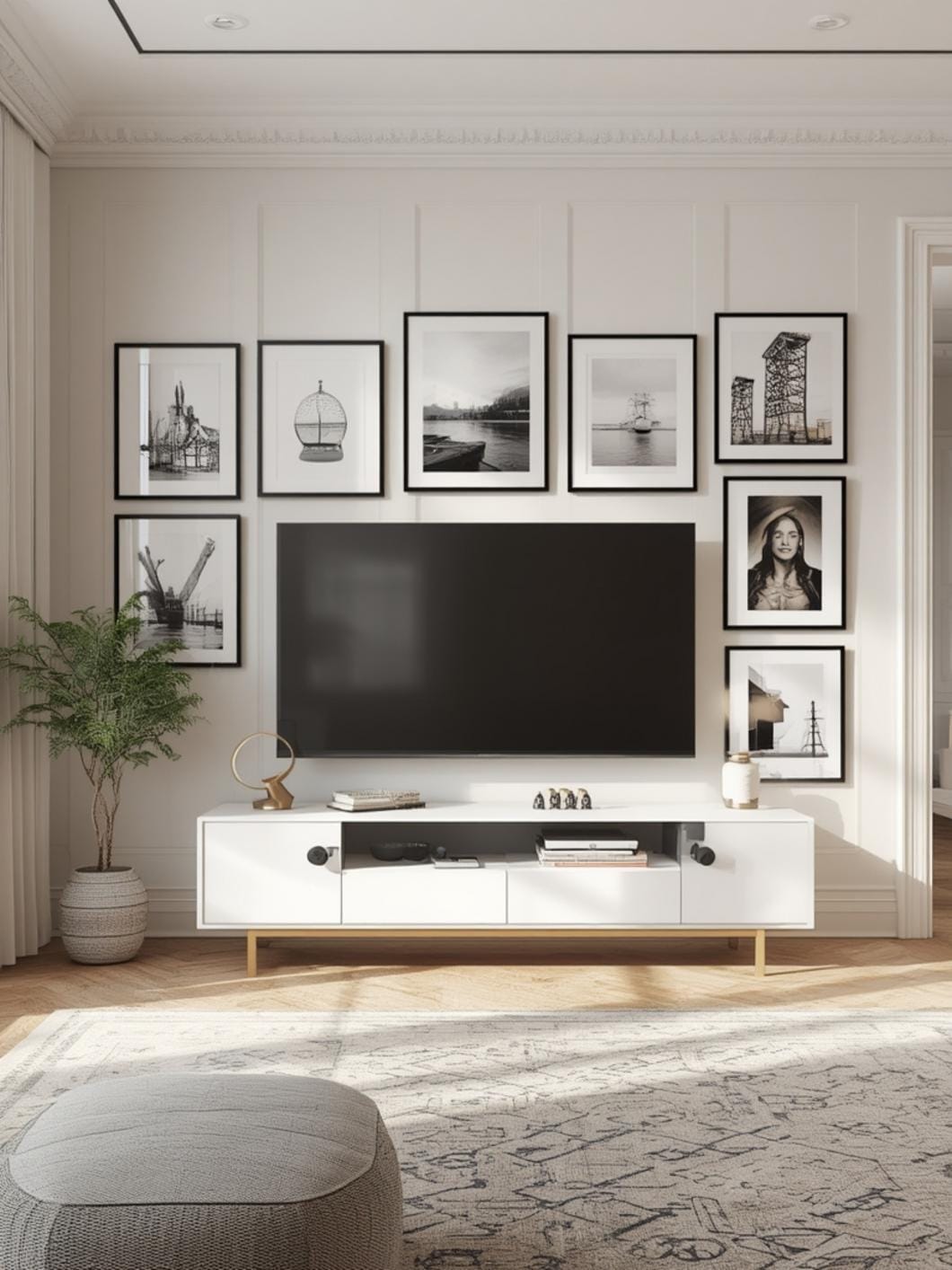
1. The Symmetrical Grid
Place your frame TV in the center of a perfect grid with equally-sized frames surrounding it. This works beautifully in modern and transitional spaces. Use three frames above, three below, and three on each side for a balanced nine-piece arrangement around your TV.
2. The Salon Style
Mix different frame sizes and orientations in an organic arrangement that feels collected over time. Your TV becomes just another frame in the mix. Start with your TV placement, then work outward with varying sizes, keeping roughly equal spacing between all pieces.
3. The Floating Shelf Gallery
Mount your frame TV above two or three floating shelves instead of surrounding it with hung frames. Layer framed art on the shelves, leaning pieces against the wall. This approach makes it easy to switch out artwork whenever you want a fresh look.
4. The Minimalist Three-Piece
Keep it simple with just one large frame on each side of your TV. This works perfectly in smaller spaces where too many frames would feel overwhelming. Choose oversized pieces that match your TV’s height for maximum impact.
5. The Corner Conversation
Turn a corner into your gallery wall space by mounting the frame TV on one wall and extending the frame arrangement onto the adjacent wall. This creates visual interest that draws the eye around the room rather than focusing solely on the TV.
6. The Floor-to-Ceiling Statement
Start with your frame TV at eye level, then extend frames both above and below, even down to picture ledges near the floor. This dramatic approach works best with high ceilings and creates an impressive focal wall.
7. The Concealed Wire Collection
This is where how to hide tv wires on gallery wall becomes essential. Use the frames themselves as cover—run a thin cable channel behind where your frames will hang, then position larger frames strategically to hide any visible channels. Paint the channel the same color as your wall for near-invisible integration. You can also add a decorative shelf just below your TV that creates a natural hiding spot for cables running down to components.
For wireless connections, position your streaming devices behind the TV itself or inside a nearby cabinet. The fewer visible wires, the more your gallery wall looks like pure art.
Benefits That Go Beyond Looks
A well-designed frame TV gallery wall does more than just look pretty on Instagram.
Your daily experience improves immediately. Instead of seeing a black screen dominating your room during the day, you see artwork. Your living room feels more like a curated space and less like a home theater.
The flexibility factor matters too. When you want to watch something, your TV is right there. When you don’t, it blends into the background with museum-quality images. You’re not sacrificing entertainment for aesthetics or vice versa.
This setup also solves the eternal debate about TV placement in open-concept homes. You can position your frame TV gallery on a main wall without it becoming the room’s only focal point. The surrounding frames balance the visual weight.
For families, this approach helps the TV feel less dominant in shared spaces. Kids and guests notice the overall gallery first, not just the screen. It creates a more sophisticated atmosphere that still accommodates modern life.
Your Budget and Style Options
Budget-friendly approach:
Use simple black frames from big-box stores and free printable art from museum websites. Your frame TV is the investment—the surrounding pieces can be affordable. Stick to a monochrome palette to keep costs down while maintaining a cohesive look.
Mid-range option:
Mix quality wood frames with a few custom-matted pieces. Add one or two textured elements like a small woven wall hanging or brass mirror. This price point lets you create more visual interest without breaking the bank. Expect to spend around $300–$500 on frames and artwork beyond the TV itself.
Premium approach:
Invest in custom framing for original artwork or family photos. Include some three-dimensional elements like floating shadow boxes or small sculptural pieces. Work with consistent premium materials—like all white oak frames or all brass accents. You’re looking at $800–$1,200 for a truly elevated gallery.
Small space adaptation:
In compact rooms, limit your gallery to five to seven pieces total including the TV. Use vertical orientation to draw the eye upward and make ceilings feel higher. Stick to one frame style and color to avoid visual clutter.
Common Mistakes to Avoid
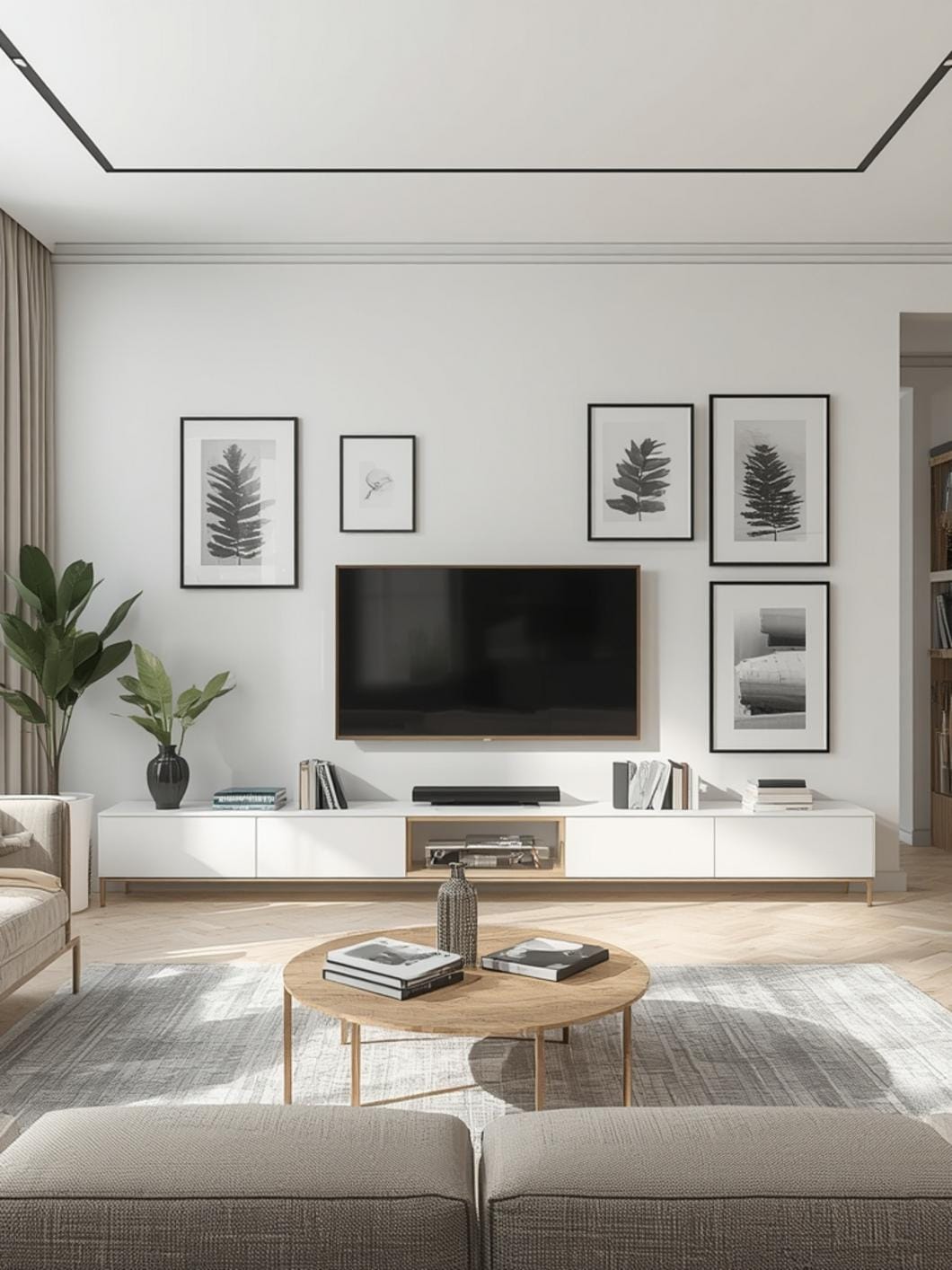
Hanging frames too high around the TV. Your TV should sit at eye level when you’re seated, which means the frames directly beside it need to align with that height, not float up near the ceiling. Measure while sitting on your couch.
Forgetting about glare. Frame TVs have anti-glare screens, but surrounding glass-covered artwork might catch light and create distracting reflections. Use non-glare glass or acrylic for frames that face windows directly.
Making all the frames identical. While cohesion matters, using the exact same frame in the exact same size around your TV can look too matchy and highlight that you’re trying to hide something. Vary the sizes by at least a few inches.
Ignoring the TV’s bezel color. If your frame TV has a white bezel, warm brown wood frames right next to it will emphasize the difference. Either match the bezel color or create enough contrast that it looks intentional.
Cramming frames too close together. Leave at least 2–3 inches between frames to let each piece breathe. Too-tight spacing makes the whole wall feel cluttered and draws attention to individual frames rather than the overall effect you’re creating.
Keeping Everything Fresh and Clean
Frame TV gallery walls need very little maintenance, but a few simple habits keep them looking gallery-ready.
Dust your frames monthly with a microfiber cloth, giving the TV screen the same treatment with a screen-safe cleaner. Don’t use glass cleaner on your frame TV—it can damage the anti-glare coating.
Update your TV’s art display seasonally to keep the gallery feeling fresh. Most frame TVs include art subscriptions or let you upload personal photos. Changing the digital art is easier than rearranging physical frames and gives you the visual refresh you’re craving.
Check frame alignment every few months. Frames naturally shift over time, especially if you have kids or pets. A quick adjustment with your level takes two minutes and maintains that professional gallery look.
If you used command strips, be aware they can lose adhesion over time, especially in humid climates. Check them twice a year and replace any that feel loose before a frame falls.
Your New Favorite Wall
You’ve learned how to turn that technology box into an intentional part of your home’s design story. A frame TV gallery wall brings together the entertainment you want with the aesthetic you love—no compromises needed.
Start with a simple layout that feels manageable. You can always add more frames later as you find the perfect pieces. The goal is creating a space that makes you smile every time you walk into the room, whether the TV is on or off.
Ready to explore more ways to elevate your walls? DecorKingdom has dozens of gallery wall ideas and styling tips to help you create the home you’ve been dreaming about.
FAQs
Can I create a gallery wall with a regular TV instead of a frame TV?
Yes, but it requires more intentional design choices. Choose artwork that’s bold enough to hold its own against the black screen, and use the TV as an anchor point rather than trying to camouflage it. Darker frames and high-contrast artwork help regular TVs blend better into gallery walls.
How much space should I leave between my TV and the surrounding frames?
Leave 3–6 inches between your frame TV and the nearest artwork. This spacing prevents the gallery from feeling cramped while maintaining visual connection. The exact distance depends on your frame sizes—larger frames can handle slightly more space.
What’s the best height to mount a frame TV in a gallery wall?
The center of your TV should sit at 42–48 inches from the floor, roughly eye level when you’re seated. Build your gallery wall around this height rather than centering the entire arrangement on the wall, which often results in a too-high TV.
How do I choose artwork that complements my frame TV?
Look at the colors and style of the art your TV displays most often, then choose surrounding frames that either match that palette or create intentional contrast. If your TV shows mostly black and white photography, you can either embrace that theme or add color through surrounding pieces for balance.
Can I mix frame colors in a TV gallery wall?
Absolutely, but limit yourself to two or three frame finishes maximum. A mix of black and natural wood looks collected and intentional, while five different frame colors can look unplanned. The key is repetition—use each frame color at least twice in your arrangement.
—
Meta Title: Frame TV Gallery Wall Ideas That Hide Your Screen (2026)
Meta Description: Turn your TV into art with frame TV gallery wall ideas that blend tech and style. Get layouts, wire-hiding tricks, and real design tips.