7 Natural Stone Accent Wall Ideas for a Modern, Earthy Look
Your living room feels bland. Your bedroom lacks personality. You’ve scrolled through countless design photos, and one thing keeps catching your eye—those gorgeous textured walls that add instant drama and warmth to any space.
Stone accent wall ideas offer the perfect solution for homeowners who want to add character without overwhelming a room. Whether you’re drawn to sleek modern stacked stone or rustic river rock, a well-placed stone wall creates a focal point that elevates your entire design scheme.
The best part? You don’t need to be a professional contractor to bring this look into your home. With the right planning and materials, you can create a stunning stone feature that becomes the talking point of your space.
Table of Contents
What You’ll Need to Get the Look
Creating a beautiful stone accent wall starts with gathering the right materials. The good news is that today’s stone veneer options make this project far more approachable than traditional full-depth stonework.
Stone Materials:
– Thin stone veneer panels (lightweight and easy to handle)
– Individual stone tiles or stacked stone pieces
– Faux stone panels (budget-friendly and surprisingly realistic)
– Natural river rock or fieldstone for authentic texture
Installation Essentials:
– Construction adhesive designed for stone
– Level and measuring tape
– Notched trowel for spreading adhesive
– Grout and grout float (if using individual stones)
– Sealer to protect your finished wall
Design Support Items:
– Painter’s tape to mark your layout
– Drop cloths to protect floors
– Spacers for consistent gaps between stones
– Sponges and buckets for cleanup
Most of these materials are available at home improvement stores, and many retailers offer sample pieces so you can test colors and textures in your actual lighting before committing.
Finding Your Style and Season
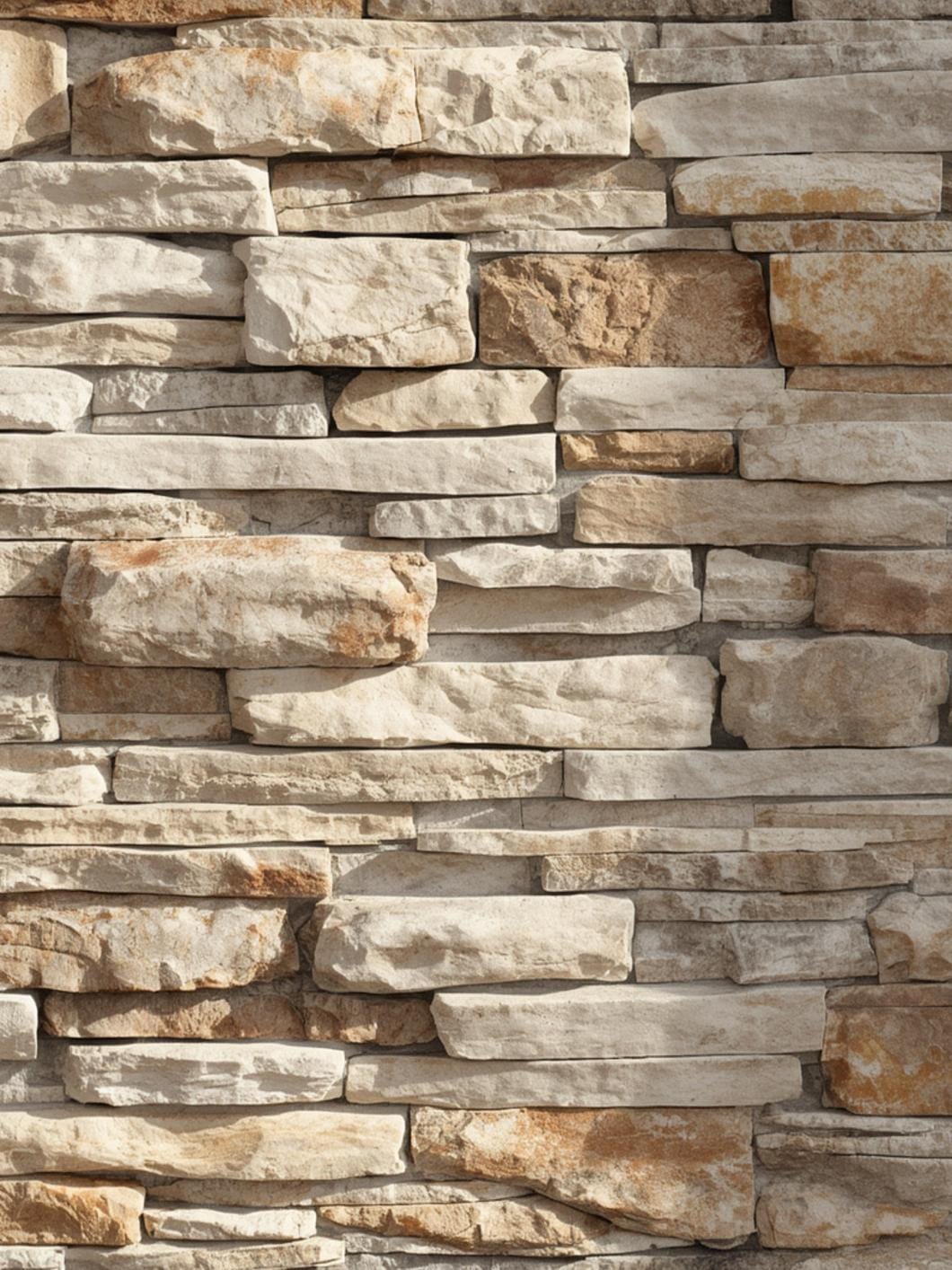
The beauty of stone accent walls is their year-round appeal. Unlike trendy wallpapers or bold paint colors that might feel dated after a season, stone brings timeless texture that works in any climate or decorating season.
Consider Your Home’s Personality:
Choose lighter limestone or whitewashed stone for coastal and farmhouse styles. These create an airy, relaxed atmosphere perfect for spring and summer entertaining.
Dark slate or charcoal stacked stone suits modern and industrial spaces beautifully. The dramatic contrast works especially well in winter months when you want your home to feel cozy and intimate.
Room-Specific Timing:
Bedrooms benefit most from stone accents during fall refresh projects when you’re layering in textiles and warm lighting. The combination of soft fabrics against hard stone creates irresistible balance.
Living rooms shine with stone features year-round, but installation during mild weather (spring or fall) makes the project more comfortable if you need windows open for ventilation during adhesive application.
Budget Planning:
Real stone veneer typically runs between $8-$15 per square foot. For a standard 8×10 foot accent wall, budget $640-$1,200 for materials alone.
Faux stone panels cost $5-$8 per square foot, making that same wall achievable for $400-$640. The quality difference has narrowed considerably in recent years.
7 Ideas to Try in Your Home
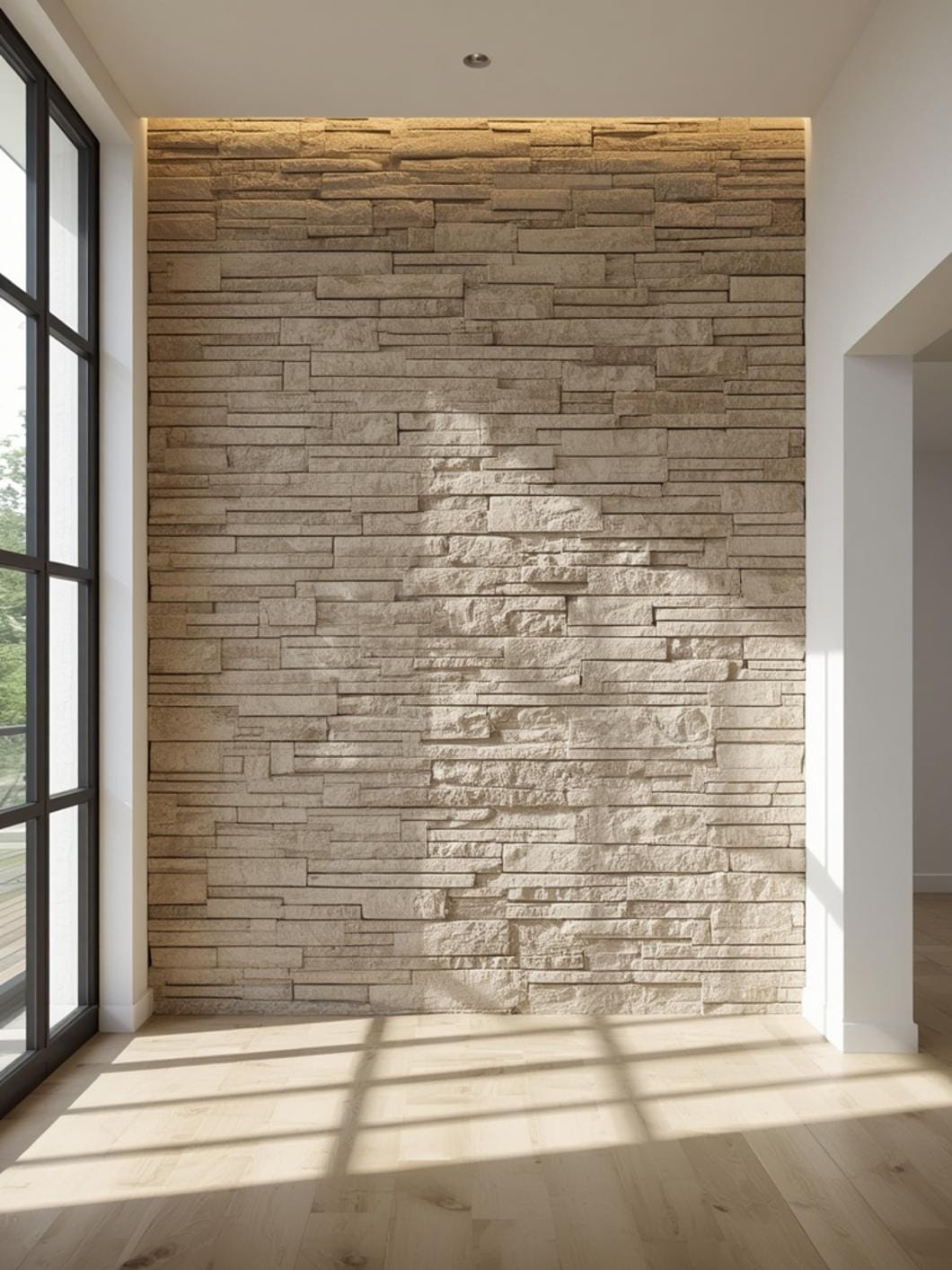
Ready to explore specific looks? These design approaches work beautifully in real homes and can be adapted to match your existing decor.
1. Fireplace Surround Elegance
Frame your fireplace with floor-to-ceiling stacked stone in neutral grays. This creates an architectural statement that draws the eye upward and makes standard-height ceilings feel taller. Pair with a simple wooden mantel to soften the look.
2. Bedroom Behind-the-Bed Drama
Install stone panels on the wall behind your headboard for instant boutique hotel vibes. Lighter tones like cream travertine or beige limestone prevent the space from feeling heavy while adding sophisticated texture. Add wall-mounted reading lights that cast beautiful shadows across the stone surface.
3. Entryway First Impression
Your entryway sets the tone for your entire home. A stone accent wall immediately signals quality and attention to detail. Choose a warm honey-colored ledgestone that welcomes guests and transitions beautifully into adjacent rooms.
If you’re wondering how to install a stone accent wall in a high-traffic entryway, focus on durability—use a penetrating sealer that protects against fingerprints and scuffs while maintaining the stone’s natural appearance.
4. Dining Room Feature Wall
Create restaurant-worthy ambiance by adding stone to the wall your dining table faces. This works especially well in open-concept homes where the dining area needs definition. Dark gray or black stone adds drama without requiring a full room commitment.
5. Bathroom Spa Retreat
Transform your master bath with a stone accent wall behind the vanity or in the shower area. Natural river rock creates organic, spa-like energy, while stacked slate offers clean-lined luxury. The moisture resistance of sealed stone makes it ideal for humid bathroom environments.
6. Exterior-Inspired Interior
Bring the outside in by wrapping a stone accent from an exterior wall into your interior space. This works beautifully in sunrooms, breakfast nooks, or any room with large windows. The visual connection between indoor and outdoor spaces makes rooms feel larger and more connected to nature.
7. Partial Wall Pop
You don’t need to cover an entire wall to make an impact. Install stone on just the lower half of a wall, topped with a wooden cap rail, for a wainscoting effect with serious texture. This approach costs less while still delivering visual interest.
Benefits That Go Beyond Beauty
Stone accent walls deliver practical advantages that improve your daily living experience beyond their obvious aesthetic appeal.
Durability You Can Count On
Unlike painted walls that show every scuff and need regular touch-ups, stone surfaces hide minor wear beautifully. The varied texture and natural color variations mean everyday living doesn’t leave visible marks.
Sound Dampening Qualities
Stone naturally absorbs and diffuses sound waves. Homes with open floor plans particularly benefit from this acoustic improvement. Your living room conversations stay more intimate, and television audio doesn’t bounce around as much.
Increased Home Value
Real estate professionals consistently report that stone features rank high on buyer wish lists. A well-executed stone accent wall signals quality construction and thoughtful design, often returning more than your material investment at resale time.
Low Maintenance Lifestyle
Once sealed properly, stone requires minimal upkeep. A damp cloth handles dust, and annual resealing takes less than an hour. Compare this to wallpaper that peels, paint that fades, or fabric panels that absorb odors.
Temperature Regulation
Stone’s thermal mass helps stabilize room temperatures. During summer, it stays cool to the touch. In winter, it absorbs and radiates warmth from your heating system. This subtle effect contributes to year-round comfort.
Tips, Alternatives, and Styling Advice
Budget and space constraints shouldn’t stop you from enjoying the stone accent wall look. These adaptations make the style accessible for various situations.
Budget-Friendly Approach ($300-$500):
Start with faux stone panels in a small area like a fireplace surround or behind a console table. Modern manufacturing techniques produce remarkably realistic textures. Install panels directly over existing drywall using construction adhesive. Choose neutral colors that coordinate with multiple design schemes.
Mid-Range Investment ($800-$1,500):
Opt for real stone veneer but limit the application to one feature wall. Mix stone types—use larger pieces on bottom sections and smaller stacked stone near the ceiling to reduce material costs while maintaining visual interest. This range allows for professional-grade adhesives and proper sealing products.
Premium Experience ($2,000-$4,000):
Invest in premium natural stone with unique coloring and texture. Cover multiple walls or create a stone column feature. Add integrated lighting—LED strips tucked into horizontal grooves cast dramatic shadows. At this level, consider hiring professional installers for the most complex sections while handling finishing work yourself.
Small Space Adaptation:
In compact rooms, limit stone to one section rather than a full wall. A 3-foot-wide vertical strip from floor to ceiling creates height without overwhelming the space. Lighter stone colors reflect more light, making small rooms feel larger rather than cave-like.
Styling Around Stone:
Balance stone’s organic texture with smooth, refined elements. Pair rustic fieldstone with contemporary furniture for interesting contrast. Let the stone be your room’s textural statement—avoid competing patterns in nearby fabrics and rugs.
Common Mistakes to Avoid
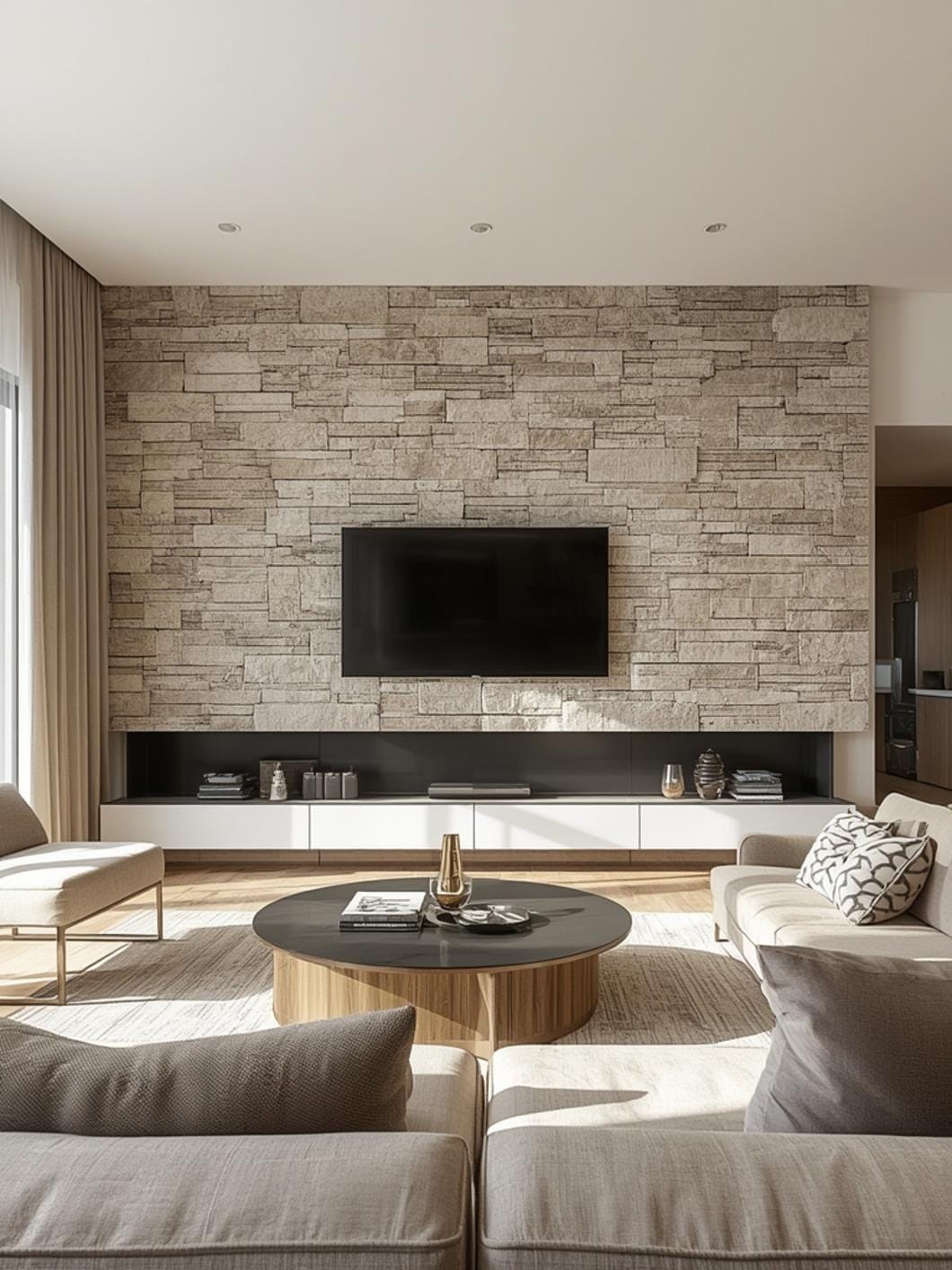
Learning from others’ missteps saves you time, money, and frustration. Watch out for these frequent errors.
Skipping the Layout Planning
Many homeowners dive straight into installation without mapping their pattern first. Dry-lay your stones on the floor in front of the wall, arranging colors and sizes before applying any adhesive—this prevents awkward clustering of similar stones and ensures balanced distribution.
Choosing the Wrong Adhesive
Standard construction adhesive works for lightweight faux panels, but real stone veneer requires stone-specific adhesive with higher bonding strength. Using the wrong product leads to stones falling off months later—check product specifications carefully before purchasing.
Forgetting About Electrical Outlets
Stone adds thickness to your wall, which means standard outlet covers won’t fit anymore. Purchase outlet box extenders before you start installation, and mark electrical locations clearly as you work around them.
Ignoring Sealer Application
Unsealed stone absorbs stains, moisture, and dirt that become permanent. Apply penetrating sealer after installation and grouting, following manufacturer recommendations for reapplication frequency—typically annually in high-use areas.
Overdoing the Stone
More isn’t always better. Stone on multiple walls makes rooms feel heavy and dark. Limit stone to one accent wall per room, letting painted or neutral walls provide visual rest—this approach makes your stone feature stand out as intentional rather than overwhelming.
Maintenance and Upkeep Tips
Keeping your stone accent wall looking fresh requires minimal effort with the right approach.
Weekly Care:
Dust stone surfaces with a soft, dry microfiber cloth or use your vacuum’s brush attachment on low suction. This prevents dust buildup in crevices where it can dull the stone’s natural color over time.
Monthly Cleaning:
Wipe down with a damp cloth and pH-neutral stone cleaner. Avoid acidic cleaners like vinegar or lemon-based products that etch certain stone types. For stubborn spots, use a soft brush with gentle circular motions.
Annual Sealing:
Reapply penetrating sealer once yearly to maintain stain resistance. Test a small, inconspicuous area first to ensure the sealer doesn’t darken your stone more than desired. One bottle typically covers 150-200 square feet.
Grout Maintenance:
If your stone installation includes grout lines, inspect them annually for cracks or gaps. Small repairs prevent moisture from reaching the wall behind your stone. Pre-mixed grout in a caulking tube makes touch-ups simple.
Handling Damage:
Individual damaged stones can often be carefully removed and replaced without disturbing surrounding pieces. Keep extra stones from your original installation for future repairs—stone lots vary slightly in color between production runs.
Bring Natural Beauty Into Your Home
Stone accent walls offer a unique combination of dramatic visual impact and practical durability that few other design elements can match. The varied textures and earthy tones work beautifully across design styles, from rustic farmhouse to sleek contemporary.
Your home deserves features that reflect your personal style while standing up to daily life. Stone delivers on both counts, creating spaces that feel both polished and lived-in.
Explore more inspiring accent wall ideas and room transformation tips at DecorKingdom, where beautiful, functional design meets real-life practicality.
FAQs
How much does a stone accent wall cost for an average-sized room?
For a standard 8×10 foot wall, expect to spend $400-$640 for faux stone panels or $640-$1,200 for real stone veneer. These figures include materials only—adhesive, grout, and sealer add another $100-$200. Labor costs vary widely by region if you hire installers, typically adding $500-$1,500 for professional installation.
Can I install stone veneer over existing painted drywall?
Yes, as long as your drywall is structurally sound, clean, and free from loose paint or wallpaper. Lightly sand glossy painted surfaces to improve adhesive bonding. The wall must be flat—repair any significant damage or irregularities before installation. Stone veneer adds minimal weight that standard drywall easily supports.
What’s the difference between natural stone veneer and faux stone panels?
Natural stone veneer consists of real stone cut into thin pieces, offering authentic texture and color variation. Faux panels are manufactured from polyurethane or other materials molded to look like stone. Natural stone feels cool and solid, while faux panels feel lighter and slightly warmer. Quality faux panels now closely replicate stone’s appearance at lower cost and weight.
Which rooms work best for stone accent walls?
Living rooms, bedrooms, dining rooms, and bathrooms all showcase stone beautifully. Living rooms benefit from stone behind seating areas or around fireplaces. Bedrooms gain luxury behind headboards. Dining rooms feel more sophisticated with a feature wall. Bathrooms achieve spa-like ambiance, though proper sealing is essential in moisture-prone areas.
How do I choose the right stone color for my space?
Consider your existing flooring and largest furniture pieces first—stone should complement rather than match these exactly. Lighter stones (beiges, creams, light grays) brighten spaces and work in smaller rooms. Darker stones (charcoals, deep grays, slate) add drama but need ample natural or artificial light. Request samples to view in your actual room lighting before purchasing full quantities.
—
Meta Title: Stone Accent Wall Ideas That Transform Rooms (2026 Guide)
Meta Description: Discover stunning stone accent wall ideas for every room. From budget DIY to premium natural stone—create dramatic focal points in your home.