Transform Your Bookshelf Into a Showpiece — No Designer Skills Required
You walk past your bookshelf every single day, and every time, something feels off. Maybe it’s stuffed with books but lacks personality. Or perhaps it’s full of random objects that don’t quite come together. You know it could look better, but where do you even start?
The good news is that creating a beautiful bookshelf display doesn’t require a design degree or a huge budget. With the right ideas for decorating a bookshelf, you can turn that cluttered or boring unit into a focal point that reflects your personality and makes your whole room feel more polished. Whether you’re working with a tall library-style shelf or a compact set of floating shelves, the principles stay the same.
Your bookshelf is more than just storage—it’s an opportunity to showcase what you love while keeping your space organized and inviting.
Table of Contents
What You’ll Need to Get the Look
Getting started with bookshelf styling means gathering a mix of functional and decorative items. You don’t need to buy everything at once—start with what you already own and fill in gaps over time.
Books in various sizes form your foundation. Mix hardcovers with paperbacks, and don’t be afraid to stack some horizontally while standing others upright. Choose books with spines that complement your color scheme, or cover mismatched ones with coordinating paper.
Plants and greenery add life and texture. Small potted succulents, trailing pothos, or even faux stems work beautifully. You’ll want containers in materials that match your style, whether that’s ceramic, woven baskets, or modern metal planters.
Decorative objects create visual interest. Think picture frames, sculptural pieces, candles, decorative boxes, small vases, or collected treasures from your travels. Varying heights and shapes keeps things dynamic rather than monotonous.
Baskets or storage boxes hide clutter while adding texture. These work especially well on lower shelves where you need to stash items you access regularly but don’t want on display.
Bookends or sculptural supports serve double duty by holding books upright while adding decorative appeal.
Finding Your Style and Season
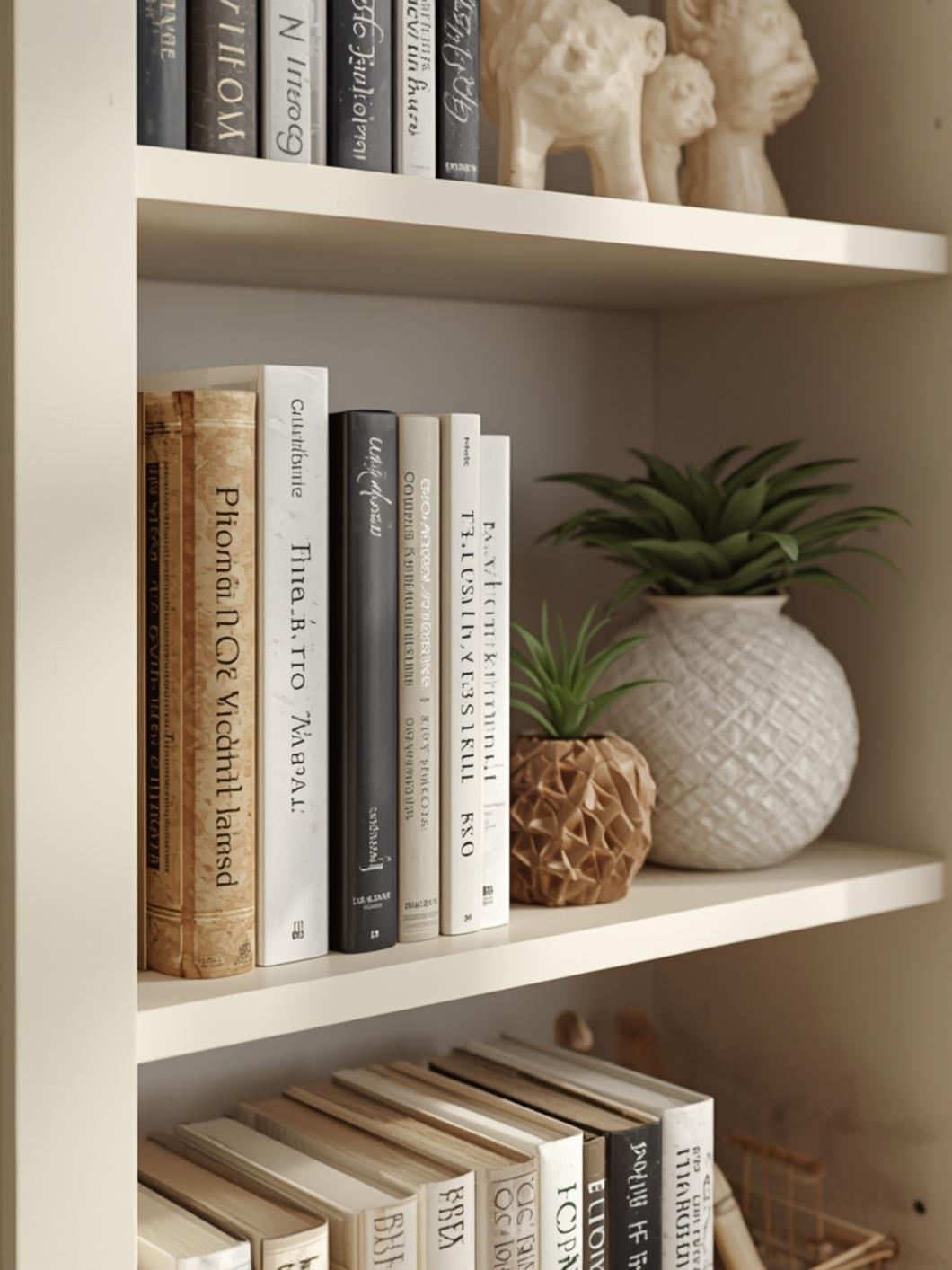
Your bookshelf styling should reflect both your personal aesthetic and the changing seasons. This keeps your space feeling fresh without requiring a complete overhaul.
Consider your overall home style first. A modern home calls for clean lines, minimal objects, and monochromatic color schemes. Traditional spaces work beautifully with classic books, vintage finds, and symmetrical arrangements. Bohemian styles embrace abundant plants, colorful textiles, and eclectic collected objects.
Seasonal updates keep things interesting. Spring invites fresh flowers and light, airy accessories. Summer works well with coastal elements and bright pops of color. Fall calls for warm tones, small pumpkins, and cozy textures. Winter styling might include evergreen sprigs, metallic accents, or soft candlelight.
Your lifestyle matters too. If you have young kids, place delicate items on higher shelves and save lower ones for sturdy baskets filled with toys. Pet owners might want to skip trailing plants that curious cats could knock over.
Budget influences your timeline. You can style a bookshelf beautifully in an afternoon with items you already own, or you can build your collection gradually over months, adding one special piece at a time.
7 Ideas to Try in Your Home
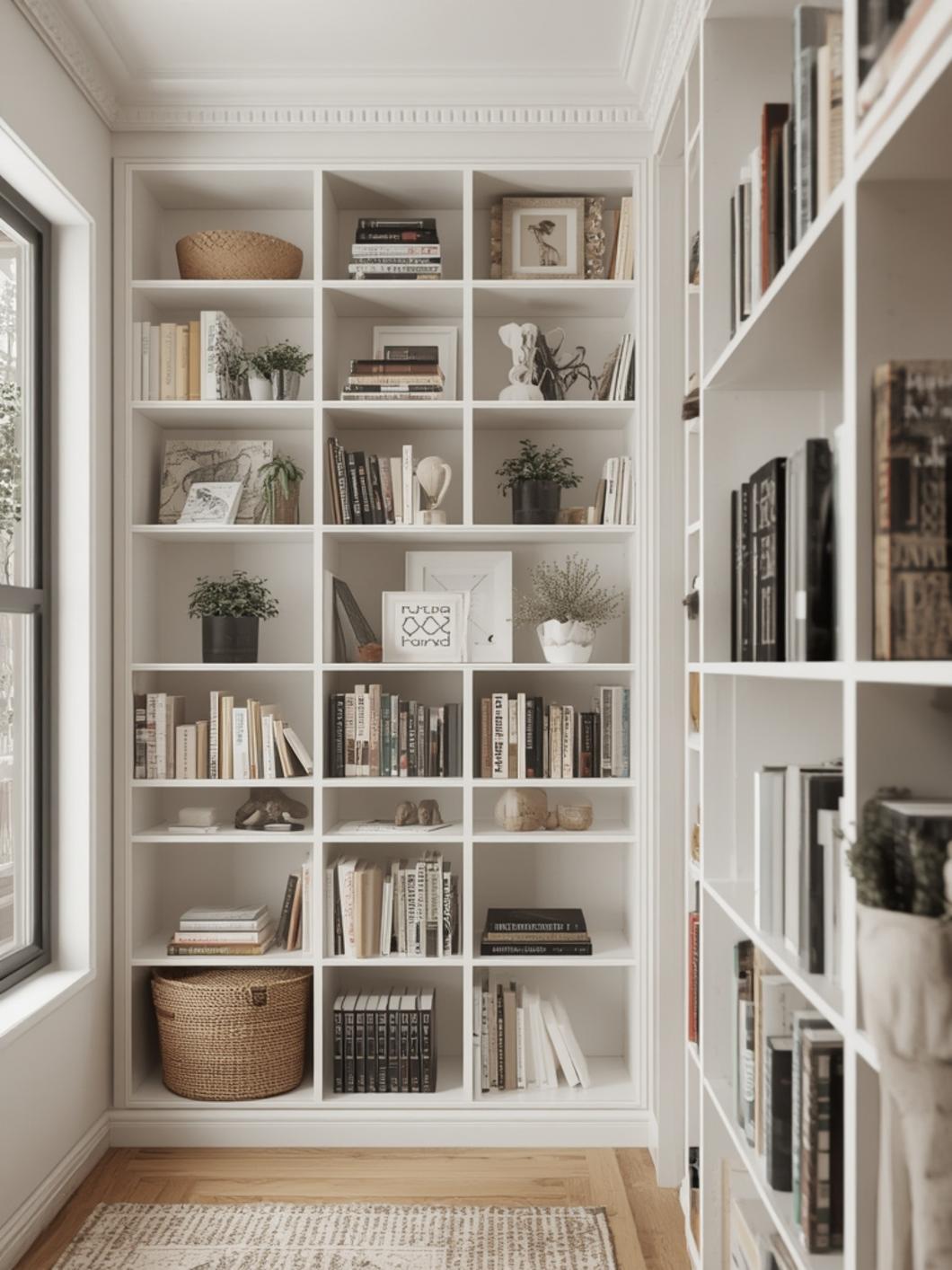
Ready to get styling? These approaches work for different aesthetics and skill levels. Mix and match elements from several ideas to create something uniquely yours.
The Rule of Three approach creates balanced vignettes. Group objects in clusters of three—like a plant, a framed photo, and a decorative object on one shelf. This odd number naturally pleases the eye and prevents that museum-like, overly matched feeling.
Color blocking makes a bold statement. Arrange books by color, creating a rainbow effect or sticking to a limited palette that matches your room. This works especially well in modern spaces where the bookshelf becomes functional art.
The layered look adds dimension. How to style a bookshelf with plants and accessories becomes easier when you layer items front to back. Place taller objects toward the back, medium-height pieces in the middle, and smaller items at the front edge. This creates depth and lets you display more without overcrowding.
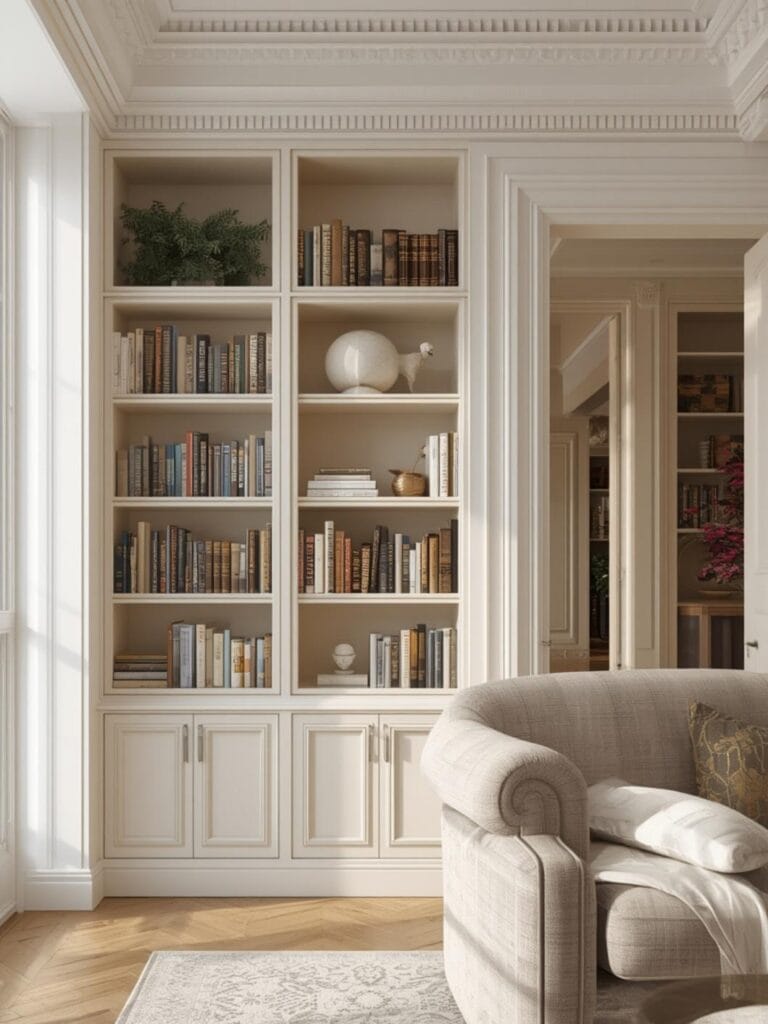
Symmetrical styling suits traditional spaces. Mirror your arrangement on both sides of the bookshelf, creating balance and harmony. This works beautifully for built-in units flanking a fireplace or window.
The library chic method celebrates books. Fill most shelves primarily with books, then add just a few carefully chosen accessories. Stack some books horizontally to create platforms for small plants or objects.
Mixed media styling combines practical storage with beauty. Use decorative baskets or boxes on some shelves to hide everyday items, then style other shelves with your prettiest objects. This gives you the best of both worlds—function and form.
The gallery wall approach treats each shelf like a tiny exhibition. Lean small framed artwork or prints against the back of the shelf, layering them with small sculptures or objects in front. This creates an ever-changing display you can refresh easily.
Benefits That Go Beyond Looking Pretty
A well-styled bookshelf does more than just look good—it transforms how you experience your entire room.
You’ll feel more organized and in control. When everything has a thoughtful place, your whole space feels calmer. That visual order reduces stress and makes your home feel more put-together even if other areas need work.
Your personality shines through in an authentic way. Unlike mass-produced wall art, a styled bookshelf tells your unique story through the objects, books, and treasures you choose to display. Guests immediately get a sense of who you are and what you love.
The room feels more expensive and designed. Professional interior designers always style bookshelves in their projects because it’s one of the fastest ways to add that finished, polished look. You get that same effect without hiring help.
You’ll actually use and enjoy your books and objects more. When things are beautifully displayed rather than shoved in boxes, you remember what you own and interact with it more often.
Three Approaches for Every Budget
Budget-friendly styling costs almost nothing. Shop your own home first, pulling accessories from other rooms to try in new combinations. Use books you already own, add grocery store flowers or clippings from your yard, and arrange family photos you’ve been meaning to display. Thrift stores offer amazing vintage books, unique objects, and planters for just a few dollars.
Mid-range styling lets you fill in gaps strategically. Invest in a few new plants from your local nursery, purchase matching storage baskets, and buy one or two statement pieces like a beautiful vase or sculptural bookends. This level typically costs between fifty and two hundred dollars and creates a cohesive, intentional look.
Premium styling incorporates investment pieces. Splurge on handcrafted pottery, limited edition books with beautiful bindings, or meaningful art pieces. Commission a local artist for custom items that make your bookshelf truly one-of-a-kind. This approach works well when you want your bookshelf to be a major focal point.
Small space adaptations make any of these work in tight quarters. Choose smaller-scale accessories, embrace vertical stacking, and use mirrors to create the illusion of more space. Even a single floating shelf can become a beautiful display when styled thoughtfully.
Common Mistakes That Undermine Your Efforts
Overcrowding every single inch makes your bookshelf look chaotic instead of curated. Leave some breathing room—empty space is just as important as filled space and lets individual objects shine.
Displaying everything at the same height creates a flat, boring look. Vary your heights by stacking books horizontally, using objects of different sizes, or adding small risers under certain items.
Ignoring the backs of shelves misses an opportunity for impact. Paint the backing of your bookshelf in a contrasting color, add wallpaper, or simply make sure that back wall is clean and fresh so your objects pop against it.
Forgetting about lighting leaves your beautiful styling in shadows. Add small battery-operated LED lights, position your bookshelf near a window, or aim a nearby lamp toward it to highlight your arrangement.
Using only new, matching accessories makes your shelf look staged rather than lived-in. Mix old with new, expensive with budget-friendly, and perfect with imperfect for a collected-over-time feel that’s more interesting and authentic.
Keeping Your Bookshelf Looking Fresh
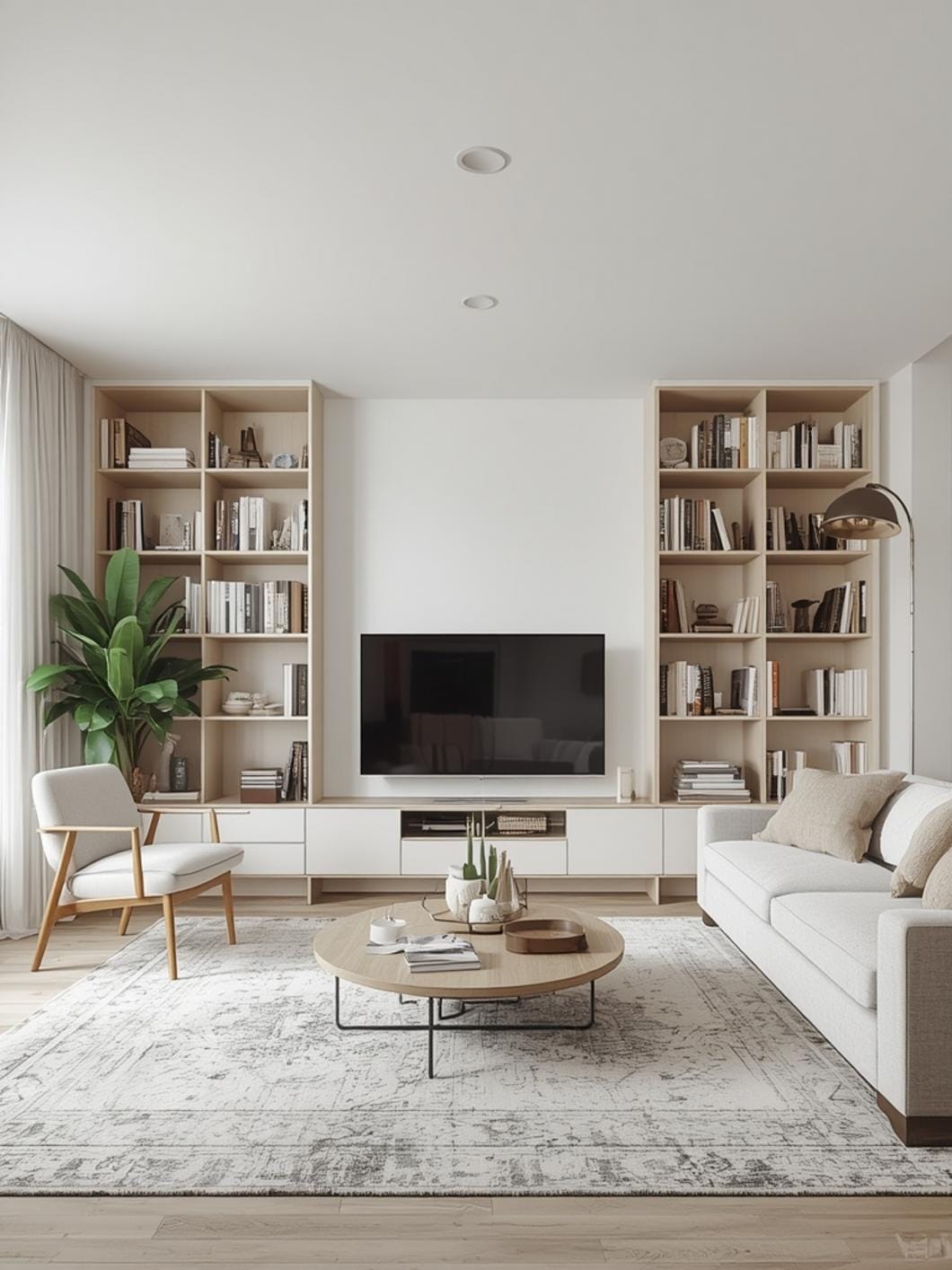
Maintaining your bookshelf display takes just a few minutes each week and ensures it always looks intentional.
Dust regularly with a microfiber cloth. Remove a few items at a time, wipe down the shelf, clean the objects, and replace them. This prevents that grimy buildup that makes even beautiful displays look neglected.
Rotate accessories seasonally or whenever you feel bored. You don’t need new purchases—just move things from other rooms or switch up the arrangement. This keeps your space feeling fresh and gives neglected objects new life.
Water plants on a consistent schedule and remove dead leaves promptly. Drooping or dying greenery undermines even the most thoughtfully styled shelf.
Edit ruthlessly every few months. If something no longer serves your aesthetic or feels meaningful, remove it. Your bookshelf should evolve as your taste and life change.
Straighten and adjust weekly. Books get pulled and replaced, objects get bumped—take thirty seconds each week to realign everything and maintain that curated look.
Conclusion
Your bookshelf has incredible potential to become one of the most beautiful and personal elements in your home. With thoughtful styling that balances books, plants, and meaningful objects, you create a display that’s both functional and inspiring.
Start with what you have, experiment with different arrangements, and don’t be afraid to switch things up when inspiration strikes. Your perfectly styled bookshelf is waiting—and it’s easier to achieve than you might think.
Explore more styling inspiration and practical decorating advice at DecorKingdom to make every corner of your home feel intentional and beautiful.
FAQs
How many decorative items should I put on each bookshelf?
Aim for the rule of three—about three groupings or objects per shelf works well for most standard bookcases. This might mean three books plus one decorative object, or two stacks of books with a plant. Avoid filling every inch, as negative space helps your eyes rest and makes individual items stand out more effectively.
Should I arrange my books by color or keep them organized by topic?
This depends entirely on how you use your books and your personal style. If you reference your books regularly for work or hobbies, organize by topic so you can find things easily. If your books are more decorative and you remember titles by their covers, color-coding creates a stunning visual impact that works beautifully in modern and contemporary spaces.
What’s the best way to style a bookshelf if I don’t have many books?
Use decorative objects, plants, baskets, and artwork to fill the space beautifully. You can also face some books outward to show their covers, which takes up more visual space than spine-out arrangements. Larger objects like vases, sculptures, or framed photos work perfectly in gaps where books might otherwise go.
How do I keep my bookshelf from looking too cluttered with plants?
Limit yourself to one or two plants per bookshelf unit, and choose different sizes and types for variety. Place a larger plant on a lower shelf where it has room to spread, and tuck a smaller succulent or trailing plant on an upper shelf. Make sure each plant has space to breathe rather than crowding it between objects.
Can I style a bookshelf in a rental without damaging anything?
Absolutely—bookshelf styling is one of the most renter-friendly decorating projects. You’re simply arranging objects on existing shelves without making any permanent changes. If you want to add backing paper or paint, use removable wallpaper or contact paper that peels off cleanly when you move. Everything else—books, plants, and accessories—comes with you.
—
Meta Title: Ideas for Decorating a Bookshelf: Fresh Styles 2026
Meta Description: Discover stunning ideas for decorating a bookshelf with plants, books, and accessories. Create a beautiful display you’ll love in any room.