10 Laundry Room Ideas for Your Basement
Your basement laundry room doesn’t have to feel like a dark, forgotten corner of your home. Many homeowners struggle with cramped layouts, poor lighting, and zero storage down there. But with the right approach, you can transform that awkward space into a surprisingly functional and even pleasant part of your daily routine.
Whether you’re dealing with exposed pipes, low ceilings, or barely enough room to open the dryer door, smart laundry room ideas basement setups can solve these challenges. The key is working with what you’ve got instead of fighting against it. With a few strategic changes and some creative thinking, your basement laundry area can become a space you actually don’t mind visiting.
This guide walks you through practical ways to maximize every inch while keeping things simple and doable for any homeowner.
Table of Contents
What You’ll Need to Get the Look
Creating a functional basement laundry room starts with choosing the right elements for your space. Focus on items that add both utility and a touch of style to brighten up that below-ground location.
Essential furniture and fixtures:
– Wall-mounted drying rack or retractable clothesline
– Rolling cart or utility table for folding
– Stackable washer and dryer (if ceiling height allows)
– Pegboard or slatwall system for vertical storage
– LED shop lights or track lighting fixtures
– Moisture-resistant paint in light colors
– Vinyl plank flooring or sealed concrete coating
Storage solutions:
– Clear plastic bins with labels
– Over-the-door organizers
– Tension rods for hanging
– Slim rolling storage tower
– Wall-mounted shelving brackets and boards
– Magnetic containers for small items like clothespins
Decor touches that matter:
– Washable area rug or anti-fatigue mat
– Battery-operated or plug-in sconces
– Framed prints in waterproof frames
– Small potted faux plants
– Colorful laundry baskets
You don’t need everything on this list, but having a mix of functional storage and a few cheerful details makes the space feel less utilitarian and more like an actual room in your home.
Finding Your Style and Season
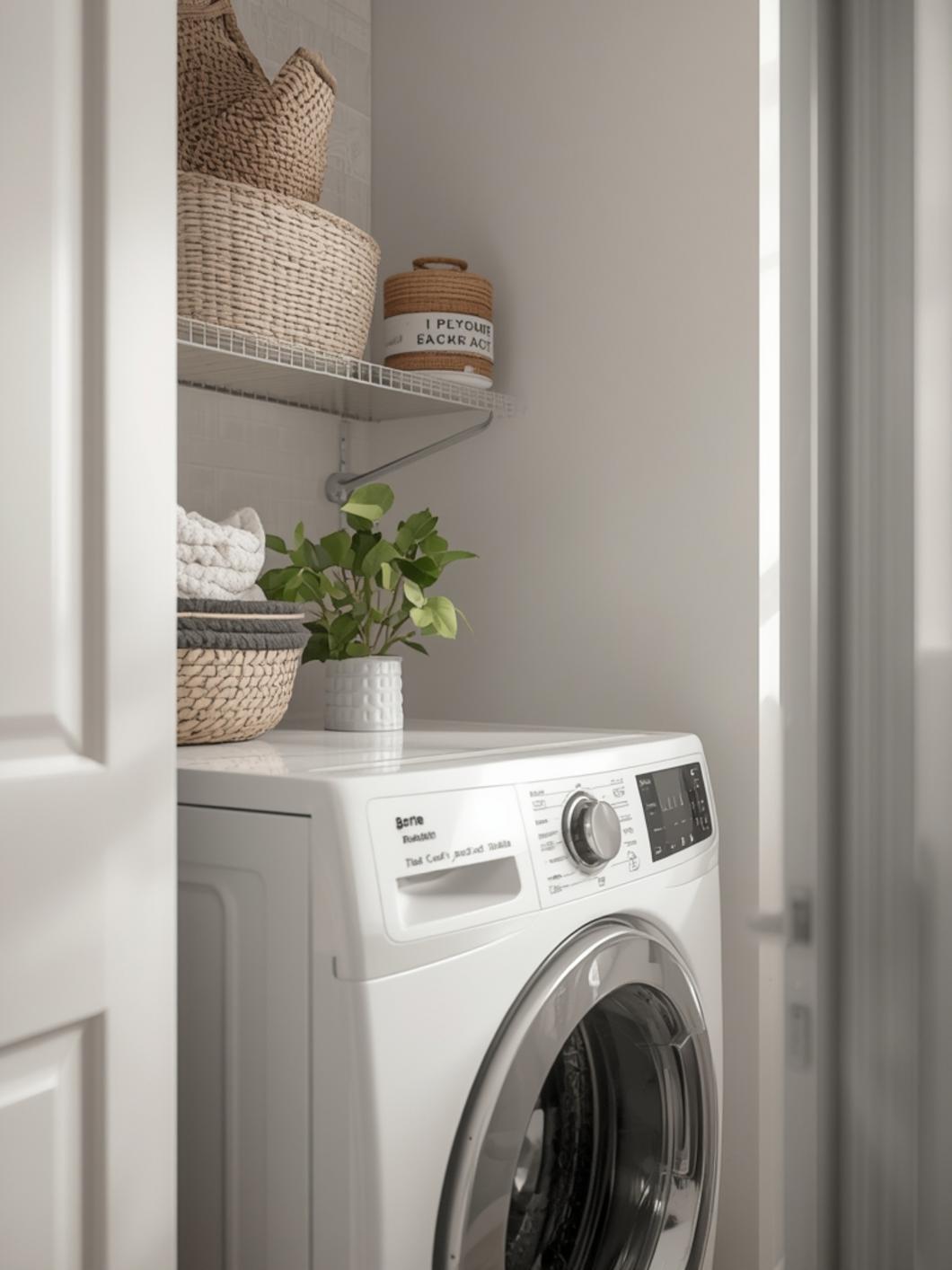
Basement laundry rooms benefit from year-round consistency since they’re not exposed to seasonal changes. That said, the style you choose depends on your home’s overall vibe and how much natural light (if any) filters into the space.
Consider these factors before you start:
Your existing basement conditions matter most. If you’re dealing with concrete block walls, moisture control comes before pretty paint colors. Address any dampness issues first, then move on to aesthetics.
Lighting availability shapes your entire design approach. Basements with small windows need different solutions than completely windowless spaces. Plan to add multiple light sources rather than relying on a single overhead fixture.
Timing your refresh:
Most homeowners tackle basement laundry improvements during spring or fall when indoor projects feel more appealing. Summer heat makes basement work comfortable, while winter means you’re dealing with cold concrete floors.
Budget your project in phases if needed. Month one might focus on storage additions, month two on lighting upgrades, and month three on aesthetic finishing touches. This approach keeps costs manageable and prevents overwhelm.
Plan for at least two full weekends to complete a basic refresh, or spread tasks across several weeknights if you prefer working in shorter bursts.
7 Ideas to Try in Your Home
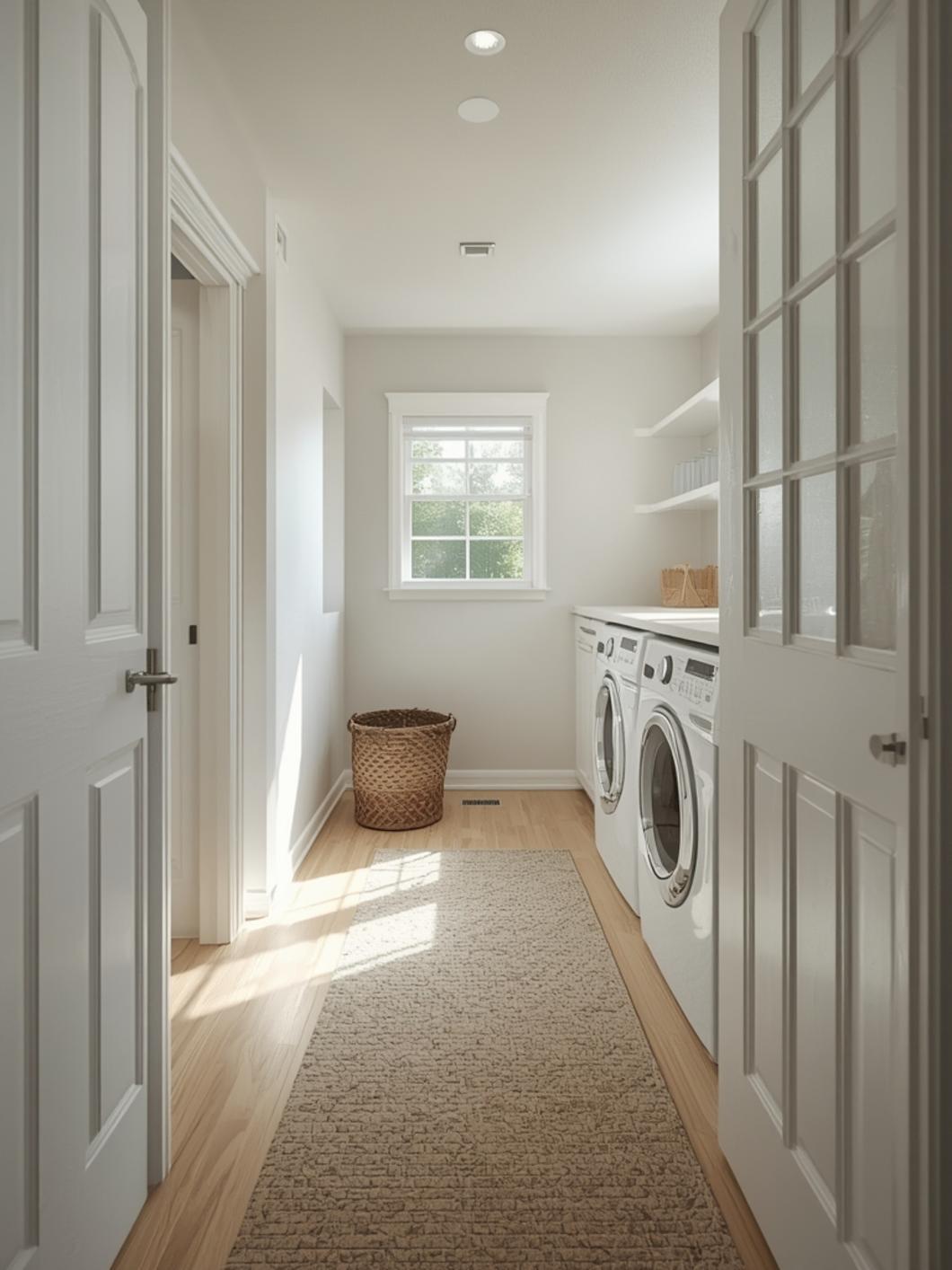
1. Brighten with strategic lighting layers
Replace that single dim bulb with multiple light sources. Add LED strip lights under shelves, position a bright shop light above your folding area, and install battery-operated puck lights inside cabinets. Layered lighting makes the space feel larger and more welcoming.
2. Paint everything one light color
Choose a single light neutral—white, pale gray, or soft blue—and paint walls, ceiling, exposed joists, and even the concrete floor. This monochromatic approach visually expands the space and creates a cohesive, intentional look instead of an unfinished basement feel.
3. Create zones with area rugs
Define your folding zone, sorting zone, and storage zone with coordinating washable rugs. This simple trick adds warmth underfoot while helping the space feel organized and purposeful rather than chaotic.
4. Install a wall-to-wall folding counter
Mount a simple butcher block or laminate countertop along one wall at comfortable height. This gives you dedicated folding space and creates a visual anchor that makes the room feel more finished. Add baskets or bins underneath for sorting dirty laundry.
5. Use vertical storage ruthlessly
Basement laundry rooms rarely have extra floor space, so go vertical. Mount shelves as high as you can reach, hang pegboards for frequently-used items, and install hooks everywhere. Small basement laundry room storage solutions rely heavily on making use of every wall inch available to you.
Consider a approach for maximizing tight quarters.
6. Add a sink station if plumbing allows
If you’ve got existing plumbing nearby, adding a utility sink transforms functionality. You gain a spot for pretreating stains, hand-washing delicates, and filling your mop bucket. Even a small drop-in sink makes a significant difference in daily use.
7. Hide mechanical eyesores creatively
Exposed pipes, ductwork, and utility panels are basement realities. Instead of fighting them, work around them with tension curtains, painted PVC pipe covers, or decorative screens that maintain access while improving aesthetics. Keep everything functional but less visually dominant.
Benefits of a Well-Planned Basement Laundry
A thoughtfully designed basement laundry room delivers benefits that extend beyond just having clean clothes. The improvements you make ripple through your daily routines in surprisingly positive ways.
You’ll save steps and time every single week. When everything has a designated spot and you’ve optimized the workflow, laundry becomes less of a dreaded chore. No more running back upstairs because you forgot the detergent or searching through piles for a missing sock.
Your home’s usable square footage effectively increases. By turning that neglected basement corner into a proper functional room, you’re adding value to your property. Future buyers appreciate finished, organized utility spaces.
Family members become more independent with laundry tasks. A well-labeled, easy-to-navigate setup means older kids and partners can handle their own laundry without constant questions. Clear systems create household independence.
You protect your belongings better. Proper storage keeps detergents away from moisture, prevents mildew on clean clothes waiting to be folded, and creates space to properly care for delicate items that need special attention.
The emotional benefit matters too—a space that functions well and looks decent just feels better to use. You’ll procrastinate less on laundry day when the environment itself isn’t working against you.
Tips, Alternatives, and Styling Advice
Budget-friendly approach (under $300):
Focus on adding lighting and simple storage. Paint what you can with leftover paint from other projects, install peel-and-stick tiles on the floor, and use repurposed furniture like an old dresser for supply storage. Shop secondhand for baskets and bins.
Mid-range refresh ($300-$800):
Invest in quality LED lighting fixtures, proper moisture-resistant paint, and custom shelving that fits your exact space. Add a countertop work surface and upgrade to matching storage containers. Include a dehumidifier if dampness is an issue.
Premium makeover ($800-$2000):
Install luxury vinyl plank flooring throughout, add a utility sink with a modern faucet, invest in custom cabinetry or closet system components, and upgrade to a premium stacked washer-dryer set if your current units are older. Include decorative tile backsplash and designer lighting.
Adaptation for extremely tight spaces:
When floor space is minimal, every storage solution needs to fold, stack, or mount to walls. Use a fold-down wall-mounted table that disappears when not in use, hang collapsible drying racks, and choose slim-profile machines specifically designed for compact areas.
Consider to further brighten your space.
Common Mistakes to Avoid
Ignoring moisture and ventilation from the start. Basement environments are naturally damp, and adding a dryer makes it worse. Install a dehumidifier and ensure your dryer vents properly to the outside before decorating.
Choosing dark colors to hide dirt. This instinct backfires in basements where light is already limited. Light colors actually make dirt more noticeable, which motivates you to clean more regularly and keeps the space fresher overall.
Skipping the planning phase and buying storage randomly. Measure your exact space and map out where items will go before purchasing anything. Random storage solutions create clutter instead of solving it.
Forgetting about folding space entirely. Many homeowners focus only on washing and drying, then end up folding clothes on the dryer top or carrying everything upstairs. Dedicate at least two feet of counter space for this essential task.
Overlooking the importance of good lighting. A single overhead bulb isn’t enough for detailed tasks like stain removal or sorting colors. Budget for multiple light sources from the beginning rather than adding them later out of frustration.
Maintenance and Upkeep Tips
Keep your basement laundry room functioning smoothly with simple regular care that takes just minutes.
Weekly tasks:
Wipe down the washer door seal and detergent drawer to prevent mildew buildup. Sweep or vacuum the floor to catch lint before it accumulates in corners. Empty the dryer lint trap completely after every use.
Monthly tasks:
Check behind and under machines for escaped socks, dust buildup, or small leaks. Vacuum the dryer vent hose and surrounding area to maintain efficiency. Wipe down shelves and reorganize any storage that’s gotten messy.
Seasonal attention:
Test your dehumidifier to ensure it’s working properly, especially heading into humid summer months. Check for any new cracks or moisture spots on walls or floors. Refresh labels on storage containers as needed and purge supplies you haven’t used.
Deep clean your washing machine by running an empty cycle with vinegar or a machine cleaner tablet. This prevents odors and keeps your clothes smelling fresh.
Quick daily habits:
Don’t leave wet clothes sitting in the washer—they’ll develop that sour smell quickly in a basement environment. Hang damp items immediately or toss them in the dryer. Keep supplies returned to their designated spots so you always know where everything is.
Finishing Touches That Make the Difference
Your basement laundry room can genuinely become a space that works for you instead of against you. The improvements you make—whether simple or extensive—compound into a more efficient home and easier daily routines.
Start with the changes that solve your biggest frustrations first. Maybe that’s adding better lighting, maybe it’s creating storage for all those mismatched bottles, or maybe it’s simply painting the walls something brighter than dingy beige.
Ready to tackle more home improvement projects? Explore DecorKingdom for hundreds of practical ideas that make your entire house work better for the way you actually live.
FAQs
How do I stop my basement laundry room from smelling musty?
Run a dehumidifier constantly to keep humidity below 50 percent, ensure your dryer vents properly to the outside, and leave the washer door open between loads so it can dry completely. Adding a small fan improves air circulation and prevents that stale basement smell from settling into fabrics.
What’s the best flooring for a basement laundry room?
Luxury vinyl plank (LVP) works beautifully because it’s waterproof, comfortable underfoot, and handles basement moisture without warping. Sealed concrete is budget-friendly and durable, while epoxy coating adds color and protects against stains. Avoid traditional hardwood, laminate, or carpet in basement laundry spaces.
Can I make my basement laundry room feel less like a basement?
Absolutely—bright white or light-colored paint on everything, multiple light sources at different heights, and adding warm touches like a colorful rug and some artwork make a massive difference. The goal is creating visual warmth and adequate lighting so your brain doesn’t register it as a dark underground space.
How much storage do I actually need in a laundry room?
Plan for storage that holds detergent, fabric softener, stain removers, dryer sheets, and a small supply of extras. Add space for items that need hanging to dry, bins for sorting lights and darks, and room for seasonal items like wool wash or beach towels. Most homeowners need about 8-12 linear feet of shelving or cabinet space total.
Should I stack my washer and dryer or keep them side by side?
If your basement has low ceilings or very limited floor space, stacking makes sense and frees up room for folding or storage areas. If you have the width but not the depth, side-by-side placement is easier to load and unload. Consider your physical comfort—bending to a front-load washer on the floor is harder on your back than reaching into a stacked unit.
—
Meta Title: Laundry Room Ideas Basement: Smart Solutions 2026
Meta Description: Transform your basement laundry with these practical laundry room ideas basement homeowners love. Storage, lighting, and layout tips that work.