10 Shower Wall Accent Tile Ideas That Feel Like a Spa
Your shower is more than just a place to rinse off. It’s the first spot you see in the morning and the last place you unwind at night. Yet most showers feel… boring. Plain white tiles from wall to wall don’t exactly spark joy.
Shower wall accent tile ideas can completely change the feel of your bathroom without a full renovation. A well-placed accent creates a focal point that makes your shower feel custom and intentional. You don’t need a massive budget or a contractor to make it happen.
Whether you’re refreshing an outdated bathroom or adding personality to a builder-grade space, the right accent tile brings character, depth, and a touch of luxury to your daily routine.
Table of Contents
What You’ll Need to Get the Look
Before you start dreaming about patterns and colors, gather your inspiration and materials. You’ll need fewer items than you think.
Tile options:
– Glass mosaic tiles for a spa-like shimmer
– Natural stone strips for organic texture
– Metallic or mirrored tiles for modern drama
– Patterned ceramic tiles for bold statements
– Subway tiles in contrasting colors for classic appeal
Installation supplies:
– Thin-set mortar designed for wet areas
– Tile spacers to keep lines clean
– Grout in a color that complements your design
– Waterproofing membrane or sealant
– Basic tile tools like a notched trowel and sponge
Design tools:
– Paint samples to test color coordination
– Painter’s tape to map out placement
– Graph paper for planning your layout
– A measuring tape and level
You won’t need any heavy equipment or specialized contractor tools. Most of what you need is available at your local home improvement store.
Finding Your Style and Season
Accent tiles work year-round, but your design choices might shift with the seasons and your mood. Spring and summer invite lighter, airier palettes—think seafoam greens, soft blues, and crisp whites. These colors make small bathrooms feel more spacious and bring a coastal vibe indoors.
Fall and winter call for deeper, richer tones. Charcoal grays, warm terracotta, and jewel-tone mosaics create a cozy, enveloping atmosphere. These choices work especially well if your bathroom gets limited natural light.
Consider the overall feel you want to create. Are you after a serene spa retreat where you can decompress? Or do you want an energizing space that wakes you up in the morning? Your accent tile should support that intention. A vertical stripe of glass tiles creates movement and energy, while a horizontal band of stone offers grounding calm.
Timing your project around a bathroom refresh makes sense. If you’re already replacing fixtures or repainting, adding accent tiles during that window saves you from doing multiple small projects. Most accent tile installations take a weekend to complete once you’ve finalized your design.
7 Ideas to Try in Your Home
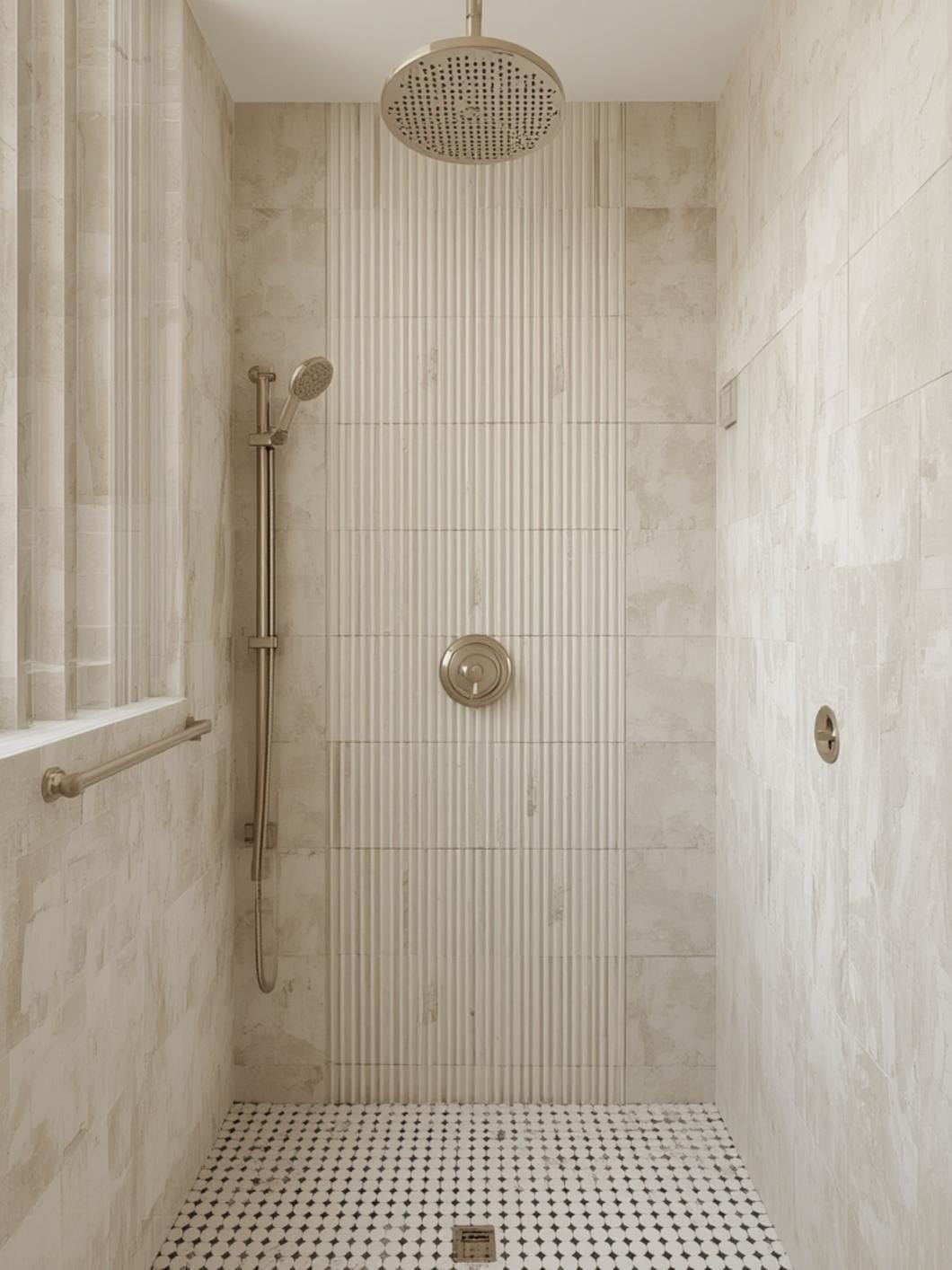
1. The Vertical Waterfall
Run a single vertical stripe of mosaic tiles from ceiling to floor behind your showerhead. This draws the eye upward and makes standard eight-foot ceilings feel taller. Glass tiles in shades of blue or green mimic water and reinforce the shower’s purpose. Keep the width narrow—six to twelve inches works beautifully without overwhelming the space.
2. The Niche Frame
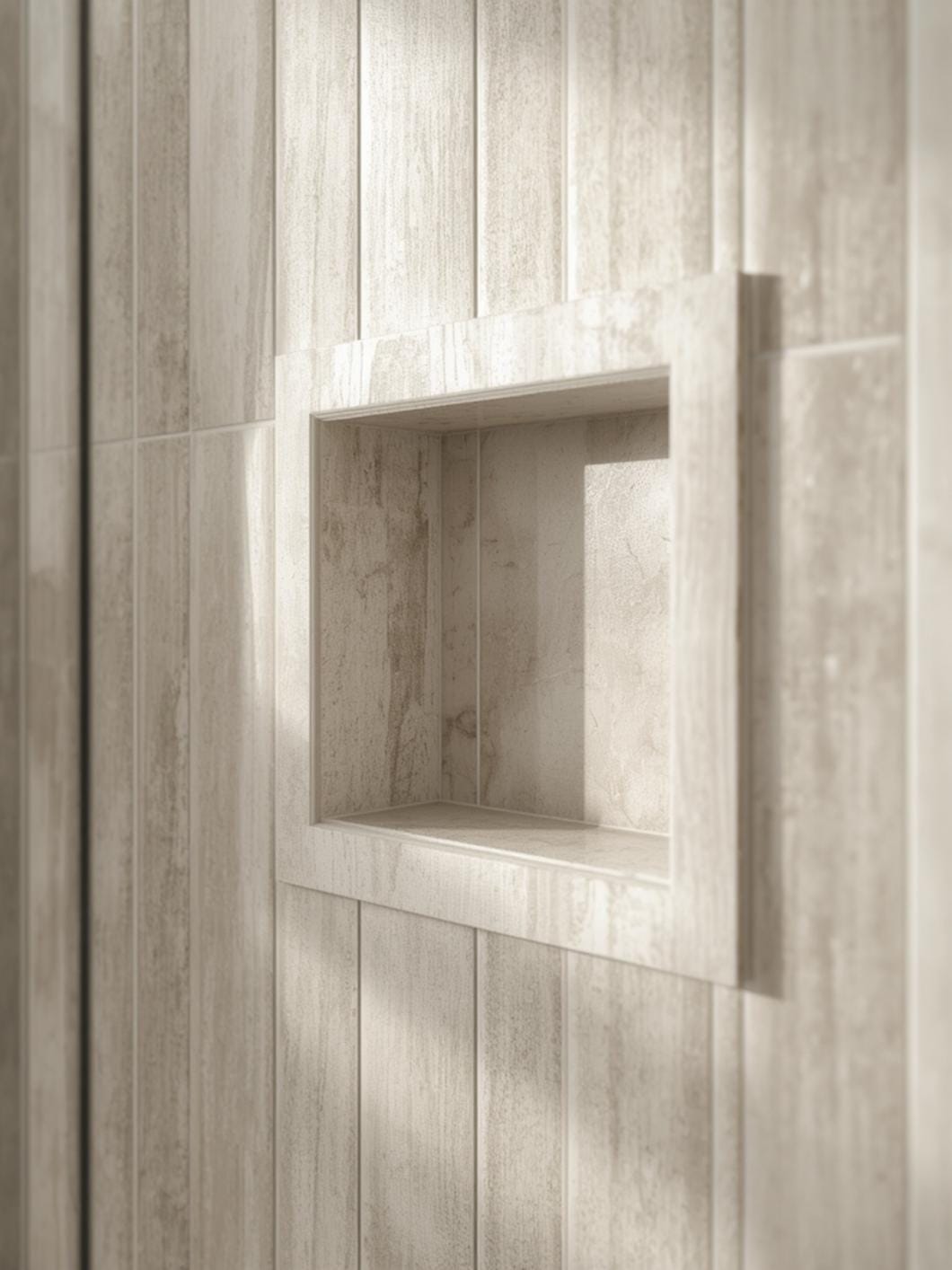
Built-in shower niches need definition. Frame yours with a contrasting tile that wraps around the opening. If your main walls are white subway tiles, try a hexagonal mosaic or a slim pencil tile in metallics. This small detail transforms a functional cutout into an architectural feature worth noticing.
3. The Horizontal Band
Place a horizontal stripe of accent tiles at eye level, running the full width of your shower. This works especially well in long, narrow showers where you want to break up vertical space. Choose tiles with texture or pattern to create visual interest. How to waterproof shower accent tiles matters most with horizontal installations—you’ll need to ensure your substrate is properly sealed and that you’re using the right mortar for wet applications.
4. The Behind-the-Showerhead Statement
Create a focal point directly behind your showerhead with a square or rectangular section of accent tiles. This area naturally draws attention since it’s where you face while showering. Patterned cement tiles or bold geometric designs work wonderfully here. Keep it contained—a three-foot-by-three-foot section creates impact without chaos.
5. The Full Back Wall
If you’re feeling bold, cover the entire back wall of your shower in accent tiles and keep the side walls neutral. This approach works beautifully in alcove showers where one wall is the clear star. Natural stone slabs or large-format porcelain with dramatic veining create a luxurious backdrop without small grout lines to maintain.
6. The Corner Cascade
Install accent tiles in one vertical corner, letting them wrap slightly onto both adjacent walls. This creates depth and makes the corner feel intentional rather than leftover. Stacked stone or three-dimensional tiles add physical texture that plays with light and shadow.
7. The Floor-to-Ceiling Stripe Border
Frame your entire shower entrance with vertical stripes of accent tiles running from floor to ceiling on both sides. This creates a portal effect and clearly defines the shower zone. Slim profile tiles in contrasting colors work best—they provide definition without eating into shower space.
Benefits / Advantages
Accent tiles do more than look pretty. They solve real problems in everyday bathrooms.
First, they hide imperfections and age. If your existing shower tiles are dated but structurally sound, strategically placed accent tiles draw attention away from what you don’t love. Your eye goes to the beautiful new element instead of the tired original tiles.
Second, they create a custom look at a fraction of the cost. Full shower retiles run thousands of dollars and take days or weeks. An accent tile project might cost a few hundred dollars and take a weekend. You get that “designed just for me” feeling without the designer price tag.
Third, they add perceived value to your home. Buyers notice thoughtful design details. A well-executed accent tile suggests the homeowner cares about aesthetics and maintenance—traits that extend throughout the house.
Finally, they make your daily routine more enjoyable. You’ll actually look forward to your shower when it feels special. That mood boost at the start and end of each day adds up to genuine quality-of-life improvement.
Tips, Alternatives, Styling Advice
Budget-Friendly Option:
Peel-and-stick mosaic tiles have come a long way. Modern versions are water-resistant and easy to install. Place them as a temporary accent in a rental or as a test run before committing to permanent tiles. They cost just $15–30 per sheet and require no special tools.
Mid-Range Option:
Glass mosaic tiles on mesh backing offer the best balance of style and affordability. You’ll spend $8–15 per square foot. They come in endless color combinations and catch light beautifully. Installation is straightforward since the mesh backing keeps spacing consistent.
Premium Option:
Natural stone slabs or handmade artisan tiles create one-of-a-kind installations. Expect to invest $25–50 per square foot. The payoff is a truly unique shower that no neighbor will have. Marble, onyx, and quartzite all bring organic patterns that feel luxurious.
Small Space Adaptation:
If your shower is tiny, skip busy patterns and stick to solid colors with texture. A vertical stripe in a slightly darker shade of your main tile color adds dimension without visual clutter. Reflective glass tiles in light colors bounce light around and prevent that cave-like feeling.
Common Mistakes to Avoid
Choosing tiles that don’t match your skill level. Tiny mosaic sheets are gorgeous but unforgiving for first-timers—one uneven section shows immediately. Start with larger-format tiles that are easier to place accurately.
Forgetting about grout color. Your grout can make or break the design. Dark grout hides stains but creates strong grid lines that can look busy. Light grout blends better but shows dirt over time. Test samples before committing to the whole shower.
Skipping the layout planning. Don’t start installing and hope it works out. Measure twice, mark your center points, and do a dry layout on the floor first. This prevents ending up with awkward partial tiles in visible corners.
Using the wrong adhesive. Not all mortars are rated for wet, vertical applications. Read labels carefully and choose products specifically designed for shower walls. This isn’t where you save money—proper adhesive prevents future tile failures.
Placing accent tiles where they’ll get constant water spray. The area directly under your showerhead takes the most abuse. If you choose porous natural stone for that spot, you’ll fight water stains forever. Save those tiles for drier zones and use nonporous materials in high-spray areas.
Maintenance / Upkeep Tips
Keep your accent tiles looking fresh with simple regular care. Squeegee after each shower to prevent water spots and soap buildup. This 30-second habit dramatically reduces cleaning time.
Seal natural stone tiles every 6–12 months with a quality stone sealer. Apply it with a foam brush, let it soak in for the recommended time, and wipe away excess. This prevents stains from penetrating the stone.
Clean grout lines monthly with a mixture of baking soda and water. Make a paste, apply with an old toothbrush, scrub gently, and rinse thoroughly. Avoid harsh acidic cleaners that can erode grout over time.
Address any loose tiles immediately. Water infiltrating behind tiles causes exponential damage. If you notice a tile wiggling or grout cracking, scrape out the old material and replace it. A small repair now prevents a major headache later.
Make Your Shower Your Favorite Room
Accent tiles turn a forgettable shower into a space that genuinely makes you happy. You don’t need a complete bathroom overhaul to achieve that designer look—just thoughtful placement of the right tiles in the right spots.
Start with one of these ideas, adapt it to your space and style, and enjoy the process of making your bathroom truly yours. Ready for more ways to refresh your home? Explore our other bathroom and tile ideas right here on DecorKingdom.
FAQs
What’s the best height for a horizontal accent tile band in a shower?
Place it between 48 and 60 inches from the floor, roughly at eye level for most adults. This creates a natural focal point without interfering with showerhead placement. If your shower has a low ceiling, position it slightly lower to maintain balanced proportions.
Can I install accent tiles over existing shower tiles?
Yes, if the existing tiles are firmly attached and the surface is clean and level. Use a bonding primer designed for tile-over-tile applications, then proceed with thin-set mortar rated for wet areas. This saves demolition time but adds slight thickness to your walls.
Do accent tiles need to be the same material as my main shower tiles?
Not at all. Mixing materials adds interest and texture. You can pair porcelain field tiles with glass accents, or combine matte ceramic with glossy metallics. Just ensure all tiles are rated for wet wall applications and that your installation materials are compatible.
How much extra should I budget for accent tiles?
Plan for an additional 15–30% on top of basic tile costs. Accent tiles themselves often cost more per square foot, and you may need specialty tools or adhesives. For a typical shower accent, budget an extra $150–400 beyond your standard tile expenses.
Will accent tiles make my small bathroom look even smaller?
Not if you choose wisely. Vertical stripes elongate space, while light-colored glass tiles reflect light and create openness. Avoid large-scale busy patterns in tight quarters. One well-placed accent adds personality without overwhelming a compact bathroom.
—
Meta Title: Shower Wall Accent Tile Ideas That Wow in 2026
Meta Description: Discover shower wall accent tile ideas that transform boring bathrooms into personal retreats. Get inspiring designs plus waterproofing tips.