5 Ways to Turn a Boring Hallway Into a Gallery Wall Showstopper
Your hallway deserves more than just a path from one room to another. It’s prime real estate for showcasing your personality, your memories, and your style. Yet so many of us leave these walls bare, unsure how to tackle that long, narrow space.
That’s where hallway gallery wall ideas come in. Whether your hallway is bright and wide or narrow and dim, a well-designed gallery wall can turn it into a visual journey through your home. You don’t need a designer’s budget or professional installation skills — just a little planning and confidence to hang what you love.
This guide walks you through everything you need to create a stunning hallway gallery that feels curated, not cluttered.
Table of Contents
What You’ll Need to Get the Look
Creating a gallery wall in your hallway doesn’t require complicated tools or expensive equipment. Here’s what you’ll want to gather before you begin:
Picture frames in various sizes — Mix rectangles, squares, and even circular frames to create visual interest. You can stick with matching finishes for a cohesive look or blend metals and wood tones for an eclectic feel.
Artwork and photos — This is your chance to tell a story. Family photos, travel prints, botanical illustrations, abstract art, vintage posters, or even framed fabric swatches all work beautifully.
Measuring tape — Essential for spacing your frames evenly and keeping everything level along your hallway’s length.
Pencil and painter’s tape — Use these to map out your layout on the wall before committing to nail holes.
Picture hanging strips or nails — Choose based on your wall type and frame weight. Adhesive strips work wonderfully in rentals or if you want flexibility to change things up.
Level tool — Even a small phone app level will help you avoid crooked frames that throw off the entire display.
Kraft paper or newspaper — Trace your frames onto paper and tape the outlines to your wall first. This lets you test arrangements without making holes.
Finding Your Style and Season
Gallery walls work year-round, but certain moments make them especially meaningful. Maybe you’re preparing your home for holiday guests and want to showcase family memories. Or perhaps spring cleaning has you reimagining your spaces with fresh eyes.
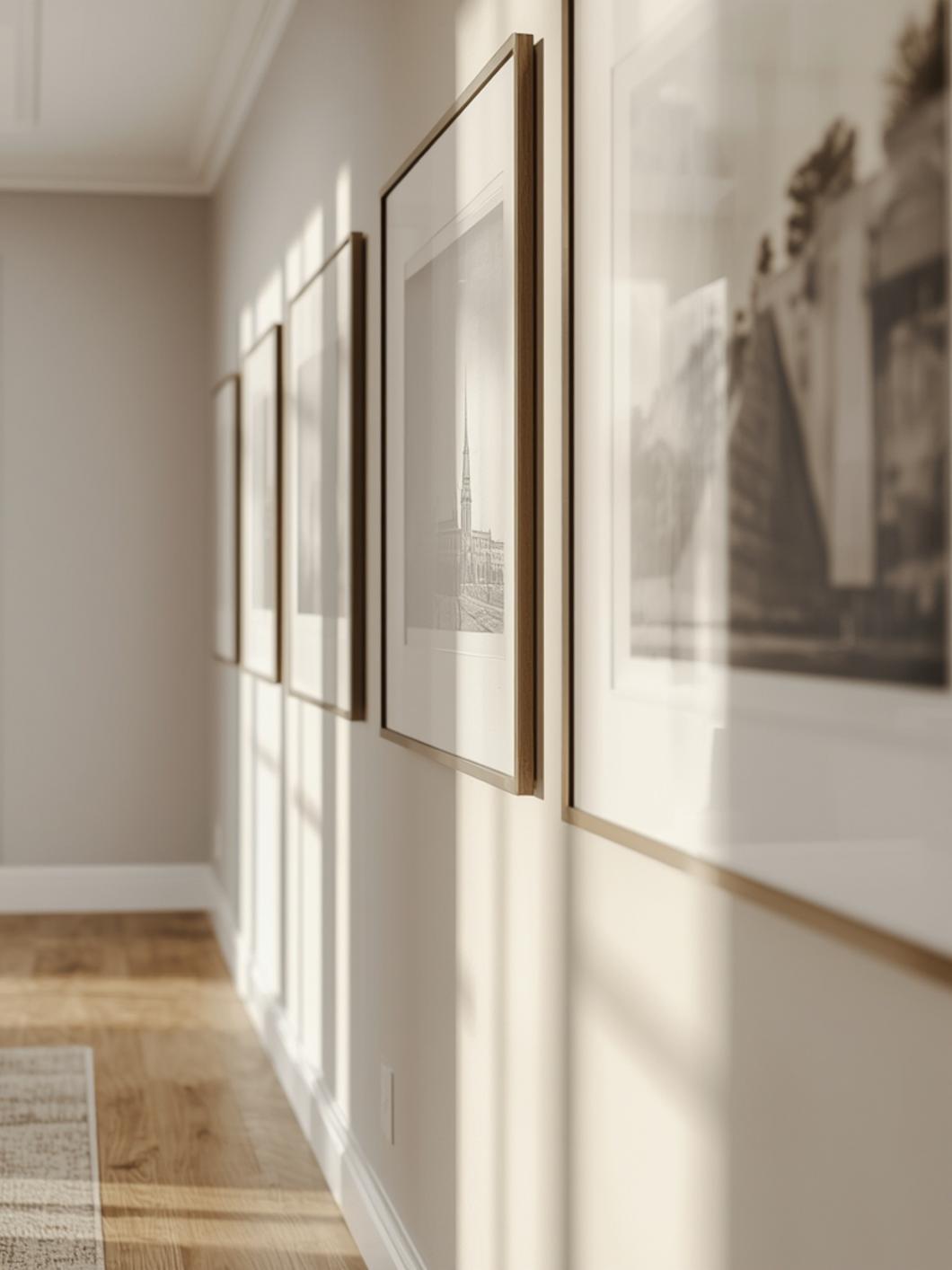
Think about the mood you want your hallway to convey. A gallery wall filled with black and white family photos creates timeless elegance. Colorful abstract prints bring energy to a space that might otherwise feel transitional. Botanical prints and nature photography work beautifully in homes with lots of natural light.
Consider your home’s existing style too. If your living spaces lean modern and minimal, keep your gallery wall clean-lined with uniform frames and plenty of breathing room between pieces. If your style is more traditional or farmhouse-inspired, layered frames with mixed finishes and sizes will feel right at home.
The beauty of a hallway gallery is that it can evolve with you. Switch out pieces seasonally, add new travel photos after vacations, or rotate children’s artwork to keep the display fresh and personal.
7 Ideas to Try in Your Home
The Symmetrical Grid
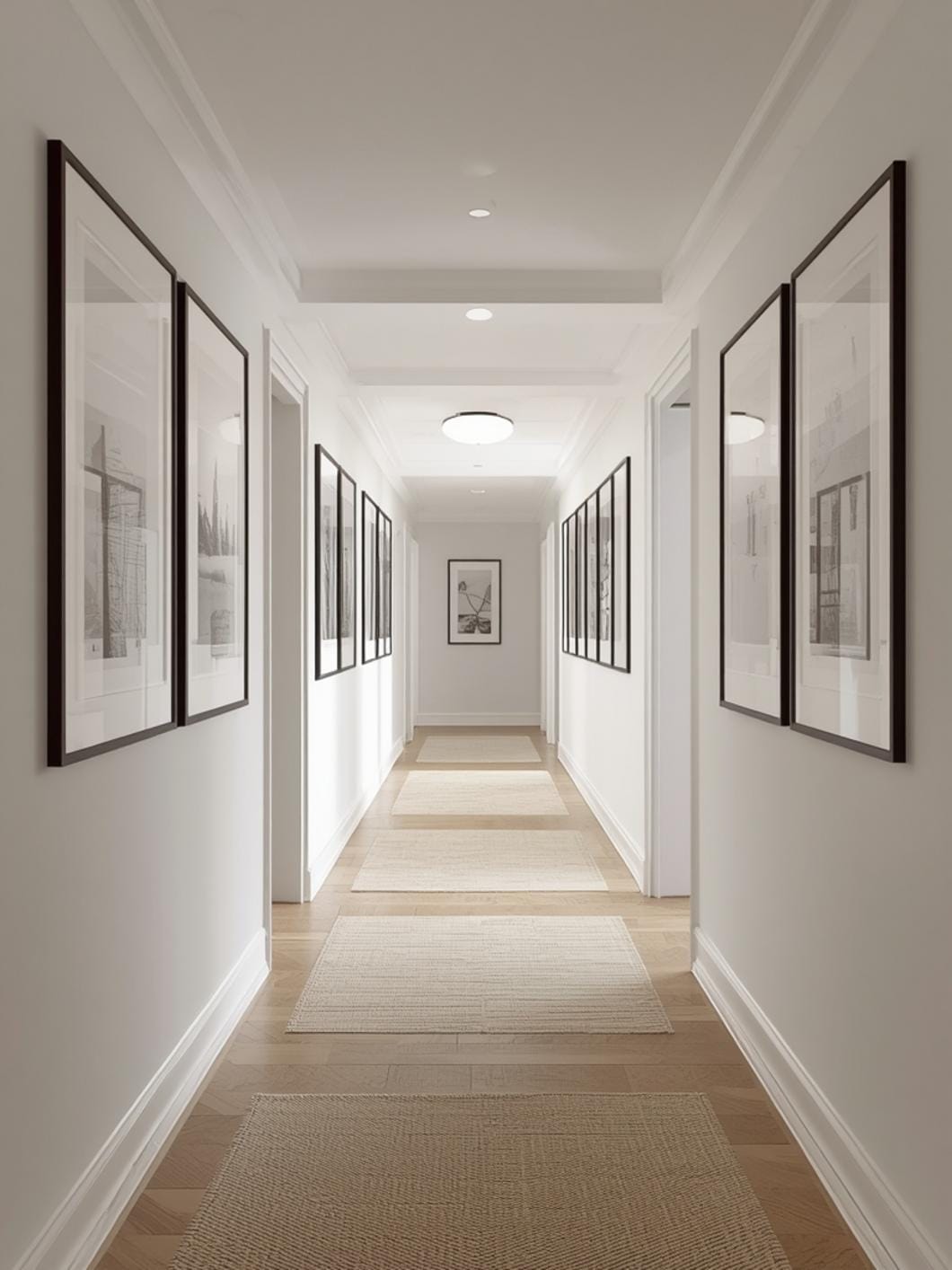
This classic approach uses frames of identical size arranged in neat rows and columns. It brings order to a narrow space and makes even a modest collection look intentional and polished. Stick with the same mat color and frame finish for maximum impact.
The Salon-Style Mix
Embrace organized chaos with frames of all sizes overlapping and filling your wall from floor to ceiling. This works especially well in hallways with high ceilings or period homes where an eclectic vibe matches the architecture. Start with your largest piece at eye level and build outward.
The Linear Arrangement
Perfect for how to hang artwork in a narrow hallway, this style keeps everything at the same horizontal line. Your frames might vary in size and orientation, but their center points or bottom edges align. This creates visual flow that pulls the eye down the hallway rather than overwhelming the narrow width.
The Ledge System
Install narrow floating shelves along your hallway wall and lean frames against the wall rather than hanging them. This approach gives you incredible flexibility to swap pieces without new holes and lets you layer smaller frames in front of larger ones.
The Oversized Single Statement
Sometimes one large piece makes more impact than many small ones. A single oversized photograph, painting, or mirror-backed frame can anchor a short hallway beautifully without feeling cramped. This works particularly well if your hallway has architectural details you don’t want to hide.
The Monochrome Story
Choose all black and white photography or prints for a cohesive, gallery-like feel. The lack of competing colors lets you mix wildly different subjects and frame styles while maintaining visual harmony. This approach feels especially sophisticated in contemporary homes.
The Themed Collection
Create a gallery around a single theme: vintage travel posters, botanical illustrations, family heritage photos, or your children’s artwork through the years. A clear theme gives your hallway purpose and makes selecting new pieces much easier over time.
Benefits of a Hallway Gallery Wall
A thoughtfully designed gallery wall transforms the most overlooked space in your home into something you actually want to look at. Every trip down the hallway becomes a small moment of joy rather than just a functional movement between rooms.
Gallery walls also solve the tricky problem of what to do with narrow, awkward spaces. Unlike furniture, which can make hallways feel cramped, artwork adds personality without taking up precious floor space. Your hallways suddenly feel finished and intentional.
There’s also something deeply personal about walking past your memories and favorite images daily. A hallway gallery becomes a visual diary of your life — family moments, places you’ve traveled, art that moves you. Guests get an immediate sense of who you are before they even reach your main living spaces.
From a practical standpoint, gallery walls are also remarkably flexible. You can start with just a few pieces and add more over time as you find them. Rearranging or updating is as simple as swapping out a frame or two, giving you an easy refresh without major redecorating.
Tips, Alternatives, and Styling Advice
Budget-Friendly Option
Print your own photos and frame them in identical frames from affordable retailers. Black frames with white mats create a cohesive look even when you’re mixing professional photography with your own snapshots. Thrift stores are also treasure troves for vintage frames you can paint to match.
Mid-Range Option
Invest in a mix of quality frames in two or three coordinating finishes. Pair these with a combination of purchased prints and personal photos. Consider using some larger statement pieces alongside smaller ones to create visual interest without buying dozens of frames.
Premium Option
Commission custom framing for meaningful pieces or invest in limited edition prints from artists you love. Mix in museum-quality matting and frames with special features like conservation glass. The investment shows in the overall polish and longevity of your display.
Small Space Adaptation
In a very narrow hallway, stick with a single vertical line of frames rather than trying to go wide. Three to five frames arranged vertically creates impact without overwhelming the space. Keep frames small to medium sized — nothing wider than 16 inches works best in tight quarters.
Common Mistakes to Avoid
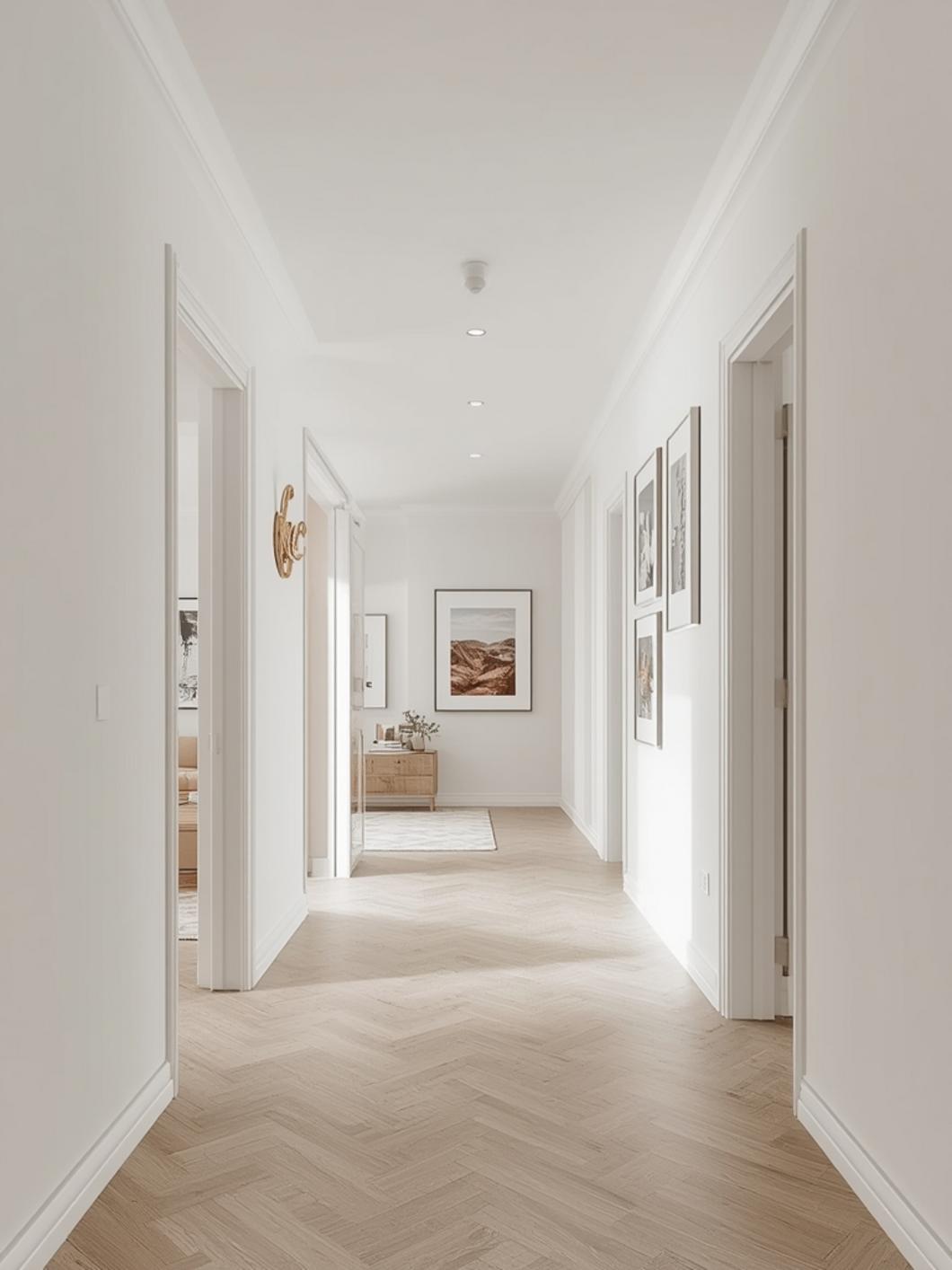
Hanging everything too high. Many people hang artwork as if everyone viewing it is six feet tall. The center of your gallery wall should sit at 57-60 inches from the floor — standard gallery height that works for most viewers.
Ignoring the spacing between frames. Crowding frames too close together looks chaotic, while spacing them too far apart loses visual connection. Aim for 2-3 inches between frames for a cohesive look that still lets each piece breathe.
Forgetting to plan the layout first. Jumping straight to hammering nails often results in uneven spacing and poorly balanced compositions. Always map your arrangement on the floor or with paper templates on the wall first.
Mixing too many frame styles without intention. While eclectic galleries can be beautiful, randomly mixing every frame style you own rarely works. Choose 2-3 coordinating finishes or stick with one finish in varying sizes for the most polished result.
Neglecting lighting in darker hallways. Even the most beautiful gallery wall disappears in a dim hallway. Consider adding picture lights, wall sconces, or even LED strip lighting to ensure your artwork gets the visibility it deserves.
Maintenance and Upkeep Tips
Gallery walls need surprisingly little maintenance once they’re up. Dust your frames gently every few weeks with a microfiber cloth to prevent buildup. For glass-fronted frames, a quick wipe with glass cleaner keeps them sparkling.
Check your hanging hardware every six months, especially if you live in an older home where walls might shift slightly. Tighten any screws that have loosened and adjust frames that have gone crooked. This five-minute check prevents bigger problems down the line.
If you notice fading on certain pieces, particularly those near windows or under direct lighting, consider rotating them with other artwork or adding UV-protective glass. This is especially important for valuable photographs or prints you want to preserve.
For homes with young children or pets, consider using shatterproof acrylic instead of glass in lower frames. It’s safer if anything gets knocked loose and weighs less too, which means less stress on your walls.
Make Your Hallway Tell Your Story
A gallery wall in your hallway isn’t just decoration — it’s a reflection of what matters to you. Whether you fill it with family memories, artistic finds, or a curated collection of prints, you’re transforming a functional space into something meaningful.
The best part? You don’t need to get it perfect on the first try. Gallery walls are meant to evolve as your life does. Start with what you have, follow the guidelines for spacing and hanging, and trust your eye.
Ready to tackle more hallway transformations? Explore more ideas and inspiration at DecorKingdom for spaces that work as beautifully as they look.
FAQs
How many pictures should I put on a hallway gallery wall?
There’s no magic number, but odd-numbered groupings tend to look more balanced than even numbers. For a standard 8-foot hallway wall, anywhere from 7 to 15 pieces works well depending on their sizes. The key is filling roughly two-thirds of your wall space while leaving enough breathing room around each piece.
Should all my frames be the same color in a hallway gallery?
Not necessarily, but cohesion matters more than exact matching. Sticking with frames in the same finish family — like all warm woods or all metals — creates unity even when sizes vary. If you want to mix finishes, limit yourself to two or three complementary options rather than every frame style you own.
How do I hang a gallery wall without making my hallway look cluttered?
The secret is consistent spacing and a clear visual anchor. Plan your layout so the largest or most important piece sits at eye level, then build around it with 2-3 inches between each frame. In narrow hallways especially, consider a linear arrangement rather than trying to fill too much vertical space.
Can I create a gallery wall in a rental without damaging walls?
Absolutely. Command strips and other adhesive hanging systems hold surprisingly well for lightweight to medium frames. For heavier pieces, removable hooks designed for rental properties work beautifully and leave minimal marks. Just follow weight limits carefully and consider using a shelf system where frames lean rather than hang.
What’s the best height to hang pictures in a hallway gallery wall?
Aim for the center of your overall gallery arrangement to sit at 57-60 inches from the floor — the same height museums use. In hallways where you’ll mostly view the art while walking, this height feels natural and accessible. If you’re using a single horizontal line of frames, their centers should all align at this height.
—
Meta Title: Hallway Gallery Wall Ideas That Transform Your Space in 2026
Meta Description: Turn your narrow hallway into a stunning showcase with these hallway gallery wall ideas. Simple tips for spacing, hanging, and style.