Small Laundry Room Flooring Ideas That Actually Work
Your laundry room takes a beating. Water splashes from the washer, detergent spills on the floor, and wet clothes drip everywhere. In a small space, every puddle feels like a disaster waiting to happen.
You need flooring that can handle moisture without looking like a basement afterthought. The good news? Small laundry room flooring ideas have come a long way, and you don’t have to sacrifice style for durability. The right floor can make your compact laundry area feel fresh, clean, and surprisingly spacious.
Whether you’re dealing with a closet-sized space or a narrow galley layout, your flooring choice sets the tone for the entire room. Choose wisely, and you’ll love doing laundry a little more each week.
Table of Contents
What You’ll Need to Get the Look
Creating a beautiful, functional laundry room floor starts with understanding your material options. Each choice brings different benefits for moisture resistance, comfort, and visual appeal.
Vinyl plank flooring offers the easiest installation and best water resistance. It comes in wood-look and stone-look patterns that fool the eye. You can install it yourself with basic tools and patience.
Porcelain or ceramic tile provides timeless durability and complete waterproofing when properly sealed. Small-format tiles work beautifully in tight spaces, while larger tiles make the room feel bigger. Grout requires regular maintenance but adds character.
Luxury vinyl tile (LVT) combines the best features of both worlds. It looks like real tile but installs like vinyl plank. The texture feels surprisingly authentic underfoot.
Rubber flooring works for homeowners who prioritize comfort and soundproofing. It’s completely waterproof and cushions your feet during long folding sessions. The modern options look far better than old gym floors.
Cork flooring surprises people with its moisture resistance when properly sealed. It’s warm, quiet, and sustainable. Cork needs more maintenance than vinyl but offers unique natural beauty.
You’ll also need proper underlayment for most floating floors, transition strips for doorways, and quality caulk for sealing edges against moisture intrusion.
Finding Your Style and Season
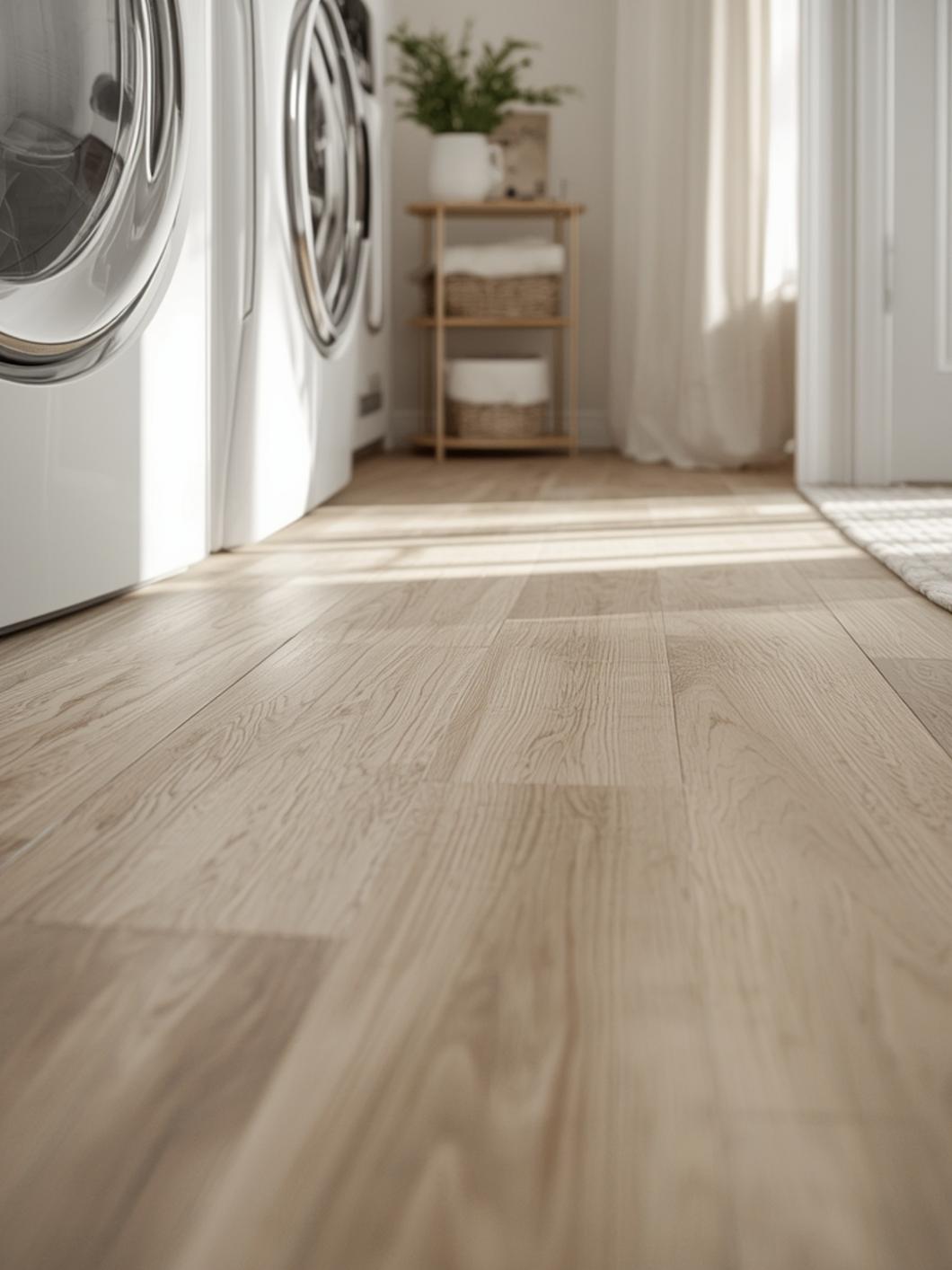
Timing your laundry room flooring project affects both convenience and budget. Spring and fall offer moderate temperatures that help adhesives cure properly. Summer humidity can extend drying times, while winter cold makes some materials brittle during installation.
Plan for a full weekend to complete the project yourself. You’ll need Friday evening to remove old flooring and prepare the subfloor, Saturday for installation, and Sunday for trim work and cleanup. Professional installation typically takes one day but costs $3–$8 per square foot for labor.
Budget between $200 and $1,200 for a typical 6×8 laundry room, depending on material choice. Vinyl plank runs $2–$7 per square foot, while porcelain tile costs $5–$15 per square foot. Add 10% extra material for cuts and mistakes.
Consider your home’s overall aesthetic when selecting patterns and colors. Light-colored floors make small spaces feel larger and brighter. Darker floors hide stains better but show dust and lint more readily.
Season your style around your washer and dryer colors. White appliances pair beautifully with any floor color, while black or stainless finishes look sharp against gray or wood-toned floors.
7 Ideas to Try in Your Home
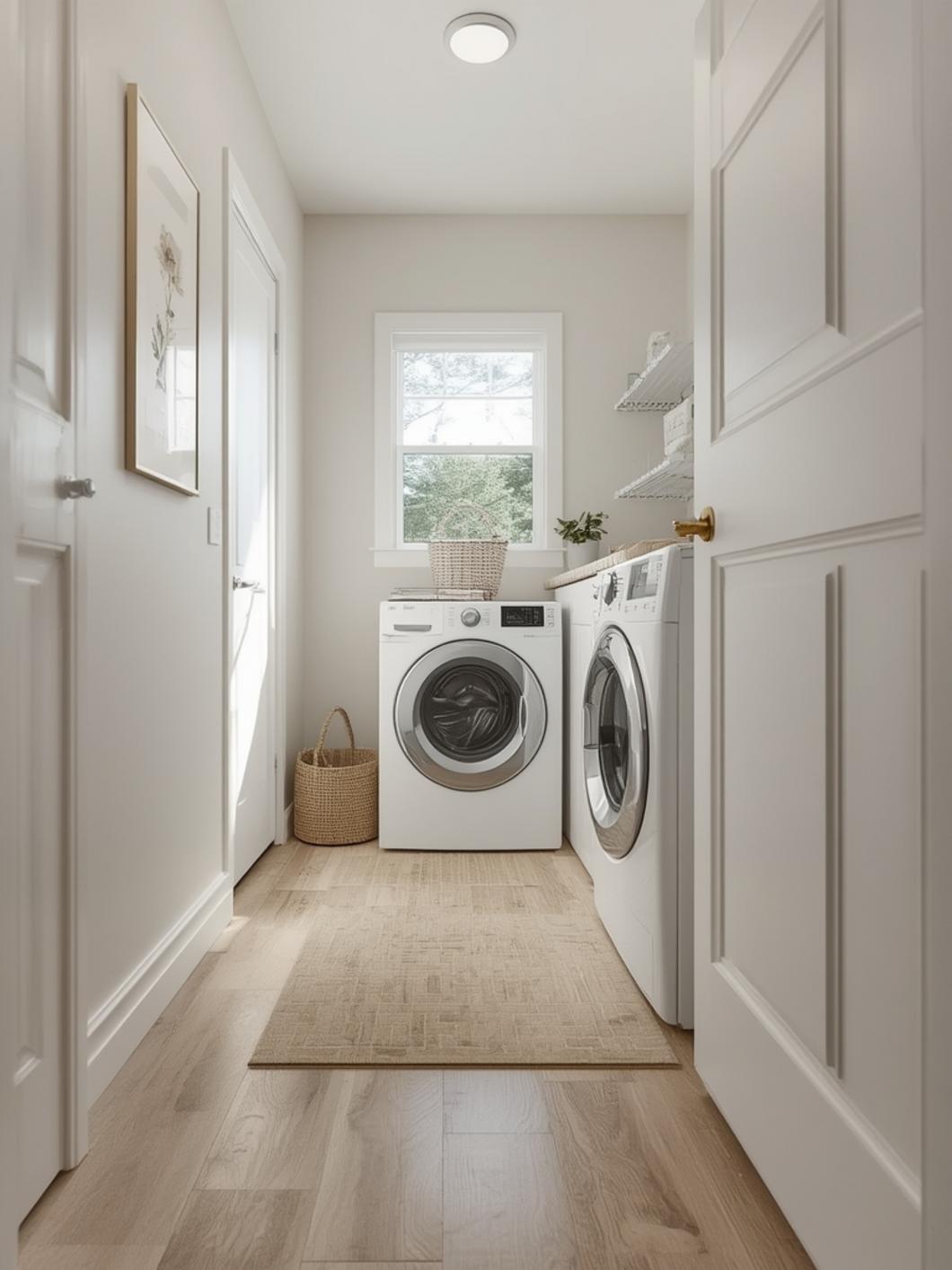
Herringbone Vinyl Plank in Gray Oak
Arrange waterproof vinyl planks in a herringbone pattern to add visual interest without overwhelming your small space. The diagonal lines trick the eye into seeing more square footage. Gray-washed oak tones pair with both warm and cool color schemes.
Classic White Subway Tile with Black Grout
Small rectangular tiles laid in a traditional brick pattern create a crisp, clean foundation. Black grout adds definition and hides dirt between deep cleanings. This timeless look never goes out of style and makes colorful walls pop.
Checkerboard Pattern with Two-Tone LVT
Alternate light and dark luxury vinyl tiles in a classic checkerboard for vintage charm. This best flooring for high moisture areas approach combines water resistance with personality. The pattern adds energy without requiring bold wall colors.
Natural Stone-Look Porcelain in Large Format
Choose 12×24-inch porcelain tiles that mimic travertine or slate for an upscale appearance. Fewer grout lines mean easier cleaning and a more spacious feel. The natural variation in stone-look patterns hides water spots and minor scuffs.
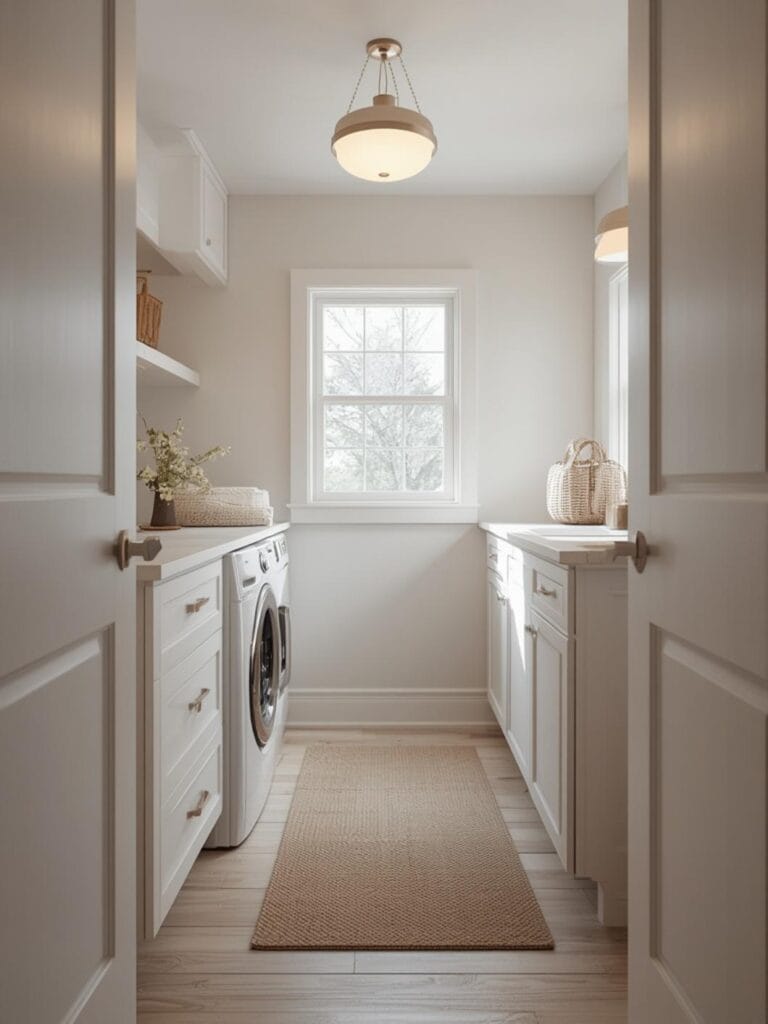
Weathered Wood-Look Vinyl with White Cabinets
Install wide-plank vinyl flooring in a driftwood or weathered gray finish beneath white cabinets and walls. The contrast creates a modern farmhouse vibe that feels both fresh and lived-in. The texture on quality vinyl mimics real wood grain beautifully.
Geometric Patterned Cement Tile Look
Patterned vinyl or porcelain tiles bring global flair to your laundry space. Choose small-scale geometric patterns in two or three colors that complement your walls. The pattern creates a focal point floor that makes the room memorable.
Solid Color Rubber in Bold Navy or Charcoal
Install commercial-grade rubber flooring in a sophisticated solid color for ultimate durability and comfort. The matte finish looks intentional rather than industrial. Rubber absorbs sound from washing machines better than hard surfaces, creating a quieter laundry experience.
Benefits of Smart Laundry Room Flooring
The right flooring transforms your laundry room from a dreaded chore space into a room you don’t mind spending time in. Water-resistant materials protect your subfloor from expensive damage while keeping the surface safe and slip-free when wet.
Quality flooring reduces fatigue during long laundry sessions. Standing on cushioned vinyl or cork feels dramatically better than cold concrete or worn linoleum. Your back and feet will thank you after sorting, folding, and ironing.
Easy-clean surfaces save you time and frustration. Modern flooring options resist staining from bleach, detergent, and fabric softener. A quick sweep and damp mop restore the floor to spotless condition.
Upgraded flooring increases your home’s value and appeal to buyers. A finished, thoughtfully designed laundry room stands out during home tours. The relatively small investment yields impressive returns.
Beautiful floors make small rooms feel intentionally designed rather than forgotten. When your laundry room looks good, you’re more likely to keep it organized and functional. Pride in the space naturally follows.
Tips, Alternatives, and Styling Advice
Budget-Friendly Option: Sheet vinyl offers excellent water resistance at the lowest price point. Modern printed patterns look surprisingly good, and installation requires minimal tools. Expect to spend $1–$3 per square foot for materials.
Mid-Range Option: Luxury vinyl plank provides the best balance of affordability, appearance, and DIY installation ease. Water-resistant core technology protects against humidity and spills. Most homeowners successfully install it themselves, saving hundreds on labor costs.
Premium Option: Porcelain tile delivers unmatched durability and true waterproofing for $8–$15 per square foot installed. Heated floor systems can be added underneath for ultimate luxury. Professional installation ensures proper waterproofing and level surfaces.
Small Space Adaptation: Choose large-format tiles or wide vinyl planks to reduce visual clutter from grout lines and seams. Diagonal installation makes narrow rooms feel wider. Light colors reflect available light, making tiny laundry closets feel less cramped.
Consider adding a small washable rug near the folding area for extra comfort during extended standing. Anti-fatigue mats designed for kitchens work beautifully in laundry rooms too.
Match your flooring undertones to your cabinet finish for a cohesive look. Cool gray floors pair with white or gray cabinets, while warm wood-look floors complement cream or natural wood cabinetry.
Common Mistakes to Avoid
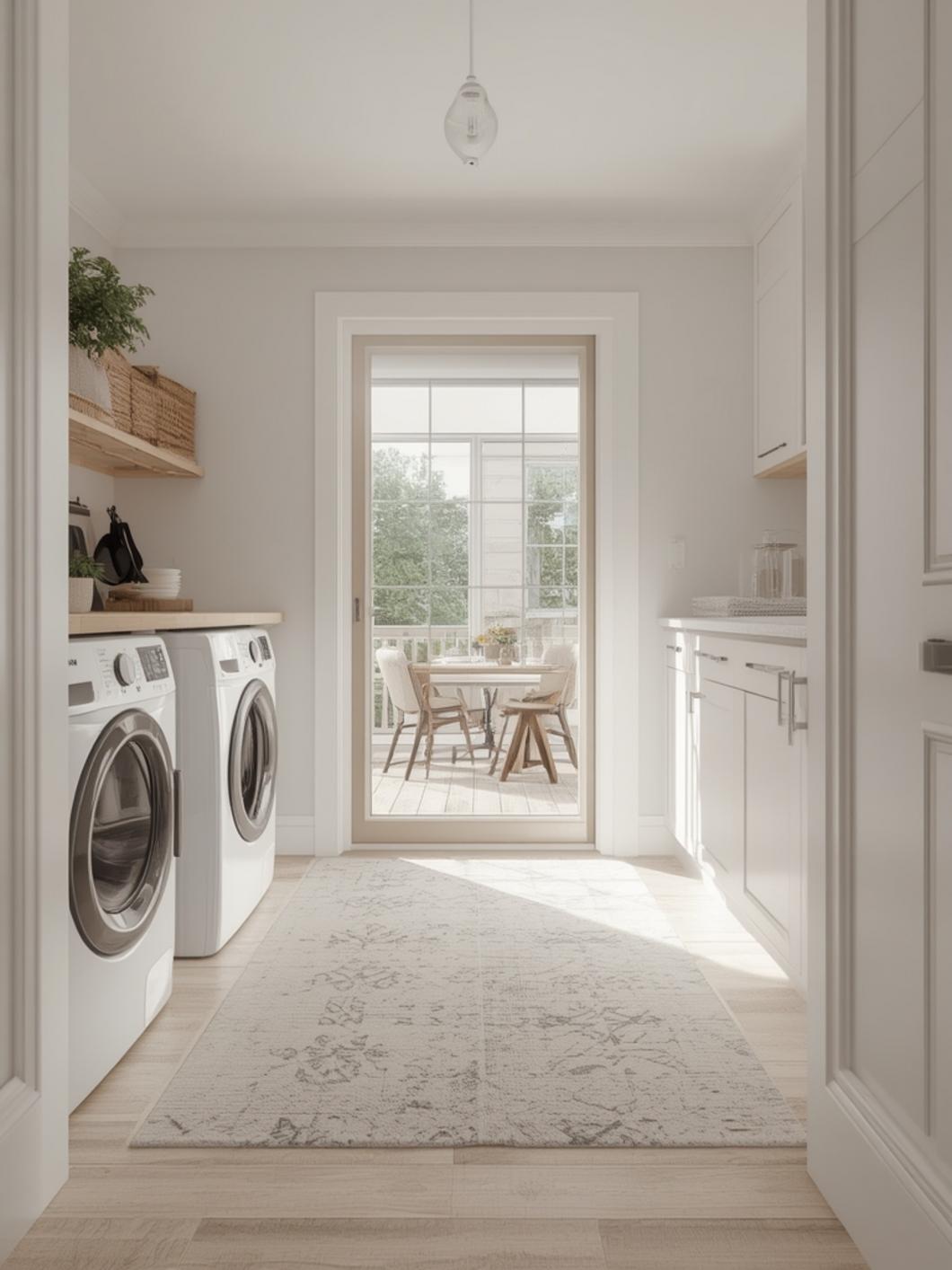
Skipping moisture barrier underlayment beneath floating floors. Even water-resistant top layers need protection from moisture rising through concrete slabs. Always install the vapor barrier recommended by your flooring manufacturer.
Choosing unsealed grout in wet areas. Regular grout absorbs water and grows mildew within months in laundry rooms. Apply grout sealer immediately after installation and reapply annually for lasting protection.
Ignoring expansion gaps around the perimeter. Floating floors expand and contract with temperature and humidity changes. Leave the recommended quarter-inch gap around all edges, or your floor will buckle within the first year.
Installing real hardwood in laundry rooms. Wood and water don’t mix, no matter how many coats of polyurethane you apply. Stick with wood-look vinyl or tile that mimics wood grain without the moisture vulnerability.
Forgetting to level the subfloor before installation. Dips and bumps telegraph through thin flooring materials and create trip hazards. Spend time leveling and smoothing your subfloor for professional-looking results that last.
Maintenance and Upkeep Tips
Sweep or vacuum your laundry room floor weekly to prevent dirt and lint buildup. Lint sticks to damp floors and creates gray streaks that require scrubbing to remove.
Wipe up spills immediately, especially bleach and detergent. Even water-resistant flooring can stain if harsh chemicals sit too long. Keep a small towel dedicated to floor cleanup in your laundry room.
Damp mop vinyl and tile floors monthly with a pH-neutral cleaner designed for your specific flooring type. Avoid harsh chemicals that degrade protective coatings and leave sticky residues.
Reseal grout lines annually to maintain water resistance and prevent mildew growth. This fifteen-minute task saves you from expensive repairs and keeps your floor looking fresh.
Check caulk around baseboards and appliances twice yearly. Reapply if you notice gaps or peeling. This simple step prevents water from seeping under your flooring and causing hidden damage.
Place waterproof mats beneath washing machines and protect against unexpected leaks. Swap them out every few years as rubber backing deteriorates.
Your Laundry Room Deserves Better
The floor beneath your washer and dryer works harder than almost any surface in your home. Choosing moisture-resistant materials in styles you love makes daily laundry less of a chore and more of a pleasant routine.
Small laundry rooms especially benefit from thoughtful flooring choices that enhance both function and visual space. Your feet will appreciate the upgrade, and your home’s value will reflect the improvement.
Explore more laundry room transformation ideas and practical home design inspiration throughout DecorKingdom. Your dream home starts with small, smart improvements in every room.
FAQs
What flooring is best for a small laundry room that gets really wet?
Porcelain tile and luxury vinyl plank offer the best water resistance for frequently wet laundry rooms. Both materials are completely waterproof when properly installed with sealed edges. Vinyl installs easier for DIYers, while tile provides slightly better long-term durability in extreme moisture conditions.
Can I install laundry room flooring myself without professional help?
Most homeowners successfully install vinyl plank and luxury vinyl tile themselves using basic tools. The click-lock installation systems require no adhesive and forgive minor mistakes. Tile installation requires more skill, specialized tools, and experience with mortar and grout for professional-looking results.
How much does it cost to replace flooring in a small laundry room?
Expect to spend $200–$600 for DIY vinyl plank installation in a typical 6×8 laundry room. Professional tile installation in the same space costs $800–$1,500 including materials and labor. Prices vary based on material quality, room preparation needs, and regional labor rates.
Do I need special flooring under a washing machine that vibrates?
Any water-resistant flooring works under washing machines, but floating floors like vinyl plank perform better than rigid tile. The slight flex absorbs vibration rather than transmitting it throughout the house. Add rubber anti-vibration pads beneath washer feet for extra noise reduction.
What flooring makes a tiny laundry closet look bigger?
Light-colored flooring in large-format planks or tiles makes small laundry spaces feel more open and airy. Install planks or tiles diagonally to trick the eye into perceiving more width. Avoid busy patterns and dark colors that visually shrink already compact rooms.
—
Meta Title: Small Laundry Room Flooring Ideas That Handle Moisture 2026
Meta Description: Transform your laundry space with smart small laundry room flooring ideas that resist water, look great, and fit tight budgets.