How to Choose the Perfect Bedroom Backgrounds
You walk into your bedroom after a long day, and instead of feeling relaxed, something just feels… off. The walls are fine, but the room lacks that cozy, pulled-together feeling you see in magazines. You’re not imagining it — the backgrounds of bedrooms play a huge role in how comfortable and inviting your space actually feels.
Most of us focus on furniture and bedding but forget that what’s behind everything sets the entire mood. Whether it’s the paint color, wallpaper pattern, or textured finishes, your bedroom background is the foundation of your room’s personality.
The good news? You don’t need a complete renovation to make a real difference. With the right approach and a little planning, you can create a bedroom backdrop that makes you excited to walk in every evening.
Table of Contents
What You’ll Need to Get the Look
Getting your bedroom background right starts with understanding what elements you’re actually working with. Here’s what makes the biggest impact:
Wall treatments and finishes:
– Paint in various sheens (matte, eggshell, satin)
– Wallpaper (peel-and-stick or traditional)
– Wood paneling or shiplap boards
– Textured plaster or decorative finishes
– Fabric wall panels
Accent and feature options:
– Removable wall decals or murals
– Gallery wall frames in coordinating finishes
– Floating shelves for layered styling
– Large-scale artwork or tapestries
– Mirrors in statement frames
Lighting elements that affect backgrounds:
– Table lamps with warm bulbs
– Wall sconces for ambient glow
– String lights or LED strips
– Natural light window treatments
– Dimmer switches for control
Foundational pieces:
– Painter’s tape for clean lines
– Sample paint pots for testing
– Wallpaper samples in different textures
– Fabric swatches in your color palette
These materials work together to create depth and personality. The key is choosing combinations that complement your natural lighting and personal style rather than fighting against them.
Finding Your Style and Season
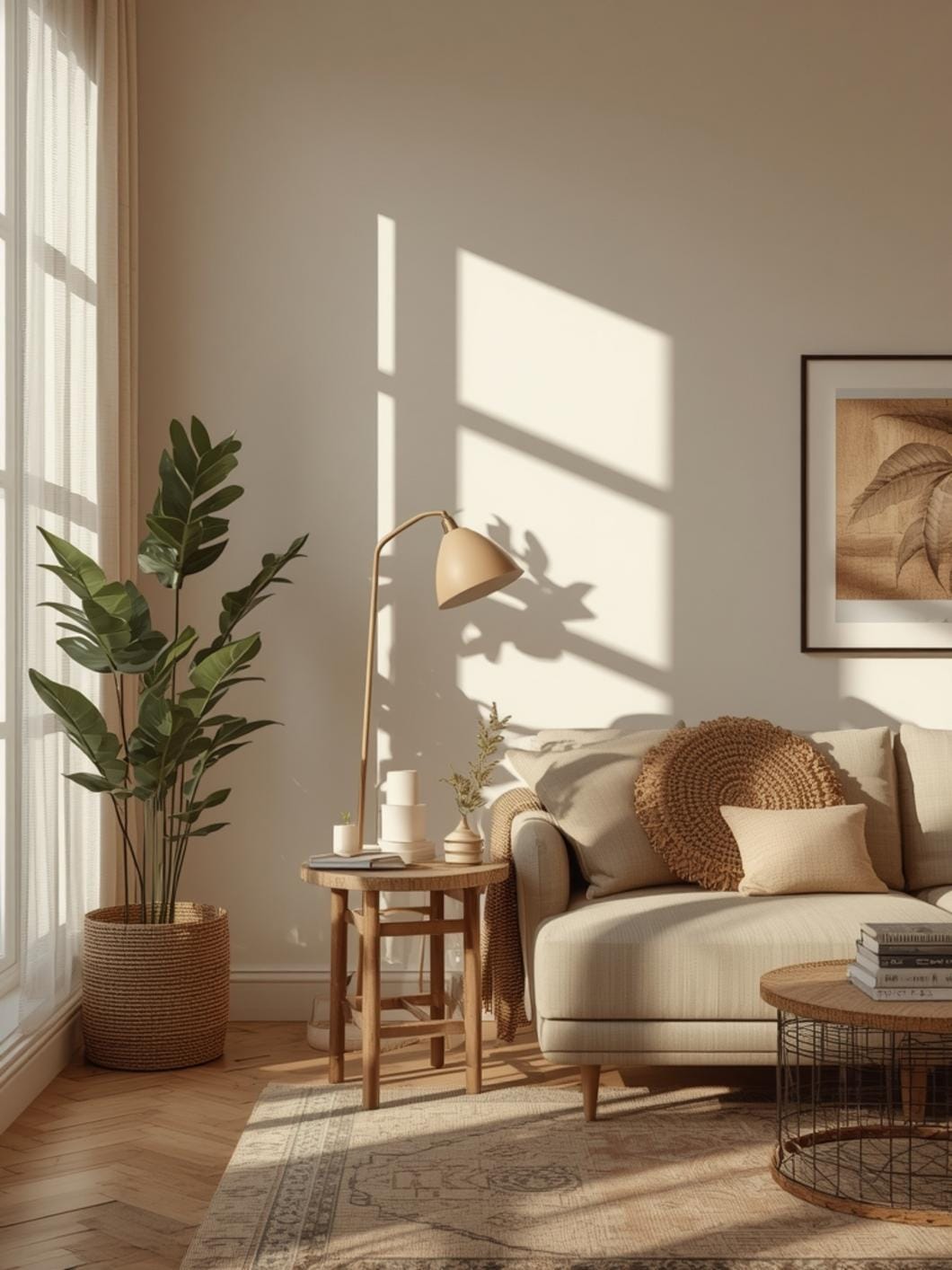
Your bedroom background should reflect not just your style but also how the room changes throughout the day and year. Light shifts dramatically, and your backdrop needs to work in all conditions.
Morning light considerations:
If your bedroom gets strong morning sun, cooler tones and matte finishes prevent overwhelming brightness. Soft blues, greens, and grays absorb excess light beautifully. Textured backgrounds like linen wallpaper or subtle grasscloth add interest without glare.
Evening and artificial light:
When natural light fades, your bedroom background shifts personality completely. Warmer paint tones and reflective finishes help bounce limited light around the room. This is when cream, taupe, and soft terracotta really shine.
Seasonal mood shifts:
Your bedroom feels different in January than it does in July, even if you don’t change anything. Choosing backgrounds with year-round appeal means avoiding trendy colors that might feel wrong half the year. Neutrals with warm undertones work beautifully across all seasons.
Testing before committing:
Live with large paint swatches or wallpaper samples for at least three days. Watch how they look at 7 AM, 2 PM, and 9 PM. Notice how they make you feel when you first wake up versus when you’re winding down.
The best bedroom backgrounds feel intentional in morning sunshine and cozy under lamplight. If a color or texture only works in one lighting scenario, keep searching.
7 Ideas to Try in Your Home
Soft textured neutrals:
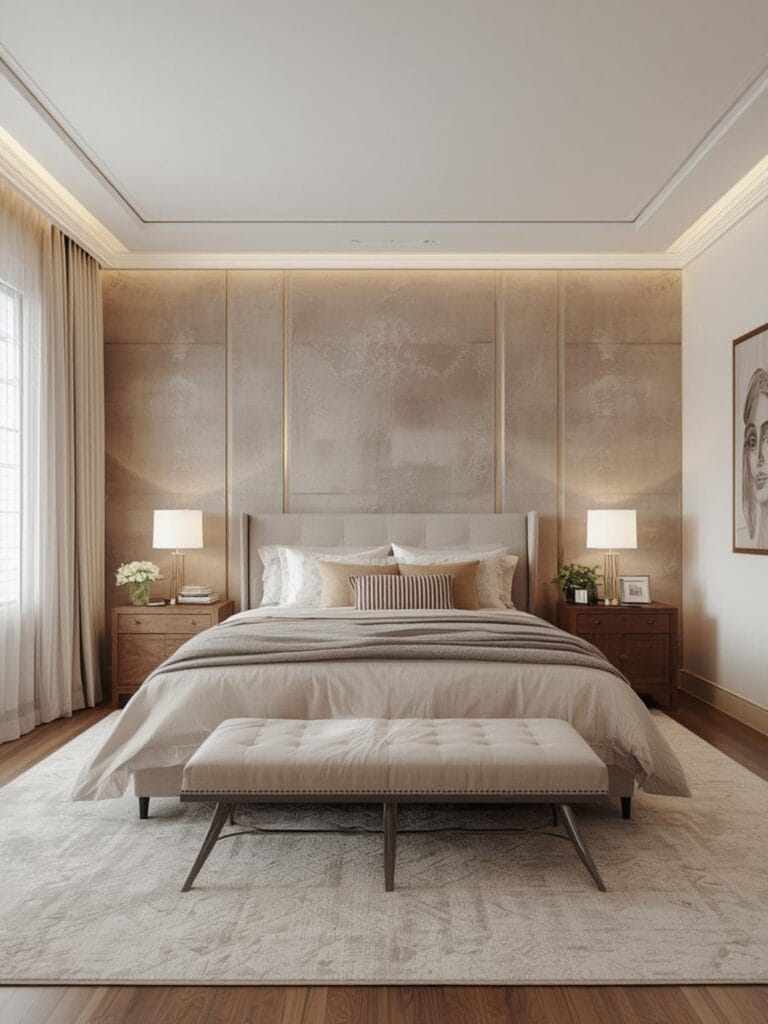
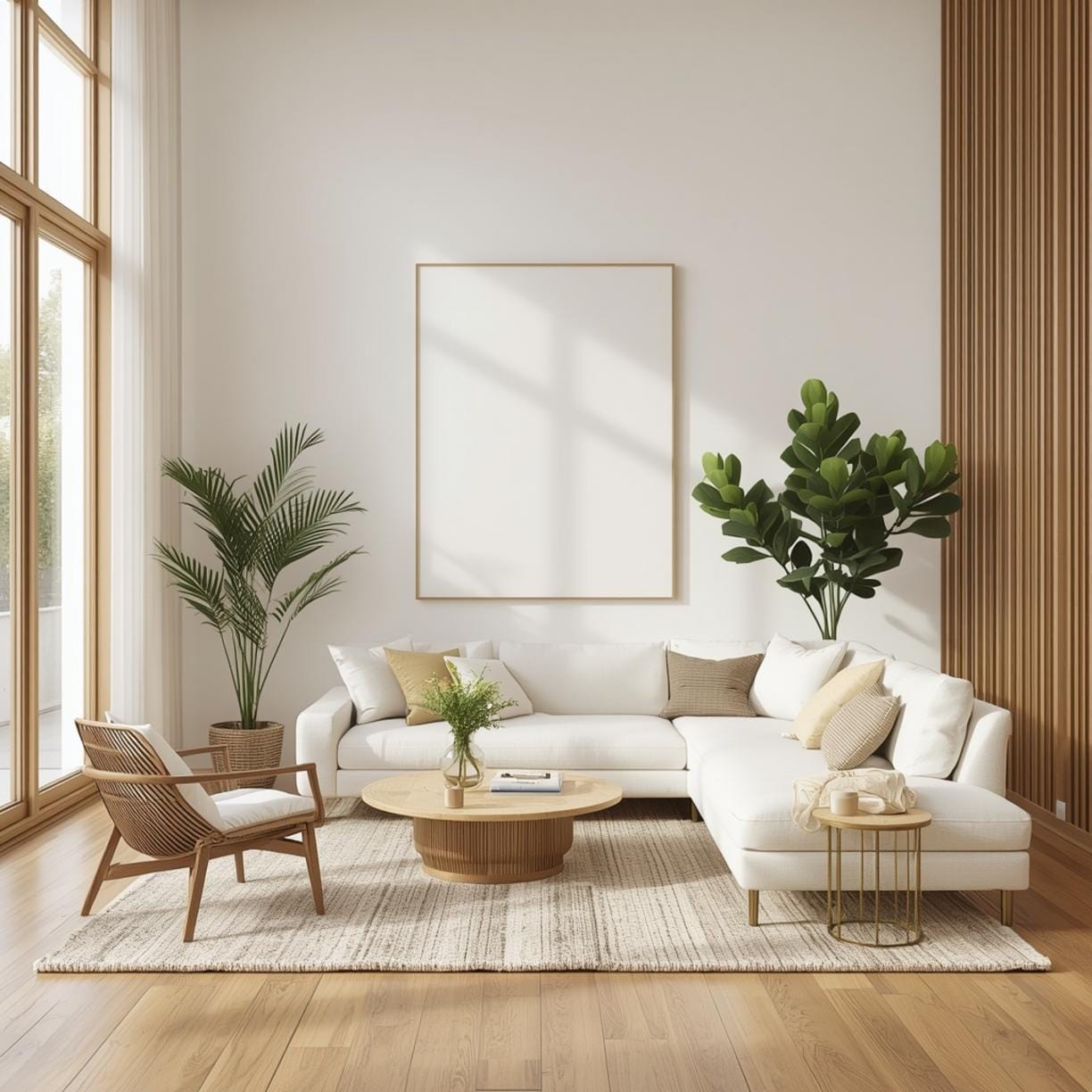
Warm gray or beige paint combined with a textured accent wall creates incredible depth. Use techniques like color washing or apply a single wall of textured wallpaper behind your bed. This approach works beautifully in rooms with minimal natural light because the texture creates shadows and interest even in dim conditions.
Nature-inspired feature walls:
Bring the outdoors in with botanical wallpaper or a soft sage painted accent wall. Pair it with natural wood furniture and cream bedding for a calming retreat. How to choose bedroom wall textures for different lighting conditions becomes simpler when you think about nature — matte finishes mimic outdoor surfaces and feel peaceful regardless of the time of day.
Modern moody drama:
Deep charcoal, navy, or forest green on all walls creates an enveloping cocoon effect. This works surprisingly well in small bedrooms because it makes boundaries disappear. Add warm brass lighting and light-colored bedding to prevent the room from feeling cave-like. The key is keeping the ceiling light and using multiple soft light sources.
Subtle pattern play:
Small-scale geometric or floral wallpaper in muted tones adds personality without overwhelming the space. Choose patterns with a soft contrast between background and design elements. This works especially well in bedrooms with lots of natural light because the pattern catches and reflects light throughout the day.
Warm earth tones:
Terracotta, rust, or warm caramel creates an instantly cozy atmosphere. These colors feel expensive and sophisticated while remaining approachable. They work beautifully with both modern and traditional furniture styles. In rooms with northern exposure, these warm backgrounds compensate for the naturally cool light.
Elegant wainscoting effect:
Create visual interest by painting the lower third of your walls a shade darker than the upper portion. This grounds the room and makes ceilings feel taller. Use painter’s tape to create a crisp line at chair rail height. This technique adds architectural interest to plain rooms without permanent changes.
Serene monochromatic layers:
Choose three shades of the same color family and layer them through paint, textiles, and decor. Your wall background becomes the lightest shade, creating a sophisticated and calming effect. This approach makes decorating easier because everything naturally coordinates. It’s particularly effective in master bedrooms where you want a restful, spa-like atmosphere.
Each of these ideas adapts to your home’s unique lighting. The texture and tone you choose matter more than following trends.
Benefits That Actually Matter
The right bedroom background does more than look pretty in photos. It changes how you experience your most personal space every single day.
Better sleep quality:
Calming background colors and non-reflective textures help your brain wind down at night. When your walls aren’t competing for attention, your nervous system relaxes more easily. Many homeowners report falling asleep faster after switching to softer, more cohesive bedroom backgrounds.
Mood improvement:
Walking into a bedroom that feels pulled together genuinely lifts your spirits. Your background sets the emotional tone before you even notice the details. Choosing colors and textures that make you happy creates a personal sanctuary rather than just a place to sleep.
Easier decorating decisions:
When your background is right, everything else falls into place naturally. You’ll stop second-guessing throw pillow choices because your foundation is solid. This saves money and frustration over time as you avoid buying decor that doesn’t work.
Increased home value:
A thoughtfully designed bedroom background appeals to future buyers even if you’re not selling now. Neutral, well-executed wall treatments are always a selling point. The investment in quality paint or wallpaper pays off in both daily enjoyment and eventual resale value.
Personal expression without permanence:
Modern wall treatments give you flexibility to express your style without lifelong commitment. Peel-and-stick options and easily paintable surfaces mean you can evolve your space as your taste changes. This freedom makes your bedroom feel truly yours.
Your bedroom background should make you feel something positive every time you enter. If it doesn’t, it’s not working hard enough for you.
Tips, Alternatives, and Styling Advice
Budget-friendly option:
Start with a fresh coat of paint in a sophisticated neutral like warm greige or soft white. Add visual interest through a gallery wall arrangement or removable wallpaper on just one wall. Use your existing furniture and focus your budget on the background treatment itself. You can transform a bedroom for under $200 with smart paint choices and DIY effort.
Mid-range option:
Invest in quality wallpaper for one accent wall combined with complementary paint on the remaining walls. Include upgraded lighting fixtures that highlight your new background beautifully. Budget around $500-800 for materials including proper wallpaper adhesive and professional-grade paint. This level lets you incorporate texture and pattern without going overboard.
Premium option:
Custom wall treatments like Venetian plaster, fabric wall panels, or high-end designer wallpaper create a truly unique backdrop. Hire a professional for specialty finishes that require expert application. Expect to invest $1,500-3,000 for a master bedroom with premium materials and installation. The result is a space that looks custom and expensive because it is.
Small space adaptation:
Light, reflective backgrounds make tiny bedrooms feel significantly larger. Use vertical stripes or subtle patterns to draw the eye upward and create the illusion of height. Keep your background treatment simple and let one or two statement pieces provide personality. Mirrors placed strategically multiply your background’s impact.
Color psychology tips:
Blues and greens promote relaxation and work well for poor sleepers. Warmer tones like blush or terracotta create cozy, intimate feelings. Avoid pure white in bedrooms as it can feel sterile and cold, especially in artificial light. Choose colors slightly softer and warmer than your initial instinct.
Common Mistakes to Avoid
Choosing colors based solely on small paint chips:
Those tiny samples look completely different on an entire wall and under your specific lighting. Always test colors on large poster boards and live with them for several days before committing.
Ignoring your room’s natural light direction:
North-facing rooms need warm backgrounds while south-facing spaces can handle cooler tones. Fighting against your natural light creates a room that never feels quite right no matter what you add.
Matching backgrounds exactly to bedding:
This creates a flat, one-dimensional look where nothing stands out. Your background should complement your bedding while providing subtle contrast that adds depth.
Following trends instead of your instincts:
That trendy dark green might look amazing on Instagram but feel wrong in your actual bedroom. Choose backgrounds you’ll love in three years, not just three months.
Skipping proper surface preparation:
Painting or wallpapering over damaged walls shows every flaw and shortens the lifespan of your treatment. Spend time filling holes, sanding rough spots, and priming properly for professional-looking results that last.
Keeping Your Bedroom Background Beautiful
Maintaining your bedroom backdrop requires minimal effort but makes a significant difference in longevity and appearance.
Regular dusting prevents buildup:
Wipe down walls every few months with a microfiber cloth to remove dust that dulls paint and wallpaper. Pay special attention to corners and areas near heating vents where dust accumulates fastest.
Address marks immediately:
Clean scuffs and fingerprints as soon as you notice them using a slightly damp cloth. For stubborn marks on painted walls, a magic eraser works wonders without damaging most finishes. Test in an inconspicuous area first.
Protect high-traffic areas:
Place furniture pads under items that touch walls to prevent scratches and marks. Be especially careful when moving furniture or hanging artwork to avoid gouging your background.
Monitor humidity levels:
Excess moisture damages both paint and wallpaper over time. Use a dehumidifier in humid climates or during summer months. Proper ventilation prevents peeling and mold growth that ruins backgrounds.
Touch up as needed:
Keep leftover paint or extra wallpaper for inevitable touch-ups down the road. Small repairs handled promptly prevent bigger problems that require complete redo.
Seasonal deep cleaning:
Once or twice yearly, give walls a gentle cleaning with appropriate products for your finish type. This maintains the fresh, just-finished look and extends the time between major updates.
Making Your Bedroom Background Work for You
Creating the perfect bedroom backdrop isn’t about following rigid rules or copying someone else’s style. It’s about understanding how light, color, and texture work together in your specific space.
Your bedroom background should make you feel relaxed and happy every time you see it. Whether that means calming neutrals, bold feature walls, or subtle pattern, trust your instincts and choose what genuinely appeals to you.
Ready to explore more ways to make your bedroom a personal retreat? DecorKingdom has dozens of inspiring ideas to help you create a space you’ll never want to leave.
FAQs
What color background makes a bedroom feel most relaxing?
Soft, warm neutrals like greige, light taupe, and warm gray create the most universally calming effect. Blues and soft greens also promote relaxation, but choose muted versions rather than bright, saturated shades. The key is avoiding high-contrast or overly stimulating colors that activate your brain when you should be winding down.
Can I mix wallpaper and paint in the same bedroom?
Absolutely! Using wallpaper on one accent wall with complementary paint on the remaining walls is one of the most popular and effective combinations. Choose wallpaper with colors that tie into your overall palette, and use the dominant background color from the wallpaper for your painted walls. This creates cohesion while adding visual interest.
How do I know if my bedroom background works with my lighting?
Test your chosen background at different times of day over at least three days. It should look appealing in morning sunlight, afternoon shadows, and evening lamplight. If it only works in one lighting scenario or creates an uncomfortable glare, it’s not the right choice. Your background should enhance your space regardless of the time or weather.
Should bedroom backgrounds be lighter or darker than living spaces?
Bedroom backgrounds typically work best when they’re slightly deeper or more saturated than common areas. This creates a cozy, enclosed feeling that promotes rest and relaxation. However, this isn’t a hard rule — if you have a small, dark bedroom, keeping backgrounds light prevents the space from feeling claustrophobic.
How often should I change my bedroom background?
Most people refresh bedroom backgrounds every 5-7 years, either from wear or changing style preferences. However, if you choose classic, quality treatments you genuinely love, they can last much longer. The “need” to update often comes from choosing trendy options that feel dated quickly rather than timeless backgrounds that age gracefully.
—
Meta Title: Stunning Backgrounds of Bedrooms: Fresh Ideas for 2026
Meta Description: Discover beautiful backgrounds of bedrooms that work with your lighting. Get 7 inspiring ideas plus practical tips for creating your perfect retreat.