5 Ways to Transform Your Laundry Room With Beadboard
Your laundry room deserves more than just function. You walk in there multiple times a week, and wouldn’t it feel better if the space looked as good as it worked?
Beadboard laundry room ideas bring that perfect blend of cottage charm and practical durability that makes sense in a hardworking space. The vertical grooves add texture without overwhelming a small room, and the wainscoting-style installation protects your walls from splashes and scuffs. Whether you’re drawn to crisp white cottage style or something more colorful and modern, beadboard gives you a foundation that feels intentionally designed.
This isn’t about a complete renovation. You can refresh your laundry room with beadboard panels in a weekend, creating a space that actually makes you smile when you sort socks.
Table of Contents
What You’ll Need to Get the Look
The beauty of beadboard is that you don’t need specialized materials. Most homeowners choose from these accessible options:
Beadboard Materials:
– Tongue-and-groove beadboard planks (real wood or MDF)
– 4×8 beadboard panels with pre-cut grooves
– Paintable beadboard wallpaper for renters or quick updates
– Chair rail or cap molding to finish the top edge
– Baseboard molding if updating the bottom trim
Installation Supplies:
– Construction adhesive rated for moisture
– Finish nails or brad nails
– Wood filler for nail holes
– Level and measuring tape
– Painter’s caulk for seamless edges
Finishing Touches:
– Semi-gloss or satin paint (easier to wipe clean than flat)
– Primer if painting raw wood or MDF
– Wall hooks that complement your style
– Open shelving brackets if adding storage above
You’ll find these materials at any home improvement store, and the panel style makes installation much faster than individual planks if you’re new to DIY projects.
Finding Your Style and Season
Beadboard adapts beautifully to different design personalities. The key is deciding how prominent you want it and what mood you’re creating.
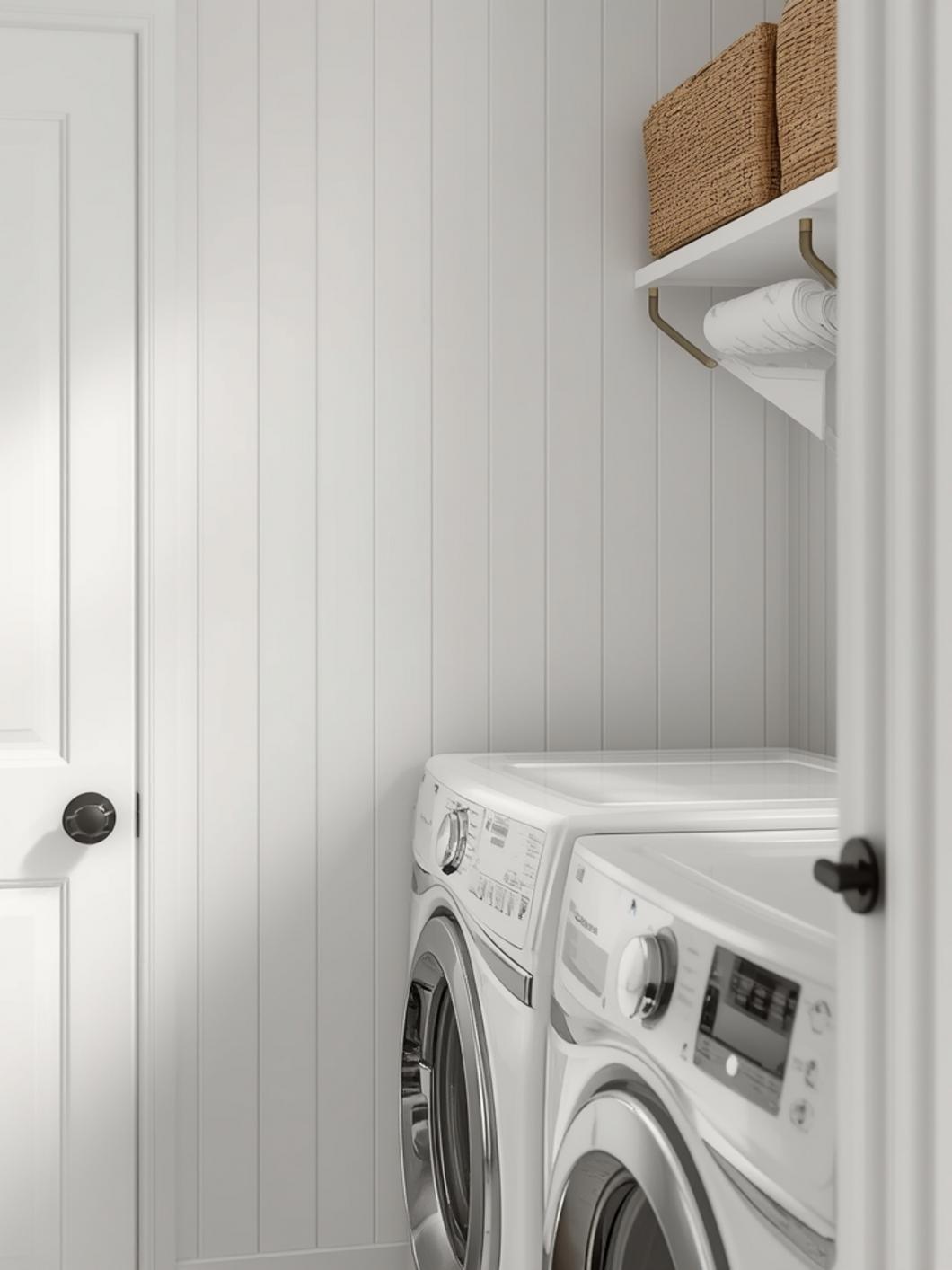
Classic cottage style calls for white or cream beadboard extending about 36 inches up the wall. This height protects the high-splash zone while keeping the room bright. Pair it with soft blue-gray upper walls and brass hooks for a timeless feel that never looks dated.
Modern farmhouse lovers can paint beadboard in darker tones like charcoal or navy, then contrast it with white upper walls and black fixtures. This flips the traditional approach and creates unexpected drama in a utilitarian space.
If you’re refreshing your laundry room in spring or summer, lighter colors help the space feel airy even without windows. Fall and winter projects might lean toward richer tones that make the room feel cozy when you’re folding warm towels from the dryer.
Consider your home’s existing style too. A 1920s bungalow looks right with beadboard extending two-thirds up the wall, while a contemporary space might limit it to just the lower third as an accent.
7 Ideas to Try in Your Home
1. Full-Height Painted Beadboard
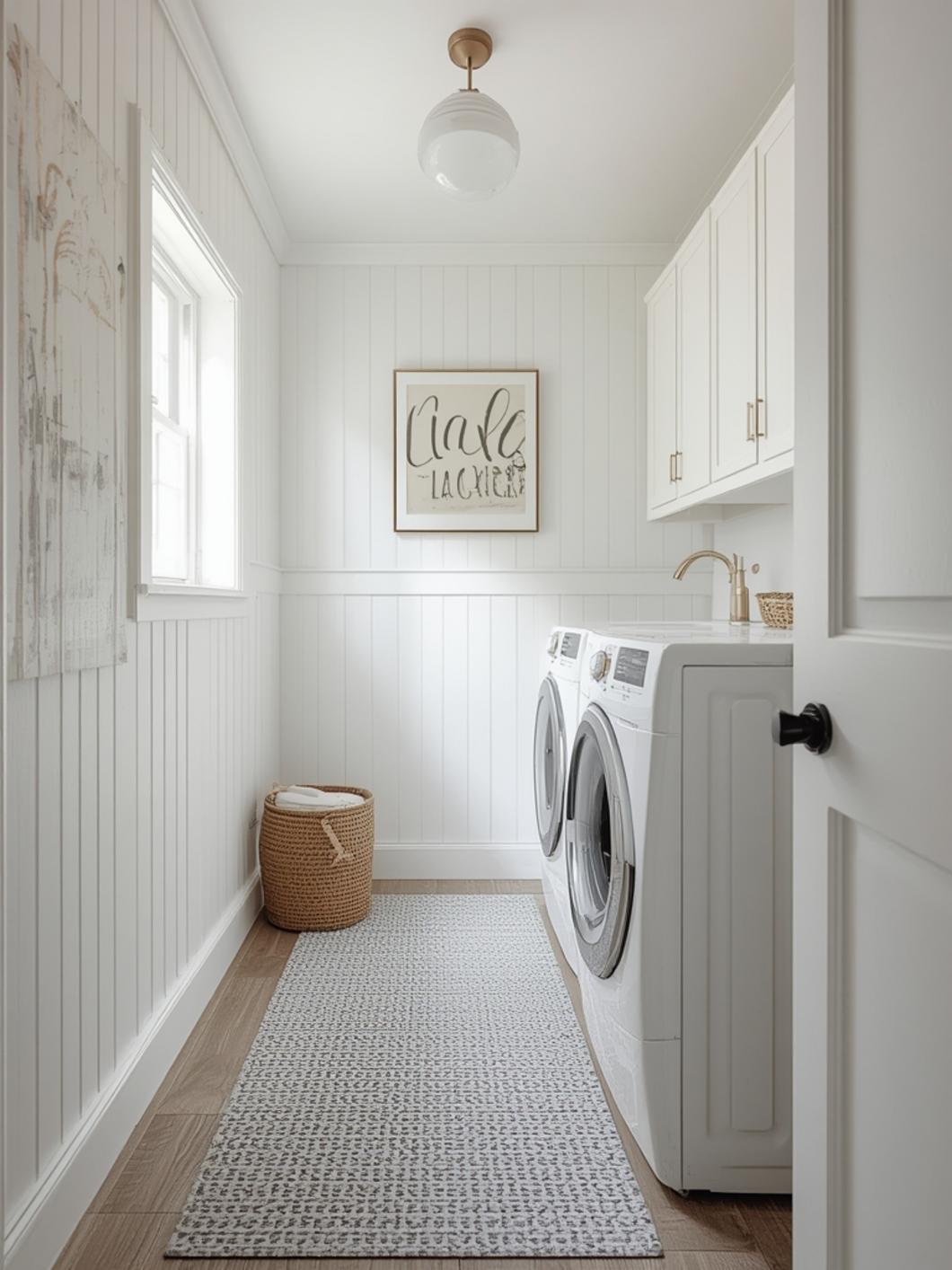
Cover all four walls from floor to ceiling in painted beadboard for a clean, cohesive look. White makes small laundry rooms feel larger, while sage green or soft gray adds personality without overwhelming the space. This approach hides imperfections in older walls and gives you a fresh start.
2. Classic Wainscoting Style
How to install beadboard wainscoting in laundry room spaces typically means running panels 32 to 42 inches high, then capping them with chair rail molding. Paint the beadboard one color and the upper walls another for visual interest. This traditional approach protects the most vulnerable wall area while keeping installation manageable for a weekend project.
3. Behind-the-Washer Accent Wall
Install beadboard only on the wall behind your washer and dryer. This creates a focal point and protects the wall from detergent splashes and dryer heat. Paint it a bold color like coral or teal while keeping other walls neutral.
4. Ceiling Treatment
Run beadboard across the ceiling instead of the walls for unexpected cottage charm. This works especially well in laundry rooms with adequate natural light, as the grooves create subtle shadows that add dimension overhead. Keep walls simple to let the ceiling shine.
5. Inside Built-In Cabinets
Line the back walls of open shelving or cabinet interiors with beadboard. This adds depth and texture where you least expect it. Paint it to match or contrast with your cabinet color for a custom look that feels professionally designed.
6. Horizontal Installation
Turn beadboard planks sideways to run horizontally instead of vertically. This unexpected orientation makes narrow laundry rooms appear wider and gives a more modern interpretation of the classic material. The horizontal lines draw the eye across the space.
7. Two-Tone Beadboard
Install beadboard wainscoting and paint the grooves a different color than the flat surfaces. This adds dimension and visual interest without additional materials. Try cream with soft gray grooves, or white with navy for a bolder statement.
Benefits of Beadboard in Laundry Spaces
Beadboard isn’t just pretty. It solves real problems in hardworking rooms where walls take a beating.
The texture hides minor wall imperfections better than flat painted drywall. Those little dings from laundry baskets and vacuum cleaners disappear into the grooves. You get a fresh look without extensive wall repair first.
Moisture resistance matters in laundry rooms where humidity builds up. Painted beadboard panels create a semi-sealed surface that handles occasional splashes better than standard drywall. This prevents water damage behind washing machines and utility sinks.
The vertical lines make low-ceilinged laundry rooms feel taller. Your eye travels up those grooves, creating the illusion of height even in basement or closet spaces where every visual trick helps.
Maintenance becomes simpler too. When detergent splashes or mud splatters, you can wipe down painted beadboard without worrying about damaging the finish. The durable surface stands up to the scrubbing that laundry rooms require.
Perhaps most importantly, beadboard makes your laundry room feel intentional. It signals that this space matters as much as your kitchen or bathroom, which changes how you feel about spending time there.
Tips, Alternatives, and Styling Options
Budget-Friendly Approach:
Beadboard wallpaper gives you the look for under $50 in a small laundry room. Choose a paintable vinyl version that handles moisture well. This works beautifully for renters who want the style without permanent changes. Install it only behind machines or as wainscoting to stretch your budget further.
Mid-Range Solution:
Pre-finished 4×8 beadboard panels in white MDF typically cost $30 to $50 per sheet. You’ll need adhesive and trim, bringing most laundry rooms to around $200 to $300 for materials. This sweet spot delivers authentic texture with manageable installation time. Paint it yourself to save on labor costs.
Premium Investment:
Real tongue-and-groove wood beadboard planks create the most authentic look with natural wood grain showing through paint. Expect $500 to $800 for materials in an average laundry room, plus more installation time. This makes sense if you’re doing a comprehensive renovation and want lasting quality.
Small Space Adaptation:
In closet-sized laundry spaces, limit beadboard to just one accent wall or use it only as a backsplash behind machines. Full-room installation can feel busy in tight quarters. Stick with white or very light colors to keep the space from feeling closed in.
Alternative Materials:
If beadboard’s not your style, consider shiplap for horizontal lines or board-and-batten for bold vertical strips. Tile wainscoting offers similar protection with easier cleaning but costs more and requires different skills to install.
Common Mistakes to Avoid
Installing Over Existing Problems
Beadboard covers minor imperfections, but it won’t fix moisture damage or mold. Check your walls first and address any underlying issues before installation. Otherwise you’re just hiding problems that will worsen over time.
Skipping the Top Trim
Raw beadboard edges at the top look unfinished and collect dust. Always cap wainscoting-height beadboard with chair rail molding or use a simple cap trim piece. This small detail makes the difference between DIY-looking and professionally finished.
Using Flat Paint
Flat or matte paint shows every splash and handprint in a laundry room. Choose semi-gloss or satin finishes that wipe clean easily. The slight sheen also reflects more light, brightening windowless spaces.
Ignoring Electrical Outlets
Plan how you’ll handle outlets before cutting panels. You’ll need to measure carefully and cut openings precisely for a clean look. Rushing this step leads to gaps around outlet covers that ruin the finished appearance.
Measuring Once
Laundry rooms often have walls that aren’t perfectly square or level. Measure multiple times along each wall before cutting panels. Account for out-of-square corners in your planning to avoid gaps and awkward cuts at the end.
Maintenance and Care Tips
Painted beadboard needs minimal upkeep to stay looking fresh. Wipe down panels monthly with a damp microfiber cloth to remove dust that settles in the grooves. This prevents buildup that dulls the finish over time.
For splashes and spills, clean immediately with warm water and mild dish soap. Avoid harsh chemicals that might damage paint finishes. The semi-gloss paint should release most stains with gentle scrubbing.
Touch up paint chips and scratches as they happen rather than waiting. Keep leftover paint in a small jar for quick fixes. A tiny artist’s brush helps you fill in narrow grooves without making a mess.
Check caulk lines annually where beadboard meets walls, floors, and trim. Laundry room humidity can cause caulk to shrink and crack. Recaulk any gaps to maintain the moisture barrier that protects your walls.
If you notice paint peeling in one area, it usually signals a moisture problem behind the wall. Address the source rather than just repainting the surface. This prevents larger damage down the road.
Conclusion
Beadboard transforms ordinary laundry rooms into spaces that feel thoughtfully designed and genuinely pleasant to use. Whether you choose classic white wainscoting or a bold full-wall treatment, you’re adding character that makes daily chores feel less like work.
The project fits most skill levels and budgets, delivering impressive visual impact for the time and money invested. Start planning your beadboard laundry room refresh today, and explore more inspiring home ideas right here on DecorKingdom.
FAQs
What height should beadboard wainscoting be in a laundry room?
Standard wainscoting height runs 32 to 42 inches from the floor, which protects the high-splash zone behind washers and dryers. Taller wainscoting at 48 inches works well if you have high ceilings or want more visual weight. In small rooms, stay closer to 32 inches to avoid overwhelming the space.
Can I install beadboard directly over existing tile?
You can install beadboard panels over smooth tile using construction adhesive rated for tile surfaces. The tile must be firmly attached with no loose pieces. This approach saves removal work, but adds thickness to your walls so outlets and trim may need adjustment.
Does beadboard work in windowless laundry rooms?
Beadboard actually helps brighten windowless spaces when painted in light colors. The vertical grooves create subtle shadows that add dimension, making walls more interesting than flat paint. Choose semi-gloss white or cream to maximize light reflection from overhead fixtures.
How do I clean beadboard grooves without damaging paint?
Use a soft brush vacuum attachment monthly to remove dust from grooves. For deeper cleaning, spray cleaner on a microfiber cloth rather than directly on the wall, then wipe following the groove direction. This prevents excess moisture from seeping behind panels.
Is MDF or wood beadboard better for laundry rooms?
MDF beadboard costs less and paints beautifully with no visible grain, making it popular for budget-friendly projects. Real wood handles moisture slightly better long-term but costs more and requires more prep work for smooth paint. Both work well when properly sealed with quality primer and paint.
—
Meta Title: Beadboard Laundry Room Ideas That Transform (2026)
Meta Description: Discover beadboard laundry room ideas that add charm and protect walls. 7 styles from classic wainscoting to bold accents you can DIY this weekend.