5 Ways to Maximize Small Laundry Room Floor Ideas
You open the laundry room door and immediately feel cramped. The tiny space feels even smaller because the flooring isn’t working in your favor. You’re not alone—many homeowners struggle with making their compact laundry areas feel welcoming instead of claustrophobic.
The good news? The right small laundry room floor ideas can completely change how your space looks and feels. Your floor choice affects everything from how light bounces around the room to how easy it is to keep clean after detergent spills.
Whether you’re renovating or just refreshing, smart flooring decisions can turn your cramped laundry corner into a space you don’t mind spending time in. The key is choosing materials and patterns that visually expand your room while still handling the practical demands of a hardworking laundry area.
Table of Contents
What You’ll Need to Get the Look
Before you start dreaming about your new floor, gather some inspiration and practical supplies:
Flooring Materials:
– Luxury vinyl plank (LVP) in light or medium tones
– Ceramic or porcelain tile in large format sizes
– Peel-and-stick vinyl tiles for DIY installation
– Sheet vinyl with modern patterns
– Water-resistant laminate planks
Design Helpers:
– Paint samples to test against flooring options
– Tape measure for accurate room dimensions
– Painter’s tape to map out pattern layouts
– Room visualizer apps on your phone
– Fabric swatches from your existing decor
Practical Add-Ons:
– Waterproof underlayment if needed
– Transition strips for doorways
– Floor cleaner appropriate for your material choice
– Anti-slip mats for high-traffic spots
– Rubber furniture pads to protect the surface
Keep samples of your flooring choices in the actual laundry room for a few days. Natural and artificial light change throughout the day, and you want to see how your floor looks during morning laundry sessions and evening folding marathons.
Finding Your Style and Season
Timing your laundry room floor update depends more on your household rhythm than the calendar. If you have young kids, summer might work best when they’re out of the house more. Empty nesters often tackle these projects during spring cleaning season.
Budget planning matters too. Quality vinyl plank runs $2-5 per square foot for materials, while ceramic tile ranges from $3-8 per square foot. A typical small laundry room (50-80 square feet) means material costs between $100-640 depending on your choice.
Think about your home’s overall style before committing. Modern farmhouse homes love wide-plank wood-look vinyl. Contemporary spaces shine with large-format concrete-look tiles. Traditional homes often prefer classic black-and-white patterns or warm wood tones.
Consider moisture levels in your space too. If your washer has leaked before or you live in a humid climate, prioritize 100% waterproof options. Your beautiful new floor should handle whatever laundry day throws at it.
7 Ideas to Try in Your Home
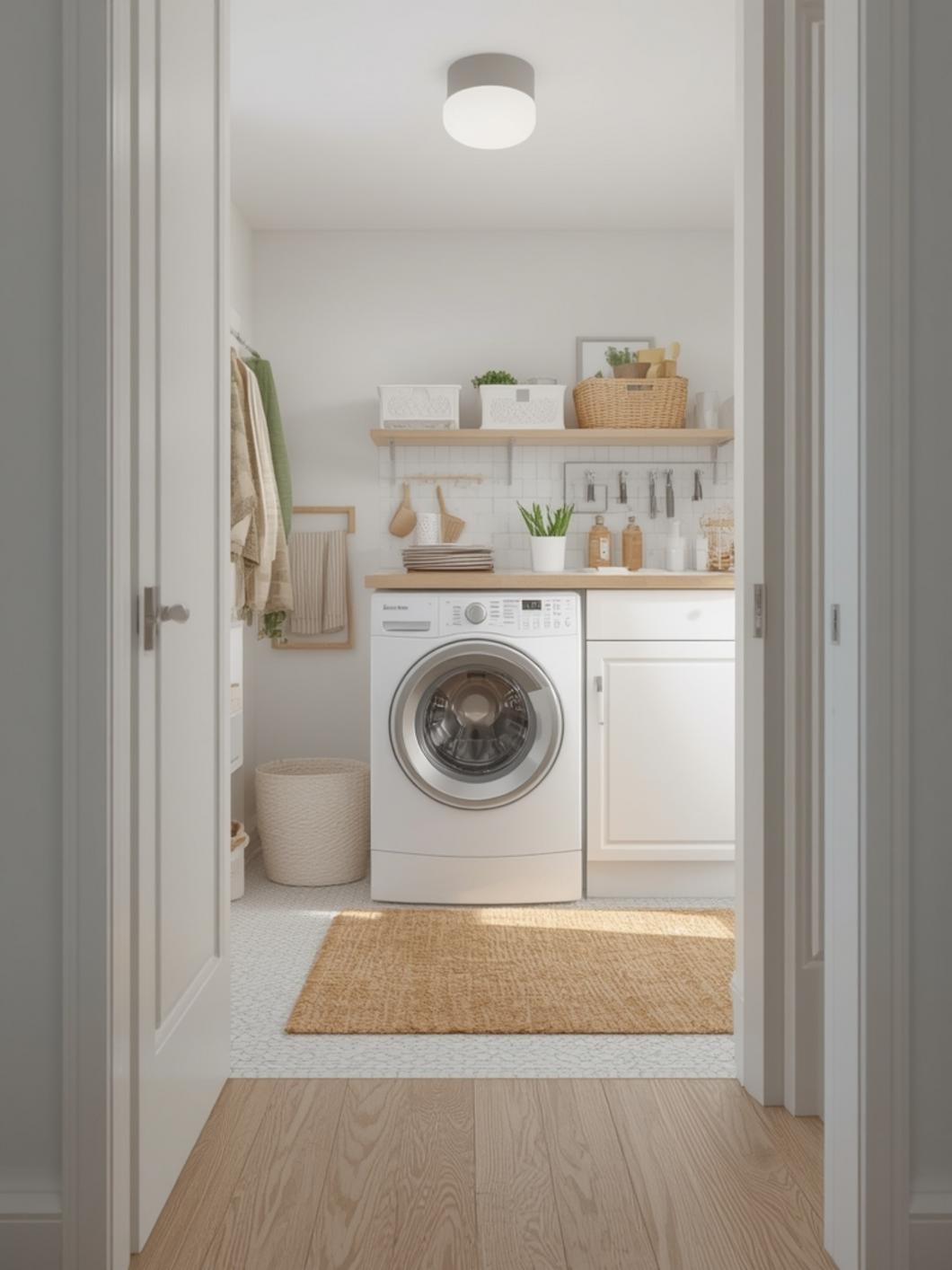
1. Light-Colored Wide Planks
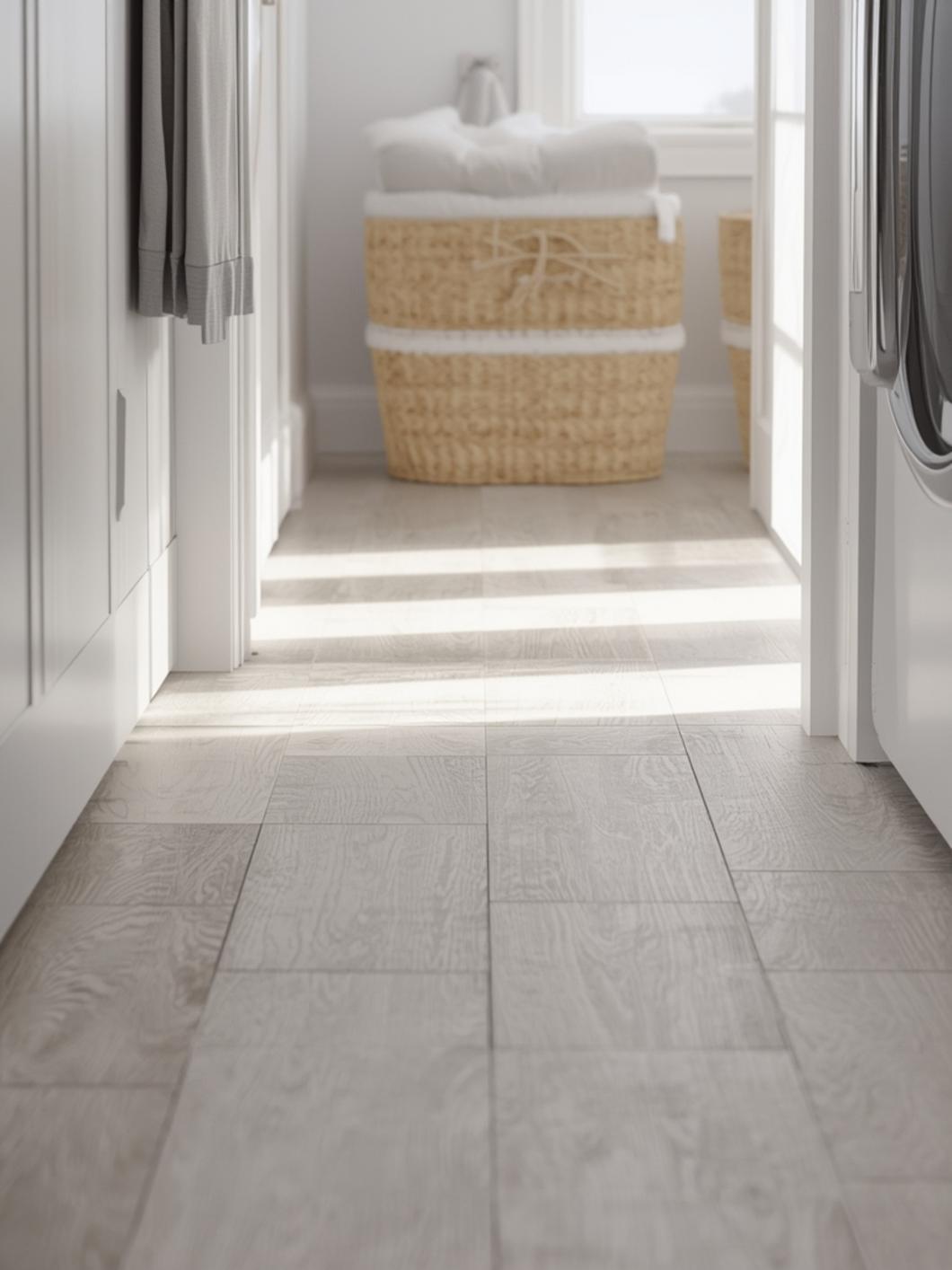
Install luxury vinyl planks in pale oak or whitewashed finishes running the longest direction of your room. The continuous lines draw the eye through the space, creating an illusion of length. Wide planks (7-9 inches) mean fewer seam lines, which makes the floor feel less busy and more expansive.
2. Diagonal Tile Pattern
Position square tiles at a 45-degree angle instead of straight grid alignment. This diagonal installation creates movement and makes your brain perceive more square footage than actually exists. Stick with 12×12 inch or larger tiles in light grays or soft beiges for maximum impact.
3. Oversized Format Tiles
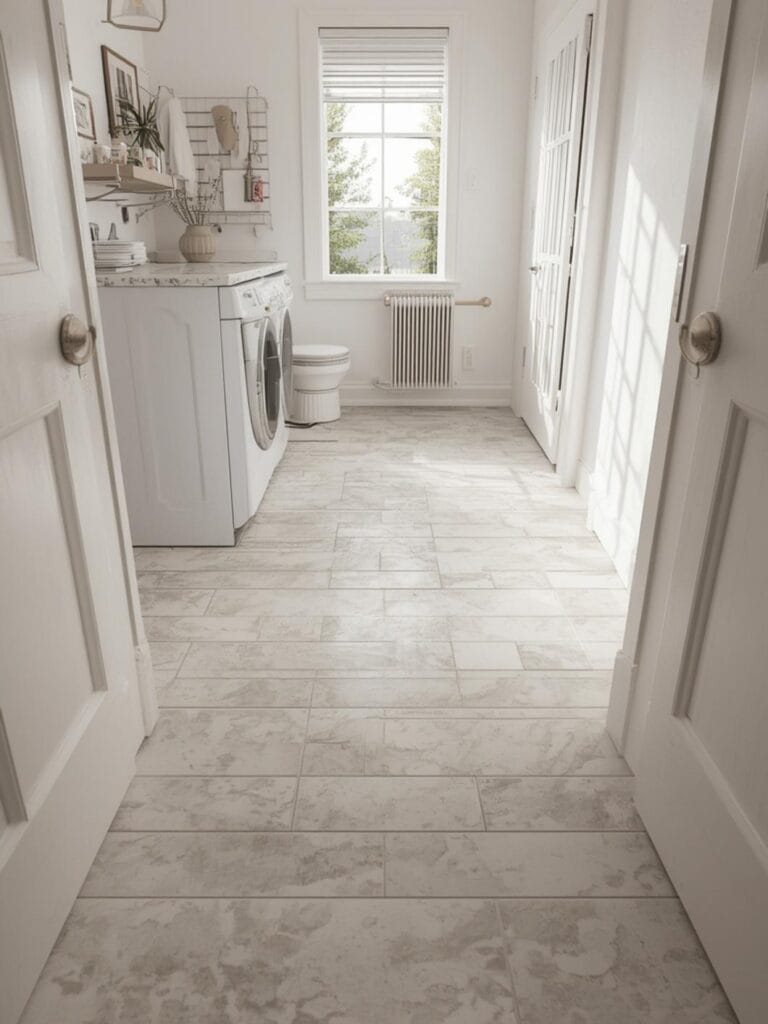
Choose extra-large tiles (18×36 inches or bigger) in a single neutral color. Fewer grout lines mean less visual interruption, and how to make a small laundry room feel bigger with flooring often comes down to reducing visual clutter. Your eye travels smoothly across the surface instead of counting individual tiles.
4. Glossy or Polished Finish
Select flooring with a slight sheen rather than matte. Glossy surfaces reflect light from your ceiling fixture and any windows, brightening the entire room. Polished porcelain or high-gloss vinyl planks work beautifully for this effect without being slippery when wet.
5. Continuous Flooring from Hallway
Extend your hallway flooring directly into the laundry room without transition strips if possible. This visual trick eliminates boundaries and makes both spaces feel more connected and larger. Your laundry room becomes an extension of your home rather than a separate box.
6. Two-Tone Border Design
Create a subtle frame using your main floor color in the center with a darker or lighter border around the perimeter. This “rug effect” adds designer style while the lighter center keeps the space feeling open. Keep the border narrow—just 4-6 inches—so it doesn’t overwhelm.
7. Concrete-Look Luxury Vinyl
Install modern concrete-style vinyl planks in soft gray tones. The industrial-chic look adds character while the large-format planks and monochromatic color scheme prevent the room from feeling cramped. The slightly textured surface hides dirt better than pure white options.
Benefits of Strategic Floor Choices
The right floor does more than just look pretty—it actively improves your laundry room experience. Light-reflective surfaces bounce illumination into dark corners, reducing that cave-like feeling many small laundry rooms have.
Waterproof materials give you peace of mind during inevitable spills and leaks. You can wipe up detergent puddles without worrying about warped wood or damaged subfloors. That confidence makes laundry chores less stressful.
Visual expansion techniques make your daily routine more pleasant. When you don’t feel cramped while loading the washer or folding clothes, you’re more likely to keep the space organized. A floor that makes the room feel bigger actually encourages better habits.
Easy-to-clean surfaces save you time and energy. Smooth vinyl or sealed tile can be quickly swept and mopped, meaning your laundry room stays fresh even with heavy use. You spend less time maintaining the floor and more time on everything else.
Modern flooring options are surprisingly durable. Quality luxury vinyl and porcelain tile resist scratches from detergent bottles, withstand dropped laundry baskets, and maintain their appearance for 15-20 years with basic care.
Tips, Alternatives, and Styling Advice
Budget-Friendly Option:
Peel-and-stick vinyl tiles in light colors offer the easiest DIY installation at $1-2 per square foot. Choose 12×12 inch squares in a light gray or soft white. They’re completely waterproof, forgiving for beginners, and removable if you’re renting.
Mid-Range Option:
Luxury vinyl plank in a pale wood tone provides excellent value at $3-4 per square foot installed. The realistic wood grain adds warmth while the light color keeps things airy. Most homeowners can install this themselves over a weekend with basic tools.
Premium Option:
Large-format porcelain tile (24×48 inches) in a soft marble or concrete look runs $6-10 per square foot installed. Professional installation ensures perfect results, and the high-end appearance adds resale value to your home.
Small Space Adaptation:
In truly tiny laundry rooms (under 40 square feet), consider running flooring planks horizontally if the room is narrow and vertical. This creates width where you need it most. Stick with one continuous color—no patterns or mixed materials that would break up the visual flow.
Paint your walls and ceiling in the same soft white or pale gray as your flooring undertones. This creates a cohesive envelope that blurs boundaries and makes the room feel significantly larger than its measurements suggest.
Common Mistakes to Avoid
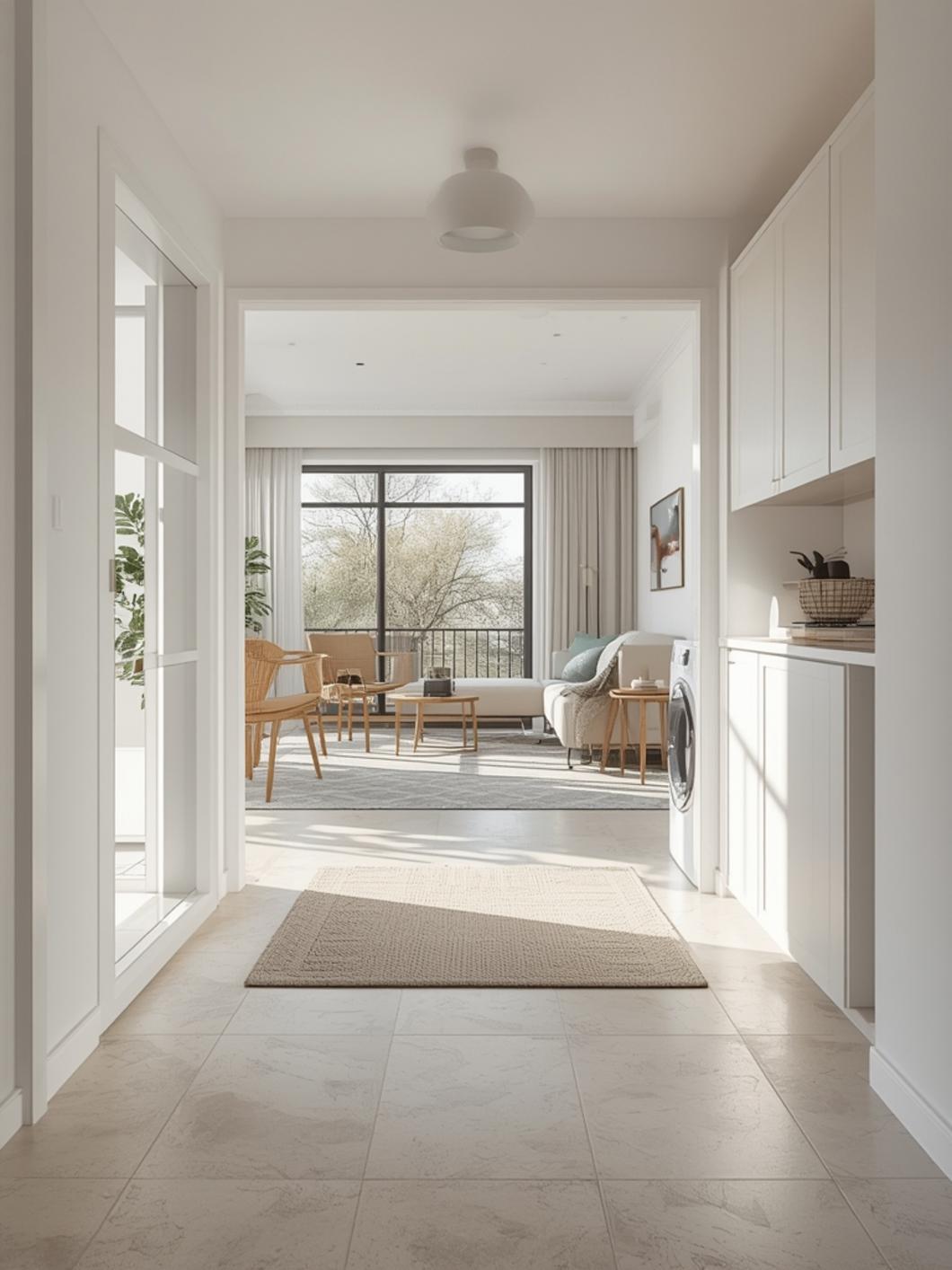
Choosing dark flooring because it “won’t show dirt” actually makes small spaces feel like caves. Instead, select medium tones that hide everyday wear while still reflecting light—think soft gray or warm taupe rather than charcoal or espresso.
Installing small mosaic tiles or busy patterns overwhelms tiny laundry rooms with too much visual information. Stick with larger formats and simpler designs—your floor should be a calm backdrop, not the star of the show.
Forgetting about door clearance causes frustration when your new floor is too thick for doors to swing properly. Measure your door gaps before purchasing flooring, especially if you’re adding thick underlayment beneath.
Skipping waterproof options to save money leads to expensive repairs later. Even if your washer has never leaked, one hose failure can ruin non-waterproof flooring—spend the extra $50-100 for complete water resistance and protect your investment.
Mixing too many flooring types throughout your home creates visual chaos. If your kitchen has wood-look vinyl, continue that theme or choose something that coordinates rather than using completely different materials in every room.
Maintenance and Upkeep Tips
Sweep or vacuum your laundry room floor weekly to prevent dirt and lint buildup. Small debris can scratch vinyl and get ground into tile grout, so quick regular cleaning beats deep scrubbing later.
Wipe up spills immediately with a damp cloth. Liquid detergent, fabric softener, and bleach can be slippery and may discolor flooring if left sitting. Keep a small towel handy near your machines for quick cleanups.
Mop with warm water and a pH-neutral cleaner designed for your specific flooring type. Avoid harsh chemicals, vinegar, or steam cleaners on luxury vinyl—they can dull the finish or damage the wear layer over time.
Check washing machine hoses annually for cracks or bulges. Replacing old hoses before they burst prevents the water damage that ruins floors. This five-minute inspection saves thousands in potential replacement costs.
Place rubber pads under your washer and dryer to prevent vibration scratches. These small protectors also help absorb noise and keep your machines from walking across the floor during spin cycles.
Make Your Small Laundry Room Work Harder
Your laundry room floor sets the foundation for the entire space—literally and visually. When you choose materials and patterns that reflect light and create visual flow, you transform a cramped utility area into a pleasant part of your home.
The best floor for your space balances practical waterproof performance with the visual tricks that make small rooms feel more spacious. Start with your favorite idea from this list, test samples in your actual lighting, and trust your instincts about what feels right for your home.
Ready to explore more ways to maximize your home’s potential? Browse DecorKingdom for hundreds of practical decorating ideas that help every room work beautifully for real life.
FAQs
What’s the best flooring color for a small laundry room?
Light to medium tones work best—think soft grays, warm beiges, or pale wood looks. These colors reflect more light than dark options, making your space feel larger and brighter. Avoid pure white though, as it shows every speck of lint and dirt.
Can I install laundry room flooring myself?
Absolutely, especially with luxury vinyl plank or peel-and-stick tiles. These materials are designed for DIY installation and require only basic tools like a utility knife and straight edge. Most homeowners complete a small laundry room in one weekend with no prior experience.
How do I choose between vinyl and tile for a small laundry room?
Both work beautifully—vinyl offers easier DIY installation, more cushion underfoot, and lower cost, while tile provides a more premium look and potentially longer lifespan. Consider your budget, DIY confidence, and whether you prefer the softer feel of vinyl or the solid feel of tile.
Should laundry room flooring match the rest of my house?
It doesn’t need to match exactly, but coordinating with adjacent spaces creates better visual flow. If your hallway has warm wood tones, choose laundry flooring in a similar color family. This connection makes your whole home feel more cohesive and can make the laundry room feel less isolated.
How long does laundry room flooring typically last?
Quality luxury vinyl lasts 10-15 years with normal use, while porcelain or ceramic tile can last 20+ years. Proper installation and regular maintenance significantly extend these lifespans. The waterproof barrier is what usually determines replacement timing rather than surface wear in laundry rooms.
—
Meta Title: Small Laundry Room Floor Ideas That Expand Space (2026)
Meta Description: Transform cramped quarters with smart small laundry room floor ideas. Light colors, large formats, and strategic patterns make tiny spaces feel bigger.