Creative Mudroom Shelf Ideas to Maximize Your Entryway
You rush in through the door with grocery bags, backpacks, and jackets piling up faster than you can handle. Your entryway feels chaotic, and you’re tired of tripping over shoes every single day.
The right mudroom shelf ideas can completely change how your family enters and exits your home. Whether you’re working with a dedicated mudroom or carving out space near your back door, smart shelving creates order without sacrificing style.
Your entryway deserves better than random hooks and piles on the floor. A well-planned shelf system keeps everything accessible while making your home feel welcoming the moment anyone walks in.
Table of Contents
What You’ll Need to Get the Look
Creating a functional mudroom shelf setup doesn’t require a massive renovation. Start with these essential elements that work together to build your perfect entryway storage.
Wall-mounted brackets or floating shelf hardware form the foundation of your system. Choose options rated for the weight you’ll be storing—boots and bags add up quickly.
Wood shelving boards in various depths give you flexibility for different items. A 12-inch depth works beautifully for most mudroom needs, while 16-inch shelves accommodate larger bins and baskets.
Storage baskets or bins keep small items corralled and your shelves looking tidy. Woven baskets add warmth, while wire baskets create an industrial vibe that’s equally charming.
Additional elements that complete the look include:
– Coat hooks or a peg rail mounted below your shelves
– Labels for baskets so everyone knows where things belong
– A small bench or stool if floor space allows
– Decorative elements like small plants or framed prints
Finding Your Style and Season
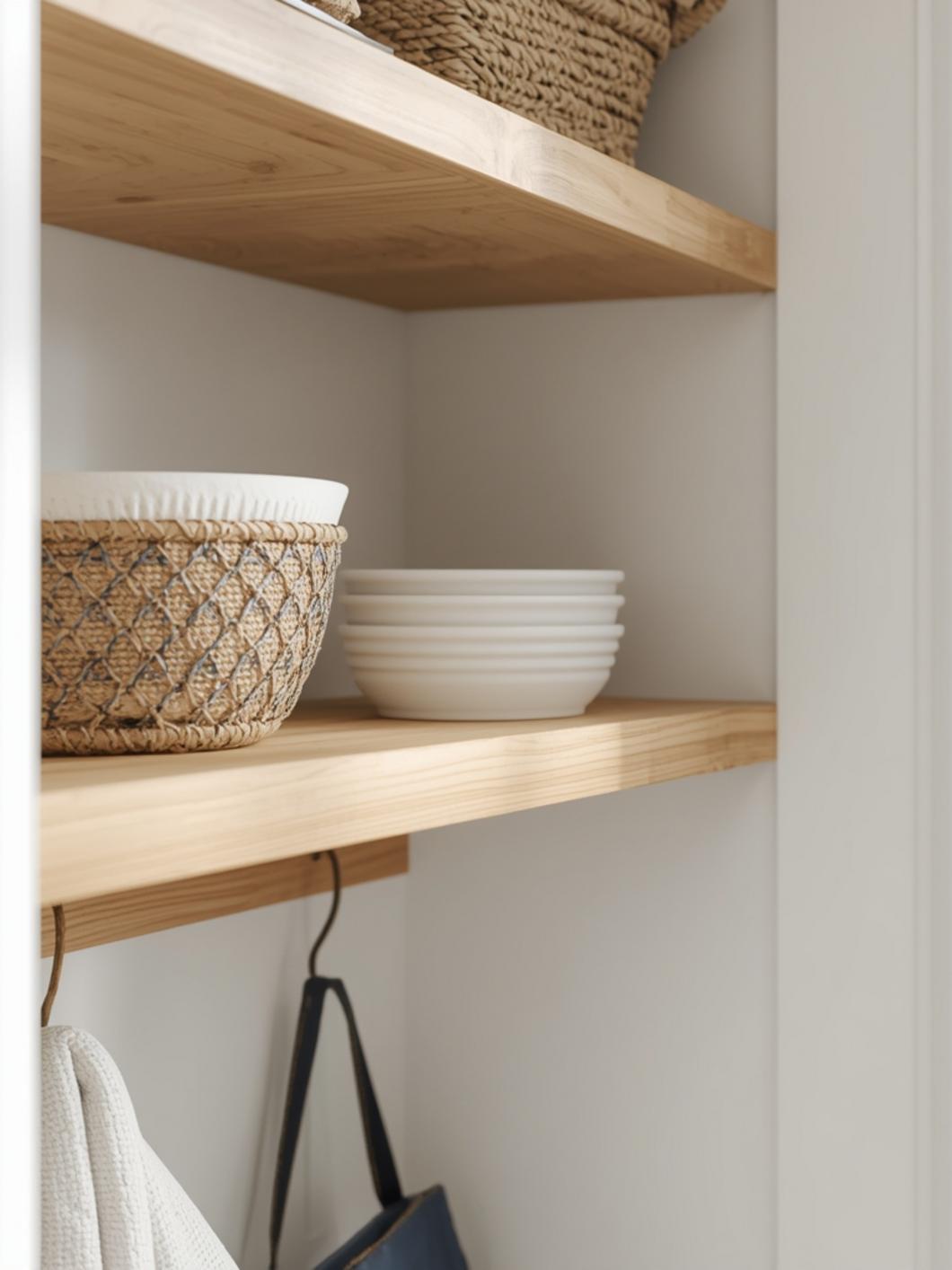
Your mudroom shelving should evolve with your lifestyle and the changing seasons. Winter demands space for heavy coats and boots, while summer shifts to lighter jackets and outdoor toys.
Think about your family’s rhythm throughout the year. Back-to-school season might mean dedicating shelf space to backpacks and lunch boxes. Holiday months could transform your top shelf into a display area for seasonal decor.
Consider how natural light hits your entryway at different times of day. Morning light might inspire you to add a small plant on an upper shelf, while evening shadows could call for lighter-colored storage solutions that brighten the space.
Your personal style matters just as much as function. Farmhouse enthusiasts might gravitate toward reclaimed wood and vintage hooks, while minimalists prefer clean lines and neutral tones.
7 Ideas to Try in Your Home
The Tiered Tower Approach stacks three shelves at different heights to create zones for different family members. Mount the top shelf at six feet for rarely-used items, the middle at four feet for adults, and the bottom at two feet where kids can reach their own gear. This vertical strategy works brilliantly in narrow entryways where floor space is precious.
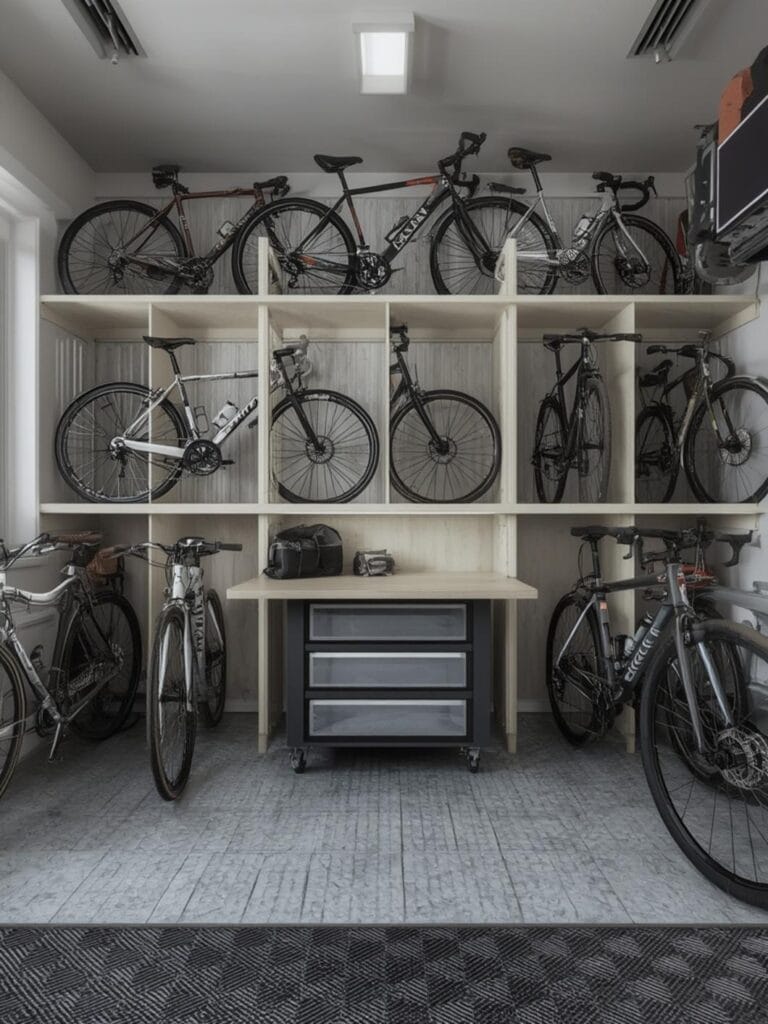
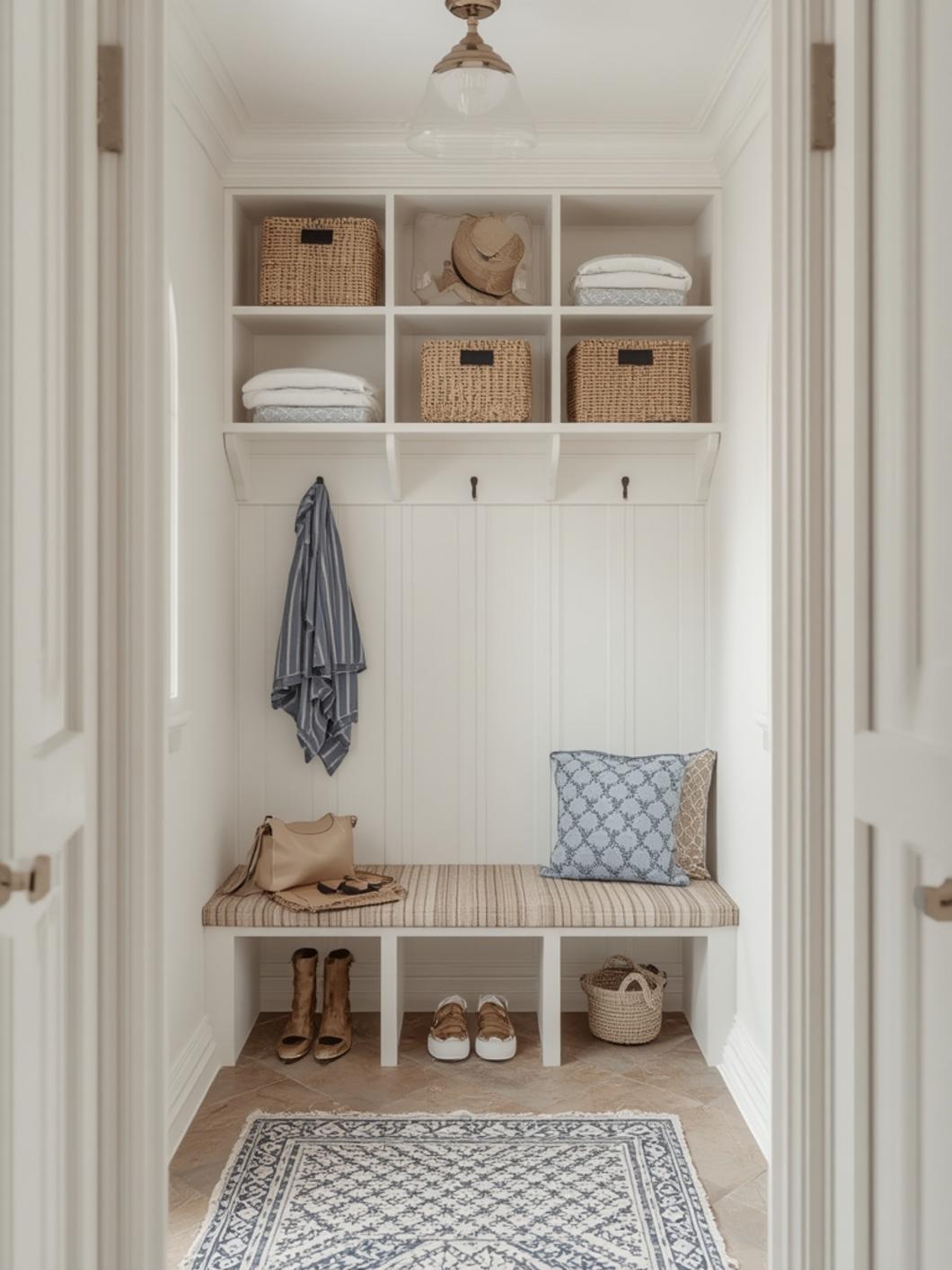
The Cubby System divides your wall into individual compartments for each person. Install a shelf with vertical dividers creating separate sections about 12 inches wide. Each family member gets their own designated spot, eliminating the morning scramble and after-school chaos.
The Floating Minimalist keeps just one or two sleek floating shelves mounted at eye level. This approach works perfectly in small spaces or modern homes where less is genuinely more. Add a few beautiful hooks below and limit what you store to only daily essentials.
The Corner Maximizer turns that awkward corner near your door into prime storage real estate. L-shaped shelving wraps around the corner, giving you double the storage without eating up precious wall space. This design flows naturally and makes excellent use of overlooked areas.
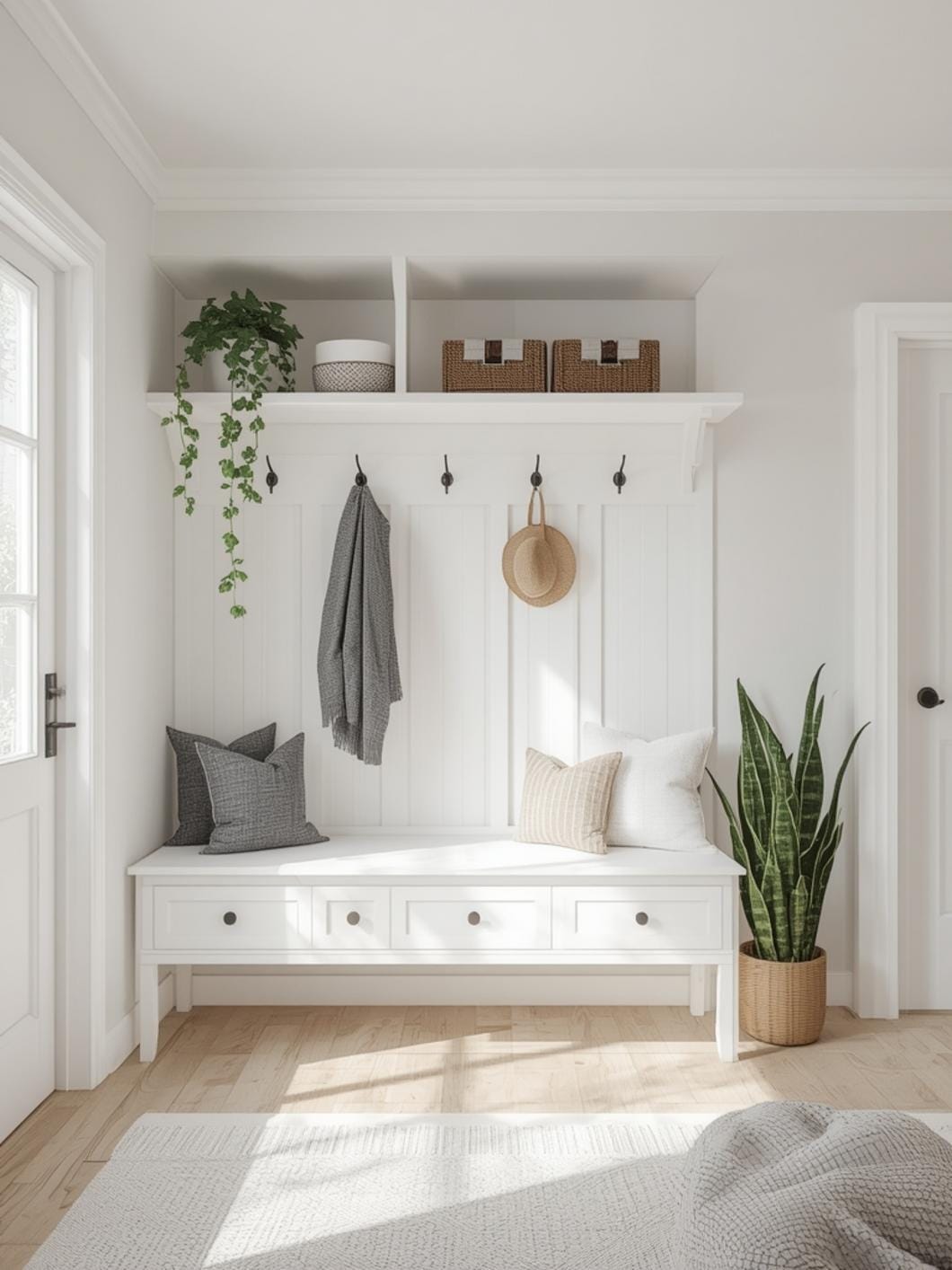
The Bench-Integrated Shelf combines seating with overhead storage. Mount a sturdy shelf directly above a built-in or freestanding bench, creating a cohesive station where you can sit to put on shoes while storing bags and hats within arm’s reach. Understanding your mudroom shelf weight capacity guide becomes essential here—you’ll want shelves that can handle heavier items like winter boots and loaded backpacks.
The Gallery Wall Combo mixes functional shelving with decorative frames and artwork. Alternate shelves with framed family photos or inspirational prints, making your mudroom feel less utilitarian and more like a thoughtfully designed room. This approach softens the storage vibe while keeping everything organized.
The Industrial Pipe Design uses black iron pipes as both brackets and design elements. The pipes add architectural interest while supporting your shelves with impressive strength. This look pairs beautifully with reclaimed wood planks and creates an urban farmhouse aesthetic that’s incredibly popular right now.
When planning weight distribution, your shelf capacity guide should account for daily use patterns. Lower shelves naturally bear more weight since that’s where you’ll store boots and heavy bags. Upper shelves work better for lightweight items like hats, gloves, and decorative baskets.
Benefits of Thoughtful Mudroom Shelving
A well-designed shelf system transforms how your household functions every single day. Mornings become smoother when everyone’s belongings have designated spots instead of being scattered across surfaces.
Your home feels calmer immediately. Visual clutter triggers stress, and an organized entryway sets a peaceful tone the moment you walk through the door. Guests notice the difference too—a tidy mudroom makes a welcoming first impression.
You’ll actually save money over time by keeping track of your belongings better. No more buying replacement gloves because you can’t find the ones you already own. Everything visible on shelves means nothing gets lost in forgotten corners.
The right shelving protects your walls and floors from damage. Wet boots and bags on shelves dry properly instead of creating water stains on your flooring. Coats hung on proper hooks don’t leave scuff marks from being tossed onto benches.
Tips, Alternatives, and Styling Advice
Budget-Friendly Approach: Simple pine boards from your local hardware store combined with basic L-brackets create functional shelving for under fifty dollars. Paint or stain the wood to match your existing trim, and add affordable wire baskets from discount stores. The look stays clean and organized without breaking the bank.
Mid-Range Solution: Invest in pre-made shelving systems designed specifically for mudrooms and entryways. These kits include everything you need with coordinating finishes and sturdy construction. Expect to spend between 150 and 300 dollars for a complete setup that looks professionally designed.
Premium Investment: Custom-built shelving with integrated lighting and premium materials creates a true showpiece. Hardwood shelves, decorative metalwork, and personalized details make your mudroom feel like a designer space. This route runs 500 dollars and up but adds significant value to your home.
Small Space Adaptation: When square footage is limited, go vertical with narrow shelves mounted on every available inch of wall height. Choose shallow 8-inch depth shelves that don’t protrude far into your walkway. Mount hooks on the shelf undersides for additional storage without any extra space requirements.
Style your shelves seasonally to keep your mudroom feeling fresh. Swap basket colors or add small decorative touches that reflect the current season without cluttering your functional space.
Common Mistakes to Avoid
Installing shelves too high makes them useless for daily items. Mount your primary shelves between 48 and 60 inches from the floor where adults can easily reach without stretching.
Ignoring weight limits leads to sagging shelves and potential damage. Always check the weight capacity of your brackets and distribute heavy items across multiple shelves rather than loading everything onto one.
Choosing shelves that are too shallow means items fall off constantly. A 10-inch depth is the minimum for most mudroom storage needs—anything less frustrates more than it helps.
Forgetting about the space below your shelves wastes valuable real estate. Add hooks, a bench, or a boot tray to maximize every vertical inch of your mudroom area.
Skipping labels on bins creates confusion and messy shelves within weeks. Simple tags help everyone in your household return items to their proper spots without constant reminders.
Maintenance and Upkeep Tips
Wipe down your shelves monthly with a slightly damp microfiber cloth to remove dust and dirt tracked in from outside. This quick routine prevents buildup that makes your mudroom look dingy.
Check bracket stability every few months by gently testing each shelf with light pressure. Tighten any loose screws immediately to prevent shelves from pulling away from the wall under normal use.
Declutter your shelves seasonally when you rotate clothing. Remove items that haven’t been used in months and reassess whether your current organization system still serves your family’s needs.
Treat wood shelves with furniture polish or wood conditioner twice a year to protect against moisture damage. Mudrooms face more humidity than other rooms, so this extra care extends the life of your shelving.
Wash fabric baskets and bins every few months to keep them fresh. Most can go right in your washing machine, making this maintenance task surprisingly easy.
Make Your Entryway Work Harder
The right shelf setup turns your mudroom from a dumping ground into an organized hub that serves your family beautifully. Start with one area and build from there—you don’t need to transform everything overnight.
Your entryway sets the tone for your entire home. Investing time in thoughtful shelving pays dividends every single day in reduced stress and smoother routines.
Ready to tackle more home organization projects? Explore more inspiring ideas and practical advice here at DecorKingdom, where every room in your home gets the attention it deserves.
FAQs
How much weight can typical mudroom shelves hold safely?
Most properly installed wall-mounted shelves with quality brackets handle 25 to 50 pounds per linear foot. Floating shelves typically support less weight, around 15 to 30 pounds depending on the mounting system. Always distribute weight evenly across the shelf length rather than concentrating heavy items in one spot.
What’s the best shelf depth for a mudroom?
A 12-inch depth works perfectly for most mudroom needs, accommodating standard storage baskets, folded items, and bags without items constantly falling off. If you plan to store larger bins or winter boots, consider 14 to 16-inch depth shelves. Avoid anything deeper than 16 inches as it makes reaching items in back difficult.
Should I paint or stain my mudroom shelves?
Paint creates a clean, modern look that’s easy to wipe clean and hides imperfections in budget lumber. Stain showcases natural wood grain and feels warmer, though it requires better quality wood to look its best. Consider your existing mudroom finishes—paint matches trim easily while stain coordinates with wood doors and floors.
How high should I mount shelves above a mudroom bench?
Leave 18 to 24 inches of clearance between your bench seat and the bottom of your shelf. This spacing lets you sit comfortably without bumping your head while still keeping stored items within easy reach. If you’re particularly tall or have family members who are, err toward the 24-inch measurement.
Can I install mudroom shelves without drilling into studs?
Heavy-duty drywall anchors work for lightweight decorative shelves holding just a few pounds, but mudroom shelves need stud mounting for safety. The daily wear of grabbing coats and bags creates significant stress on mounting hardware. Use a stud finder to locate solid backing and ensure your shelves stay securely attached for years.
—
Meta Title: 49 Mudroom Shelf Ideas That Actually Work (2026 Guide)
Meta Description: Transform chaos into calm with smart mudroom shelf ideas. Get 7 practical designs plus weight capacity tips for lasting organization.