5 Accent Wall Ideas That Make a Small Bedroom Feel Bigger, Not Smaller
Your small bedroom deserves to feel spacious, stylish, and completely yours. If you’ve been staring at blank walls wondering how to add personality without overwhelming the room, you’re not alone. Many homeowners struggle with making compact bedrooms feel both designed and open.
Accent wall ideas for small bedroom spaces offer the perfect solution. A single statement wall can define your room’s style, create visual interest, and even make the space feel larger when done right. You don’t need a huge budget or professional help to pull this off.
The key is choosing the right wall, color, and technique that complements your room’s size rather than fighting against it. Ready to give your small bedroom the wow factor it deserves?
Table of Contents
What You’ll Need to Get the Look
Creating an accent wall in a small bedroom requires surprisingly few materials. You likely have some of these items already, and the rest are easy to find at your local home improvement store.
For paint-based accent walls, you’ll need:
– Quality interior paint in your chosen color
– Paint roller and brush set
– Painter’s tape
– Drop cloth or plastic sheeting
– Paint tray
For texture or material-based walls, consider:
– Peel-and-stick wallpaper or decals
– Wood planks or wall panels
– Adhesive strips or appropriate mounting hardware
– Level tool
– Measuring tape
You might also want lighting elements like LED strip lights or small picture lights to highlight your accent wall. Decorative items such as floating shelves, artwork, or mirrors can enhance the effect once your wall is complete.
Keep your furniture minimal near the accent wall to let it shine. A bed frame, nightstand, and perhaps one statement piece work best.
Finding Your Style and Season
Timing your accent wall project matters more than you might think. Spring and fall offer ideal conditions for paint projects, with moderate temperatures and good ventilation opportunities. Summer works too, though you’ll want to keep windows open for proper airflow.
Consider your bedroom’s natural lighting throughout the day. Morning light shows warm tones differently than afternoon sun. Visit your space at different times before committing to a color.
Your personal style should drive your choices. Are you drawn to calming minimalist spaces? Bold bohemian vibes? Modern industrial looks? Your accent wall should feel like an authentic extension of your taste, not just a trendy addition.
Think about the mood you want when you wake up and wind down. Energizing colors work well if your bedroom doubles as a workspace. Soothing tones suit pure sleep sanctuaries better.
Budget considerations play a role too. Peel-and-stick wallpaper offers an affordable, renter-friendly option you can change seasonally. Paint provides a more permanent solution at a similar price point. Textured materials like wood or fabric panels cost more but create stunning dimension.
7 Ideas to Try in Your Home
Deep Jewel Tones Behind Your Headboard
Paint the wall behind your bed in rich navy, emerald, or burgundy. These saturated colors create depth rather than closing in your space. Pair with white or cream bedding to keep the room feeling balanced and bright.
This works especially well in rooms with good natural light. The contrast makes your bed the clear focal point while adding sophisticated drama.
Vertical Stripe Pattern
Create vertical stripes using two complementary colors. The upward lines draw the eye and make your ceiling feel higher. Stripes work beautifully with how to make a small bedroom look bigger with color by emphasizing vertical space you already have.
Use painter’s tape for crisp lines. Alternate between a light neutral and one accent shade for subtle impact, or go bold with contrasting colors.
Textured Wallpaper Feature
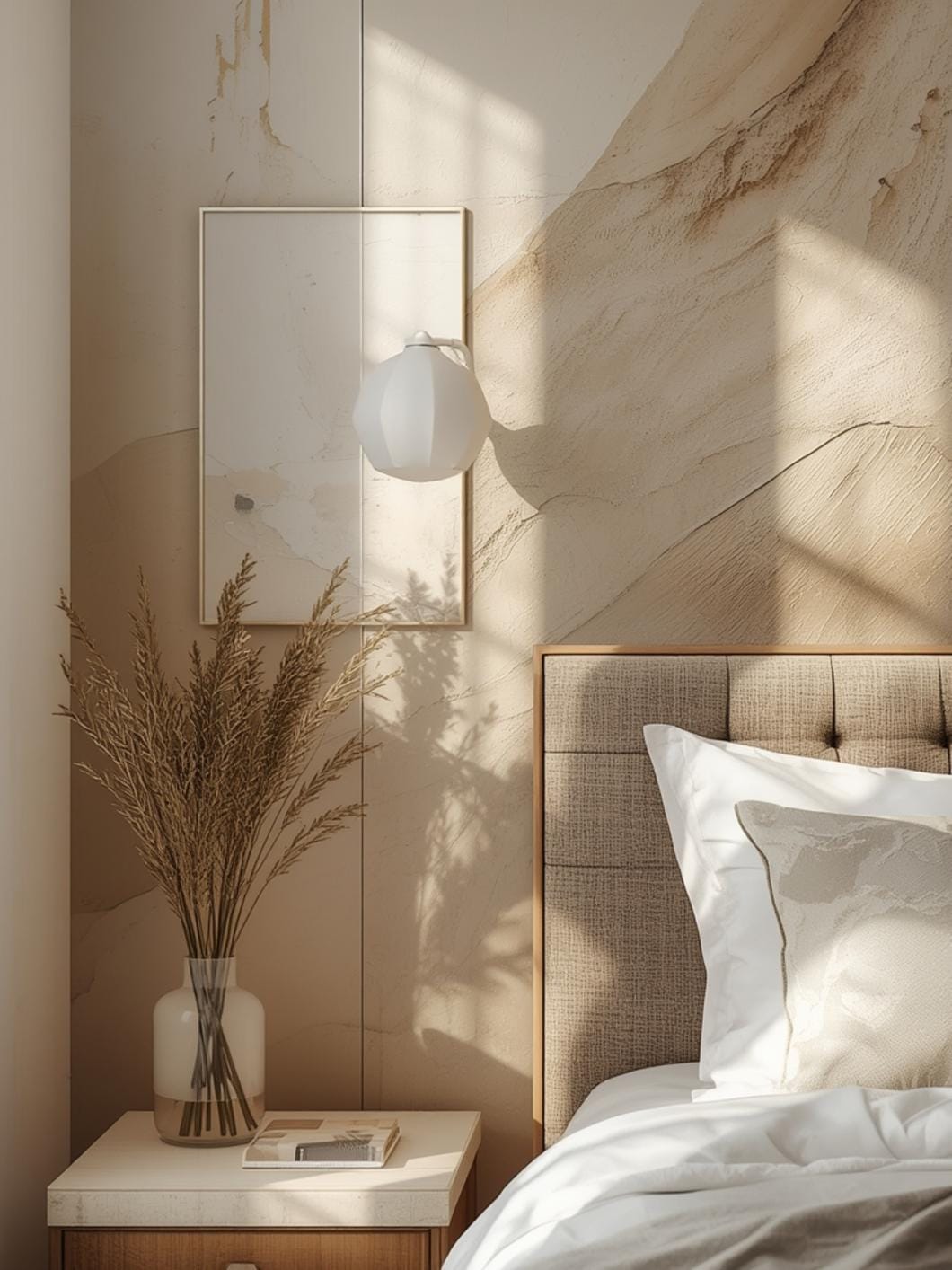
Grasscloth, linen-texture, or subtle geometric wallpaper adds dimension without overwhelming. Textured wallpaper catches light differently throughout the day, creating visual interest that flat paint cannot match.
Stick to lighter colors in small spaces. Cream, soft gray, or pale blue textures keep things airy while adding warmth.
Wood Plank Accent
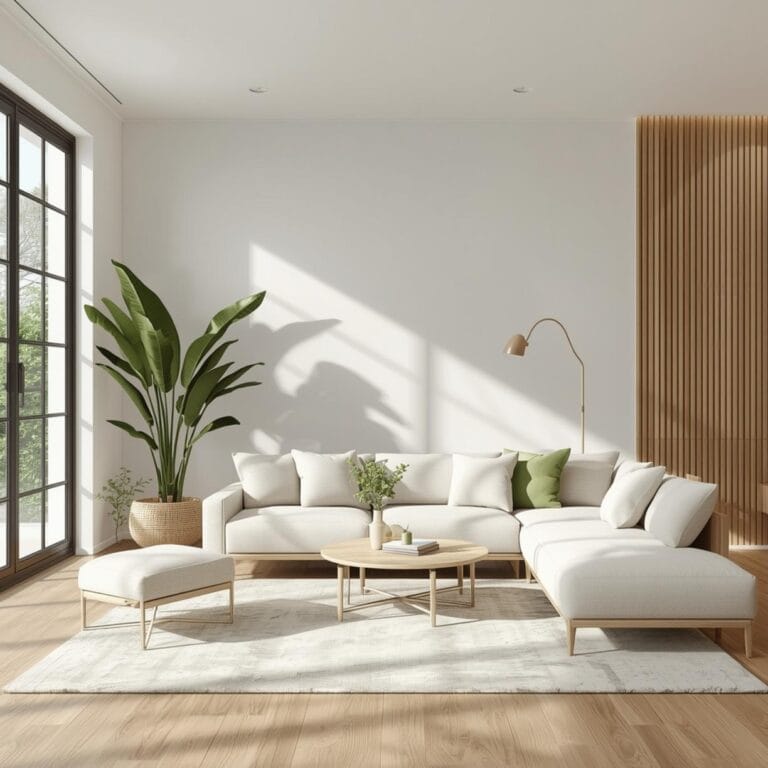
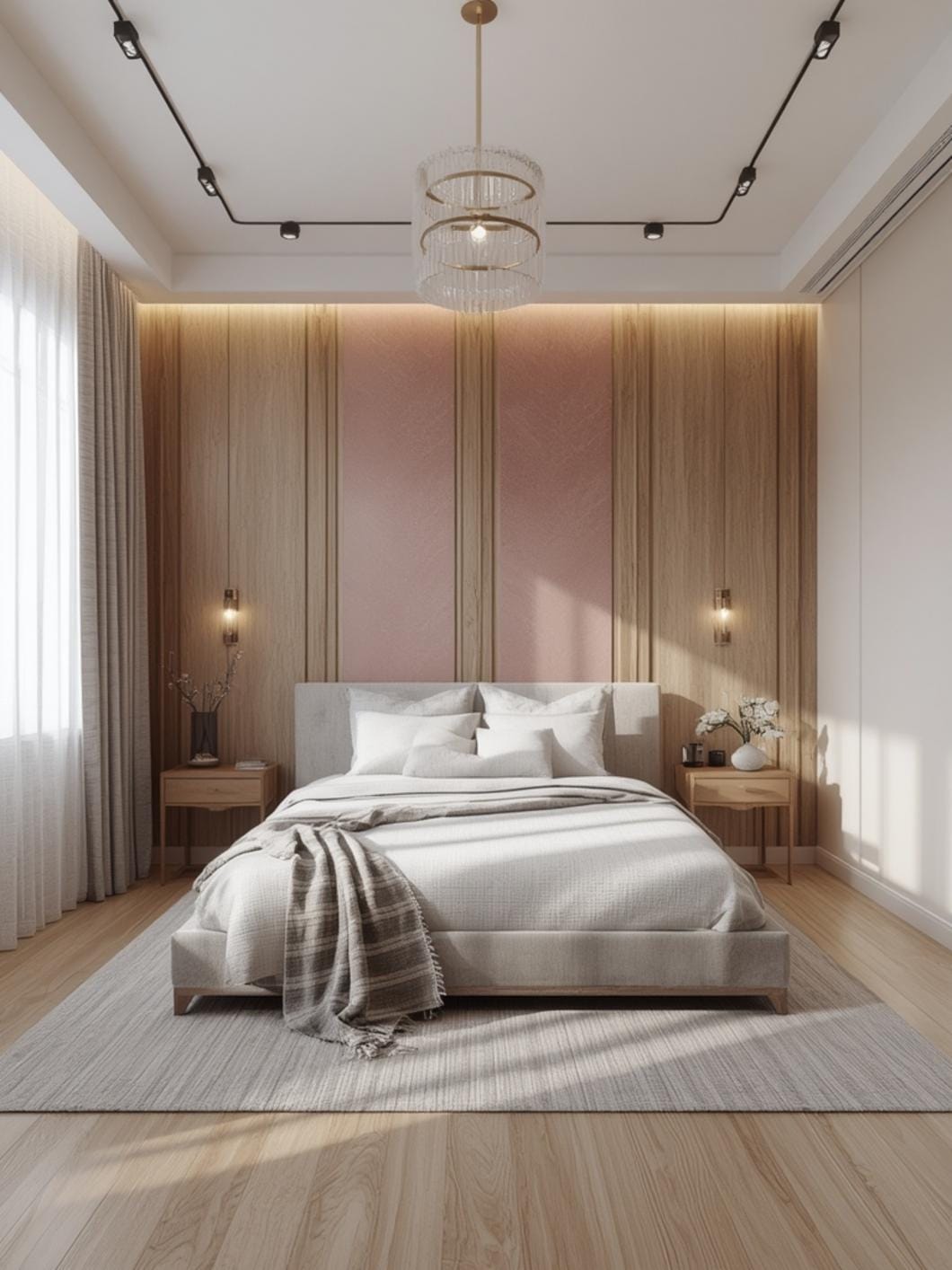
Horizontal wood planks or wood-look panels bring organic warmth to small bedrooms. The horizontal lines widen your room visually. Choose light or medium wood tones to avoid making the space feel heavy.
This works especially well in modern farmhouse or Scandinavian-inspired rooms. The natural material adds coziness without competing for attention.
Painted Geometric Shapes
Create a modern accent wall using painter’s tape to mark off triangles, hexagons, or abstract shapes. Fill these sections with two or three coordinating colors. This artistic approach adds personality while keeping costs low.
The geometric pattern creates visual movement that makes your small bedroom feel more dynamic. Keep your shapes large rather than tiny to avoid a busy feeling.
Murals or Wall Decals
A carefully chosen mural can actually expand your space visually. Landscapes, skylines, or abstract designs that suggest depth work best. Peel-and-stick options make this commitment-free.
Choose murals with lighter backgrounds and avoid overly detailed or dark images. The goal is to create a view or focal point, not close in your walls.
Ombré or Gradient Wall
Blend two or three related colors from light to dark vertically or horizontally. This technique creates a dreamy, sophisticated effect. The gradual color shift adds dimension and visual interest without harsh lines.
Ombré works particularly well with blues, greens, or neutrals. The seamless transition keeps your small bedroom feeling cohesive and peaceful.
Benefits of Adding an Accent Wall
Your accent wall serves multiple purposes beyond just looking pretty. It defines your bedroom’s character instantly, creating a finished, intentional space rather than four blank walls and some furniture.
A well-chosen accent wall makes your small bedroom feel more expensive and thoughtfully designed. Guests immediately notice the effort, and you’ll feel more satisfied with your space every day.
Accent walls solve the common dilemma of wanting color without painting an entire room. You get the impact of bold choices with less commitment, time, and paint. If you change your mind later, you’re only repainting one wall.
They also provide the perfect backdrop for your bed or other furniture. Your room gains a clear focal point, which helps the space feel organized and intentional rather than cramped or cluttered.
From a practical standpoint, accent walls hide imperfections well. Minor wall damage or texture issues become less noticeable when incorporated into a designed feature wall.
Budget Options and Styling Advice
Budget-Friendly Approach
Paint remains your most affordable option. One gallon of quality paint costs between $30-50 and covers your accent wall completely. Add painter’s tape, a roller, and a brush for under $20 if you don’t own these already.
DIY geometric patterns using painter’s tape cost nothing extra. Your creativity becomes the design element. This approach lets you achieve magazine-worthy results for under $75 total.
Mid-Range Solution
Peel-and-stick wallpaper runs $30-60 per roll, and most small bedroom accent walls need just one or two rolls. This gives you professional-looking patterns without permanent commitment or hiring help.
Wood-look peel-and-stick panels offer another mid-range option. They create texture and dimension for roughly $100-150, with no special tools required. Installation takes just a few hours.
Premium Investment
Real wood planks, shiplap, or board-and-batten wall treatments range from $200-500 depending on materials. These create stunning texture and lasting value. You’ll need basic tools like a saw, level, and nail gun.
Custom murals or high-end designer wallpaper can run $150-400. These make sense if you’re creating your dream bedroom and plan to stay in your home long-term.
Small Space Adaptation
In extremely small bedrooms, consider a half-wall treatment. Paint or wallpaper from the floor up to chair rail height, then keep the upper portion light. This adds interest without overwhelming.
Alternatively, create an accent “strip” behind floating shelves or your headboard. Even a 2-3 foot section of design makes an impact when positioned strategically.
Common Mistakes to Avoid
Choosing the Wrong Wall
Many homeowners accent the first wall they see when entering, but this often feels awkward. Choose the wall behind your bed or the wall you see most from your bed instead for better visual flow.
Using Colors That Are Too Dark
Deep charcoal or black can work in small bedrooms, but only with excellent lighting and very light surrounding walls. Test your color with large paint samples first, viewing them at different times of day before committing.
Creating Too Much Pattern
Busy, small-scale patterns make small bedrooms feel chaotic and smaller. Stick with large-scale patterns, simple geometrics, or solid colors with texture for better results that won’t overwhelm your senses.
Forgetting About Existing Elements
Your accent wall needs to work with your flooring, curtains, and furniture. Ignoring these creates a disjointed look rather than a cohesive design. Pull accent colors from items you’re keeping.
Skipping the Prep Work
Rushing into painting or applying wallpaper without cleaning, patching, and priming shows in the finished result. Take time to prepare your wall properly, and your accent wall will look professional rather than rushed.
Keeping Your Accent Wall Fresh
Painted accent walls need minimal maintenance. Wipe them down twice a year with a slightly damp microfiber cloth to remove dust. Touch up any scuffs with your leftover paint, which you should store properly in a sealed container.
Wallpapered walls benefit from regular dusting with a soft brush attachment on your vacuum. Avoid getting peel-and-stick wallpaper too wet, as this can loosen the adhesive over time.
Wood plank or textured accent walls collect more dust than smooth surfaces. Dust them monthly with a microfiber duster or dry cloth. Check periodically that any attached panels remain secure, tightening hardware if needed.
Protect your accent wall from furniture damage by using felt pads under anything that sits against it. Position your bed frame an inch or two away from the wall to prevent paint chips from headboard movement.
If you used removable wallpaper, you can refresh your look every few years without damage. Simply peel off the old design and apply something new. This flexibility keeps your bedroom feeling current without major renovation.
Make Your Small Bedroom Work Harder
Your small bedroom can feel both spacious and personal with the right accent wall. The techniques and ideas shared here work for real homeowners in real spaces, not just magazine-perfect rooms with unlimited budgets.
Start by identifying which wall makes sense as your accent, then choose a color or pattern that excites you while serving your room’s proportions. Take your time with the process, and don’t be afraid to test samples before committing.
Visit DecorKingdom for more small space decorating inspiration and practical advice that actually works in everyday homes like yours.
FAQs
What color accent wall makes a small bedroom look bigger?
Light colors with cool undertones work best for making small bedrooms appear larger. Soft blues, gentle greens, and pale grays create the illusion of depth and distance. Painting your accent wall in a slightly deeper shade than your other walls adds dimension without closing in the space.
Should I paint all four walls or just one in a small bedroom?
Painting just one accent wall gives you maximum impact with minimal commitment and paint. Keep your other three walls in a light, neutral shade to maintain openness. This approach lets you use bolder colors on your accent wall without overwhelming your small space.
Which wall should be the accent wall in my bedroom?
The wall behind your headboard typically makes the best accent wall in bedrooms. This creates a natural focal point and feels intentional. If your bed sits under a window, choose the wall you see most often from your bed instead.
Can wallpaper make a small bedroom look smaller?
Large-scale, light-colored wallpaper patterns can actually make small bedrooms feel bigger by adding depth and interest. Avoid tiny, busy patterns or very dark colors that can close in your space. Vertical patterns draw the eye upward, making ceilings feel higher.
How much does it cost to create an accent wall in a small bedroom?
Most DIY accent walls cost between $50-150 for a small bedroom, depending on materials. Paint is most affordable at $50-75 total. Peel-and-stick wallpaper runs $60-100. Wood planks or premium materials can reach $200-300, but create lasting impact worth the investment.
—
Meta Title: Accent Wall Ideas for Small Bedroom: 7 Stunning Looks 2026
Meta Description: Transform your compact space with accent wall ideas for small bedroom design. Easy DIY options that make rooms feel bigger and beautiful.