7 Accent Wall Ideas That Make a Small Dining Room Feel Bigger, Not Cramped
Your dining room feels tight, doesn’t it? Every time you sit down for a meal, the walls seem to close in just a little more. You know your space has potential, but you’re not sure how to make it feel special without making it feel smaller.
The secret might be hiding in plain sight. Small dining room accent wall ideas can completely change how your space looks and feels. The right wall treatment draws the eye strategically, creates depth where there wasn’t any before, and gives your room a designer touch without the designer price tag.
You don’t need to repaint your entire dining room or knock down walls. Sometimes, one well-chosen accent wall does more than an entire room makeover ever could.
Table of Contents
What You’ll Need to Get the Look
The beauty of accent walls lies in their flexibility. Depending on which direction you choose, your shopping list will look completely different.
For paint-based designs, you’ll want quality interior paint in your chosen colors, painter’s tape for clean lines, paint rollers and brushes, and drop cloths to protect your floors. Premium paint matters more on accent walls because they draw so much attention.
Wallpaper projects require the wallpaper itself (order extra for pattern matching), wallpaper paste or pre-pasted options, a smoothing tool, a sharp utility knife, and a level to keep patterns straight. Peel-and-stick wallpaper has made this dramatically easier for beginners.
Three-dimensional treatments need different supplies altogether. Board and batten requires wood strips, a miter saw or pre-cut pieces, wood glue, finishing nails, and paint. Picture frame molding needs similar materials but creates an entirely different look.
Decorative elements like floating shelves, mirrors, or gallery walls need appropriate wall anchors, a stud finder, a level, and your chosen decorative pieces. These turn your accent wall into functional art.
Finding Your Style and Season
Timing matters more than you might think. Your dining room serves different purposes throughout the year, and your accent wall should enhance those moments.
Spring and summer invite lighter, brighter accent walls. This is when you’ll host garden party brunches and casual family dinners with the windows open. Fresh whites, soft blues, or botanical wallpapers feel natural during these months. The longer daylight hours show off texture beautifully, making it the perfect time for dimensional treatments.
Fall and winter call for cozier, more dramatic choices. Dark jewel tones, warm wood accents, or rich patterned wallpapers create intimacy when the days grow short. Your holiday gatherings will feel even more special against a thoughtfully designed backdrop.
Consider your entertaining schedule too. If you’re planning a big celebration or family gathering, finish your accent wall at least two weeks before. This gives you time to adjust furniture, add complementary decor, and let any paint smells fully dissipate.
Your daily routine matters just as much. Choose a time when you can work without interruption for at least a full weekend. Most accent wall projects take longer than expected, and you don’t want to eat dinner staring at half-finished walls.
7 Ideas to Try in Your Home
The Classic Dark Drama Wall: Paint the wall behind your dining table a deep, saturated color while keeping the other walls light. Navy, forest green, or charcoal gray creates stunning contrast. The dark wall recedes visually, which actually makes your room feel deeper. This works especially well if you have light-colored furniture that pops against the dark background.
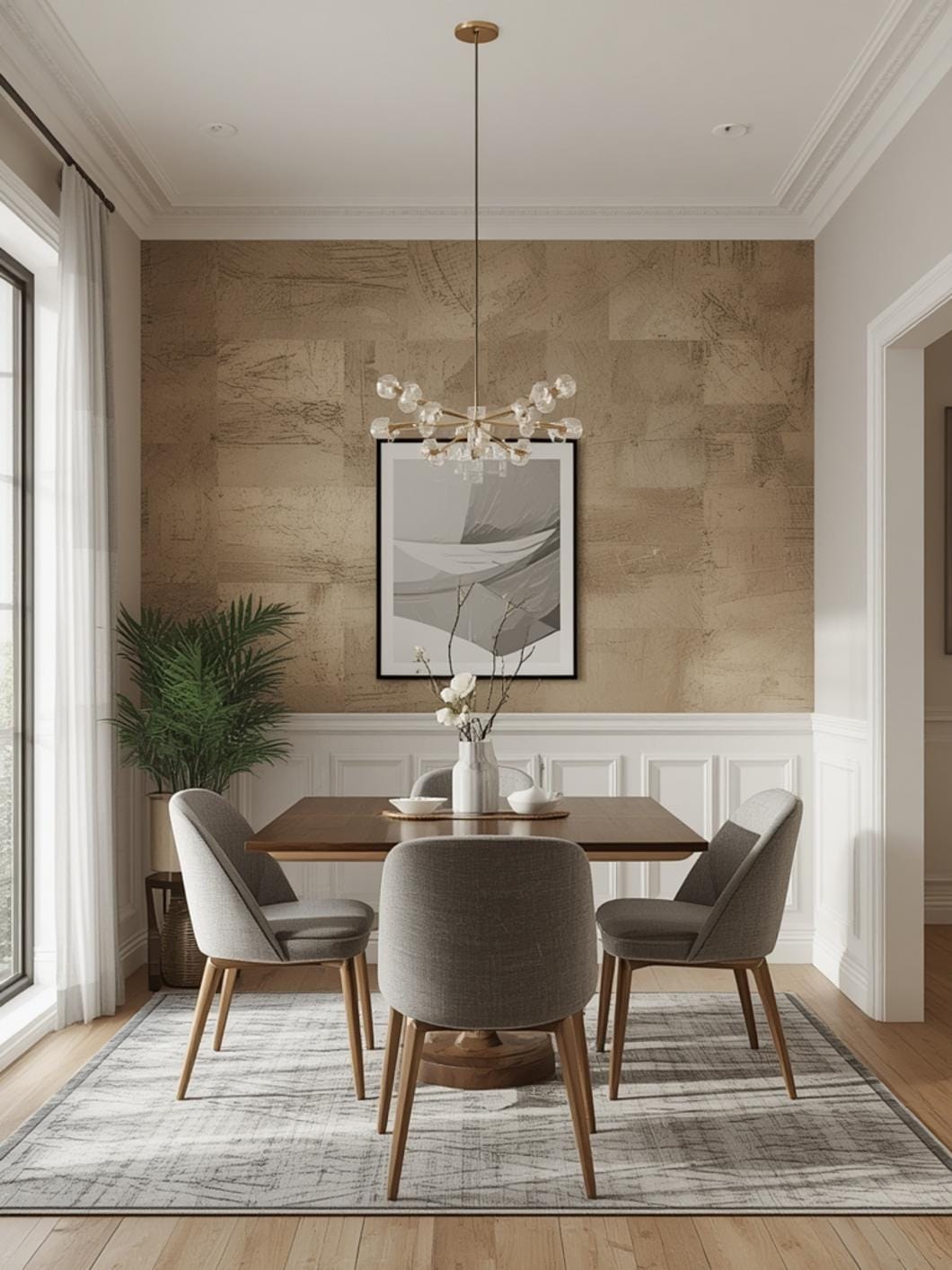
The Two-Tone Horizontal Split: Divide your accent wall horizontally, with a darker color on the bottom third and a lighter shade above. This technique grounds your space and draws the eye upward, making ceilings feel higher. How to make a small dining room look bigger with paint color often starts with this exact approach. The horizontal line tricks your brain into perceiving more square footage than actually exists.
The Textured Shiplap Story: Install horizontal shiplap boards and paint them the same color as your other walls or one shade lighter. The texture catches light and shadow throughout the day, adding visual interest without color contrast. This creates depth through dimension rather than hue, which keeps small spaces from feeling choppy or divided.
The Wallpaper Feature Statement: Choose a bold patterned wallpaper for your accent wall while keeping other walls neutral. Large-scale patterns work better than small prints in compact dining rooms. Oversized florals, geometric designs, or abstract patterns draw attention without making the space feel cluttered. The pattern creates a focal point that distracts from the room’s actual dimensions.
The Vertical Stripe Illusion: Paint or wallpaper with vertical stripes that pull the eye ceiling-ward. Stripes don’t need to be bold or contrasting. Even subtle tone-on-tone stripes in the same color family create the upward movement that makes walls feel taller. This works beautifully behind a buffet or credenza.
The Mirror-Backed Gallery Wall: Cover your accent wall with mirrors in various sizes and shapes, grouped together gallery-style. The reflection doubles your visual space instantly. Mix antique frames with modern ones for an eclectic look, or keep them uniform for contemporary elegance. This solution adds the accent wall impact while physically enlarging your space through reflection.
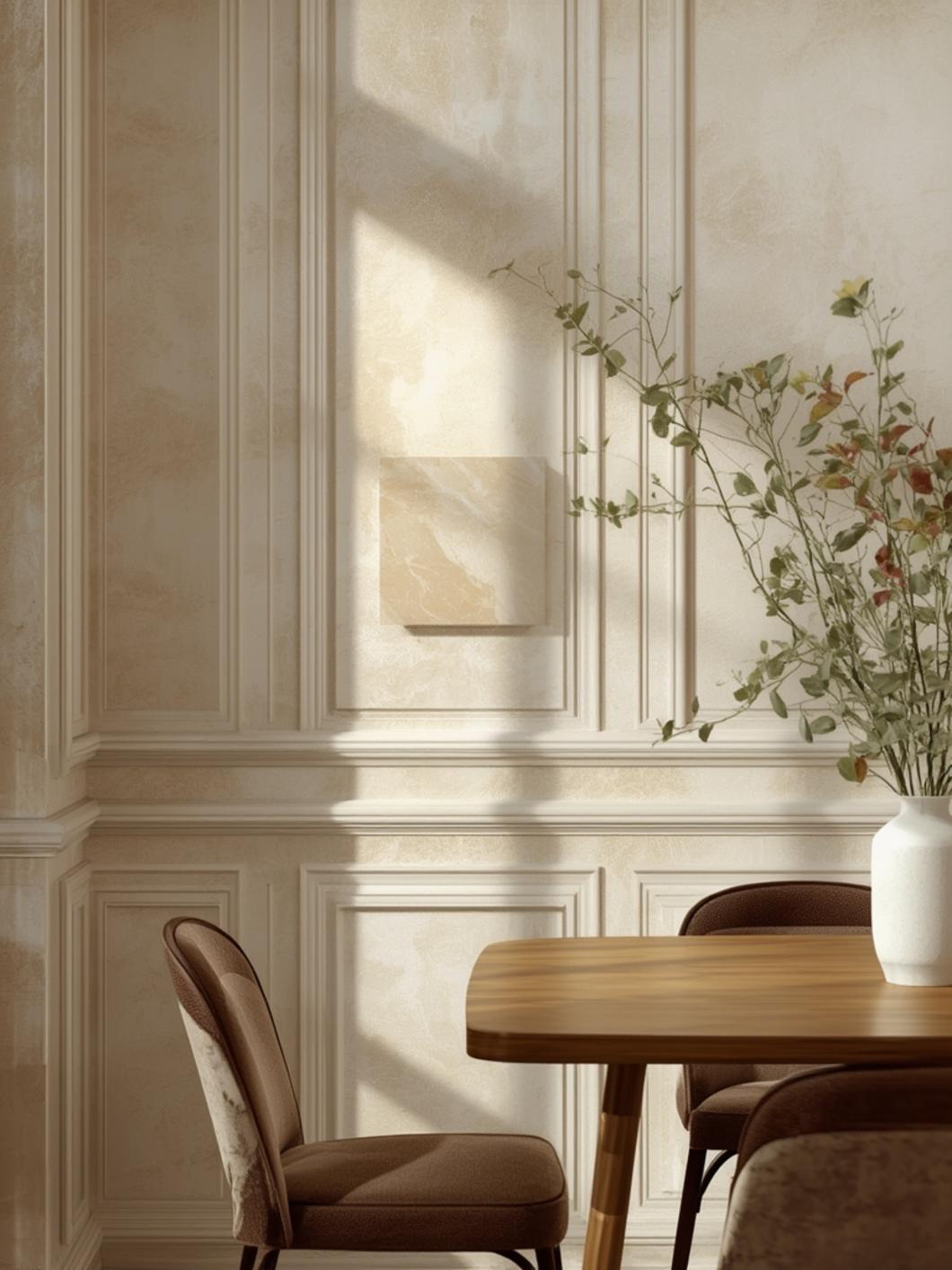
The Picture Frame Molding Grid: Create a grid of picture frame molding painted the same color as your wall or in a complementary shade. This architectural detail adds sophistication and makes your walls look original to the home rather than added later. The dimensional shadows create interest that flat paint simply can’t match. Fill alternating boxes with contrasting paint colors or wallpaper for extra impact.
Benefits That Extend Beyond Pretty Walls
Your accent wall does more than look good in photos. It fundamentally changes how your dining room functions and feels.
The most immediate benefit is visual interest. Dining rooms often lack architectural features, especially in newer homes or apartments. Your accent wall creates that “wow” factor that makes guests pause and take notice. It gives your eye somewhere specific to land rather than bouncing around an undefined space.
The psychological impact runs deeper than aesthetics. A well-designed accent wall creates a defined dining zone, which matters tremendously in open-concept homes. Your brain registers this as a dedicated space for meals and conversation, separate from the kitchen or living area. This definition changes how you use and appreciate the room.
Small dining rooms particularly benefit from the spatial manipulation accent walls provide. Dark walls recede, light walls advance, vertical elements elongate, and horizontal lines widen. You’re essentially rewriting the visual rules of your space without changing a single structural element.
The practical advantage of accent walls is their flexibility. Unlike painting an entire room, changing one wall feels manageable. If you tire of your choice or want to refresh for a new season, you’re only repainting or re-papering one surface. This makes you braver with color and pattern choices.
Your home’s value benefits too. Accent walls signal to potential buyers that someone has thoughtfully designed this space. It shows the home has been cared for and updated.
Budget-Friendly to Premium Options
Budget-Conscious Approach: Stick with paint for your accent wall. Choose one bold color from your existing decor and paint the wall yourself over a weekend. Add depth by creating a geometric pattern using painter’s tape in a complementary shade. Total investment runs under $100 for paint, supplies, and your sweat equity. The impact rivals much more expensive options.
Mid-Range Sweet Spot: Invest in quality peel-and-stick wallpaper or pre-pasted traditional wallpaper in a pattern you absolutely love. Wallpaper has become significantly more DIY-friendly and more affordable than ever before. You’ll spend $200-400 depending on your wall size, but the professional-looking result justifies every dollar. Pair this with updated light fixtures for maximum impact.
Premium Investment: Commission a custom mural artist or invest in luxury wallpaper from high-end manufacturers. Add architectural molding installed by a skilled carpenter, then paint in a sophisticated color mixed specifically for your space. Budget $800-1,500 for materials and labor. This transforms your dining room into a truly custom space that feels completely one-of-a-kind.
Small Space Adaptation: Use removable solutions like peel-and-stick wallpaper or fabric panels hung on curtain rods. This works perfectly for renters or commitment-phobes. Create an accent wall using a large-scale piece of art or a collection of smaller pieces arranged precisely. These approaches give you the accent wall effect without permanent changes.
Common Mistakes That Undermine Your Design
Choosing a color or pattern you don’t completely love is the biggest mistake homeowners make. You’ll see this wall every single day, multiple times a day. If you’re not genuinely excited about it, that hesitation will nag at you. Live with sample swatches for at least a week before committing to anything permanent.
Painting without proper surface preparation ruins otherwise beautiful choices. Dirty walls, unfilled holes, or skipped primer show through dramatically on accent walls because they draw so much attention. Take the extra day to properly prep your surface with cleaning, patching, sanding, and priming where needed.
Forgetting about your lighting completely changes how your accent wall looks. Colors and patterns that seem perfect in afternoon sunlight might feel entirely different under evening artificial light. Test your choices under all lighting conditions your dining room experiences. Install a dimmer if you haven’t already, giving you control over how your accent wall presents itself.
Ignoring scale makes pattern choices fall flat. Tiny patterns disappear in small dining rooms, while massive patterns can overwhelm them. Your pattern scale should balance your room size and furniture scale. When in doubt, go slightly larger than feels comfortable at the store.
Treating your accent wall as completely separate from the rest of your room creates a disjointed look. Your accent wall should feel intentional, not random. Pull at least one color from your accent wall into other room elements through artwork, textiles, or accessories.
Keeping Your Accent Wall Beautiful
Accent walls require surprisingly little maintenance when done correctly. The key is addressing small issues before they become big problems.
Dust your accent wall monthly, especially textured treatments like shiplap or board and batten. Use a soft microfiber cloth or a vacuum attachment to prevent buildup in grooves and seams. Dust becomes more visible on accent walls because you actually look at them.
Touch up paint scuffs immediately rather than letting them accumulate. Keep leftover paint in a tightly sealed container with the color name and date clearly marked. Small touch-ups blend seamlessly when fresh but become obvious if you wait years to address them.
Clean wallpaper gently with a slightly damp cloth when needed. Most modern wallpapers are scrubbable, but always test in an inconspicuous corner first. Avoid saturating seams, which can cause peeling. Address any lifting corners immediately with wallpaper adhesive applied carefully with a small brush.
Monitor for moisture issues, especially on exterior walls. Peeling paint or wallpaper often indicates humidity problems that need addressing beyond just cosmetic fixes. A small dehumidifier in problem areas prevents damage before it starts.
Rotate artwork seasonally if you’ve created a gallery wall accent. This keeps your space feeling fresh and lets you enjoy different pieces throughout the year. It also prevents permanent sun fading in one specific arrangement.
Make Your Dining Room Your Favorite Room
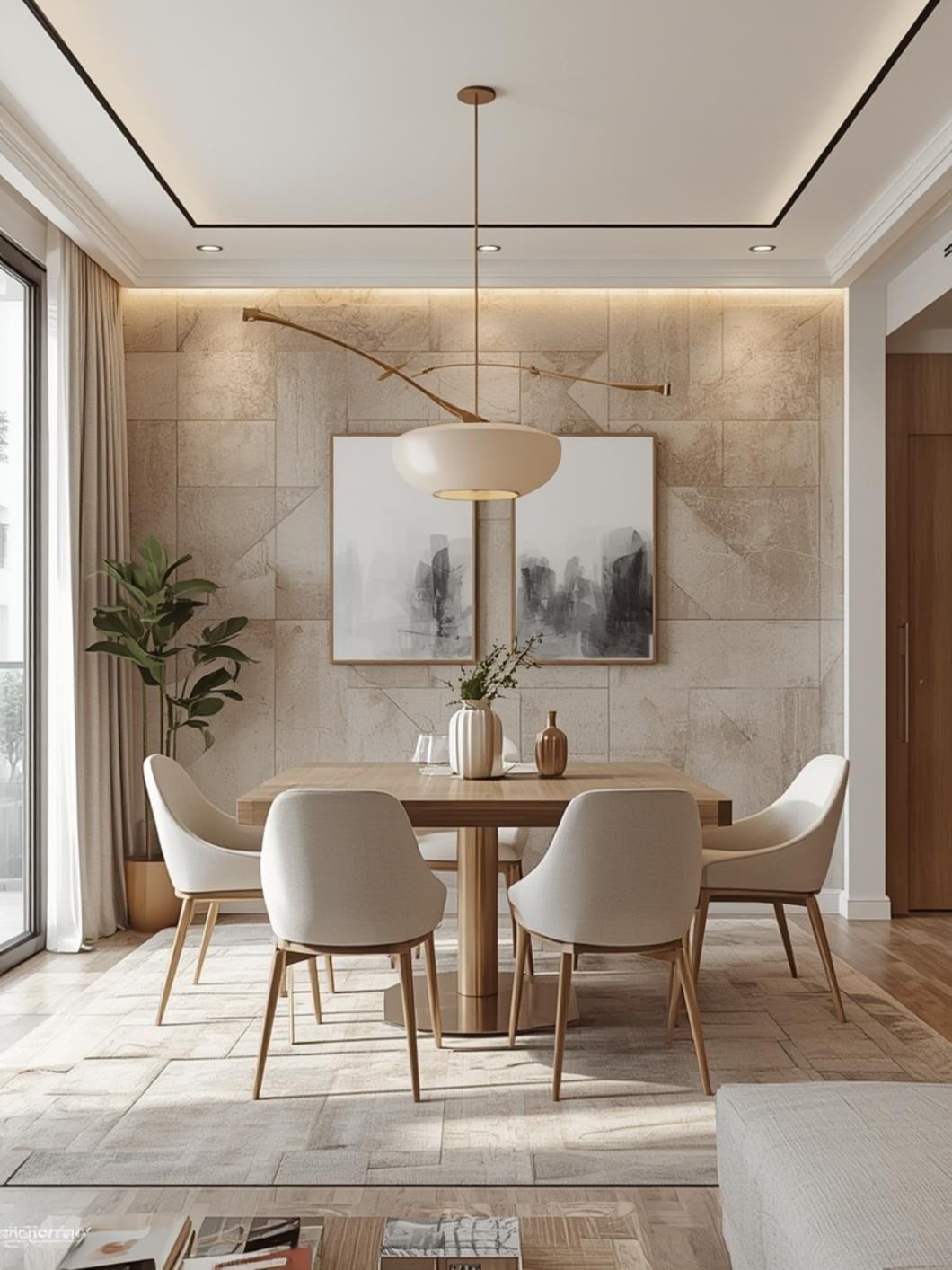
Your small dining room doesn’t have to feel cramped or forgettable. With one well-designed accent wall, you can create depth, personality, and visual interest that makes every meal feel more special.
The beauty of this project is how achievable it is. You don’t need professional skills or a massive budget to create something genuinely beautiful. You just need a clear vision, proper preparation, and the confidence to commit to a choice that excites you.
Ready to transform your space? Explore more inspiring ideas and practical guides at DecorKingdom, where your home’s potential becomes reality.
FAQs
What wall should be the accent wall in a small dining room?
Choose the wall you see first when entering the room, which is typically the wall behind your dining table. This creates an immediate focal point and draws attention away from the room’s size. If you have a wall with a window, skip that one unless you’re creating a frame effect around the window itself.
Can I use dark colors on an accent wall in a tiny dining room?
Absolutely, and you should consider it. Dark accent walls actually make small dining rooms feel larger because dark colors recede visually, creating the illusion of depth. The key is keeping your other walls light to maintain contrast and ensuring you have adequate lighting to prevent the space from feeling cave-like.
How do I choose between paint and wallpaper for my accent wall?
Paint works best when you want a clean, modern look or plan to change your design frequently. Wallpaper delivers pattern and texture that paint alone cannot achieve, making it ideal when you want maximum visual impact. Consider your commitment level and budget, as quality wallpaper costs more upfront but lasts longer than paint in high-traffic areas.
Should my accent wall match my dining furniture?
Your accent wall should complement rather than match your furniture. Pull a secondary color from your upholstery or pick a shade that sits opposite your furniture tone on the color wheel for pleasing contrast. If you have dark wood furniture, lighter accent walls create balance, while light furniture benefits from deeper, richer wall colors.
How long does it take to complete an accent wall project?
Plan for a full weekend for most accent wall projects. Simple paint applications take 6-8 hours including prep and drying time between coats. Wallpaper installations need 8-12 hours depending on pattern matching complexity. Dimensional treatments like board and batten require 12-16 hours spread across two days for measuring, cutting, installing, and painting.
—
Meta Title: Small Dining Room Accent Wall Ideas That Work in 2026
Meta Description: Transform your compact space with these small dining room accent wall ideas. Get 7 stunning styles that make rooms look bigger instantly.