Beautiful Laundry Room Tile Flooring Ideas That Handle Real Life
Your laundry room works harder than almost any other space in your home. Between water spills from the washing machine, detergent drips, and muddy shoes making their way through, this room needs flooring that can take a beating while still looking great.
If you’re tired of worn-out vinyl or dreary concrete, laundry room tile flooring ideas offer the perfect blend of durability and style. Tile stands up to moisture, resists stains, and gives you endless design possibilities that make doing laundry feel just a little less like a chore.
The right tile choice transforms this hardworking room into a space you actually enjoy spending time in. Whether you prefer classic subway patterns, modern geometric designs, or warm wood-look planks, there’s a tile option that fits your home’s personality and your practical needs.
Table of Contents
What You’ll Need to Get the Look
Choosing tile for your laundry room involves more than just picking a pretty pattern. You’ll need to consider the actual materials that create a functional, beautiful space.
Tile Materials:
– Porcelain tile (most durable and water-resistant option)
– Ceramic tile (budget-friendly with good moisture resistance)
– Luxury vinyl tile (softer underfoot, easier DIY installation)
– Natural stone tile (slate or travertine for upscale looks)
Supporting Materials:
– Grout in colors that complement your tile choice
– Grout sealer to protect against moisture and staining
– Transition strips for doorways
– Underlayment or backer board (for proper tile installation)
Coordinating Elements:
– Baseboards or tile base trim that match your flooring
– Area rugs for comfort zones near folding areas
– Cabinet hardware that complements tile finishes
– Light fixtures that highlight your flooring choice
Your tile selection should coordinate with your existing cabinetry, wall color, and overall home style. If you have white shaker cabinets, consider adding visual interest with patterned floor tiles rather than plain white.
Finding Your Style and Season
Tile installation works well during any season, but spring and fall offer the most comfortable working conditions if you’re tackling this as a DIY project. Mild temperatures help adhesives cure properly without the extremes of summer heat or winter cold affecting your results.
Your personal style should drive your tile choice more than trends. Classic patterns like hexagons, subway layouts, and simple grid arrangements never go out of style and work beautifully in laundry spaces.
Think about how your laundry room connects to adjacent spaces. If it opens directly to your kitchen or mudroom, choosing complementary flooring creates visual flow throughout your home. You don’t need exact matches, but coordinating color families or similar styles make sense.
Budget timing matters too. Tile projects require upfront investment, but sales events around major holidays often bring significant savings on both materials and professional installation services.
7 Ideas to Try in Your Home
Ready to explore specific looks for your space? These design approaches work beautifully in real laundry rooms and accommodate different style preferences.
Classic Black and White Checkerboard
This timeless pattern adds vintage charm while hiding dirt between cleaning sessions. The high contrast creates visual interest in a small space, and you can orient squares on the diagonal for added dimension. This look pairs perfectly with vintage-inspired fixtures and farmhouse-style cabinets.
Large-Format Gray Porcelain
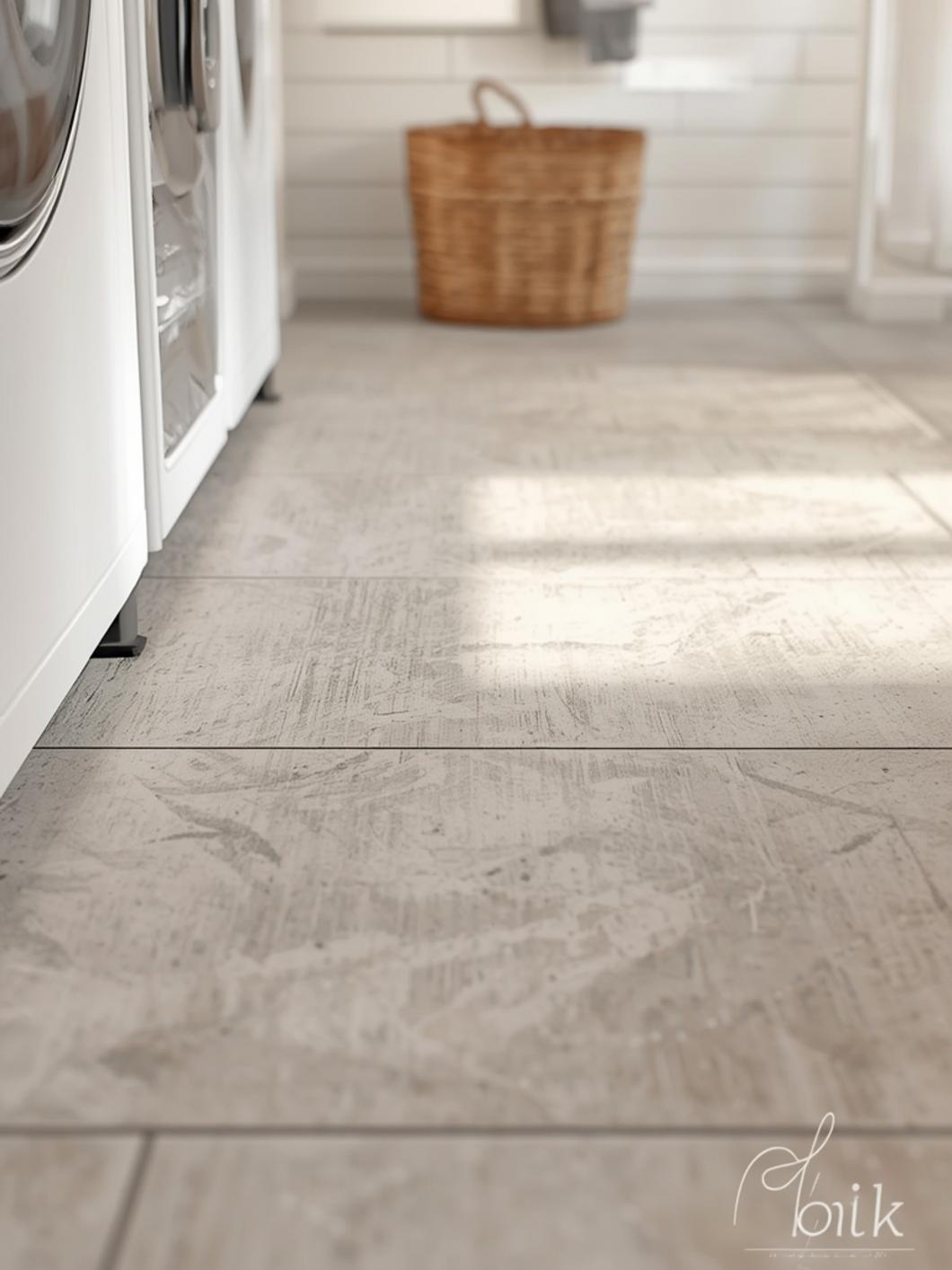
Fewer grout lines mean easier cleaning and a more modern aesthetic. Gray tones hide water spots and soap residue better than stark white, while large tiles (12×24 inches or bigger) make small laundry rooms feel more spacious. The sleek look complements contemporary and transitional home styles.
Wood-Look Tile Planks
You get the warmth of hardwood without worrying about water damage. These planks typically come in 6-8 inch widths and various lengths, installed in offset patterns just like real wood flooring. Choose medium to darker wood tones that won’t show every speck of lint or detergent drip.
Patterned Cement Tile
Colorful Moroccan-inspired or geometric patterns turn your floor into a focal point. These tiles work especially well in vintage homes or spaces with simple white cabinetry where the floor becomes the star of the room. Just remember that best tile grout sealant for laundry room moisture becomes absolutely essential with cement tiles since they’re more porous than porcelain.
Subway Tile on the Floor
The classic 3×6 inch shape that typically lives on walls creates an unexpected twist underfoot. Lay them in herringbone or traditional brick patterns for added visual texture. White or light gray subway tiles brighten dark laundry spaces while maintaining a clean, fresh feel.
Hexagon Tiles in Mixed Sizes
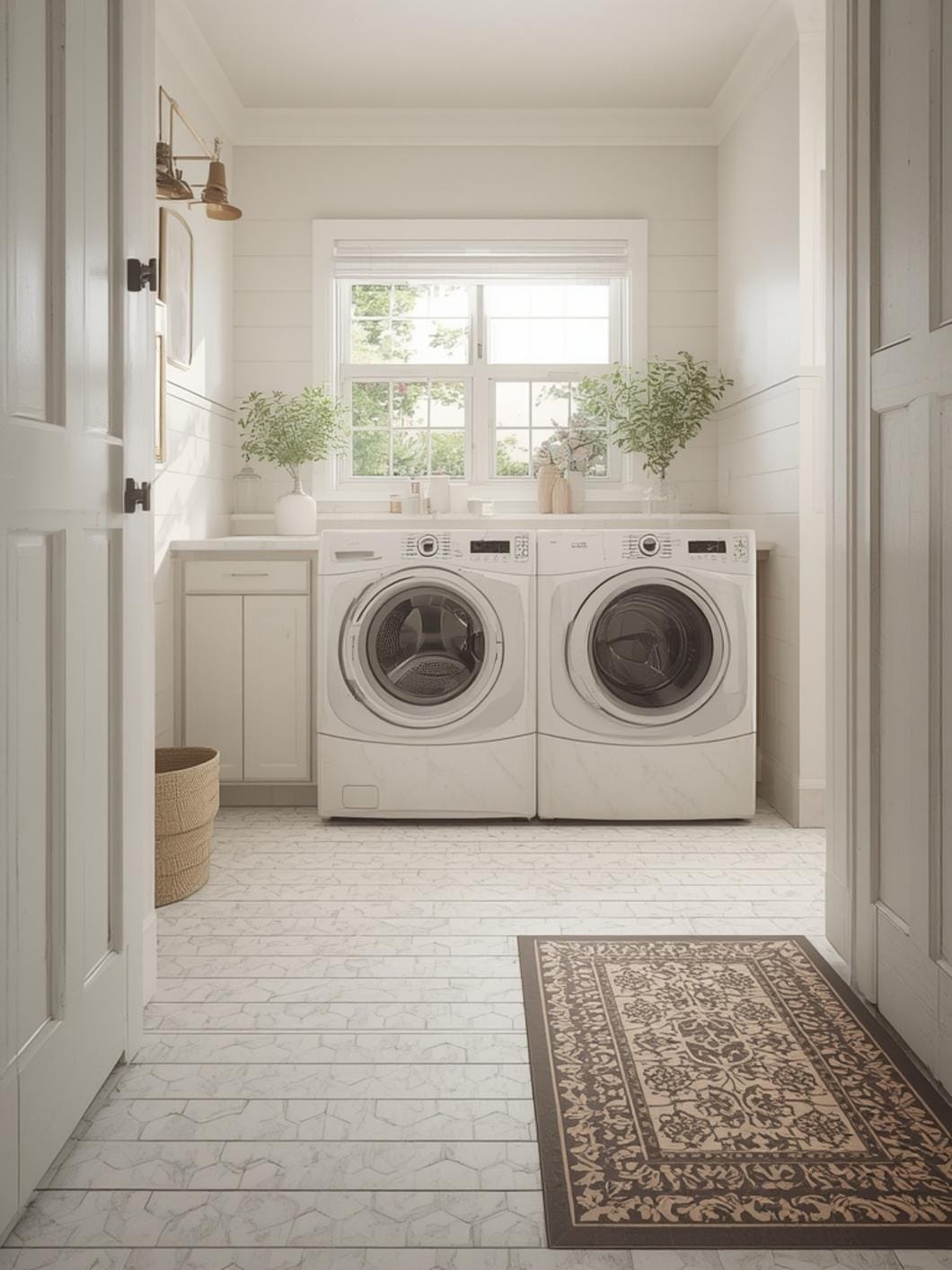
Combining large hexagons with smaller accent hex tiles creates custom patterns without custom pricing. Black hexagons with white grout offer bold contrast, while white hexagons with gray accents feel softer and more subtle. This geometric approach adds personality without overwhelming a compact space.
Natural Stone with Textured Finish
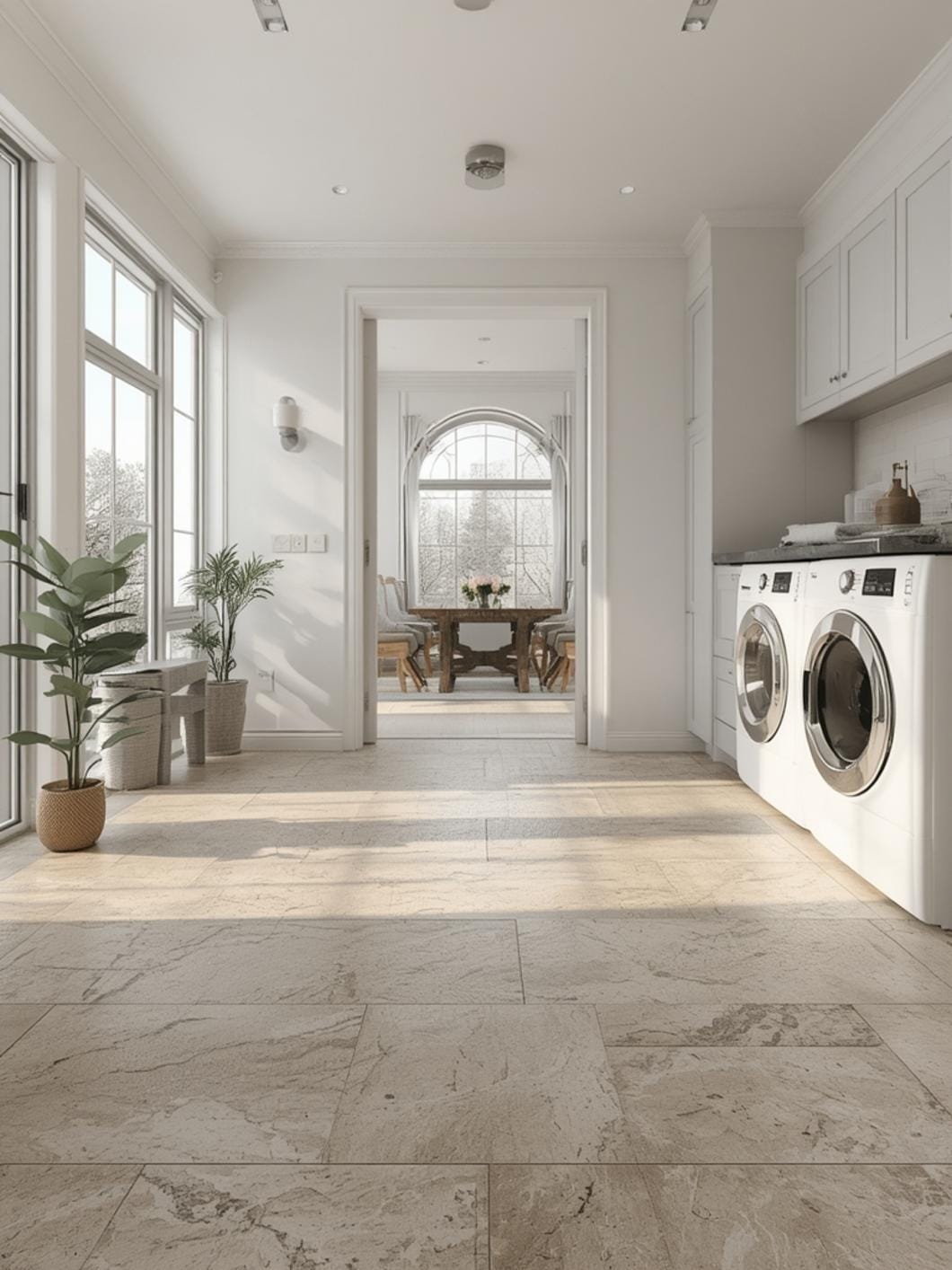
Slate or textured travertine provides built-in slip resistance, which matters in a room where water spills happen regularly. The varied natural tones hide imperfections beautifully, and the organic look brings an upscale spa feeling to your laundry routine.
Benefits / Advantages
Tile flooring in your laundry room delivers practical advantages that make everyday life easier. Water from overflowing washers, leaky hoses, or wet clothes simply wipes up without leaving damage or stains behind.
The durability factor means you install it once and enjoy it for decades. Unlike vinyl that tears or laminate that swells with moisture, properly installed tile withstands the constant demands of an active laundry space without showing wear.
Tile also improves your home’s resale value in ways that basic vinyl never will. Potential buyers notice quality flooring choices, especially in high-moisture areas where cheap options often fail. Your investment pays dividends when it comes time to sell.
From a health perspective, tile doesn’t harbor allergens, mold, or mildew the way carpet or even some vinyl products can. You can disinfect and sanitize tile surfaces completely, which matters in a room where you’re cleaning the family’s clothing.
The style flexibility means you’re never stuck with boring builder-grade basics. Tile comes in literally thousands of colors, patterns, sizes, and finishes that let you express your personal taste while meeting practical flooring needs.
Tips, Alternatives, Styling Advice
Your budget determines which tile options make sense, but beautiful results are possible at every price point.
Budget-Friendly Approach
Standard ceramic tile in 12×12 inch sizes keeps costs down while delivering durability. Stick with solid colors in grays, beiges, or whites that coordinate with multiple decor styles. DIY installation using peel-and-stick tile products cuts labor costs significantly if you’re comfortable with basic home projects.
Mid-Range Investment
Porcelain tile in larger formats (12×24 or 18×18 inches) offers premium looks at moderate pricing. Add visual interest through layout patterns like herringbone or diagonal placement rather than expensive designer tiles. Professional installation ensures proper waterproofing and longevity.
Premium Selection
Natural stone tiles, custom patterns mixing multiple tile types, or high-end porcelain that mimics marble or concrete create showroom-worthy results. Include heated flooring systems underneath for ultimate comfort during cold-weather laundry sessions.
Small Space Adaptation
Light-colored tiles make compact laundry closets feel more open and airy. Large-format tiles minimize grout lines that can make tiny rooms feel choppy. Running tile planks lengthwise in narrow spaces creates the illusion of more floor space.
Consider tile that extends partway or fully up the walls in very small laundry areas. This creates a cohesive look while protecting walls from splashes and providing easy-clean surfaces throughout the entire room.
Common Mistakes to Avoid
Choosing glossy tile for laundry room floors creates slippery surfaces when wet. Instead, select matte or textured finishes that provide traction even when water gets spilled.
Skipping proper underlayment preparation leads to cracked tiles and grout over time as floors flex beneath. Make sure your subfloor is level, stable, and properly prepared before any tile goes down.
Installing tile without considering appliance placement causes problems when you need to replace your washer or dryer. Leave accessible routes for moving large appliances in and out, or accept that you might damage tiles during future replacements.
Using the wrong grout color makes maintenance harder than it needs to be. Pure white grout in laundry rooms shows every stain, while very dark grout highlights light-colored lint and detergent residue. Medium gray or taupe tones hide the most common laundry room messes.
Neglecting transition strips between tile and adjacent flooring creates tripping hazards and exposes tile edges to damage. Proper transitions protect your investment while creating a finished, professional appearance.
Maintenance / Upkeep Tips
Daily maintenance involves sweeping or vacuuming to remove lint, dirt, and debris that accumulate quickly in laundry spaces. A quick sweep after each laundry session prevents buildup that gets ground into grout lines.
Weekly mopping with warm water and a pH-neutral tile cleaner keeps surfaces fresh without damaging grout or tile finishes. Avoid harsh chemicals, bleach, or ammonia-based products that can discolor grout or strip protective sealants over time.
Address spills immediately, especially with products like bleach, fabric dye, or laundry detergent that can stain grout if left sitting. A simple wipe-up when accidents happen prevents permanent discoloration.
Reseal your grout annually or as recommended by your grout sealer’s manufacturer. This protective layer prevents moisture absorption, staining, and mildew growth that can make grout look dingy and worn. The process takes less than an hour and extends your floor’s beautiful appearance for years.
Check caulk lines around baseboards and appliances every six months. Reapply as needed to maintain moisture barriers that protect walls and subfloors from water damage.
Conclusion
The right tile flooring turns your laundry room from purely functional to genuinely enjoyable. With options ranging from budget-friendly ceramic to premium natural stone, you can find tile that matches both your style preferences and your practical needs.
Your laundry room deserves the same design attention as any other space in your home. Explore more inspiring ideas and practical solutions here at DecorKingdom to make every room in your house work beautifully for your family’s real life.
FAQs
What type of tile holds up best in laundry rooms?
Porcelain tile offers the best combination of water resistance, durability, and stain resistance for laundry spaces. It’s denser and less porous than ceramic, which means it won’t absorb moisture even with constant exposure to water. Glazed porcelain provides an additional protective layer that makes cleaning simple and prevents permanent staining from detergents or bleach.
Can I install tile over existing vinyl flooring in my laundry room?
You can install tile over vinyl in some situations, but it’s not always the best approach. The vinyl must be completely flat, firmly attached, and not cushioned or padded. Most professionals recommend removing old vinyl first to ensure proper adhesion and a level surface that prevents future cracking. If your vinyl is loose, curling, or damaged, removal is definitely necessary.
How much does it cost to tile a typical laundry room floor?
Expect to spend between $800 and $2,500 for a standard laundry room of about 50-75 square feet, depending on tile choice and whether you hire professionals. Budget ceramic tile with DIY installation lands on the lower end, while premium porcelain or natural stone with professional installation reaches the higher range. Remember to budget extra for underlayment, grout, sealant, and transition strips.
Do I really need to seal tile grout in the laundry room?
Yes, sealing grout in your laundry room is absolutely essential. Unsealed grout absorbs moisture, detergent, bleach, and other laundry products that cause staining, discoloration, and eventual deterioration. Quality grout sealer creates a protective barrier that makes cleaning easier and extends the life of your entire tile floor. Plan to reapply sealer annually for best results.
What’s the easiest tile pattern for DIY installation in a laundry room?
Straight grid layout with square or rectangular tiles is the most beginner-friendly pattern. Simply line up tiles parallel to your walls using spacers to maintain consistent grout lines. Offset brick patterns work well with rectangular tiles and add visual interest without complicated cuts. Avoid diagonal layouts or intricate patterns for your first tile project since they require more precise measuring and cutting.
—
Meta Title: Laundry Room Tile Flooring Ideas That Last | 2026 Guide
Meta Description: Discover stunning laundry room tile flooring ideas that handle moisture and look beautiful. Get practical tips for every budget and style.