How to Choose Wallpaper for Kids Room
Your child’s bedroom should be a place where imagination runs wild and every morning feels exciting. If you’re looking for a simple way to create a magical space without a full renovation, wallpaper for kids room designs offer endless possibilities. From jungle adventures to starry night skies, the right wallpaper can turn plain walls into a world of wonder.
Unlike paint that can feel flat and one-dimensional, wallpaper brings texture, pattern, and personality into the room instantly. You don’t need to be a professional decorator to achieve stunning results, and the best part? When your child outgrows that dinosaur phase or princess theme, changing it out is easier than you might think.
The key is choosing wallpaper that grows with your child’s interests while maintaining a foundation that won’t feel outdated in six months. Whether you’re decorating a nursery, updating a toddler’s room, or giving a tween their dream space, wallpaper makes the transformation simple and impactful.
Table of Contents
What You’ll Need to Get the Look
Creating a beautiful wallpapered kids’ room requires more than just the wallpaper itself. Here’s what you’ll need to gather before you start:
Wallpaper supplies:
– Pre-pasted or peel-and-stick wallpaper (easiest for DIY installation)
– Smoothing tool or plastic squeegee
– Sharp utility knife or wallpaper trimmer
– Measuring tape and level
– Sponge and clean water bucket
Room preparation items:
– Drop cloths or old sheets to protect floors
– Painter’s tape for clean edges
– Mild cleaning solution for wall prep
– Small stepladder for reaching high spots
Optional enhancement pieces:
– Coordinating curtains or blinds
– Wall decals for additional personality
– Picture frames or shelving that complement the design
– Accent pillows or bedding that tie the theme together
Choose peel-and-stick or removable wallpaper options specifically designed for easy installation and removal. These modern versions work perfectly for renters or anyone who wants flexibility as their child grows. Traditional paste wallpaper creates a more permanent look but requires more effort to install and remove later.
Finding Your Style and Season
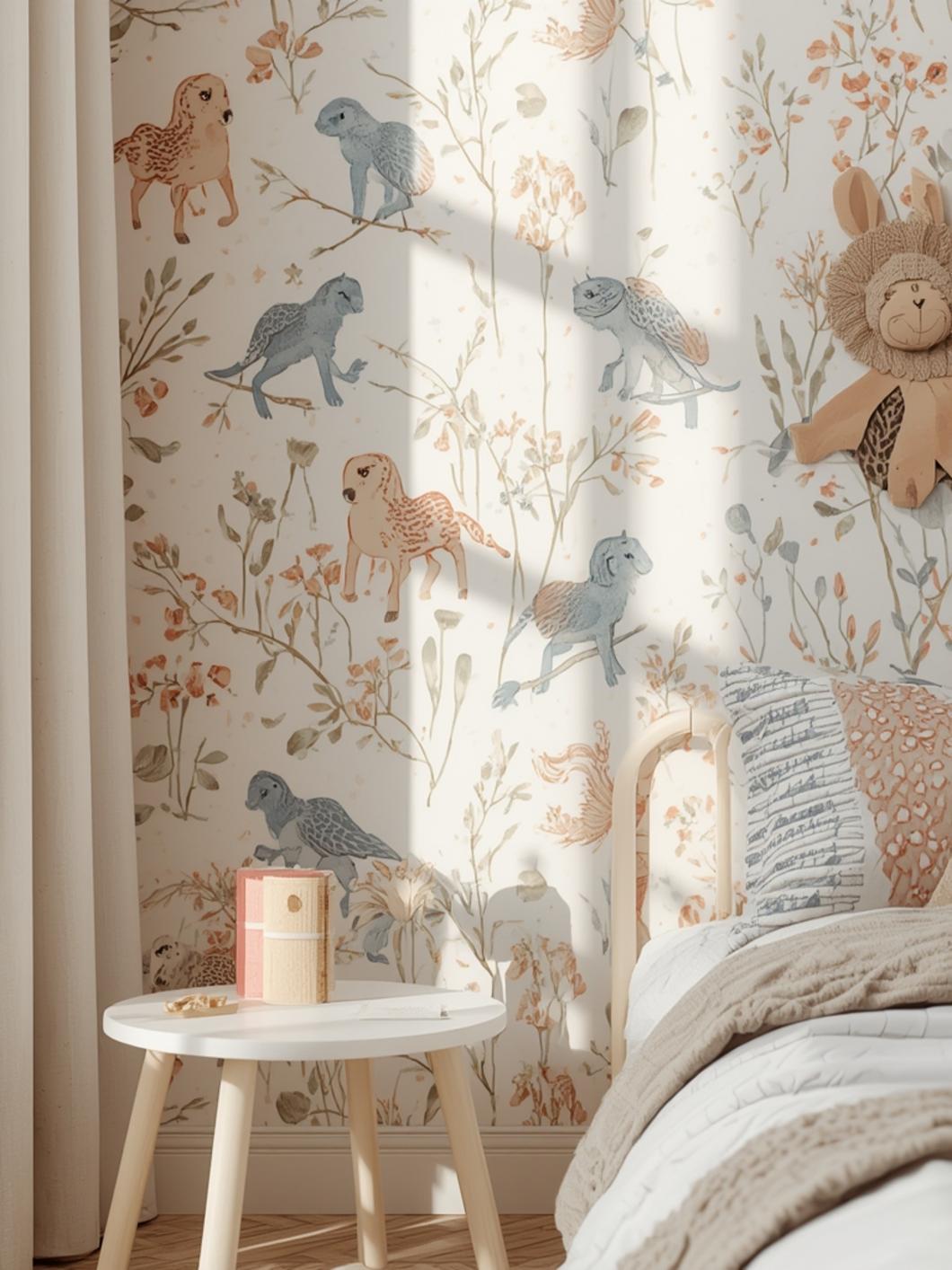
Selecting the right wallpaper goes beyond picking your child’s current favorite character. Think about patterns and themes that offer longevity while still feeling special and age-appropriate.
Consider these timing factors:
Spring and early summer are ideal times for wallpaper projects. Windows can stay open for ventilation, and you won’t be rushing to finish before holiday gatherings. Plus, kids often spend more time outdoors during these months, giving you uninterrupted workspace.
Budget planning should include not just the wallpaper itself but also preparation materials and potential future removal supplies. Most kids’ rooms range from 150 to 250 square feet, requiring 2 to 4 rolls depending on pattern repeat and wall height.
Age-appropriate considerations:
For nurseries and toddler rooms, choose soft colors and gentle patterns that create a calming environment. Avoid overstimulating designs with too many bright colors or busy patterns that might make bedtime routines harder.
School-age children benefit from wallpaper featuring their interests—space exploration, underwater scenes, or geometric patterns that feel grown-up but playful. Involve them in the selection process to ensure they’ll love spending time in their room.
Teenagers appreciate more sophisticated designs like subtle textures, ombré effects, or accent walls with geometric shapes. Avoid character-heavy themes that might embarrass them when friends visit.
7 Ideas to Try in Your Home
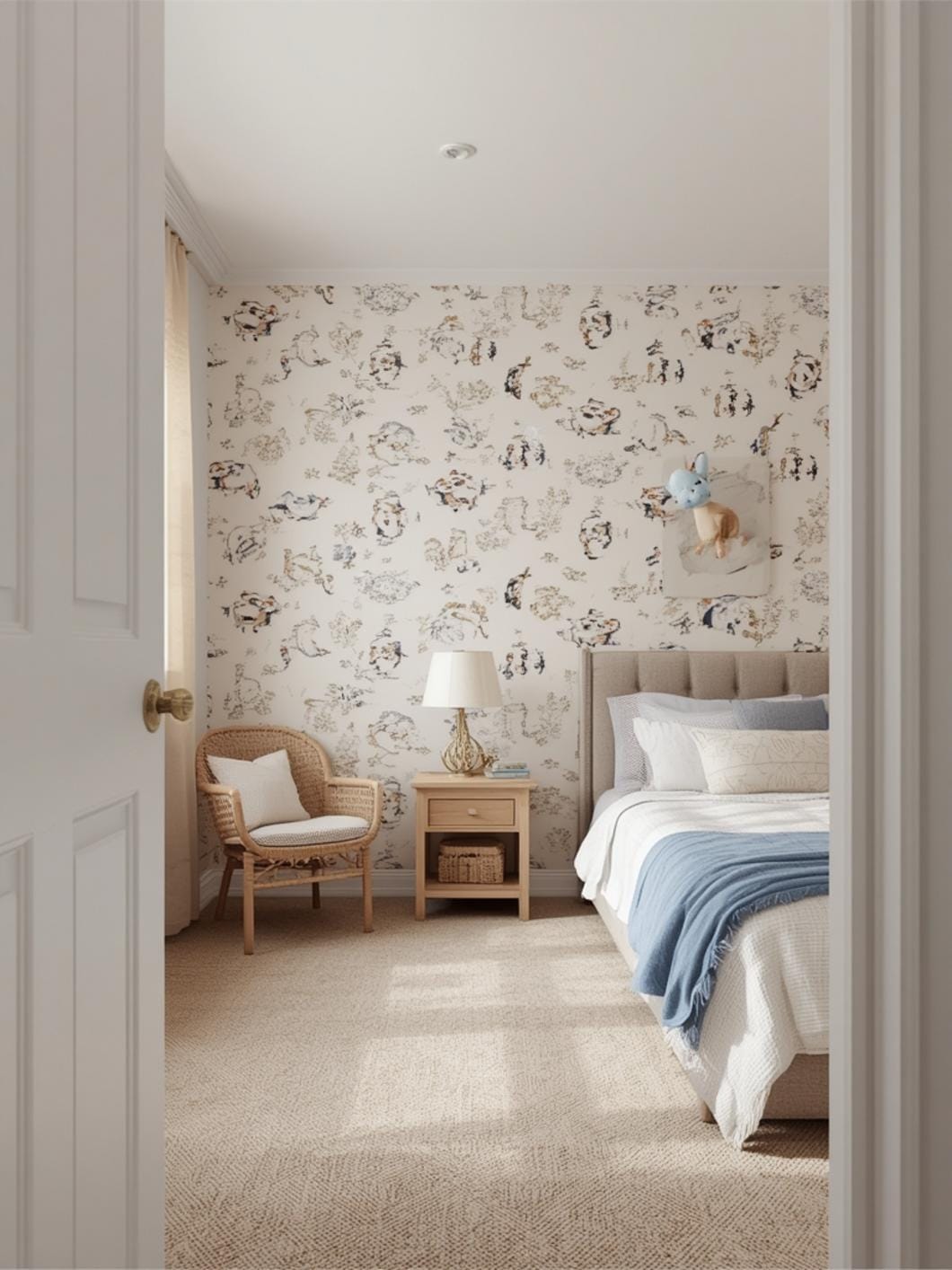
1. Feature Wall Magic
Skip wallpapering the entire room and create one stunning focal wall behind the bed or desk area. This approach costs less, takes less time, and creates maximum visual impact without overwhelming a small space. Pair it with coordinating solid paint colors on remaining walls for a balanced, designer look.
2. Ceiling Surprise
Transform the “fifth wall” into a dreamy sky scene with cloud wallpaper or starry night patterns. Kids love looking up at something special, and it’s an unexpected detail that makes the room feel custom-designed. This works especially well in rooms with lower ceilings that might feel cramped otherwise.
3. Growth-Friendly Patterns
Choose geometric shapes, stripes, or abstract patterns in colors your child loves now but won’t outgrow quickly. A navy and white chevron pattern or soft gray polka dots work from toddlerhood through teenage years with different styling accessories.
4. Nature-Inspired Themes
Woodland creatures, tropical leaves, or mountain landscapes create a gender-neutral, timeless backdrop. These themes promote calmness and connect children to the natural world, making them perfect for study areas or reading nooks.
5. Learning Through Design
Educational wallpaper featuring world maps, alphabet letters, or solar system diagrams makes learning part of daily life. These designs feel intentional and sophisticated while serving double duty as both decoration and educational tools.
6. Partial Wall Treatment
Apply wallpaper only to the lower portion of walls, creating a wainscoting effect. This protects the most vulnerable areas from little hands while keeping costs down. Top it with a chair rail and paint the upper walls in a coordinating color.
When how to remove wallpaper from children’s bedroom walls becomes necessary as your child grows, modern removable wallpapers make this process remarkably simple. Start by gently peeling from one corner, working slowly to avoid wall damage. For traditional wallpaper, use a spray bottle with warm water and a drop of fabric softener to loosen the adhesive, then scrape carefully with a plastic putty knife. This fresh start lets you update the space as your child’s interests evolve.
7. Mix and Match Textures
Combine wallpaper with other wall treatments for depth and interest. Use wallpaper on one wall, painted stripes on another, and perhaps a chalkboard paint section for creative expression. This layered approach feels custom and expensive without breaking the budget.
Benefits That Go Beyond Pretty Walls
The right wallpaper choice transforms your child’s room in ways that extend far beyond aesthetics. Here’s how this simple update improves daily life at home.
Kids develop a stronger sense of ownership over spaces designed specifically for them. When children participate in choosing wallpaper patterns, they feel heard and valued, making them more likely to keep their rooms organized and take pride in their personal space.
Wallpaper creates clear zones within larger rooms. Use different patterns to define sleeping areas versus play spaces or study corners. This visual separation helps children understand boundaries and routines, especially important in open-concept bedroom layouts.
Quality wallpaper improves room acoustics by adding a soft layer to walls that absorbs sound slightly better than flat paint. This matters for better sleep quality and quieter study time, particularly in homes where bedrooms share walls.
The installation process itself becomes a memorable project you complete together. Children remember these room transformations as special milestones, creating positive associations with their home environment that last into adulthood.
Removable wallpaper options mean you can update designs affordably every few years without professional help or permanent commitment. This flexibility reduces stress around making the “perfect” choice and allows the room to evolve with your growing child.
Tips, Alternatives, and Styling Advice
Budget-Friendly Approach
Start with peel-and-stick wallpaper from major home improvement retailers, typically $25–45 per roll. Cover just one accent wall to minimize costs while maximizing impact. Supplement with affordable DIY projects like painted furniture in coordinating colors or homemade fabric bunting that echoes wallpaper patterns.
Mid-Range Solution
Invest in higher-quality removable wallpaper with better adhesion and more sophisticated patterns, around $60–100 per roll. Cover two walls or create a more elaborate feature wall extending across corners for architectural interest. Add complementary elements like curtain panels and area rugs that tie the theme together.
Premium Option
Choose designer wallpaper with custom patterns or textured finishes, $100–200+ per roll. Professional installation ensures perfect alignment and long-lasting results, though many quality wallpapers are still DIY-friendly. Complete the look with custom bedding, furniture pieces, and lighting fixtures that create a cohesive, magazine-worthy space.
Small Space Adaptation
In compact kids’ rooms, vertical stripes elongate walls and make ceilings feel higher. Light-colored backgrounds with smaller-scale patterns prevent overwhelming tight quarters. Consider wallpapering only the wall visible from the doorway to create immediate impact without closing in the space.
Removable decals offer another alternative when commitment feels overwhelming. These stick directly to painted walls and peel off cleanly, perfect for renters or extremely temporary situations. While they lack the seamless look of full wallpaper, they provide flexibility for frequent changes.
Common Mistakes to Avoid
Choosing trendy characters over timeless patterns: That beloved cartoon character might obsess your four-year-old now, but they’ll likely move on within a year or two. Select patterns with broader appeal that work across multiple ages, then add character elements through easily changeable accessories like bedding and wall art.
Skipping wall preparation: Installing wallpaper over dirty, uneven, or damaged walls leads to poor adhesion and visible imperfections. Clean walls thoroughly with mild soap, fill any holes with spackling, and sand smooth before starting to ensure professional-looking results.
Forgetting about pattern matching: Not accounting for pattern repeats leads to buying insufficient wallpaper and frustrating gaps. Measure carefully and purchase extra, especially with large repeating patterns that require precise alignment at seams.
Installing in high-humidity areas: While kids’ bedrooms generally work well, avoid wallpaper directly behind aquariums or near bathroom-adjacent walls where moisture accumulates. This prevents premature peeling and mold growth that shortens your wallpaper’s lifespan.
Rushing the smoothing process: Air bubbles trapped during installation create unsightly bumps and weak spots where peeling begins. Work slowly from center to edges with your smoothing tool, pushing air out methodically before moving to the next section.
Maintenance and Upkeep Tips
Modern wallpapers designed for children’s spaces are remarkably durable and easy to maintain with simple regular care.
Dust wallpapered walls monthly using a microfiber cloth or vacuum with a soft brush attachment. This prevents dirt buildup that can work into textured surfaces and become harder to clean later. Start at the ceiling and work downward to catch falling dust.
For washable wallpaper varieties, spot-clean marks and fingerprints with a slightly damp sponge and mild dish soap solution. Test cleaning methods in an inconspicuous corner first to ensure colors don’t run or surfaces don’t damage. Never scrub aggressively or use abrasive cleaners that could remove the pattern.
Address peeling edges immediately before they worsen. Use a small amount of wallpaper adhesive on a cotton swab to reattach lifted corners, then smooth firmly and wipe away excess glue. This five-minute fix prevents larger sections from loosening.
Maintain consistent humidity levels in your home to prevent wallpaper adhesive from drying out or becoming too moist. Run a humidifier during dry winter months and use air conditioning or dehumidifiers during humid summers to protect your investment.
Keep furniture and beds at least an inch away from wallpapered walls to prevent constant rubbing that wears down surfaces over time. This small gap is invisible but significantly extends wallpaper life in active kids’ rooms.
Creating Lasting Memories Through Design
Updating your child’s room with wallpaper creates more than just a pretty backdrop—it builds a personalized sanctuary where they feel safe, inspired, and understood. The transformation happens quickly but the positive effects last for years, supporting better sleep, focused study time, and creative play.
Whether you choose whimsical clouds, bold geometric shapes, or educational world maps, the right wallpaper reflects your child’s personality while maintaining enough flexibility to adapt as they grow. Don’t let fear of commitment hold you back from this impactful update. Modern removable options make changes simple whenever the time comes.
Ready to explore more ways to make your home work beautifully for your family? Browse DecorKingdom for inspiration and practical advice that turns your decorating dreams into reality.
Frequently Asked Questions
How long does peel-and-stick wallpaper last in a kids room?
Quality peel-and-stick wallpaper typically lasts 3–5 years in children’s rooms with proper installation and care. The actual lifespan depends on wall condition, humidity levels, and how much wear the walls receive from furniture and active play. Removable wallpapers are designed for eventual removal, making them perfect for spaces that need updating as kids grow.
Can I install wallpaper over textured walls?
Smooth walls work best for wallpaper installation, but lightly textured walls can work if you use thicker wallpaper varieties. Heavy orange-peel or popcorn textures will show through and prevent proper adhesion, so consider skim-coating walls smooth first or choosing alternative wall treatments. Test a small section before committing to a full room.
Is wallpaper safe for babies and toddlers?
Yes, wallpaper is safe for nurseries and young children’s rooms when you choose non-toxic, water-based adhesive products and vinyl-free options. Look for wallpapers labeled as PVC-free and low-VOC to minimize chemical exposure. Peel-and-stick varieties are particularly safe since they don’t require additional adhesive application.
What’s the easiest wallpaper pattern for beginners?
Solid textures, small overall patterns, or designs without obvious repeats are most forgiving for first-time installers. Large-scale patterns with specific repeats require precise matching at seams, making them trickier for beginners. Vertical stripes are surprisingly easy since alignment is straightforward and small mistakes are less noticeable.
How do I remove wallpaper adhesive residue after taking down old wallpaper?
Mix warm water with a few drops of dish soap and apply generously to residue spots using a sponge. Let it soak for several minutes to soften the adhesive, then gently scrape with a plastic putty knife. For stubborn spots, use a commercial adhesive remover following package directions, then wash walls thoroughly before applying new wallpaper or paint.
—
Meta Title: Kids Room Wallpaper Ideas That Grow With Them (2026)
Meta Description: Discover stunning wallpaper for kids room designs that transform spaces instantly. Plus, easy removal tips when it’s time to update.