How to Choose Kids Room Wallpaper Like a Pro
Your child’s bedroom should feel like their own little universe—a place where imagination runs wild and dreams take flight. But here’s the thing: those plain white walls aren’t exactly inspiring any adventures. If you’ve been thinking about adding personality to your kid’s space, kids room wallpaper might be exactly what you need.
Wallpaper has come a long way from the dusty patterns your grandmother used. Today’s options are bold, playful, and surprisingly easy to work with. Whether your little one dreams of outer space, enchanted forests, or geometric patterns, there’s a design waiting to bring their vision to life.
The best part? You can create a magical space without breaking the bank or hiring a professional. All it takes is a little planning, the right materials, and some patience.
Table of Contents
What You’ll Need to Get the Look
Before you start shopping, think about the practical items that’ll help bring your wallpaper project together:
– Pre-pasted or peel-and-stick wallpaper (measure twice!)
– Smoothing tool or plastic squeegee
– Sharp utility knife or scissors
– Measuring tape and pencil
– Level (or smartphone app)
– Sponge and clean water
– Step ladder or sturdy stool
– Painter’s tape for marking
– Drop cloth or old sheets for floor protection
You’ll also want to consider furniture placement before you start. Moving beds and dressers now saves headaches later. Think about whether you want wallpaper on just one accent wall or all four walls—an accent wall often delivers big impact with less investment.
Don’t forget lighting considerations. Darker patterns work beautifully with plenty of natural light, while lighter designs can brighten a room that doesn’t get much sun.
Finding Your Style and Season
Timing matters when you’re planning a kids’ room refresh. Summer months work wonderfully because you can keep windows open for ventilation, and school’s out means less disruption to routines.
Spring also brings that natural urge to refresh and renew. Your child might be ready for something new after staring at the same walls all winter. Plus, spring birthdays make excellent motivators for room makeovers.
Consider your child’s current interests, but think ahead too. A four-year-old obsessed with unicorns might still love them in two years—or they might not. Choose designs with staying power, or embrace removable options that let you change things up as they grow.
Holiday breaks work perfectly for wallpaper projects. You’ll have uninterrupted time, and your child can help with age-appropriate tasks. That shared experience becomes part of the room’s story.
7 Ideas to Try in Your Home
Celestial Wonderland: Create a dreamy nighttime sky with constellation patterns or moon phases. Deep navy backgrounds with gold or silver stars work for any age, from toddler through teen years. This style pairs beautifully with white furniture and soft lighting.
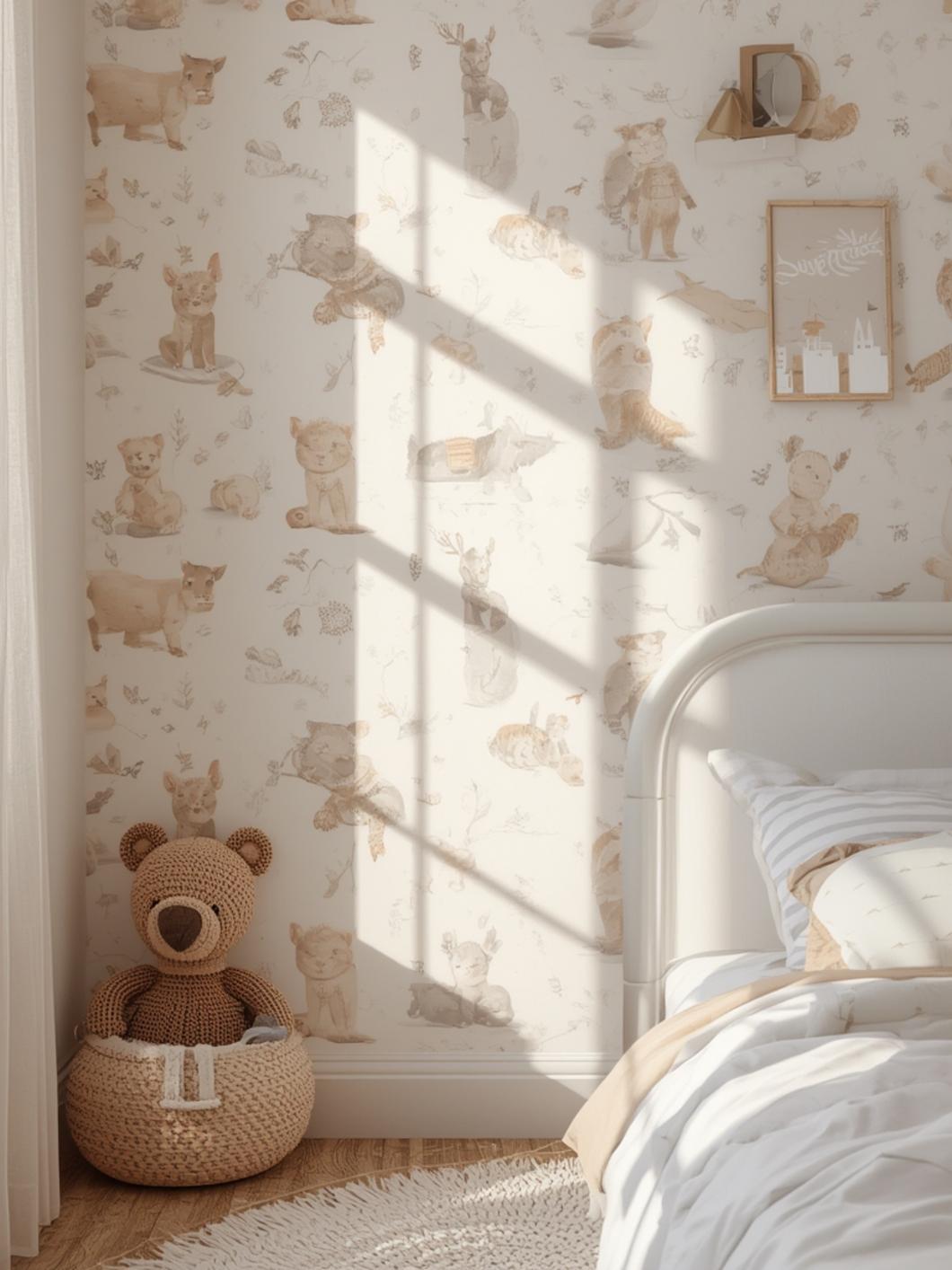
Safari Adventure: Bring the wild indoors with jungle leaves, friendly animals, or tropical patterns. Greens and earth tones create a calming environment while still feeling adventurous. Add some wooden accents and plants for a cohesive look.
Geometric Playground: Modern geometric shapes in soft pastels or bold primaries add sophistication without feeling too grown-up. These patterns work especially well for shared rooms since they’re not gender-specific. The structured designs can actually make a busy room feel more organized.
Storybook Forest: Enchanted woodland scenes with trees, mushrooms, and forest creatures spark imagination at bedtime. These murals often extend across entire walls, creating an immersive experience. Consider this style if your child loves fairy tales and outdoor adventures.
Underwater Escape: Ocean waves, friendly sea creatures, or coral reef patterns bring tranquility to restless sleepers. Blues and aquas naturally promote calmness. This theme grows well with your child—teenagers often still appreciate ocean-inspired spaces.
Vintage Map Explorer: World maps or vintage travel posters feed curiosity and double as learning tools. These sophisticated patterns appeal to older kids and tweens. They’re perfect if you want something educational that doesn’t scream “children’s room.”
Rainbow Gradient Magic: Ombre effects or rainbow stripes create joy without overwhelming the space. Start with softer tones near the ceiling and deepen toward the floor, or vice versa. This approach works in any room size and complements virtually any color scheme.
When you’re ready to switch things up later, knowing how to remove wallpaper from children’s bedroom walls makes future changes stress-free. Modern peel-and-stick varieties come off cleanly, but traditional wallpaper requires scoring, applying removal solution, and gently scraping away sections. The process takes patience, but it’s completely doable for a homeowner.
Benefits Beyond Just Looking Pretty
The right wallpaper choice impacts your child’s daily experience more than you might realize. Colors and patterns influence mood—soft tones promote relaxation at bedtime, while energizing patterns work beautifully in playroom areas.
Wallpaper adds texture and depth that paint alone can’t achieve. This visual richness makes rooms feel more intentional and thoughtfully designed. Your child feels valued when their space receives special attention.
Quality wallpaper also protects walls from the wear and tear active kids bring. It’s easier to clean than painted drywall and can hide minor imperfections. Many parents find this protective layer worth the investment.
A personalized room supports independence and ownership. When kids help choose their wallpaper, they develop confidence in their taste and decision-making. That sense of pride in their space often translates to better care of their belongings.
Budget-Friendly Options That Still Look Amazing
Starter Approach: Focus on one accent wall with peel-and-stick wallpaper. Shop discount retailers or wait for sales at major home stores. You can create impact for under $75 if you’re strategic. Choose patterns with longer staying power to maximize your investment.
Mid-Range Choice: Cover two adjacent walls or try a chair rail design—wallpaper on the bottom half, paint on top. This approach costs $150-300 depending on room size. The divided wall technique adds sophistication and makes the wallpaper go further.
Premium Experience: Wall-to-wall coverage with custom-printed or designer wallpaper transforms the entire room. Budget $400-600 for a standard bedroom. High-quality materials last longer and often feature fade-resistant inks that maintain vibrancy through years of sunlight exposure.
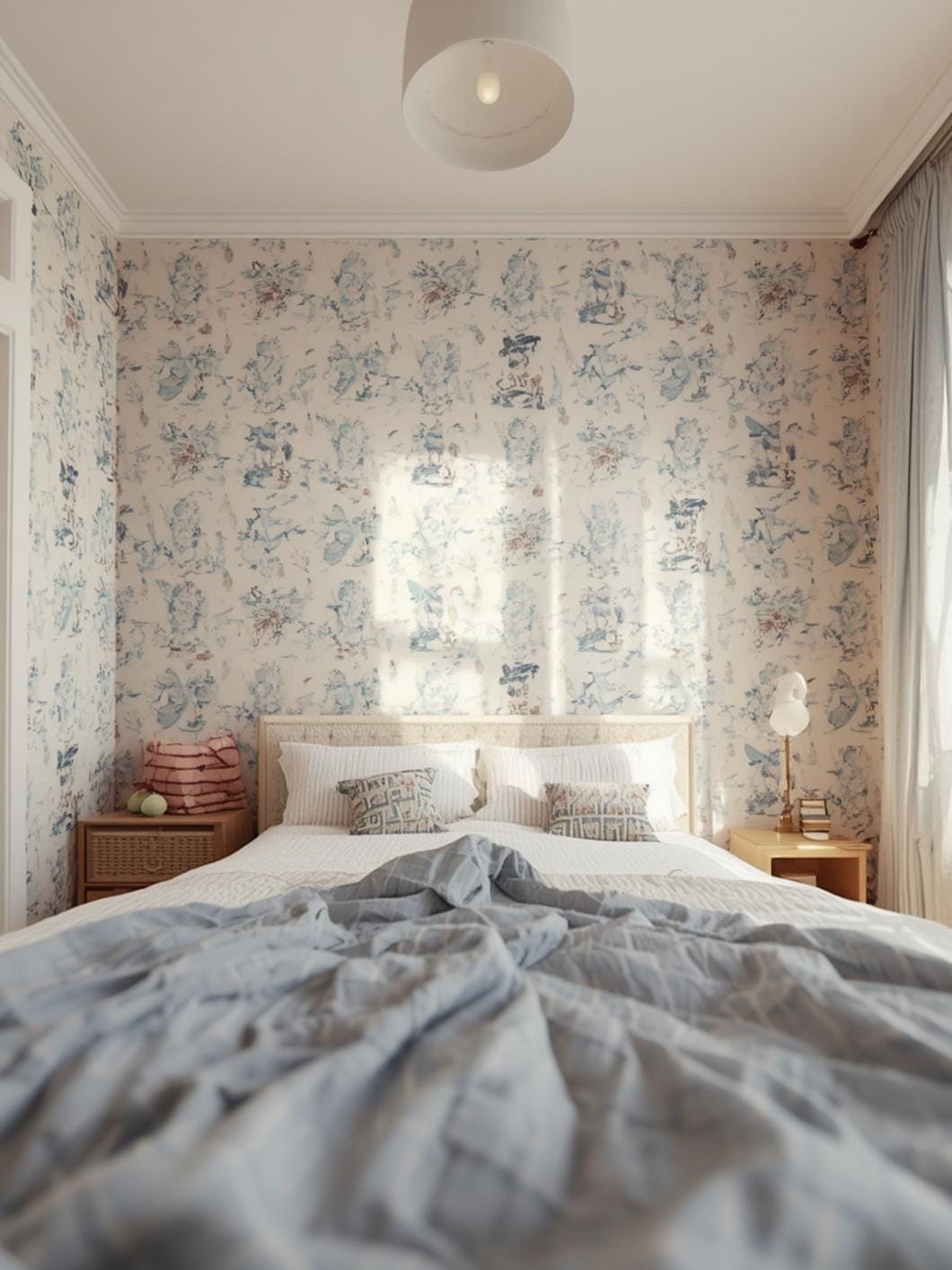
Small Space Adaptation: Studio apartments or shared bedrooms benefit from wallpapering just the headboard wall. This creates a focal point without overwhelming limited square footage. You’ll use less material and can choose bolder patterns that might feel too intense in larger applications.
Common Mistakes to Avoid
Starting without proper wall prep: Wallpaper needs clean, smooth surfaces to adhere properly. Take time to fill holes, sand rough spots, and wipe away dust—your finished result will thank you.
Choosing based on trends alone: That viral pattern might look dated in two years. Balance current style with timeless appeal, especially if you’re using permanent wallpaper that requires more effort to remove.
Ignoring pattern matching: When designs need alignment, budget extra material for matching repeats. Running short mid-project means delayed completion or visible mismatches that you’ll notice forever.
Rushing the smoothing process: Air bubbles and wrinkles ruin an otherwise perfect installation. Work slowly with your smoothing tool, pushing from center outward, taking breaks when you need fresh eyes.
Forgetting about removable options: If your child’s interests change frequently, removable wallpaper saves future heartache. Traditional paste-the-wall options work for stable, long-term designs, but peel-and-stick varieties offer flexibility worth considering.
Maintenance That Keeps Things Fresh
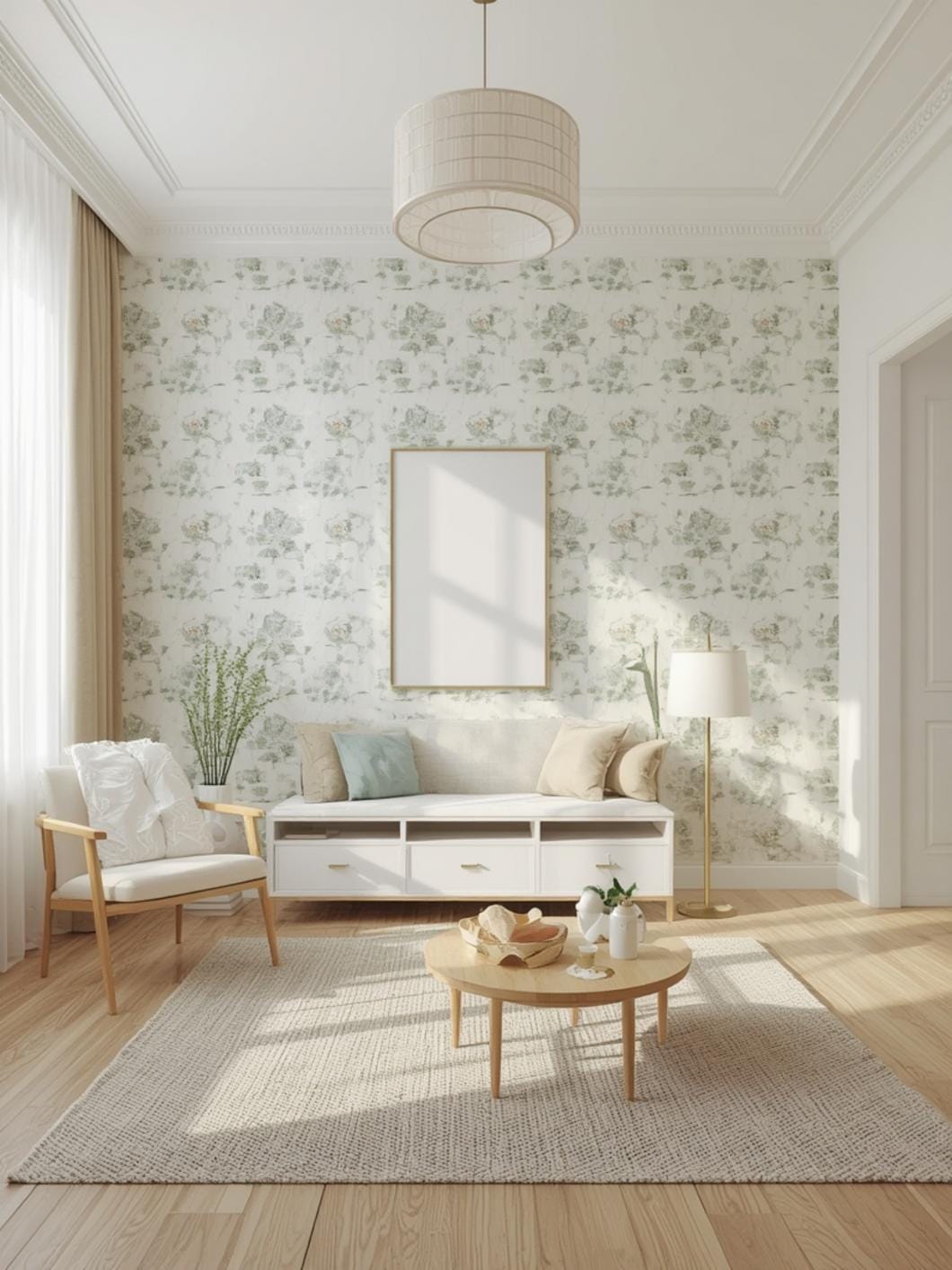
Most modern wallpapers handle gentle cleaning beautifully. Wipe down with a slightly damp cloth monthly to remove dust accumulation. Avoid harsh chemicals that might damage the printed surface or adhesive backing.
Address marks immediately when they happen. Crayon usually responds to a damp magic eraser, while sticky residue comes off with a tiny amount of dish soap on a soft cloth. Test cleaning methods in an inconspicuous corner first.
Check edges periodically, especially near doorways where hands tend to bump. If corners start lifting, a small dab of wallpaper adhesive on a cotton swab fixes the issue before it spreads.
Consider protective furniture placement in high-traffic areas. Position beds, dressers, or shelving units strategically to shield wallpaper from daily wear. This thoughtful arrangement extends your wallpaper’s lifespan significantly.
Make It Your Own Special Project
Creating a personalized space for your child doesn’t require professional skills or an unlimited budget. With the right wallpaper choice and some dedicated weekend time, you can craft a room that reflects your child’s personality and supports their growth.
Remember that perfection isn’t the goal—creating a space your child loves is what matters. Those slightly crooked seams you obsess over? Your kid won’t even notice them.
Ready to explore more ways to make your home beautiful and functional? DecorKingdom offers hundreds of ideas for every room in your house, all written with real homeowners in mind.
FAQs
Is wallpaper safe for toddlers and young children?
Yes, modern wallpapers are safe when properly installed. Choose products specifically labeled as non-toxic and low-VOC. Peel-and-stick options are particularly safe since they don’t require chemical adhesives. Just ensure your toddler isn’t trying to peel or eat it, which supervision easily prevents.
How long does kids room wallpaper typically last?
Quality wallpaper lasts 5-15 years depending on type and care. Peel-and-stick varieties generally last 3-7 years, while traditional paste-the-wall options last longer. Kids’ rooms experience more wear than adult spaces, so expect the lower end of these ranges. Proper installation and gentle cleaning extend lifespan significantly.
Can I wallpaper over existing wallpaper in my child’s room?
This works sometimes but isn’t ideal. If the current wallpaper is firmly attached with no bubbles or peeling, you might succeed with peel-and-stick over it. However, removing old wallpaper first gives better results. The extra effort ensures smooth surfaces and proper adhesion for your new design.
What’s the easiest wallpaper type for beginners?
Peel-and-stick wallpaper wins for first-timers. It’s repositionable during installation, removes cleanly, and doesn’t require mixing adhesives or booking time. Pre-pasted wallpaper comes second—you just add water. Save traditional unpasted wallpaper for when you’ve gained experience and confidence.
Should I wallpaper all walls or just create an accent wall?
Accent walls work wonderfully for beginners and budget-conscious projects. They deliver visual impact using less material and time. Full-room wallpapering creates immersive environments but requires more investment and skill. Consider your child’s age too—younger kids benefit from stimulating accent walls, while tweens might prefer subtle all-over patterns.
—
Meta Title: Kids Room Wallpaper Ideas That Actually Last (2026)
Meta Description: Transform your child’s bedroom with playful kids room wallpaper designs. Get style ideas, installation tips, and removal advice for real homes.