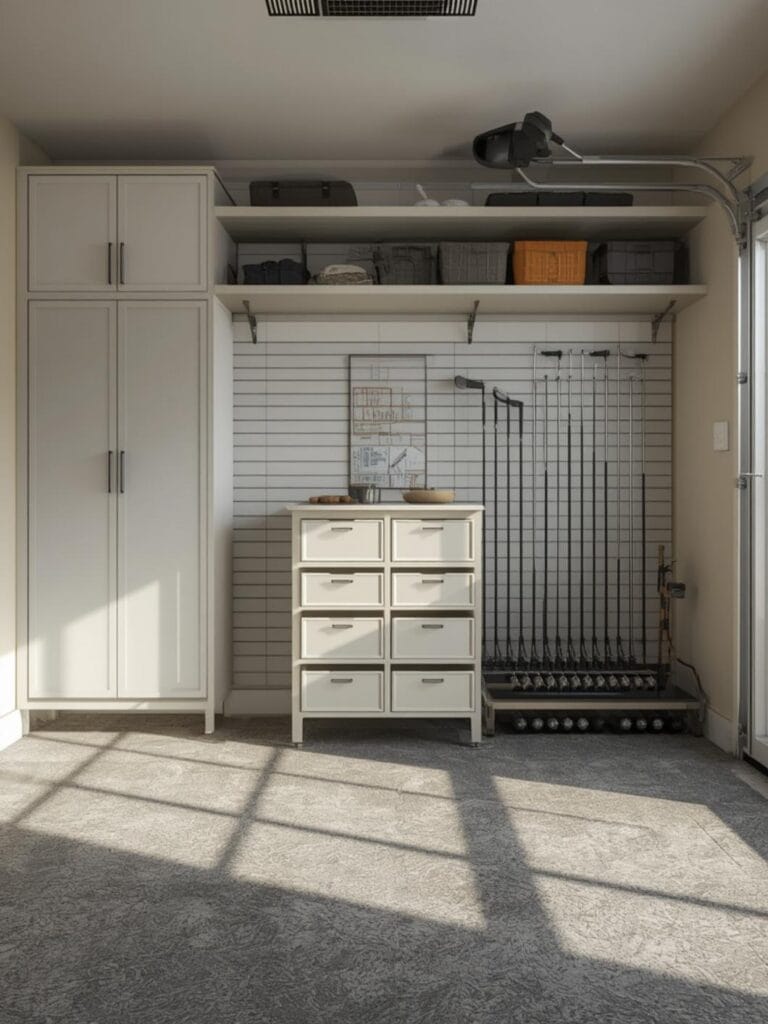
How to Choose Mudroom Ideas for Dogs
Your dog races through the front door, paws muddy and leash tangling around your ankles. Between wet fur, scattered toys, and the ever-present dog smell, your entryway feels more like chaos than a welcoming home. If you’ve ever wished for a better way to manage the mess while keeping your furry friend comfortable, you’re not alone.
Creating mudroom ideas for dogs transforms your entryway into a functional space that works for both you and your pet. You don’t need a huge budget or professional renovation to make it happen. With a few smart additions and some thoughtful planning, you can design a mudroom that keeps everything organized while giving your dog their own cozy corner.
The best part? Most of these solutions work in spaces of any size, from grand entryways to compact apartment foyers. You just need to know what works and how to arrange it.
What You’ll Need to Get the Look
Creating a dog-friendly mudroom starts with the right elements. You’ll want durable materials that can handle daily wear from paws, fur, and the occasional accident.
For flooring, consider waterproof options like luxury vinyl plank, sealed tile, or even rubberized mats. These surfaces clean easily and won’t trap odors the way carpet does. If you’re working with existing flooring you love, washable area rugs designed for high-traffic areas offer protection without commitment.
Storage pieces make or break a functional dog mudroom. Look for:
– Low hooks or wall-mounted leash holders your kids can reach
– Cubby benches with baskets underneath for toys and grooming supplies
– Drawer units or cabinets to hide less attractive items like poop bags and medications
– Open shelving for displaying cute dog bowls or photo frames
You’ll also want a designated spot for your dog’s belongings. A stylish dog crate, comfortable bed, or even a built-in nook keeps them happy while containing the mess. Choose washable fabrics in darker colors or patterns that disguise dirt between cleanings.
Don’t forget practical accessories like a small trash can with a lid, a towel bar at waist height, and good lighting so you can actually see what you’re doing during early morning walks.
Finding Your Style and Season
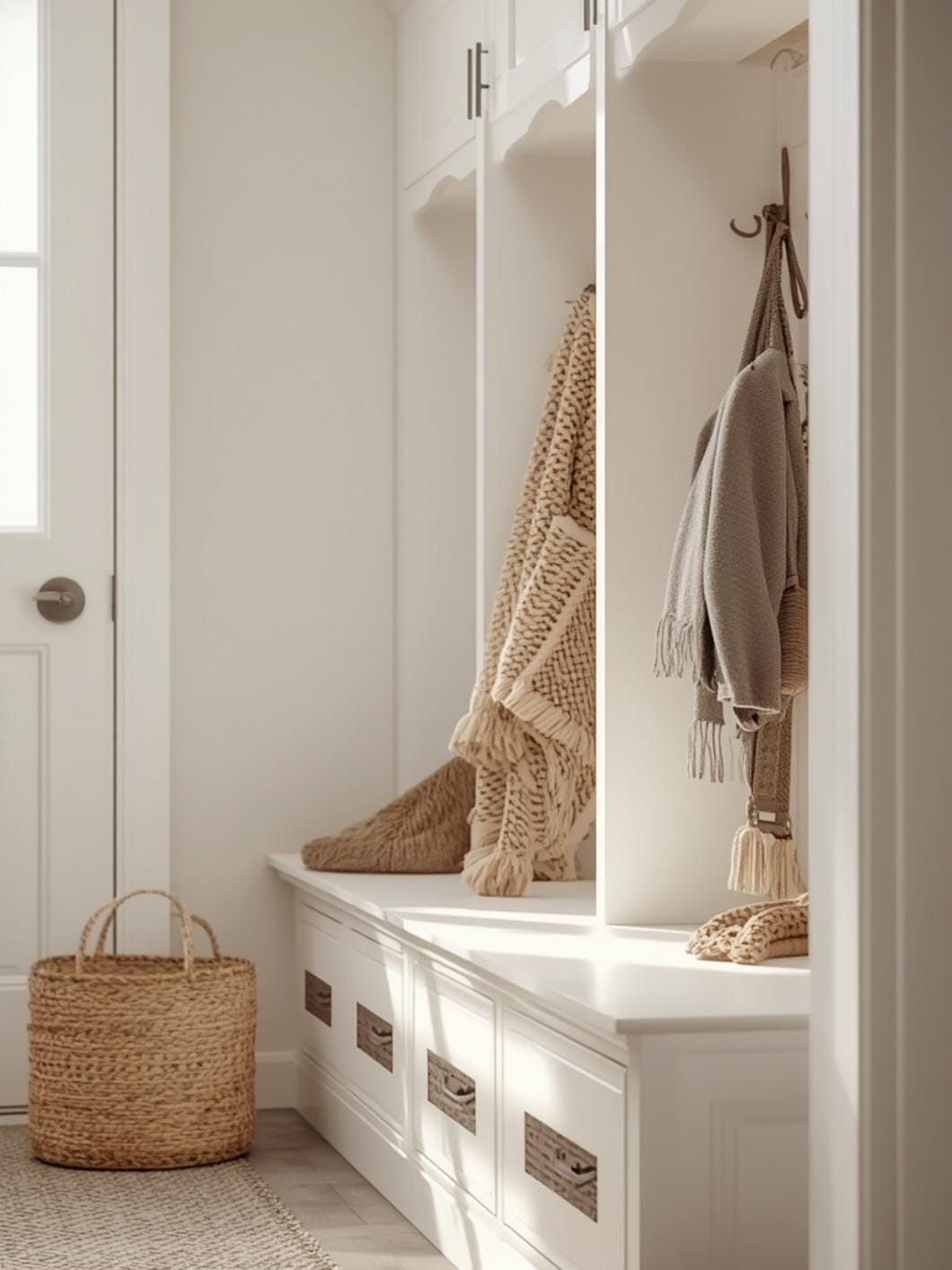
Your mudroom should reflect your home’s overall style while serving your dog’s needs year-round. Think about how you use the space during different seasons before committing to a design.
In winter, you’ll need extra room for boots, coats, and towels to dry off snowy paws. Consider hooks at multiple heights and a boot tray that can handle serious moisture. Summer brings different challenges like sandy paws and wet swimsuits, so storage that accommodates beach towels and outdoor toys becomes essential.
Spring and fall are muddy seasons in most regions. Your mudroom setup should make it easy to wipe paws quickly before your dog tracks dirt through the house. A small utility sink or even just a designated paw-washing station near the door saves your bathroom from becoming a grooming salon.
Your personal style matters too. Farmhouse lovers might choose shiplap walls, galvanized metal accents, and rustic wood benches. Modern homeowners often prefer sleek cabinets, geometric tile, and minimalist hooks. Coastal themes work beautifully with light blues, rope details, and weathered wood finishes.
Whatever style you choose, remember that your dog doesn’t care about trends. They just want a comfortable spot that feels like theirs, so include at least one element specifically for their comfort.
7 Ideas to Try in Your Home
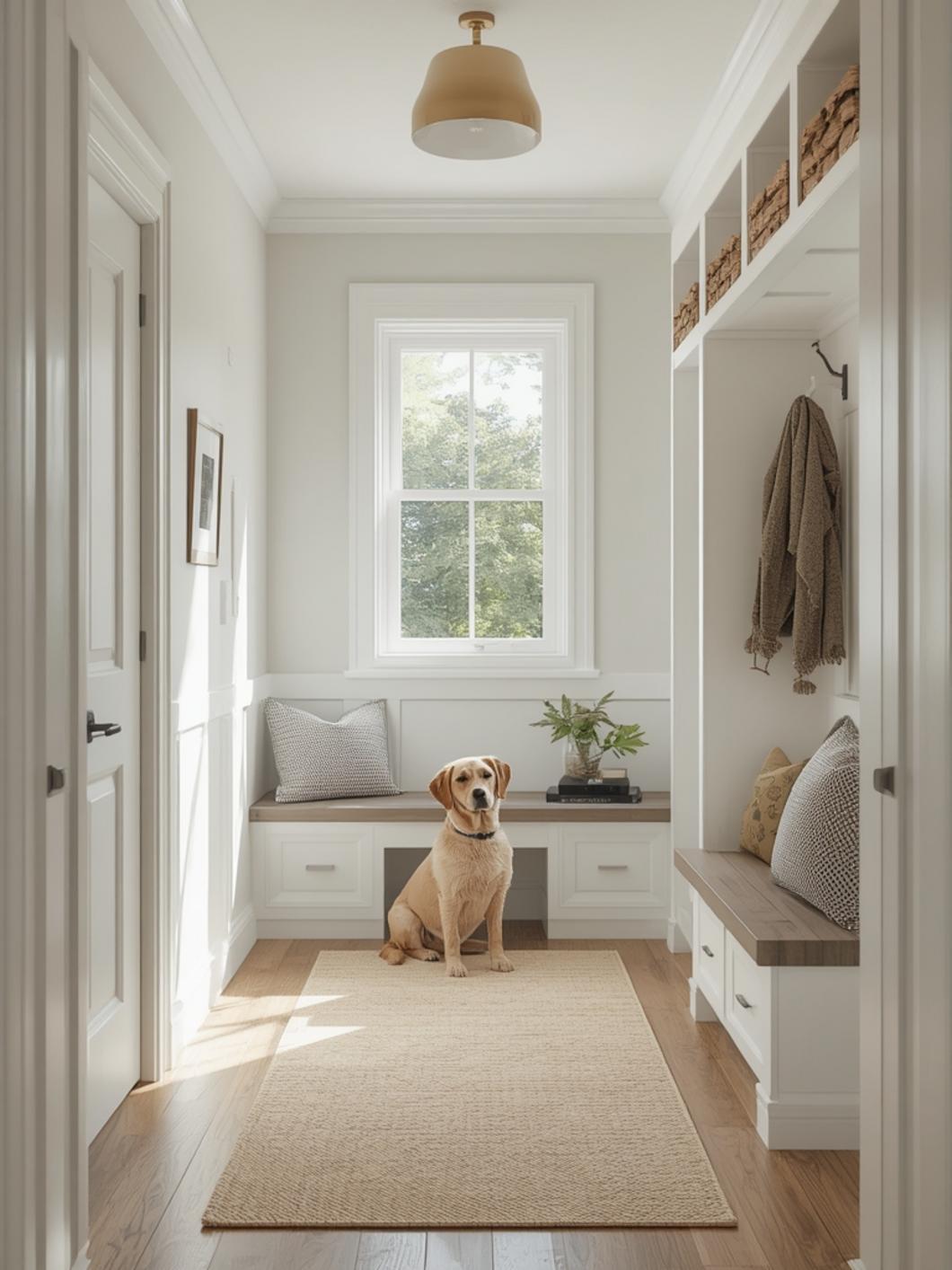
Built-In Dog Nook Under the Bench
Create a cozy cave-like space by building or positioning a bench with an open area underneath. Add a cushion that fits perfectly inside, and suddenly you have both seating and dog crate placement in entryway that looks intentional. Paint or stain the bench to match your trim, and add decorative corbels or trim details to make it look custom.
This works especially well for anxious dogs who love den-like spaces. You can even add a curtain on a tension rod for extra privacy when they need quiet time.
Wall-Mounted Feeding Station
Keep food and water bowls off the floor by installing a simple shelf at the right height for your dog’s breed. This elevated feeding station looks cleaner, prevents bowls from sliding around, and makes cleanup easier. Add small hooks underneath for storing measuring cups and a towel.
Paint the shelf in an accent color or use reclaimed wood for character. For multiple dogs, create two separate stations to prevent mealtime squabbles.
Dedicated Leash and Gear Wall
Transform one wall into command central for all dog supplies. Install a pegboard, slat wall, or simple hooks, then organize leashes, harnesses, poop bag holders, and even treats in labeled containers. Add small baskets for seasonal items like booties or cooling bandanas.
This visual organization means everyone in your household knows exactly where things belong. No more frantic searches for the leash when you’re already running late.
Grooming Station with Storage
Set up a small area specifically for post-walk cleanup. A sturdy stool or bench gives you somewhere to sit, while wall-mounted organizers hold brushes, paw wipes, and towels. If you have space, add a small hand-held vacuum on a charging dock for quick fur cleanup.
This zone keeps grooming supplies separate from human belongings and makes the chore feel less overwhelming. Choose supplies in colors that complement your decor rather than hiding everything away.
Toy Storage That Looks Good
Wire baskets, woven bins, or even a vintage crate can corral dog toys while adding texture to your space. Mount baskets on the wall at dog height so your pup can help themselves, or keep them on the floor if you prefer to control playtime.
Label baskets if you have multiple pets or want to separate squeaky toys from chew toys. This simple organization prevents tripping over scattered toys and teaches your dog where their things belong.
Mudroom Shower for Dogs
If you’re planning a renovation and have the budget, consider adding a small dog washing station. These raised tubs or shower stalls make bathing medium to large dogs infinitely easier on your back. Even a basic utility sink with a spray nozzle helps tremendously.
Tile the area with slip-resistant flooring and add plenty of towel storage nearby. This single upgrade can save your bathroom from constant dog bath aftermath.
Rotating Seasonal Decor with Function
Keep your mudroom feeling fresh by swapping out accessories seasonally while maintaining functionality. In fall, add a basket of puppy-safe mini pumpkins and autumn-colored towels. Winter brings cozy plaid blankets and a basket for salt-removing paw wipes.
This approach lets you enjoy decorating while ensuring everything in the space still serves your dog’s needs. Function comes first, but pretty matters too.
Benefits of a Dog-Focused Mudroom
A well-designed dog mudroom changes your daily routine in surprising ways. You’ll spend less time cleaning because messes get contained right at the source. Instead of tracking dirt, fur, and who-knows-what through your entire home, everything stops at the door.
Your stress levels drop when you’re not constantly searching for lost leashes or stepping on squeaky toys in the dark. Everything has a home, and your dog learns where their space begins. This boundary setting helps with training and gives your pet security.
Guests appreciate walking into a tidy, organized entryway rather than dodging dog supplies scattered everywhere. Your home immediately feels more put-together, even if the rest of your house isn’t perfect. That first impression matters, especially when you’re proud of your space.
Perhaps most importantly, you’ll actually enjoy coming home. Instead of dreading the muddy paw prints or tangled leash situation, you’ll have systems in place that make pet ownership easier. Your dog gets dedicated space that meets their needs, and you get to maintain a beautiful home.
The financial benefit shows up over time too. Protecting your floors and keeping supplies organized means less replacement and waste. You’ll know what you have and won’t buy duplicates of lost items.
Tips, Alternatives, and Styling Advice
Budget-Friendly Approach
Start with command hooks from any hardware store and repurpose baskets you already own. A washable throw rug protects flooring for under thirty dollars, and a simple cushion or folded blanket creates a dog spot without buying specialty furniture. Focus on organization before decoration, and add pretty elements as your budget allows.
Mid-Range Option
Invest in a quality storage bench with cubbies underneath. Add matching baskets, a few wall-mounted organizers, and a dedicated dog bed that coordinates with your decor. Consider one statement piece like a stylish coat rack or custom-painted cabinetry to elevate the entire space.
Premium Experience
Commission built-in cabinetry with a designated dog alcove, install a dog washing station, and choose high-end finishes like genuine hardwood or designer tile. Add custom elements like monogrammed leash hooks, heated floors for winter comfort, or even a doggy door that leads to a fenced outdoor area.
Small Space Adaptation
When square footage is limited, go vertical with wall-mounted storage and floating shelves. Choose furniture that serves multiple purposes, like an ottoman with hidden storage or a narrow console table with baskets underneath. Keep only daily essentials in the space and store seasonal items elsewhere. Even a small corner can function beautifully with the right organization.
Common Mistakes to Avoid
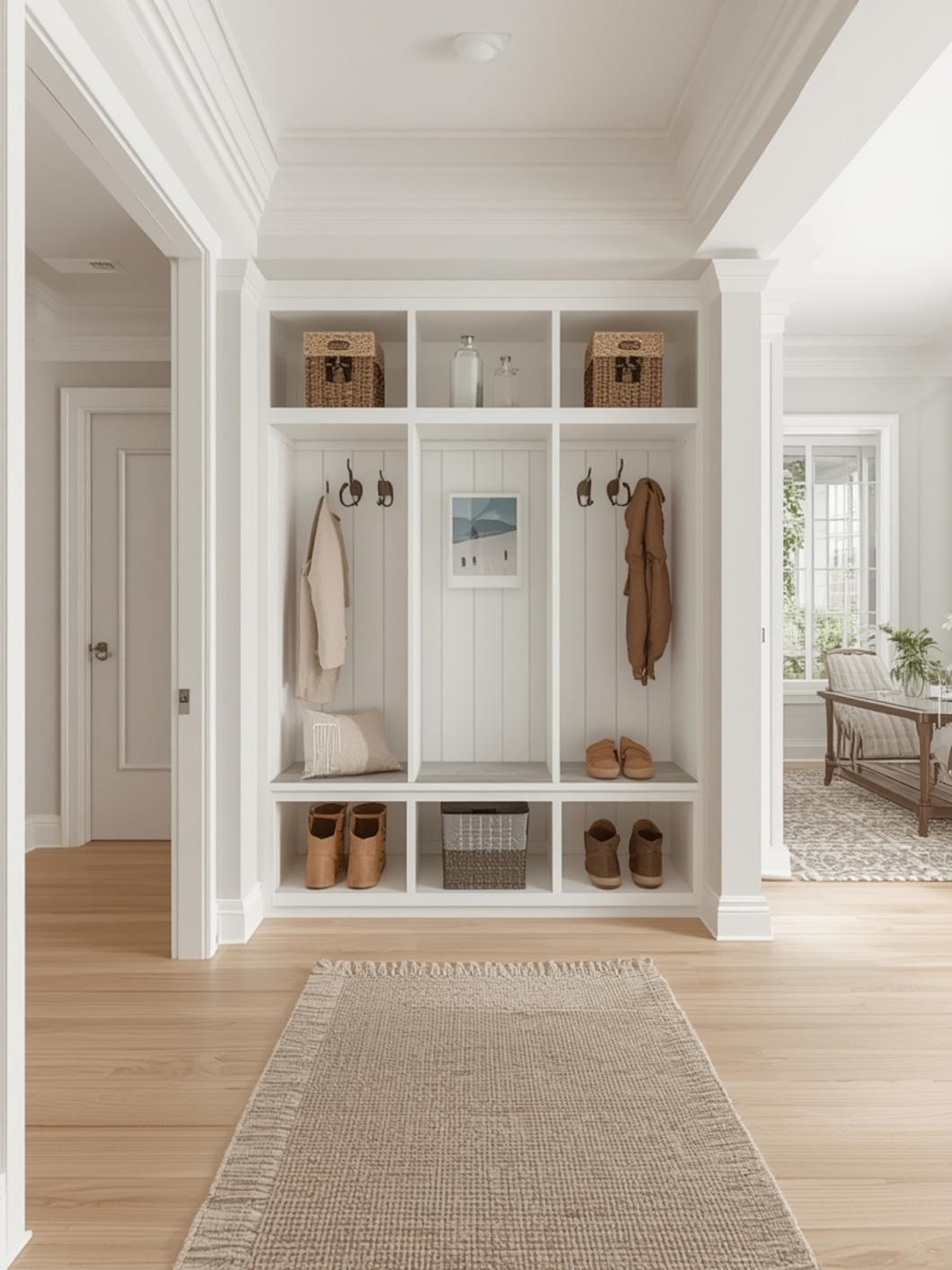
Choosing style over durability in high-traffic areas. That beautiful white bench might look amazing in the catalog, but dark paw prints will ruin it within a week. Select materials and colors that can handle real life with dogs.
Placing the dog area too close to the main traffic path. Your dog needs space that feels like theirs without being trampled every time someone walks through. Position their bed or crate slightly to the side where they can observe without being in the way.
Forgetting about your dog’s size and age. A Great Dane needs completely different accommodations than a Chihuahua, and senior dogs can’t jump into raised beds. Plan your space around your specific pet’s needs, not generic dog solutions.
Installing only high hooks that short family members can’t reach. Kids should be able to grab leashes independently, and you don’t want to stretch or climb every single time. Add hooks at multiple heights for different users and dogs.
Neglecting proper ventilation in an enclosed space. Dog areas need airflow to prevent odors and moisture buildup. If your mudroom doesn’t have a window, consider a small fan or ensure doors stay open when possible.
Maintenance and Upkeep Tips
Keep your dog mudroom functioning well with simple daily habits. Wipe down paws every single time your dog comes inside, even when you’re in a hurry. Those extra thirty seconds prevent hours of deep cleaning later.
Vacuum or sweep the space at least twice weekly. Dog fur accumulates faster than you’d think, especially during shedding season. Keep your small vacuum or broom right in the mudroom so there’s no excuse to skip it.
Wash dog beds, cushions, and blankets monthly or whenever they start smelling funky. Having two sets lets you rotate while one is in the wash. Spot clean accidents immediately with enzyme cleaners designed for pet messes rather than regular household cleaners.
Empty and wipe out storage baskets quarterly to prevent grime buildup. Check all supplies for expiration dates and toss anything past its prime. Reorganize as your needs change with seasons or your dog’s age.
Deep clean the entire space seasonally. Move furniture, wash walls or wipe down cabinetry, and clean any mats or rugs thoroughly. This prevents that gradual buildup that happens when you only clean surfaces.
Bringing Your Dog Mudroom to Life
Creating a functional mudroom for your dog doesn’t require a massive renovation or unlimited budget. Start with the basics that address your biggest pain points, then add elements that make the space feel finished and intentional. Your dog will appreciate having their own designated area, and you’ll wonder how you ever managed without proper organization.
The key is designing for real life rather than picture-perfect spaces that don’t work with actual dogs. Choose durable materials, create systems that everyone in your household can maintain, and don’t be afraid to adjust as you figure out what works best.
Ready to transform more of your home? Explore additional practical design ideas and inspiration at DecorKingdom to create spaces that work beautifully for your entire family.
FAQs
Where should I put my dog’s crate in a small entryway?
Position the crate against a side wall rather than directly in the pathway, even if it means angling it slightly. Your dog needs to feel secure without blocking traffic flow. If space is extremely tight, consider a soft-sided collapsible crate that folds away when not in use, or look for furniture pieces with built-in crate areas that serve double duty.
What’s the best flooring for a mudroom with large dogs?
Luxury vinyl plank flooring offers the best combination of durability, water resistance, and comfort for large breeds. It handles heavy traffic and sharp nails without scratching like hardwood, cleans easily, and costs less than tile. Choose textured finishes rather than smooth ones for better traction when paws are wet.
How do I keep my dog mudroom from smelling bad?
Wash all fabric items regularly, including beds, cushions, and any rugs or towels. Use enzyme-based cleaners specifically designed for pet odors rather than covering smells with air fresheners. Ensure good ventilation by opening windows or using a small fan, and consider an air purifier designed to handle pet dander and odors.
Can I create a dog mudroom in an apartment with no dedicated entry space?
Absolutely! Designate a corner near your door using a small storage unit, wall hooks, and a compact dog bed. Vertical storage maximizes limited space, and choosing multipurpose furniture helps tremendously. Even a simple setup with a few hooks, a basket for toys, and a washable mat creates a functional dog zone.
Should my dog’s feeding bowls go in the mudroom or kitchen?
This depends entirely on your household routine and your dog’s temperament. Mudrooms work well if you feed your dog immediately after walks or if you want to contain food mess near the door. Kitchens make more sense if your dog eats alongside family mealtimes or if your mudroom lacks space. Some households split the difference with water in the mudroom and food in the kitchen.
—
Meta Title: 25 Mudroom Ideas for Dogs That Actually Work (2026)
Meta Description: Transform your entryway chaos into organized bliss with mudroom ideas for dogs. Practical solutions for every space and budget!