7 Striped Accent Wall Ideas That Feel Bold, Not Busy
You walk past the same plain wall every day and feel like something’s missing. Your room has great furniture and thoughtful details, but that blank wall just sits there doing nothing.
Striped accent wall ideas give you a way to add serious visual interest without committing to wallpaper or gallery walls. Stripes bring structure, dimension, and personality to any room — and they work beautifully whether your style leans modern, coastal, or classic.
The best part? You can absolutely do this yourself with painter’s tape and a weekend. You don’t need to hire anyone or invest in expensive tools.
Table of Contents
What You’ll Need to Get the Look
Creating a striped accent wall doesn’t require a contractor-level toolkit. Most of what you need is already sitting in your garage or available at any paint store.
Paint and Application Tools:
– Two paint colors in your chosen finish (matte, satin, or semi-gloss)
– High-quality painter’s tape (the blue kind specifically designed for clean lines)
– Paint rollers and brushes
– Drop cloths to protect your floors
– Paint tray
Measuring and Planning Tools:
– Tape measure
– Pencil for marking
– Level (a small handheld one works perfectly)
– Calculator or phone for spacing math
Finishing Touches:
– Microfiber cloths for quick corrections
– Small artist brush for touch-ups
You’ll want to choose paint colors that already exist somewhere else in your room. Pull from your throw pillows, artwork, or area rug so the stripes feel intentional rather than random.
Finding Your Style and Season
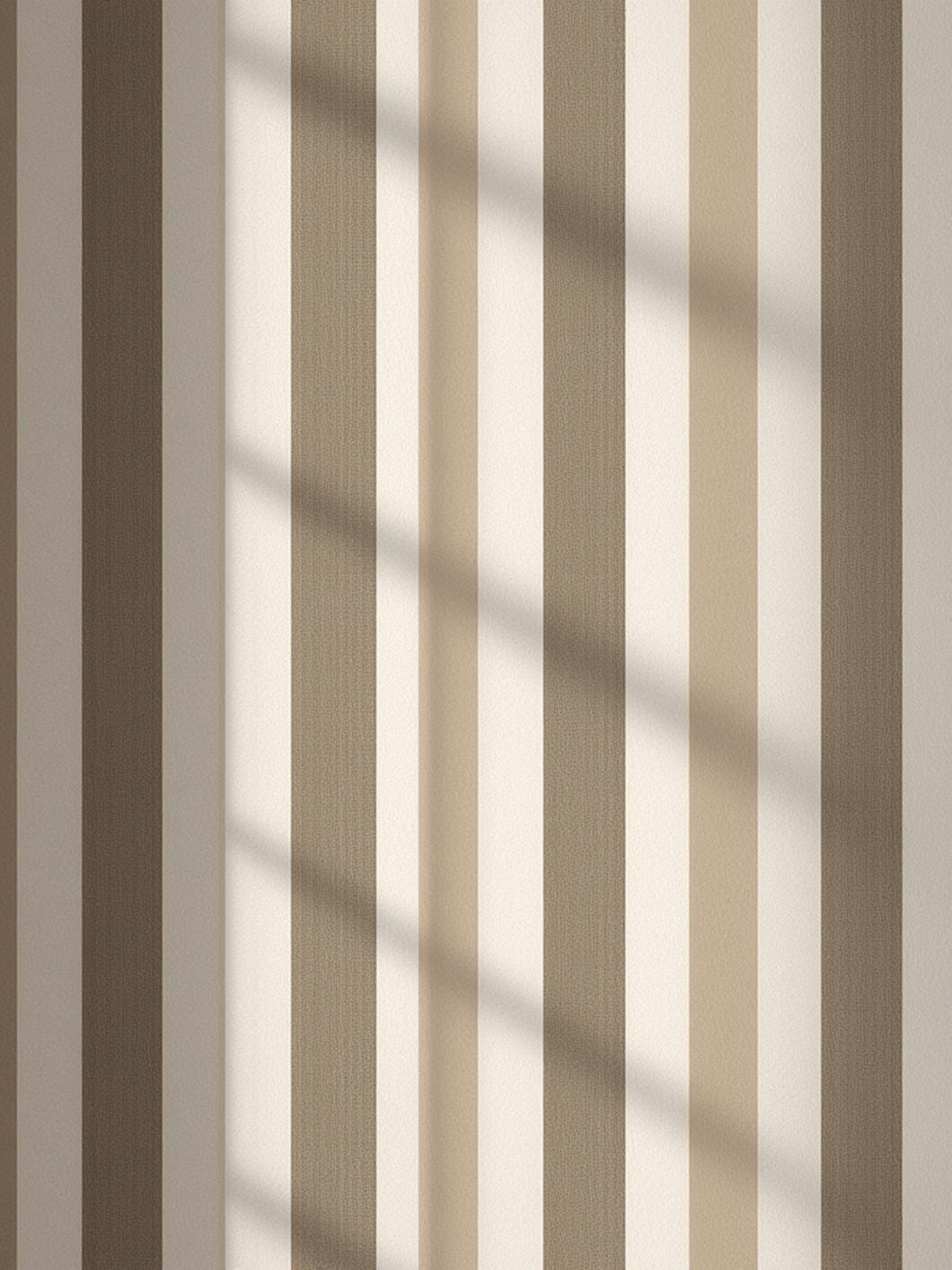
The beauty of striped walls is that they work year-round, but certain styles shine during specific seasons.
Spring and Summer call for lighter, airier stripe combinations. Think soft gray and white, or pale blue paired with cream. These combinations reflect natural light beautifully and make rooms feel larger and more refreshing.
Fall and Winter let you experiment with deeper, moodier tones. Navy and charcoal, forest green and sage, or even black and cream stripes create cozy drama that feels perfect for colder months.
Your room’s natural light matters too. North-facing rooms with cooler light benefit from warm stripe combinations like beige and terracotta. South-facing rooms with abundant warm light can handle cooler colors like blue-gray and white without feeling cold.
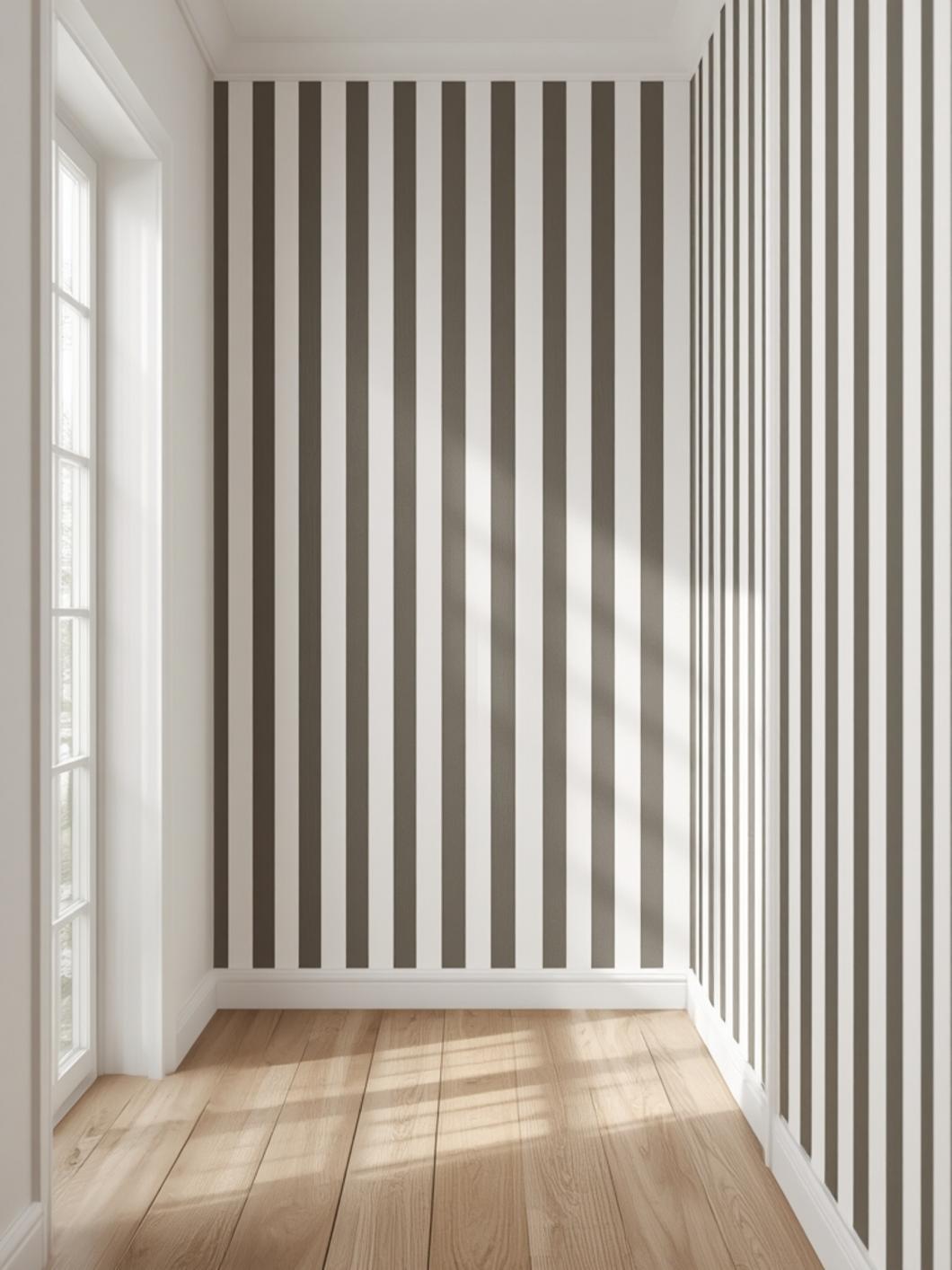
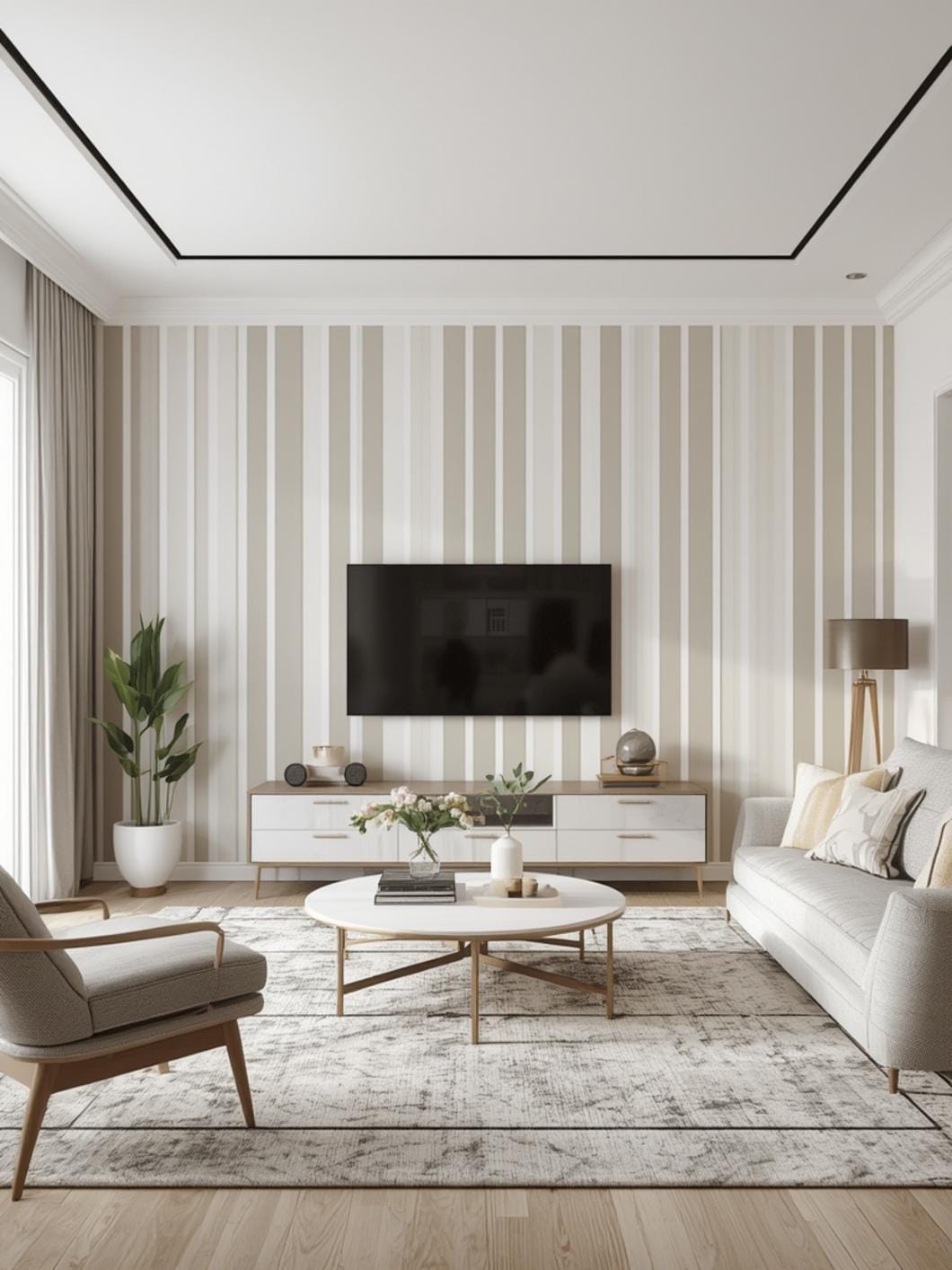
Consider what mood you want to create. Horizontal stripes make rooms feel wider and more relaxed. Vertical stripes draw the eye upward and make ceilings appear higher. Thin stripes feel formal and structured, while wide stripes lean casual and playful.
7 Ideas to Try in Your Home
Wide Horizontal Navy and White Stripes
This classic combination works beautifully in bedrooms and home offices. Paint 12-inch wide stripes alternating between navy and crisp white. The bold contrast creates a nautical-inspired look that feels sophisticated rather than themed. Position your bed or desk against this wall to make it the room’s natural focal point.
Thin Vertical Charcoal and Greige
Perfect for living rooms that need subtle texture without overwhelming the space. Paint 3-inch vertical stripes in charcoal and greige (that perfect gray-beige hybrid). The narrow width keeps things elegant, while the low-contrast colors add dimension that catches light differently throughout the day.
Ombre Effect with Multiple Stripe Colors
Start with your darkest color at the bottom and gradually lighten as you move up the wall. Paint 6-inch horizontal stripes in four shades of the same color family — perhaps deep sage, medium sage, light sage, and cream. This creates a gradient effect that feels artistic and custom.
Two-Tone Texture Stripes
Use the same color but in different finishes for a subtle, sophisticated look. Paint horizontal stripes alternating between matte and satin finishes in soft gray. The texture difference creates visual interest that’s noticeable without being loud. This works especially well in dining rooms and entryways.
Bold Accent with Metallic Stripe
Add one metallic gold or silver stripe among wider neutral stripes for an unexpected touch of glamour. Paint 10-inch stripes in cream, leaving space for one 2-inch metallic stripe between each neutral section. This technique brings just enough sparkle without feeling overdone.
Rainbow Pastels for Kids’ Spaces
Create a playful feature wall with soft pastel stripes in pink, yellow, mint, lavender, and peach. Keep each stripe about 8 inches wide for balanced visual impact. How to paint horizontal stripes on a wall becomes especially important here — you’ll want to tape carefully and paint from top to bottom to prevent accidental blending between colors.
Start by painting your base color (usually the lightest shade) across the entire wall. Once dry, measure and tape off your stripes with painter’s tape, pressing the edges firmly to prevent bleed-through. Paint your second color within the taped sections, pulling the tape while the paint is still slightly wet for the cleanest lines.
Asymmetric Modern Stripes
Break away from uniform spacing with intentionally varied stripe widths. Paint vertical stripes in black and white, alternating between 4-inch, 8-inch, and 12-inch widths. This creates a contemporary art gallery vibe that works beautifully in modern spaces.
Benefits of Choosing Striped Accent Walls
Striped walls give you architectural interest without actually changing your home’s structure. You create depth and dimension using only paint, which means you can update or change the look later without major renovation headaches.
Your furniture arrangement becomes easier because the striped wall naturally defines which wall should serve as your focal point. You instantly know where to position your bed, sofa, or credenza.
Stripes also solve common room proportion problems. Low ceilings feel higher with vertical stripes. Narrow rooms appear wider with horizontal stripes. Small spaces gain character without feeling cluttered, since you’re adding visual interest to a flat surface rather than bringing in more objects.
The cost advantage is huge compared to wallpaper. Quality paint costs less than designer wallpaper, and you control exactly what you create. Plus, if you decide to change it in a few years, you simply repaint rather than dealing with wallpaper removal.
Styling Options for Every Budget
Budget-Friendly Approach
Use paint you already have from previous projects if the colors work together. Mix leftover wall colors with white to create new coordinating shades. Borrow a level and tape measure from a neighbor if you don’t own them. Choose wider stripes (10–12 inches) which require less tape and fewer cutting-in sessions.
Mid-Range Investment
Purchase two new paint colors specifically chosen to complement your room’s existing palette. Invest in premium painter’s tape that guarantees clean lines. Add a quality angled brush for crisp edges. Budget about $75–$125 for everything including enough paint for two coats.
Premium Experience
Work with a color consultant to choose sophisticated custom-mixed paint colors. Use specialty finishes like chalk paint or limewash for added texture. Incorporate one metallic accent stripe with high-quality metallic paint. Consider hiring a professional painter just for the taping and first coat if you want absolutely perfect lines. Budget $300–$500 for this elevated approach.
Small Space Adaptation
In tiny rooms, keep stripes on just one wall and keep the other three walls in your lighter stripe color. This prevents the space from feeling busy while still giving you that striped impact. Choose thinner stripes (4–6 inches) in low-contrast colors to add interest without overwhelming the spac
Common Mistakes to Avoid
Starting without measuring and marking your entire wall first. You’ll end up with uneven stripe widths that look sloppy, especially near the ceiling or corners. Always measure and mark all your stripes with light pencil marks before applying any tape.
Using cheap painter’s tape from the discount bin. The adhesive bleeds and leaves fuzzy edges that ruin your crisp lines. Invest in quality blue painter’s tape specifically designed for delicate surfaces and clean removal.
Forgetting to paint your base color first. You might think taping and painting immediately saves time, but you need that base coat for the stripes to work properly. Paint your entire wall in the lighter of your two colors, let it dry completely, then tape and add your second color.
Pulling tape off after the paint is fully dry. The paint edges will chip and peel, leaving rough lines instead of clean ones. Remove your painter’s tape when the paint is dry to the touch but not fully cured — usually about 30–60 minutes after your final coat.
Choosing stripes that compete with busy furniture or bold patterns elsewhere. Your eye won’t know where to focus, making the room feel chaotic. If you have patterned curtains, a busy area rug, or colorful artwork, keep your stripes subtle with low-contrast colors or wider spacing.
Maintaining Your Striped Wall
Striped walls don’t require special maintenance beyond what you’d do with any painted wall. Dust them monthly with a microfiber cloth or gentle duster to prevent buildup in the corners where colors meet.
For scuffs or marks, spot-clean with a slightly damp cloth and mild soap. Keep a small amount of both paint colors in labeled jars for touch-ups. You’ll want these handy if you accidentally nick the wall moving furniture or hanging artwork.
If you used flat or matte paint, be gentle when cleaning since these finishes show wear more easily. Satin or eggshell finishes withstand gentle wiping better and work well in high-traffic areas.
Expect your stripes to last as long as any quality paint job — typically 5–10 years before you’ll want to refresh them. The beauty is that you can easily repaint with new colors when your style evolves.
Bring Your Walls to Life
Striped accent walls give you the power to completely change a room’s personality with paint, tape, and a free weekend. You create custom artwork that fits your exact style and budget.
The techniques work in every room, from calming bedroom retreats to energizing home offices. Your space gains architectural detail without construction, and you get to say you did it yourself.
Ready to explore more ways to elevate your home’s style? Browse DecorKingdom for inspiring ideas that make your space feel exactly like you.
FAQs
What’s the easiest stripe pattern for beginners to paint?
Wide horizontal stripes are the most forgiving for first-timers. Choose stripes that are 10–12 inches wide in two colors with low contrast (like cream and light gray). The wider spacing means fewer tape lines to manage, and the subtle color difference hides small imperfections better than high-contrast combinations.
Do I need to prime my wall before painting stripes?
Only if your current wall color is significantly darker than your planned stripe colors, or if you’re covering stains or repairs. Otherwise, paint your lighter stripe color as a base coat over your existing wall color. This base coat serves as both coverage and the foundation for your stripes.
Can I paint stripes over textured walls?
Yes, but you’ll get better results on lightly textured walls like orange peel finish rather than heavy knockdown or popcorn texture. Press your painter’s tape firmly along the edges and consider using a small foam roller to work paint into the texture. The lines won’t be quite as crisp as on smooth walls, but they’ll still look great.
How do I fix stripes that bled under the tape?
Use a small artist brush to carefully paint over the bleed with your base color once everything is dry. For future projects, prevent bleeding by painting a thin coat of your base color over the tape edges before applying your stripe color. This seals the tape and creates a barrier.
Should stripes go behind furniture or on an empty wall?
Stripes work beautifully behind low-profile furniture like beds, sofas, or credenzas where you can still see most of the wall. Avoid putting them behind tall bookcases or wardrobes that will hide your work. The best accent walls are visible from your room’s main entrance.
—
Meta Title: 7 Striped Accent Wall Ideas That Transform Any Room (2026)
Meta Description: Discover striped accent wall ideas that add instant style. Learn how to paint professional-looking stripes yourself this weekend.