How to Choose Wood Dining Room Sets for Your Home
You walk past your dining room and feel… nothing. Maybe the table wobbles a little. Maybe the chairs don’t match. Or maybe everything just feels tired and uninspiring, even though you host family dinners every Sunday.
Wood Dining Room Sets can completely change how your home feels. They bring warmth, character, and a sense of permanence that laminate or glass just can’t match. Whether you’re furnishing your first home or finally upgrading that hand-me-down table, choosing the right wooden dining set means creating a space where memories happen.
This guide walks you through everything you need to know about selecting, styling, and maintaining wooden dining furniture. You’ll discover what to look for, how to avoid costly mistakes, and how to keep your investment looking beautiful for decades.
Table of Contents
Key Terms and Elements to Know
Understanding the basics helps you make smarter decisions when shopping for wooden dining furniture. Here’s what matters most:
Wood Types:
– Oak: durable, heavy grain, traditional look
– Walnut: rich dark tones, smooth finish, premium feel
– Pine: softer wood, lighter color, budget-friendly
– Maple: hard surface, resists scratches, clean appearance
– Reclaimed wood: unique character, eco-friendly, varied patina
Construction Quality:
– Solid wood construction throughout (not just veneer)
– Mortise and tenon joinery for chairs and table base
– Dovetail joints in any drawers or extensions
– Center support beam under tables longer than 60 inches
– Smooth, even finish with no rough patches or drips
Set Components:
– Dining table (rectangular, round, or oval)
– Matching chairs (typically 4, 6, or 8)
– Optional bench seating
– Optional buffet or sideboard
– Coordinating finish across all pieces
Most quality sets come partially assembled, requiring only chair assembly and table leg attachment. You won’t need special tools beyond a screwdriver and an extra pair of hands.
Common Misconceptions to Clear Up First
Many homeowners hesitate because they’ve heard myths about wooden furniture that simply aren’t true anymore. Understanding the reality helps you shop with confidence.
Myth: Wood furniture is high-maintenance. Modern finishes protect wood beautifully. A quick wipe-down after meals and occasional conditioning is all most sets need. You’re not committing to hours of weekly polishing.
Myth: All wood sets look formal or traditional. Today’s designs range from sleek Scandinavian styles to industrial farmhouse looks. Wood adapts to any aesthetic you prefer, from minimalist to maximalist.
Myth: Wood shows every scratch and stain. Quality hardwoods are remarkably durable. Most everyday wear blends into the natural grain pattern. Small imperfections often add character rather than looking like damage.
Myth: You need to match your existing wood tones exactly. Mixing wood finishes creates depth and interest. Your oak floors don’t need to match your walnut table. Just keep undertones similar (warm with warm, cool with cool).
Myth: Heavier always means better quality. Weight indicates density, but construction methods matter more. A well-built maple set might feel lighter than poorly constructed oak yet last twice as long.
Shopping becomes much easier once you understand these realities. Focus on construction quality and finish durability rather than chasing outdated rules.
How It Works in Real Homes
Seeing how wooden dining sets function in actual living spaces helps you envision your own home. Here are real scenarios from homeowners who made the switch.
The Growing Family Scenario: Sarah bought an extendable oak set five years ago when she had one toddler. Now with three kids, she pulls out the center leaf every night for dinner. The wood has absorbed countless spills, dropped toys, and homework sessions. Light scratches blend into the grain, and the set looks even better with age. The investment paid off because she didn’t need to replace cheaper furniture every few years.
The Small Space Solution: Marcus lives in a 900-square-foot condo with an open floor plan. He chose a round pedestal table in light maple with four compact chairs. The single center support means everyone has legroom, and the light finish keeps the space feeling open. When friends visit, he adds a folding chair that doesn’t perfectly match, and nobody notices because the wood coordinates with his existing decor.
The Entertainer’s Choice: Jennifer hosts monthly dinner parties and needed seating for eight. She selected a rectangular walnut set with a bench on one side and six chairs. The bench slides completely under the table when not in use, saving floor space. The rich dark wood makes her dining room feel like a restaurant, and guests always compliment the sophisticated look.
The Refinishing Project: How to refinish old wood dining tables transformed David’s inherited dining set from dated to stunning. His grandmother’s 1970s oak table had good bones but an orange-toned finish that felt dated. He sanded it down, applied a gray-toned stain, and sealed it with polyurethane. The process took one weekend and cost under $100, creating a custom piece that perfectly suits his modern farmhouse style.
The Mix-and-Match Approach: Emma didn’t buy a traditional set at all. She found a solid pine farmhouse table at an estate sale and paired it with six different vintage wooden chairs she collected over time. She painted all the chairs the same soft sage green while leaving the table natural. The eclectic look feels collected and personal rather than catalog-perfect.
These examples show there’s no single “right” way to incorporate wooden dining furniture. Your lifestyle, space, and aesthetic preferences should guide your choices.
Benefits for Your Daily Life
Beyond looking beautiful, quality wooden dining sets improve how you actually live in your home. These benefits show up in unexpected ways.
Emotional Anchoring: A solid wood table creates a designated gathering spot that pulls people together naturally. You’ll notice family members lingering after meals rather than immediately scattering. The weight and presence of real wood furniture psychologically signals “this space matters.”
Durability That Protects Your Budget: While the upfront cost exceeds particle board alternatives, wooden sets last 20–30 years with basic care. You’re buying once instead of replacing furniture every 5–7 years. The long-term savings are substantial.
Resale Value: Quality wooden dining sets retain value remarkably well. If you move or redecorate, you can sell used sets for 40–60% of what you paid. Try that with IKEA furniture.
Adaptable Style: Wood accepts changes gracefully. Swap the chair cushions for a new look. Paint the chairs while keeping the table natural. Add or remove a table runner. The neutral foundation of wood lets you refresh your style without replacing major furniture.
Health and Sustainability: Solid wood contains no off-gassing chemicals found in composite materials. It’s also biodegradable and often sourced sustainably. You’re creating a healthier indoor environment for your family.
Sound and Feel: There’s a satisfying weight to pulling out a wooden chair or setting a plate on a solid wood table. The subtle acoustic qualities create a warmer, less echoing dining experience compared to glass or metal.
Budget-Smart Options and Styling Ideas
Finding the right set for your budget and space doesn’t mean compromising on quality. Here’s how to approach different price points strategically.
Budget-Friendly ($400–$800): Look for pine or rubberwood sets with simpler designs. Skip the extensions and optional pieces initially. Buy the table and four chairs now, then add more seating as budget allows. Consider unfinished sets you can stain yourself for a custom look at half the cost. These work beautifully in casual spaces, breakfast nooks, or starter homes.
Mid-Range ($800–$2,000): This sweet spot gets you solid oak or maple with better joinery and finishes. Look for sets with extension leaves, more chair options, and coordinating storage pieces. Brands at this level typically offer 5–10 year warranties. These sets work in any home style and last long enough to justify the investment.
Premium ($2,000+): Expect walnut, cherry, or high-grade reclaimed wood with exceptional craftsmanship. Hand-rubbed finishes, custom dimensions, and heirloom-quality construction justify the price. These pieces become family heirlooms passed down generations. Choose this tier if you’re in your forever home or value furniture as long-term investment.
Small Space Adaptations: Round tables seat four comfortably in less floor space than rectangular options. Drop-leaf tables fold down when not in use. Bench seating on one side allows the table to sit closer to the wall. Glass-topped wooden bases create visual lightness while maintaining wood’s warmth.
Style Mixing: Pair your wooden set with upholstered host chairs at the table ends for comfort and visual interest. Add a vintage rug underneath to define the space. Hang a statement light fixture that contrasts with the wood tone rather than matching it exactly.
Common Mistakes to Avoid
Learning from others’ missteps saves you money and frustration. Here are the mistakes homeowners most frequently regret.
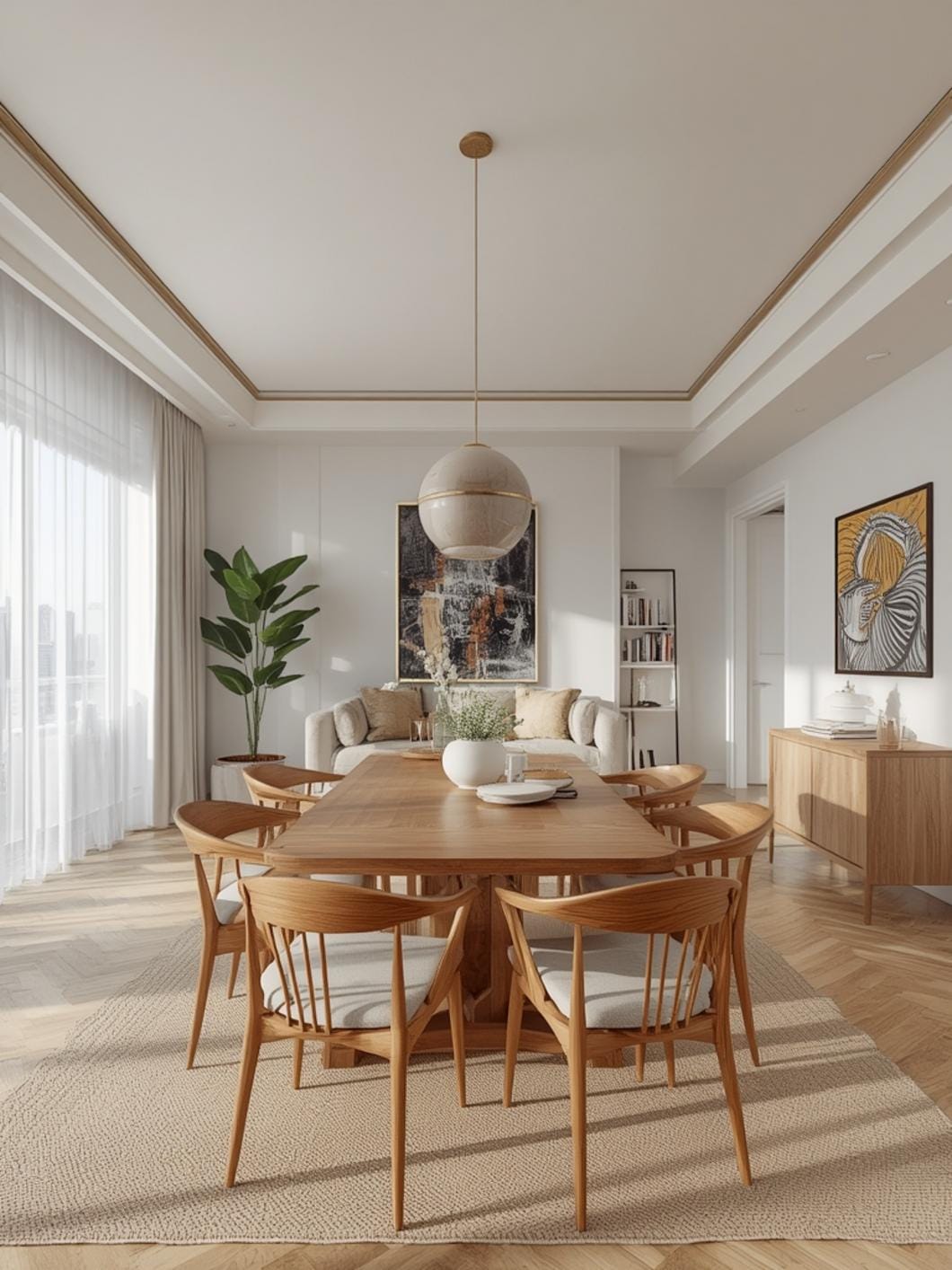
Buying a table too large for the room. You need at least 36 inches of clearance around the table for chairs to pull out comfortably. Measure your space carefully and account for traffic flow before you buy.
Choosing style over comfort in chairs. Gorgeous chairs that hurt after 20 minutes ruin dinner parties. Always sit in chairs for several minutes before purchasing, testing back support and seat depth.
Ignoring the table base design. Center pedestals offer maximum legroom but can feel wobbly with large tops. Four-leg designs are stable but limit seating at table ends. Consider how many people you typically seat and choose accordingly.
Matching wood tones to existing floors exactly. This creates a flat, monotonous look. Instead, choose wood furniture that’s noticeably lighter or darker than your floors for visual depth.
Skipping the protective finish. Some homeowners love raw wood aesthetics but quickly regret it when the first water ring appears. Even matte sealers protect beautifully while maintaining natural appearance.
Assembling alone on hardwood floors. Always use blankets or cardboard underneath during assembly. One slip with a table leg can gouge floors badly, costing hundreds in repairs.
Buying chairs that don’t fit under the table. Chair arms must clear the table apron. Measure the space between table legs before selecting chairs, especially if mixing pieces from different sources.
Simple Care That Keeps Wood Beautiful
Maintaining wooden dining sets requires less effort than most homeowners expect. These simple habits preserve beauty for decades.
Daily Care: Wipe spills immediately with a soft, slightly damp cloth. Use placemats and coasters consistently to prevent heat marks and water rings. Dust weekly with a microfiber cloth following the wood grain.
Monthly Maintenance: Clean thoroughly with a solution of mild dish soap and warm water, wringing your cloth nearly dry. Never let water pool on the surface. Dry immediately with a clean towel.
Seasonal Conditioning: Apply furniture polish or wood conditioner every 3–4 months. This prevents drying and cracking while enhancing the wood’s natural luster. Choose products specifically formulated for your finish type (oil-based or polyurethane).
Protecting from Damage: Use trivets under hot dishes always, even on sealed wood. Rotate placemats and centerpieces monthly so sun exposure affects the finish evenly. Keep your dining room at consistent temperature and humidity to prevent warping.
Addressing Minor Issues: Light scratches often disappear by rubbing with a walnut meat, which releases natural oils that blend with wood tones. For deeper scratches, use a matching wood marker or furniture touch-up pen.
Professional Intervention: Consider professional refinishing every 10–15 years if you want to refresh the look or repair significant damage. This costs $300–$600 typically but makes your set look brand new again.
Making Your Decision
Choosing the right wooden dining set comes down to matching quality construction with your lifestyle needs. You’ve learned how to evaluate wood types, avoid common mistakes, and maintain your investment properly.
Start by measuring your space accurately and determining how many people you typically need to seat. Then focus on construction quality over brand names, sitting in chairs before buying, and selecting finishes you’ll love for years.
Ready to create the gathering space your home deserves? Explore more dining room inspiration and practical guides at DecorKingdom, where we help you make every room beautiful and functional.
FAQs
How much should I expect to spend on a quality wood dining set?
Plan to spend $800–$1,500 for a solid wood table and four chairs that will last 15–20 years. Sets under $600 typically use veneer over particle board rather than solid construction. Premium hardwoods like walnut or custom pieces start around $2,000. Your cost per year of use makes mid-range sets the smartest investment for most homes.
Can I mix different wood finishes in my dining room?
Absolutely, and it often looks more interesting than matching everything exactly. Keep undertones consistent—pair warm woods (cherry, oak) together or cool woods (maple, ash) together. Vary the shade intensity with one dominant piece and lighter accents. Mixing adds depth and prevents that showroom-stiff look.
What’s the best table shape for a family with young children?
Round or oval tables work best because they eliminate sharp corners and create easier conversation flow. The lack of defined “head” positions makes everyone feel included. Round tables also maximize seating in smaller spaces. Once kids reach age 10 or so, rectangular tables work fine and offer more serving space.
How do I remove water rings from my wood dining table?
For light rings, try rubbing gently with a paste of baking soda and water using a soft cloth. For stubborn marks, apply mayonnaise directly to the ring, let sit overnight, then wipe clean. The oils in mayo often penetrate the finish and eliminate cloudiness. For serious damage, light sanding and refinishing may be necessary.
Should I buy chairs with or without arms for my dining table?
Armless chairs offer more flexibility, fit more people, and work better for kids who need to scoot closer to the table. Armed chairs provide extra comfort for lingering over meals but require more space and must fit under your table’s apron. Consider armed host chairs at the table ends with armless chairs on the sides as a compromise.
—
Meta Title: Wood Dining Room Sets: Ultimate Guide 2026
Meta Description: Transform meals into memories with the perfect wood dining set. Smart buying tips, styling ideas, and care advice for lasting beauty.