How to Turn an Awkward Corner Into a Gallery Wall Showstopper
You’ve spent months curating your favorite prints, family photos, and artwork. They’re beautiful, but they’re also sitting in a stack, waiting for the perfect display moment. That awkward corner in your living room keeps catching your eye — it feels empty, wasted, like a missed opportunity.
What if that overlooked corner could become the most talked-about feature in your home? Corner gallery wall ideas turn forgotten spaces into stunning focal points that showcase your personality and style. Whether you’re working with a narrow hallway corner or a spacious living room angle, the right arrangement transforms blank walls into conversation starters.
The best part? You don’t need professional design skills or a massive budget to create a gallery wall that looks custom and intentional.
Table of Contents
What You’ll Need to Get the Look
Creating a corner gallery wall doesn’t require specialty tools or hard-to-find materials. Here’s what you’ll want to gather:
Frames and Artwork:
– Mix of frame sizes (small 5×7″ to larger 16×20″ works well)
– Frames in coordinating finishes (all black, all wood, or mixed metallics)
– Your chosen prints, photos, or artwork
– Matting for a polished, gallery-quality appearance
Hanging Hardware:
– Picture hanging hooks rated for your frame weights
– Small finishing nails or picture hanging strips for lightweight frames
– Measuring tape and pencil for planning
– Painter’s tape to mock up your layout before committing
Optional Enhancements:
– Small floating shelves to add dimension
– 3D objects like small mirrors or decorative plates
– LED picture lights if your corner needs brightness
– Command strips for damage-free hanging in rentals
The key is starting with what you already own. That vintage mirror, those vacation photos, the print you bought on Etsy three years ago — they all deserve to be displayed together in a cohesive arrangement.
Finding Your Style and Season
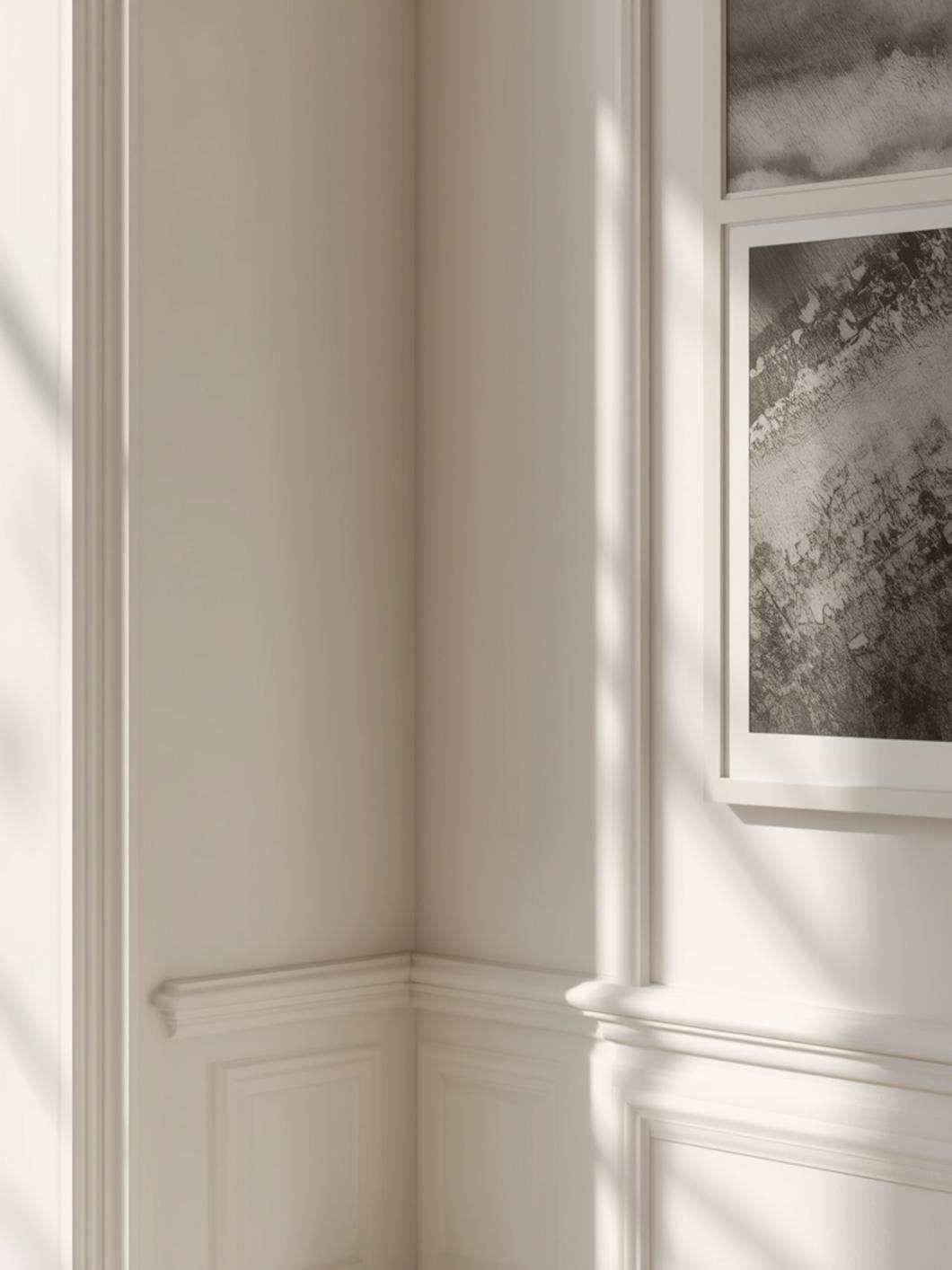
Corner gallery walls work beautifully year-round, but your approach might shift with the seasons and your home’s natural light patterns.
Spring and Summer bring abundant natural light, making corners ideal for colorful prints and lighter frames. This is when bright botanicals, beach photography, and cheerful abstract art really shine. The corner becomes an energizing feature that complements longer days and open windows.
Fall and Winter invite richer, moodier gallery walls with deeper frame colors and more intimate subject matter. Black-and-white family photos, vintage-style prints, and darker wood frames create cozy, sophisticated corners perfect for the season. If your corner gets less natural light during shorter days, consider adding a small picture light.
Your home’s existing style also guides your choices. Modern homes love clean lines with uniform spacing and matching frames. Traditional spaces embrace ornate frames and classical artwork arrangements. Eclectic homes thrive when you mix everything — old and new, large and small, photographs and paintings all together.
The beauty of corner galleries is their flexibility. You can refresh them seasonally without changing the entire arrangement, swapping just a few pieces to match your mood.
7 Ideas to Try in Your Home
1. The Organic Cluster
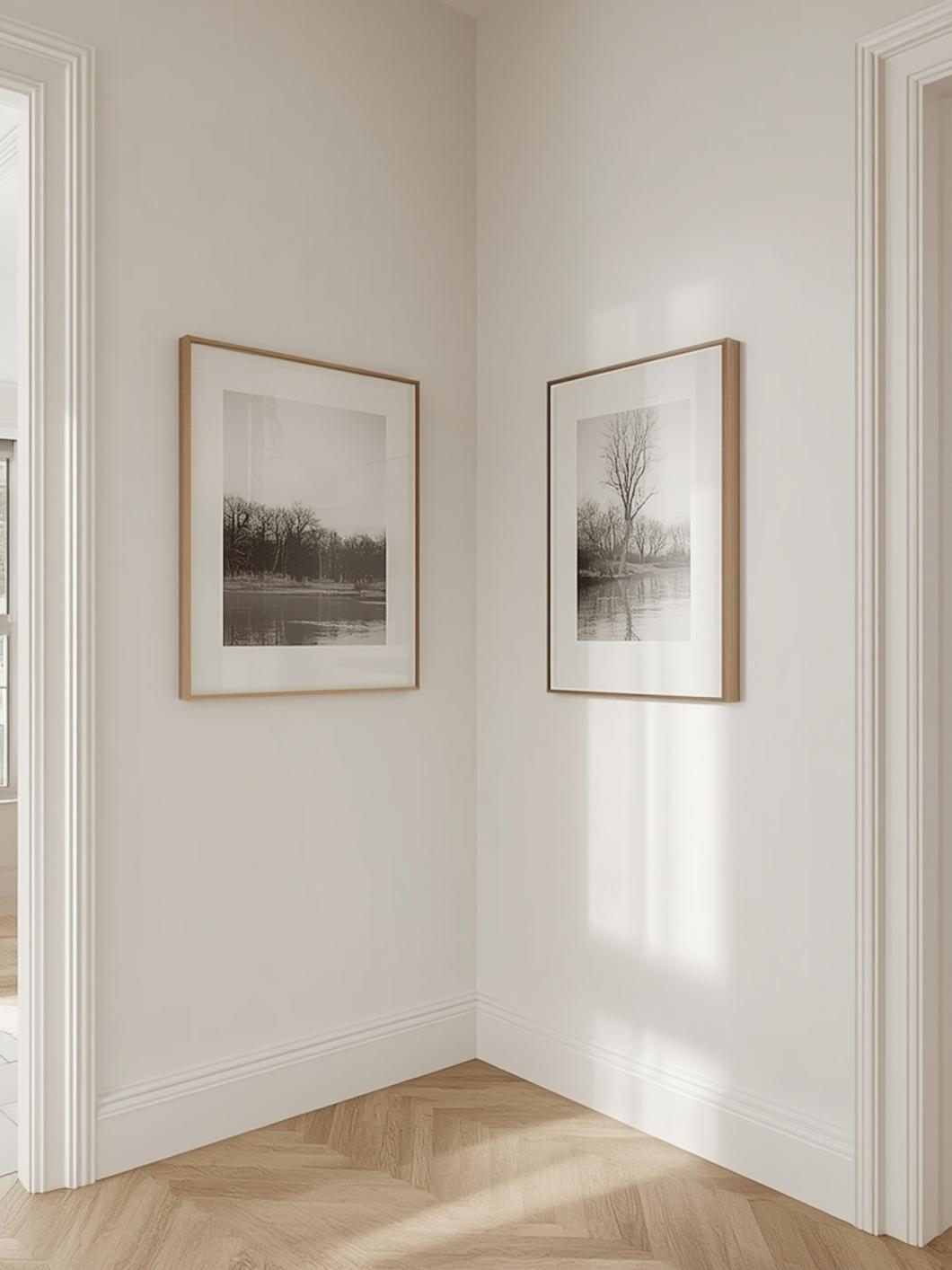
Start with your largest piece positioned near eye level on one wall. Build outward and around the corner with progressively smaller frames, creating a flowing, asymmetrical arrangement. This approach feels collected and personal rather than rigid. Leave varied spacing between frames — not everything needs to align perfectly.
2. The Grid Extension
Create a traditional grid on your primary wall, then wrap just one or two rows around the corner onto the adjacent wall. This works beautifully in dining rooms and home offices where you want structure with a creative twist. How to arrange pictures in a corner gallery wall using this method means keeping your spacing uniform — typically 2-3 inches between all frames.
3. The Floating Shelf Combo
Install two or three small floating shelves in your corner, then layer framed photos on the shelves while hanging larger pieces on the wall above and between them. This adds depth and makes it easy to rotate smaller items seasonally. You can prop frames at different angles for a relaxed, lived-in feel.
4. The Staircase Sweep
If your corner includes stairs, follow the angle of your staircase with your frame arrangement. Start at the bottom with smaller pieces and build up and around the corner, creating movement that guides the eye naturally. This prevents the awkward dead space that often appears in stairwell corners.
5. The Statement Corner
Choose one oversized piece (24×36″ or larger) for your corner’s focal point, positioned where both walls meet. Surround it with much smaller frames — think 5×7″ and 8×10″ — to create dramatic contrast. This works especially well in minimalist spaces where you want one bold moment.
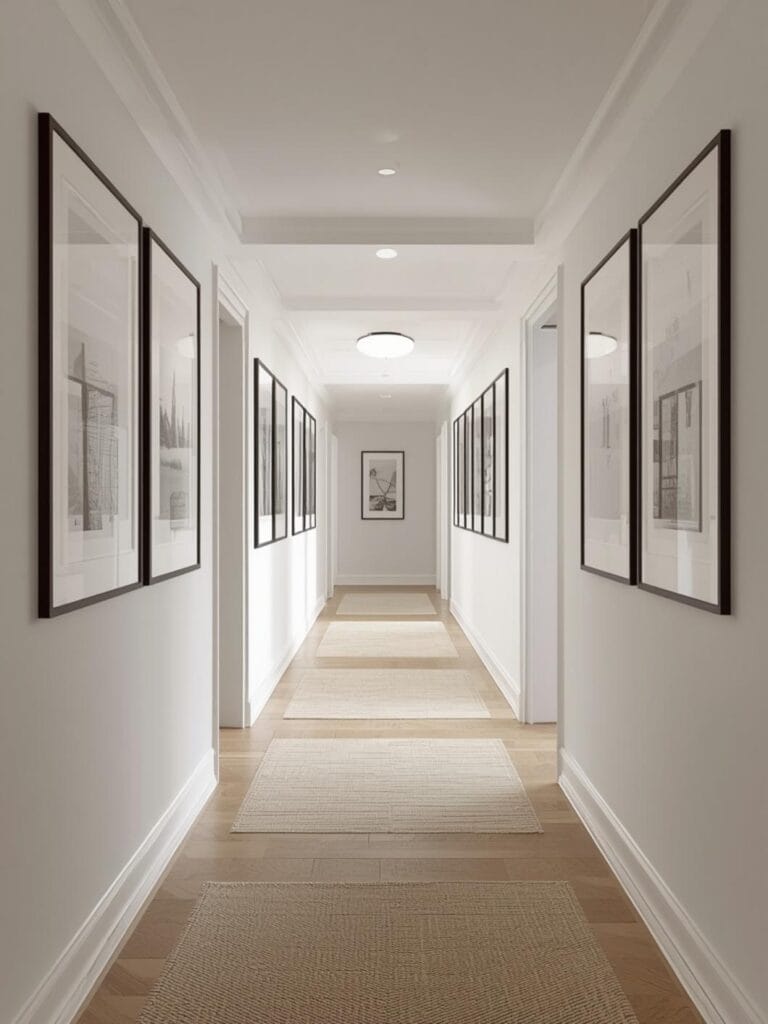
6. The Black and White Story
Commit to an all black-and-white photography display with matching black frames. The monochromatic palette creates sophistication and unity even when frame sizes vary wildly. This style never goes out of fashion and looks expensive regardless of your budget.
7. The Layered Collection
Overlap your frames slightly instead of spacing them apart, creating a collected-over-time European feel. Start in the corner where walls meet and layer outward, letting frames touch and even overlap by an inch or two. Mix in a small mirror or decorative object to break up the frames and add reflection.
Each of these approaches adapts to your available wall space and existing decor. The corner itself becomes an anchor point that makes the entire arrangement feel intentional rather than random.
Benefits for Your Daily Life
A well-designed corner gallery wall does more than fill empty space — it fundamentally changes how a room feels when you walk into it.
Creates an Instant Focal Point
Corners naturally draw the eye because they’re where two planes meet. When you fill that space with intention, you create a destination within the room. Guests gravitate toward gallery walls, and they give you a natural conversation starter that reflects your interests and experiences.
Makes Awkward Spaces Functional
Every home has those challenging corners that furniture can’t quite fill. A gallery wall transforms architectural quirks into design features. That narrow corner behind your sofa suddenly has purpose. The odd angle in your hallway becomes a mini art museum.
Displays Memories Without Clutter
Instead of frames scattered across multiple surfaces collecting dust, your cherished photos and prints live together in one curated display. This clears your shelves and tabletops while giving each piece the attention it deserves. You see your memories daily without the visual chaos.
Adds Personality Without Permanent Changes
Unlike built-in shelving or wallpaper, gallery walls are completely reversible. Renters can create stunning displays using damage-free hanging strips. Homeowners can refresh the look seasonally or as their style evolves, simply by swapping out a few frames.
Your corner gallery becomes a living display that grows and changes with your life — new family photos, vacation prints, or artwork discoveries all find their place naturally.
Tips and Alternatives for Every Budget
Budget-Friendly Approach ($50-150)
Shop thrift stores and discount retailers for mismatched frames, then spray paint them all the same color for instant cohesion. Print your favorite digital photos at standard sizes (5×7″, 8×10″) to avoid custom framing costs. Use printable art from independent artists who sell digital downloads. Damage-free hanging strips eliminate the need for tools and patch jobs later.
Mid-Range Option ($150-400)
Invest in quality frames from home decor retailers in coordinating finishes. Mix professional prints with personal photos for variety. Add one or two custom-matted pieces as focal points while using ready-made frames for the rest. Include a small decorative mirror to bounce light and add dimension without another framed piece.
Premium Investment ($400+)
Commission custom framing for your most treasured pieces with museum-quality matting and UV-protective glass. Choose solid wood frames in consistent finish quality. Work with a local framer who understands your vision and can help with measurements. Add brass picture lights for gallery-quality illumination that makes your display look professionally curated.
Small Space Adaptation
Tight corners work beautifully with smaller arrangements. Use 5×7″ and 8×10″ frames exclusively, limiting your display to 5-9 pieces total. The impact comes from thoughtful arrangement rather than quantity. In very small corners, consider a single oversized frame that extends partway onto both walls, creating presence without overwhelming the space.
Common Mistakes to Avoid
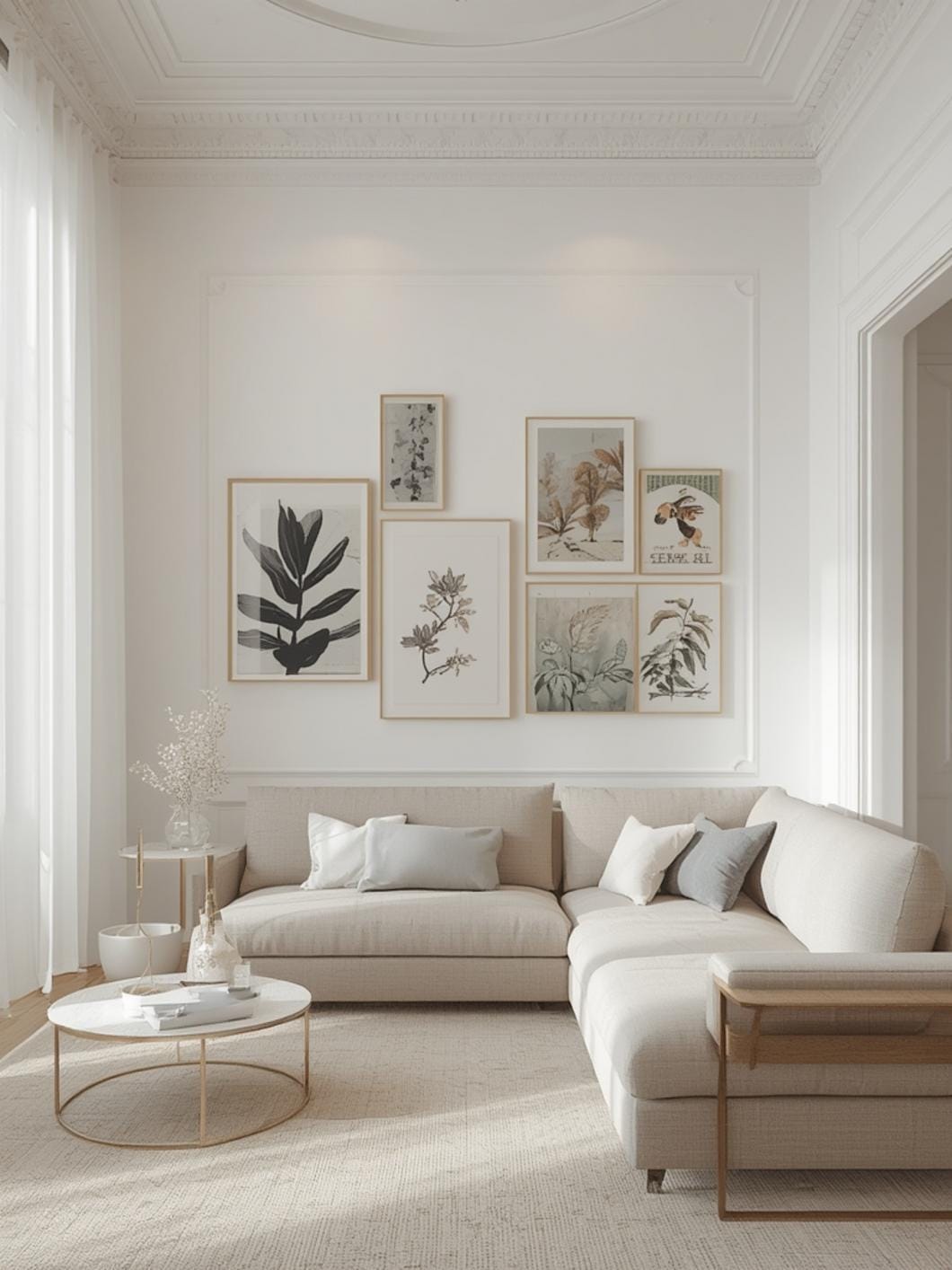
Hanging frames too high on the wall. The center of your main grouping should sit at eye level (approximately 57-60 inches from the floor), not up near the ceiling where no one can appreciate the details.
Forgetting to map your layout before hammering. Always tape your arrangement onto the wall using painter’s tape to see proportions and spacing in real life — this saves you from extra holes and regret.
Using identical frames in identical spacing. This creates a stiff, corporate feeling rather than the curated, lived-in look that makes homes feel personal. Vary your frame sizes and leave irregular spacing for visual interest.
Ignoring the corner itself. The point where your two walls meet deserves attention — place a key piece near that intersection rather than avoiding it. This anchors your entire arrangement and emphasizes the corner’s architectural interest.
Overcrowding the space with too many frames. White space between frames lets each piece breathe and prevents visual overwhelm. If you can’t see your wall color peeking through anywhere, you’ve likely added too much.
Keeping Your Display Fresh
Corner gallery walls need minimal maintenance, but a few simple habits keep them looking intentional year after year.
Dust frames monthly using a microfiber cloth or soft duster. Dust accumulates faster in corners due to air circulation patterns, so quick weekly attention prevents buildup. For glass fronts, a gentle glass cleaner works perfectly.
Check hanging hardware twice yearly, especially if you live in an older home where walls may settle. Gently wiggle each frame to ensure hooks remain secure. Tighten or replace any hardware that feels loose before frames fall.
Rotate pieces seasonally to prevent sun fading and keep your display feeling fresh. Swap two or three frames four times a year so you’re always seeing something new. This also lets you feature seasonal photos — vacation memories in summer, family gatherings during holidays.
Update your arrangement as your life evolves. New baby photos, wedding pictures, or recent travel memories deserve to replace older pieces that no longer resonate. Your corner gallery should reflect your current life, not just your past.
Clean glass regularly if your frames have it, as smudges and fingerprints dull the overall impact of your carefully chosen artwork. A clean gallery wall looks exponentially more polished than one with dusty, smudged frames.
Your Corner’s Transformation Starts Now
The corner you’ve been ignoring has incredible potential to become your home’s most distinctive feature. With the right mix of frames, thoughtful arrangement, and pieces that matter to you, that awkward angle transforms into an artful display that makes your space feel uniquely yours.
Start by gathering your favorite frames and prints this weekend. Mock up a simple arrangement using painter’s tape, and give yourself permission to play with the layout until it feels right. Your perfect corner gallery is closer than you think.
Ready to explore more ways to make every corner of your home beautiful? Keep discovering fresh inspiration and practical ideas here at DecorKingdom.
FAQs
How many frames do I need for a corner gallery wall?
Most successful corner gallery walls include 7-15 frames, though this varies based on your available space and frame sizes. Start with your largest pieces first, then fill in with smaller frames until the arrangement feels balanced. It’s better to have fewer frames with good spacing than to overcrowd your corner trying to use everything you own.
Should all my frames match for a corner gallery wall?
Your frames don’t need to match exactly, but they should coordinate through a shared element like color, finish, or style. All black frames, all natural wood, or mixed metallics (brass and gold together) create cohesion without being matchy-matchy. Avoid mixing too many different frame colors unless you’re intentionally going for an eclectic collected look.
What’s the best way to plan my layout before hanging anything?
Cut paper templates in your exact frame sizes and tape them to your wall using painter’s tape, or lay your frames on the floor and photograph the arrangement from above. Live with the taped layout for a day or two, adjusting until it feels right. This saves you from unnecessary holes and makes the actual hanging process much faster and more confident.
Can I create a corner gallery wall in a rental without damaging walls?
Absolutely — damage-free picture hanging strips work beautifully for gallery walls and hold surprisingly heavy frames when used correctly. Follow the weight limits on the package, and use multiple strips for larger frames. When you move, the strips remove cleanly without leaving marks, holes, or residue that would cost you your security deposit.
How do I make my corner gallery wall look expensive on a budget?
The secret is consistency and quality over quantity. Choose one frame color and stick with it throughout, use proper matting (even if it’s DIY), and ensure your spacing is intentional and measured. A smaller gallery with thoughtful arrangement looks far more expensive than a large, cluttered wall of mismatched frames with uneven spacing.
—
Meta Title: 49+ Corner Gallery Wall Ideas That Transform Any Space (2026)
Meta Description: Turn awkward corners into stunning focal points with corner gallery wall ideas that work. Easy layouts, budget tips, and mistakes to avoid inside.