10 Farmhouse Mudroom Ideas to Maximize Your Space
You walk through the front door juggling grocery bags, your coat slipping off your shoulder, and the kids’ backpacks hitting the floor with a thud. Sound familiar? Every home needs a hardworking entry space that doesn’t sacrifice charm for function. That’s exactly what makes farmhouse mudroom ideas so appealing right now.
Whether you’re working with a dedicated mudroom or carving one out of a corner near your door, farmhouse style brings warmth and practicality together beautifully. Shiplap walls, vintage hooks, and weathered wood benches create that lived-in look while keeping everyday chaos under control.
Your mudroom can become the most functional room in your home without breaking the bank or requiring a complete renovation.
Table of Contents
What You’ll Need to Get the Look
Creating a farmhouse-inspired mudroom doesn’t require expensive custom cabinetry or designer finishes. Start with these foundational pieces that define the style:
Seating and Storage:
– Wooden bench with cubbies or baskets underneath
– Storage bench with lift-top for seasonal items
– Vintage church pew or repurposed farm bench
Wall Elements:
– Shiplap paneling or beadboard
– Individual coat hooks in black metal or aged brass
– Floating shelves made from reclaimed wood
– Chalkboard or magnetic board for family messages
Organization Essentials:
– Wire or woven baskets for each family member
– Boot trays in galvanized metal
– Lidded bins for pet supplies or sports equipment
– Entryway rug in durable natural fiber
Decorative Touches:
– Vintage signs or farmhouse artwork
– Mason jar vases with fresh greenery
– Galvanized metal accents
– Weathered wood picture frames
The beauty of farmhouse style lies in mixing new pieces with vintage finds from thrift stores and flea markets. Your mudroom should feel collected over time rather than purchased all at once.
Finding Your Style and Season
Farmhouse mudrooms adapt beautifully to different seasons and your family’s unique personality. Think about which direction feels right for your home.
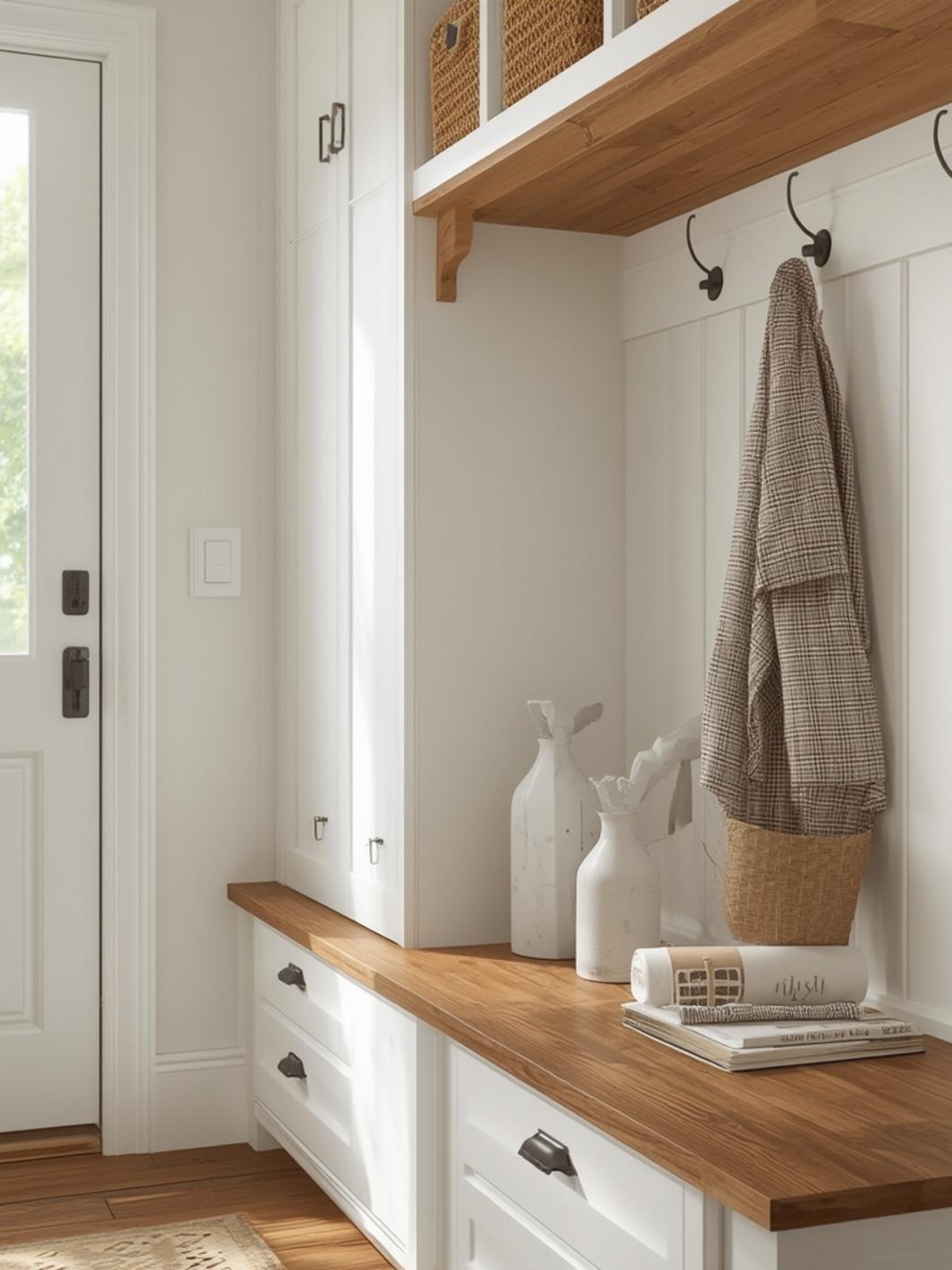
Classic White Farmhouse works year-round with crisp white shiplap, black hooks, and natural wood tones. This timeless approach never goes out of style and brightens darker entry spaces naturally.
Rustic Barn Style leans into weathered wood, exposed beams, and darker finishes. This direction works especially well if your home has other rustic elements or you love cozy, cabin-inspired spaces.
Modern Farmhouse balances clean lines with farmhouse warmth through simple bench designs, minimal decor, and a neutral color palette. This approach suits contemporary homes that want farmhouse character without going too country.
Consider your climate and lifestyle too. Homes in rainy areas need extra boot storage and water-resistant flooring. Families with young children benefit from lower hooks and durable, wipeable surfaces.
The best time to refresh your mudroom is during spring cleaning or before back-to-school season when organizational needs shift. But honestly, any weekend works when you’re ready for a change.
7 Ideas to Try in Your Home
1. The Budget-Friendly Cubby System
Transform your entry wall without custom carpentry by installing a simple bench with open cubbies above. Paint or stain an IKEA shelf unit, add vintage hooks from the hardware store, and slide baskets into each cubby for different family members. This is exactly how to organize a mudroom on a budget while still achieving that farmhouse look you love.
Spray paint basic metal hooks with oil-rubbed bronze for an aged appearance. Label baskets with chalkboard tags so everyone knows where their things belong.
2. The Shiplap Statement Wall
Create instant farmhouse character by adding shiplap to just one wall behind your hooks and bench. You can use real wood planks or affordable MDF alternatives that install with construction adhesive and a nail gun.
Paint it classic white or try a soft gray for a modern twist. The horizontal lines make narrow mudrooms feel wider and give your space that signature farmhouse texture.
3. The Vintage Locker Revival
Hunt for old metal school or gym lockers at salvage yards or online marketplaces. These provide individual storage for each family member and bring authentic industrial farmhouse character to your space.
Leave them in their original patina or spray paint in matte black. Add magnetic hooks inside doors and small baskets on top for accessories.
4. The Bench with Boot Storage Below
Build or buy a simple wooden bench and tuck galvanized boot trays underneath. Add cushions in ticking stripe or grain sack fabric for comfort and style.
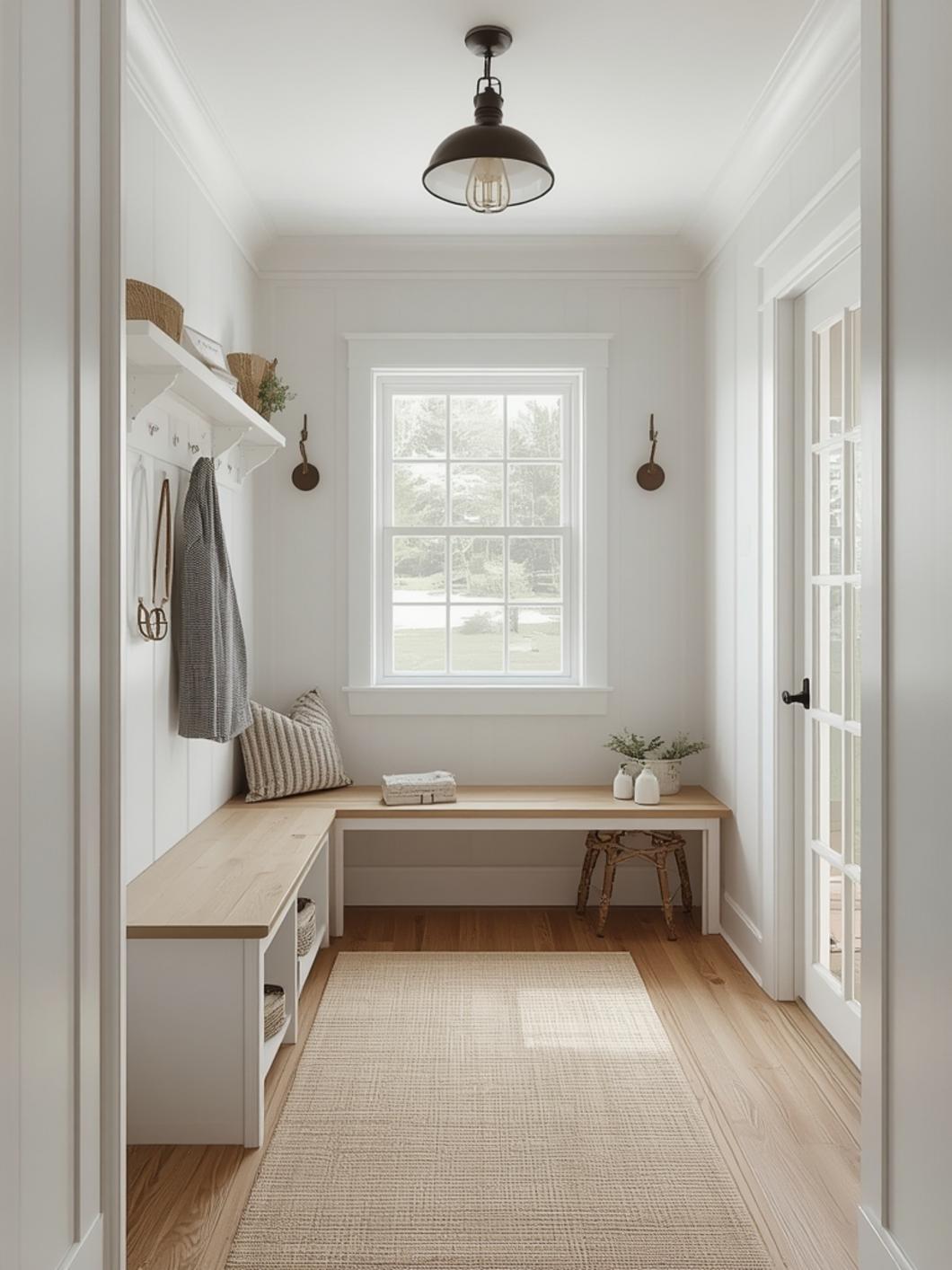
Mount a shelf above at shoulder height for hats and bags. This vertical organization keeps the floor clear while maximizing your wall space.
5. The Basket Wall System
Mount a series of wire or woven baskets directly to your wall at varying heights. This approach works beautifully in small spaces where a bench would overwhelm the room.
Each family member gets their own basket for daily essentials. Add hooks below each basket for coats and bags. The varied textures create visual interest without cluttering the space.
6. The Reclaimed Wood Feature
Use weathered barn wood or pallet wood to create a stunning accent wall or floating shelves. The aged patina brings instant character and pairs perfectly with crisp white walls.
Build a simple coat rack from a reclaimed board with vintage glass knobs serving as hooks. Or create floating shelves from thick barn beams for sturdy storage that makes a statement.
7. The Compact Corner Solution
Convert an unused corner near your entry into a mini mudroom with a corner bench and wraparound hooks. This works perfectly for homes without dedicated mudroom space.
Add a corner shelf above for keys and mail. Use the adjacent walls for full-height hooks to maximize vertical storage in your compact footprint.
Benefits of Farmhouse Mudroom Style
Farmhouse Kitchen improve your daily life in ways that go beyond just looking pretty. This style naturally encourages organization through its emphasis on open storage and designated spaces for everything.
When you can see your baskets and hooks at a glance, you’re more likely to use them consistently. No more mystery clutter piling up behind closed cabinet doors.
The durable materials central to farmhouse design stand up to real family life beautifully. Wood benches develop character with age rather than looking worn out. Metal hooks and galvanized accents handle heavy coats and bags season after season.
This style also brings warmth to what could otherwise feel like a purely functional space. Walking into a thoughtfully designed farmhouse mudroom feels welcoming rather than sterile or chaotic.
The neutral color palette typical of farmhouse design makes it easy to switch out seasonal decor without redoing the whole space. Swap a fall wreath for a spring basket of tulips and your mudroom feels fresh again.
Perhaps most importantly, a well-organized mudroom saves you time and stress every single day. When everyone knows exactly where their shoes and backpack belong, mornings run more smoothly.
Tips, Alternatives, and Styling Options
Budget-Friendly Approach: Shop your own home first for furniture that could be repurposed as a mudroom bench. An old coffee table, dresser with drawers removed, or bookshelf laid on its side all work beautifully. Add basic hooks from the hardware store and thrifted baskets for storage. Paint everything the same color to create a cohesive look for under $100.
Mid-Range Option: Invest in a quality storage bench with built-in cubbies and purchase coordinating hooks and shelving. Mix new pieces with vintage finds to keep costs reasonable while getting exactly the functionality you need. Budget around $300-500 for a polished farmhouse mudroom that will last for years.
Premium Upgrade: Commission custom built-ins with shiplap backing, integrated bench seating with upholstered cushions, and designated charging stations for devices. Add premium touches like vintage glass knobs, authentic reclaimed wood, and professional-grade hooks. This approach runs $1,500-3,000 but creates a truly custom look.
Small Space Adaptation: When you’re working with just a few feet of wall space, think vertical. Mount a narrow floating shelf at eye level for keys and mail. Install a row of hooks directly on the wall below it. Place a slim boot tray on the floor underneath. This simple vertical stack handles all the essentials without requiring a bench or large furniture pieces.
For tiny apartments or condos, consider a freestanding coat rack in farmhouse style paired with a decorative basket for shoes. You can move these pieces if needed while still maintaining an organized entry.
Color Variations: While white and natural wood dominate farmhouse style, don’t be afraid to add personality through paint. Soft blue-gray, sage green, or even charcoal gray work beautifully as accent colors on benches or shiplap walls.
Common Mistakes to Avoid
Installing hooks at the wrong height. Mount coat hooks 5-6 feet high for adults but add a lower row at 3-4 feet so children can actually reach and use them independently.
Choosing style over durability. That beautiful light-colored cushion might look perfect in photos, but it won’t survive wet coats and muddy kids. Select fabrics and finishes that can handle real life, like indoor-outdoor fabrics and sealed wood.
Forgetting about lighting. Dark mudrooms don’t get used effectively because nobody can see what they’re doing. Add overhead lighting or a plug-in wall sconce so your family can actually find what they need when leaving in the morning darkness.
Overloading with decor. A few farmhouse touches create character, but too many signs, wreaths, and knickknacks make your mudroom feel cluttered rather than functional. Keep surfaces mostly clear so they can actually be used for setting down bags and packages.
Skipping the boot tray. Without proper containment, wet shoes and boots create puddles and damage your flooring. Always include boot trays or a designated mat area, even in small spaces.
Keeping Your Farmhouse Mudroom Fresh
Maintaining the beauty of your farmhouse mudroom requires just a few simple habits that take minutes each week.
Wipe down wood surfaces monthly with a slightly damp cloth followed by a dry one. Avoid harsh cleaners that strip the finish or damage the farmhouse patina you’ve worked to create.
Vacuum or sweep your mudroom floor twice weekly since this space naturally collects more dirt than other rooms. Shake out entry rugs outside weekly and wash them monthly depending on traffic.
Empty boot trays after rainy or snowy days so water doesn’t sit and create odors or damage. A quick dump in the yard or sink takes seconds but prevents bigger problems.
Rotate seasonal items quarterly to keep your mudroom functional year-round. Store winter gear during summer months and bring out lighter jackets when temperatures drop. This prevents overcrowding and keeps the space manageable.
Touch up paint on high-traffic areas like benches and baseboards as needed. Farmhouse style benefits from a slightly worn look, but actual damage should be addressed before it worsens.
Wash baskets and fabric storage bins every few months. Most woven baskets can be wiped down with a damp cloth, while fabric bins usually go right in the washing machine.
Conclusion
Your mudroom works harder than almost any other space in your home, so it deserves to look good while handling daily chaos. Farmhouse style brings that perfect balance of beauty and function that makes your entry both welcoming and practical.
Start with one simple change, whether that’s adding hooks, painting a wall, or bringing in baskets for better organization. You don’t need a complete renovation to transform how your space works and feels.
Ready for more ways to bring farmhouse charm throughout your home? Explore our other guides here at DecorKingdom for room-by-room inspiration and budget-friendly decorating solutions.
Frequently Asked Questions
What is the most important element in a farmhouse mudroom?
Storage is the foundation of any successful farmhouse mudroom. Before adding decorative elements, make sure you have adequate hooks for coats, a bench for changing shoes, and baskets or bins for smaller items. The farmhouse aesthetic works because it’s built on functional pieces that serve real purposes first and look beautiful second.
Can I create a farmhouse mudroom in a rental?
Absolutely! Focus on freestanding furniture pieces like a storage bench and coat rack that you can take with you when you move. Use removable hooks that don’t damage walls, and add farmhouse character through accessories like baskets, rugs, and wall art that require no permanent installation. Peel-and-stick shiplap wallpaper creates the look without the commitment.
How much does it cost to create a farmhouse mudroom?
Budget options start around $100-200 using repurposed furniture and basic hardware store hooks. Mid-range projects run $300-500 for quality storage pieces and coordinating accessories. Custom built-in solutions with professional installation typically cost $1,500-3,000 depending on the size of your space and materials chosen. Start small and add elements over time as your budget allows.
What colors work best in a farmhouse mudroom?
Classic white walls paired with natural wood tones create the most timeless farmhouse look. Soft neutrals like greige, warm gray, and cream also work beautifully as base colors. Add depth through black metal hardware, aged brass hooks, and pops of muted color in accessories like sage green, dusty blue, or warm terracotta that complement rather than compete with the farmhouse aesthetic.
How do I make a small entryway feel like a mudroom?
Focus on vertical storage to maximize your limited floor space. Mount hooks directly on the wall, add a narrow floating shelf above for keys and mail, and place a slim boot tray below. Even a 2-foot wide section of wall can function as an effective mudroom when you use the full height. Keep the color palette light and minimal to prevent the small space from feeling cramped.
—
Meta Title: 25 Farmhouse Mudroom Ideas That Work in 2026
Meta Description: Transform your entry with farmhouse mudroom ideas that blend style and function. Budget-friendly tips for organizing your busiest space beautifully.