How to Choose Small Laundry Room Tile Ideas
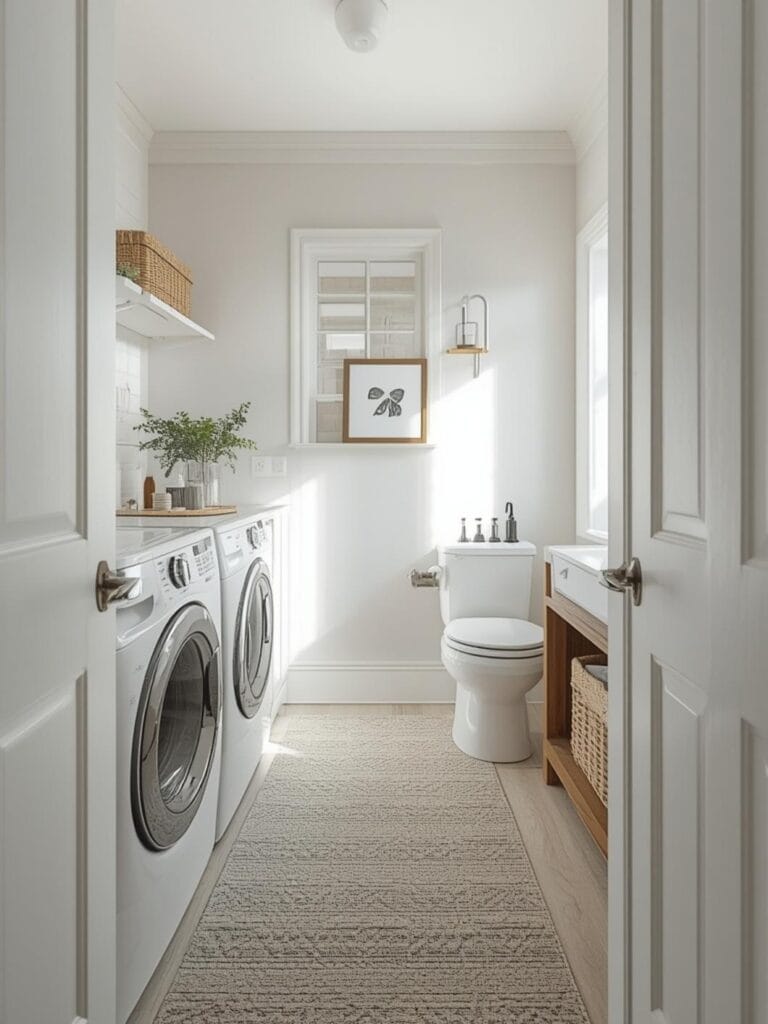
You open the laundry room door and immediately feel cramped. The walls close in, the lighting feels off, and everything just looks…blah. Sound familiar?
The right tile can completely change how your small laundry room feels and functions. Small laundry room tile ideas aren’t just about making the space prettier—they’re about creating the illusion of more room, protecting your walls from water damage, and giving yourself a reason to smile when you’re sorting socks on a Tuesday night.
Whether your laundry area is a closet-sized nook or a narrow galley space, tile choices matter more than you might think. Pick the wrong pattern or color, and the room shrinks even more. Choose wisely, and suddenly that cramped corner becomes one of your favorite spots in the house.
Table of Contents
What You’ll Need to Get the Look
Creating a beautiful tiled laundry room doesn’t require a contractor’s toolkit. Here’s what you’ll actually be working with:
Tile Options:
– Subway tiles (the classic 3×6 inch size works beautifully)
– Large-format tiles (12×24 inches or bigger to minimize grout lines)
– Penny tiles for accent walls
– Hexagon tiles for visual interest
– Peel-and-stick tiles for renters or budget projects
Grout and Sealing:
– Grout in colors that complement or contrast your tile
– Grout sealer to prevent staining
– Grout float for application
– Sponges for cleanup
Planning Materials:
– Measuring tape
– Graph paper for layout planning
– Tile samples to test in your actual lighting
– Painter’s tape to mock up patterns on your wall
Complementary Elements:
– Waterproof paint for untiled walls
– Open shelving or cabinets
– Task lighting fixtures
– Hooks and hanging rods
Finding Your Style and Season
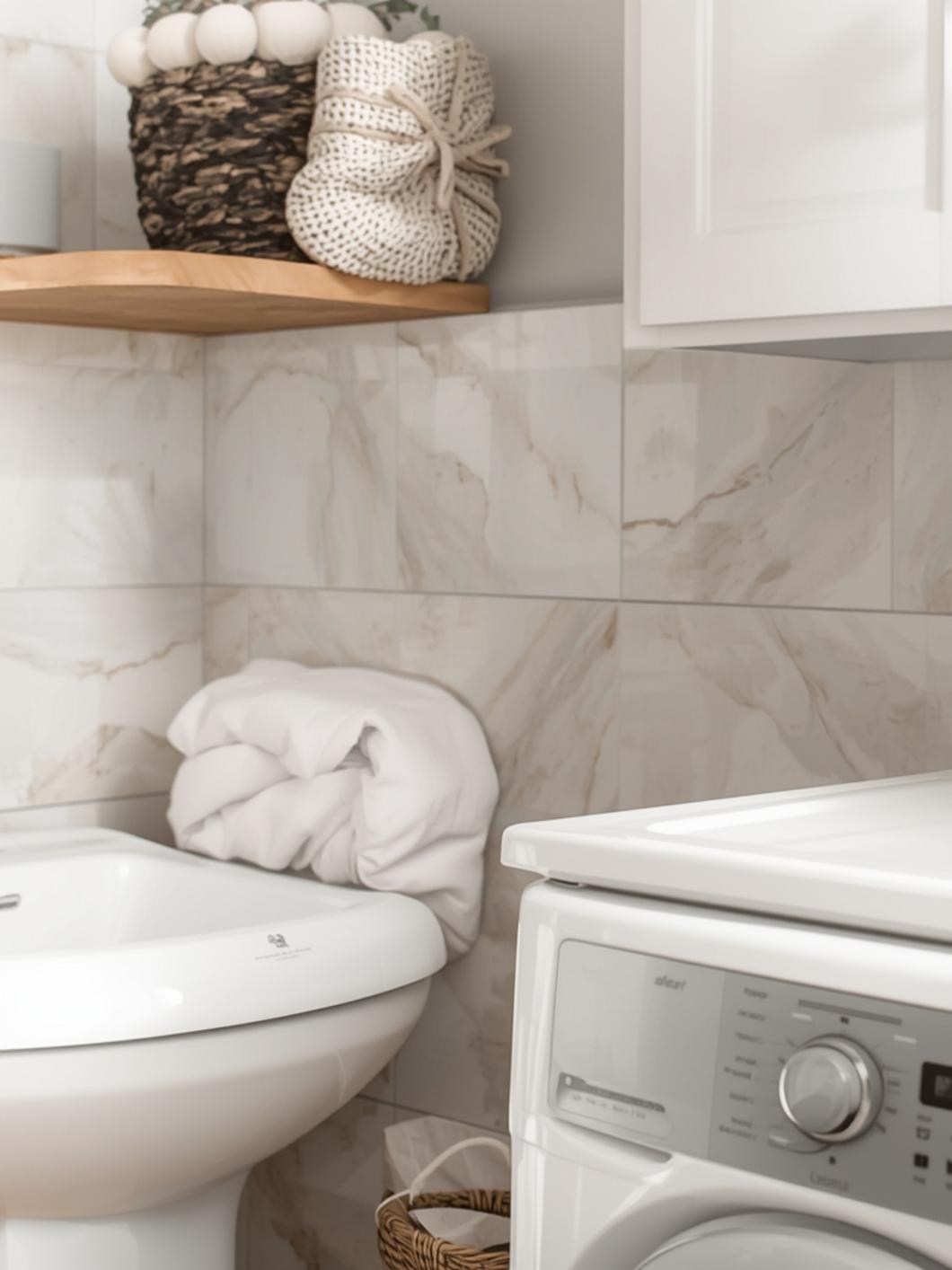
Your laundry room tile choice should reflect both your personal style and the mood you want to create in this hardworking space.
Think about when you use this room most. If you’re folding clothes late at night, warm-toned tiles in cream, beige, or soft gray create a calming environment. Morning laundry warriors might prefer crisp white subway tiles that feel fresh and energizing under bright lighting.
Season doesn’t matter much for tile installation itself, but it affects drying times for grout and how you’ll ventilate the space. Spring and fall offer moderate temperatures and humidity levels that work well if you’re planning a DIY weekend project.
Consider your home’s overall aesthetic too. Modern farmhouse styles pair beautifully with classic white subway tile and dark grout. Contemporary homes shine with large gray tiles and minimal grout lines. Eclectic spaces come alive with patterned cement tiles or colorful mosaics.
Budget plays a role in timing as well. Tile prices fluctuate with trends, and end-of-season sales at home improvement stores can stretch your dollar further. Plan your project around major sale periods if budget flexibility matters to you.
7 Ideas to Try in Your Home
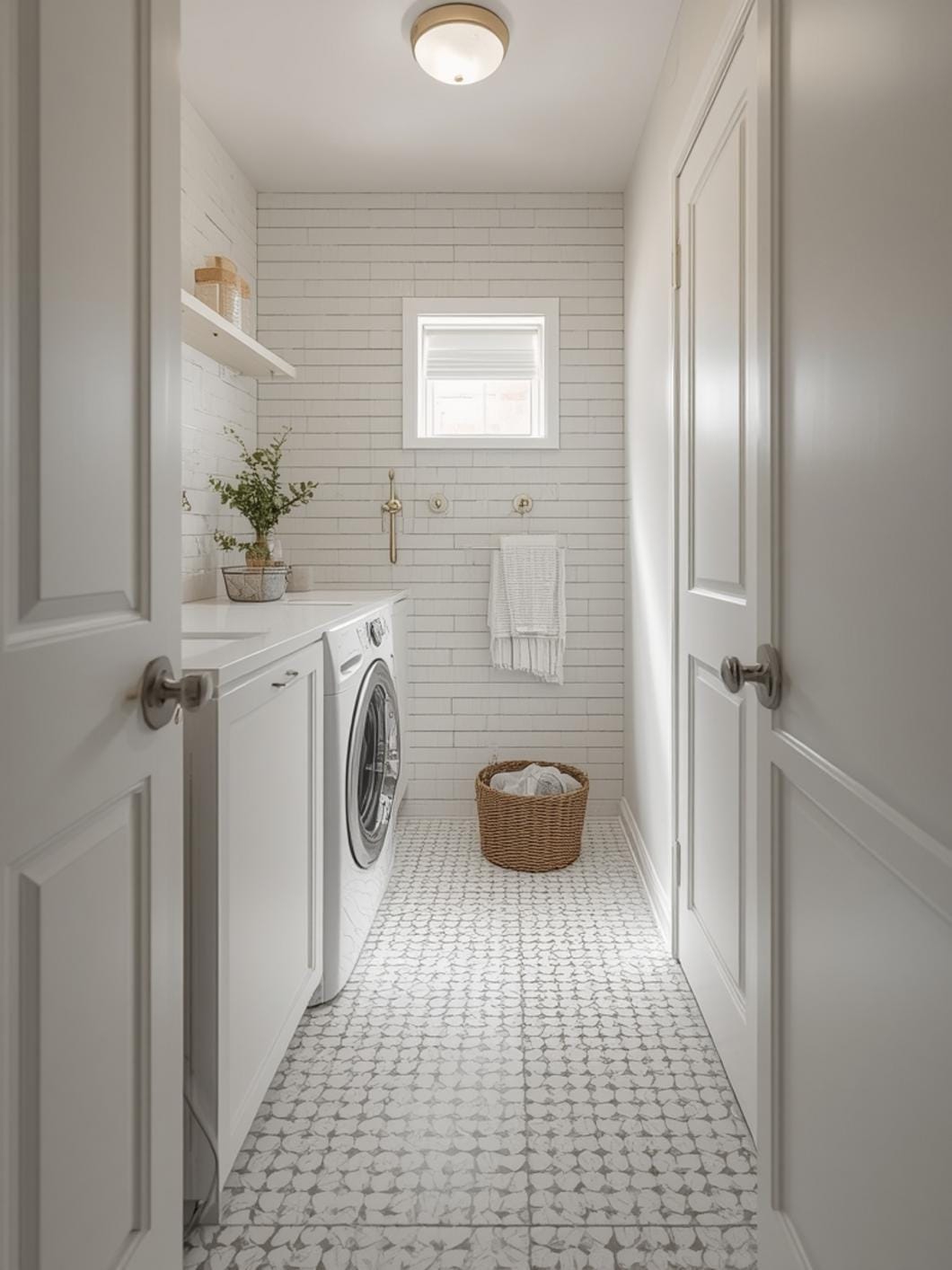
1. Floor-to-Ceiling White Subway with Dark Grout
This classic combination never goes out of style for good reason. The vertical lines draw eyes upward, making your ceiling appear higher than it actually is. The dark grout (charcoal or black) adds definition without overwhelming the space. This look works especially well in laundry rooms with minimal natural light because the white reflects every bit of available brightness.
2. Large-Format Tiles in Light Gray
Bigger tiles mean fewer grout lines, which creates a seamless, expansive feel. A 12×24 inch tile in soft gray feels modern and sophisticated while hiding water spots better than white. Run these tiles vertically on walls to add perceived height, or use them on floors to make narrow spaces feel wider. How to choose grout color for small bathrooms applies perfectly here—matching grout in the same gray family makes grout lines virtually disappear, which visually enlarges your room.
3. Accent Wall with Patterned Cement Tiles
If an all-over tile treatment feels too permanent or expensive, focus on one accent wall behind your washer and dryer. Patterned cement tiles in blues, greens, or warm terracottas add personality without overwhelming the space. Keep the other three walls painted in a coordinating solid color to let your tile wall shine as the focal point.
4. Horizontal Subway Tile Layout
Everyone defaults to vertical subway tile, but flipping the orientation horizontally can actually make a narrow laundry room feel wider. Pair this with light-colored grout for a softer, more cohesive look that doesn’t chop up the wall visually. This unexpected twist feels fresh while still being timeless enough to appeal to future buyers.
5. Hexagon Tiles on the Floor
Small hexagon tiles (also called penny tiles when they’re truly tiny) create incredible visual texture on laundry room floors. Choose white or light gray for maximum space-enhancing effect. The busy pattern actually works in your favor here—it hides dirt and lint between cleanings. Just be sure to seal the grout well since laundry rooms see moisture and detergent spills.
6. Two-Tone Tile Treatment
Split your wall vertically with one tile type on the bottom half and another on top. Try subway tile on the lower portion (where water splashes happen) and painted walls above. Or use a darker tile below and lighter tile above to ground the space while keeping it bright. This approach gives you the protection of tile where you need it most without the cost of tiling every surface.
7. Peel-and-Stick for Commitment-Phobes
Renters and anyone unsure about permanent changes can test the waters with high-quality peel-and-stick tiles. Today’s options look remarkably real, from subway to marble to cement tile patterns. Apply them to a single wall or even to the front panels of your washer and dryer for a removable backsplash effect. If you hate it, you can peel it off without damaging walls.
Benefits of Smart Tile Choices
The right tile does more for your small laundry room than just looking pretty on Pinterest.
Water protection tops the practical benefits list. Laundry rooms face splashes from sinks, drips from wet clothes, and occasional appliance leaks. Tile creates an impermeable barrier that paint or wallpaper simply can’t match. One small flood won’t ruin your walls when they’re properly tiled.
Light reflection matters enormously in windowless or poorly lit laundry spaces. Glossy tiles bounce available light around the room, making it feel larger and more welcoming. You’ll actually want to spend time folding clothes when the space feels bright and airy instead of cave-like.
Easy maintenance keeps your laundry room functional with minimal effort. Wipe down tiled walls with a damp cloth, and you’re done. No repainting scuff marks or scrubbing mysterious stains from drywall. Tile laughs off detergent splashes and fabric softener drips.
Property value gets a quiet boost too. Buyers love seeing upgraded finishes in utilitarian spaces because it signals overall home care. A beautifully tiled laundry room suggests the rest of the house has been thoughtfully maintained.
Your daily mood improves when you’ve created a space that doesn’t feel like a punishment to enter. That might sound dramatic, but spending hours each week in a cramped, ugly room genuinely affects your attitude about household tasks.
Tips, Alternatives, and Styling Advice
Budget-Friendly Approach
Stick with classic white subway tile and do the installation yourself over a weekend. These tiles cost $1–3 per square foot and require minimal cutting in small spaces. Use peel-and-stick tiles if you want an even cheaper entry point at $0.50–2 per square foot.
Mid-Range Sweet Spot
Invest in large-format porcelain tiles with professional installation on walls only. Keep floors simple with painted concrete or vinyl plank flooring. Budget around $8–15 per square foot installed. This approach gives you the high-end look where it counts most while controlling costs elsewhere.
Premium Investment
Go for handmade cement tiles or stone throughout the space with heated flooring underneath. Include custom tile work like a decorative border or mosaic accent. Expect $20–40 per square foot installed. This level of finish transforms your laundry room into a legitimate design feature of your home.
Small Space Hack
Run floor tiles up the wall by six inches to create a cohesive baseboard effect. This visual trick makes the room feel more intentional and finished without the expense of tiling every surface. The durable tile at floor level also protects your walls where shoes and laundry baskets tend to scuff.
Common Mistakes to Avoid
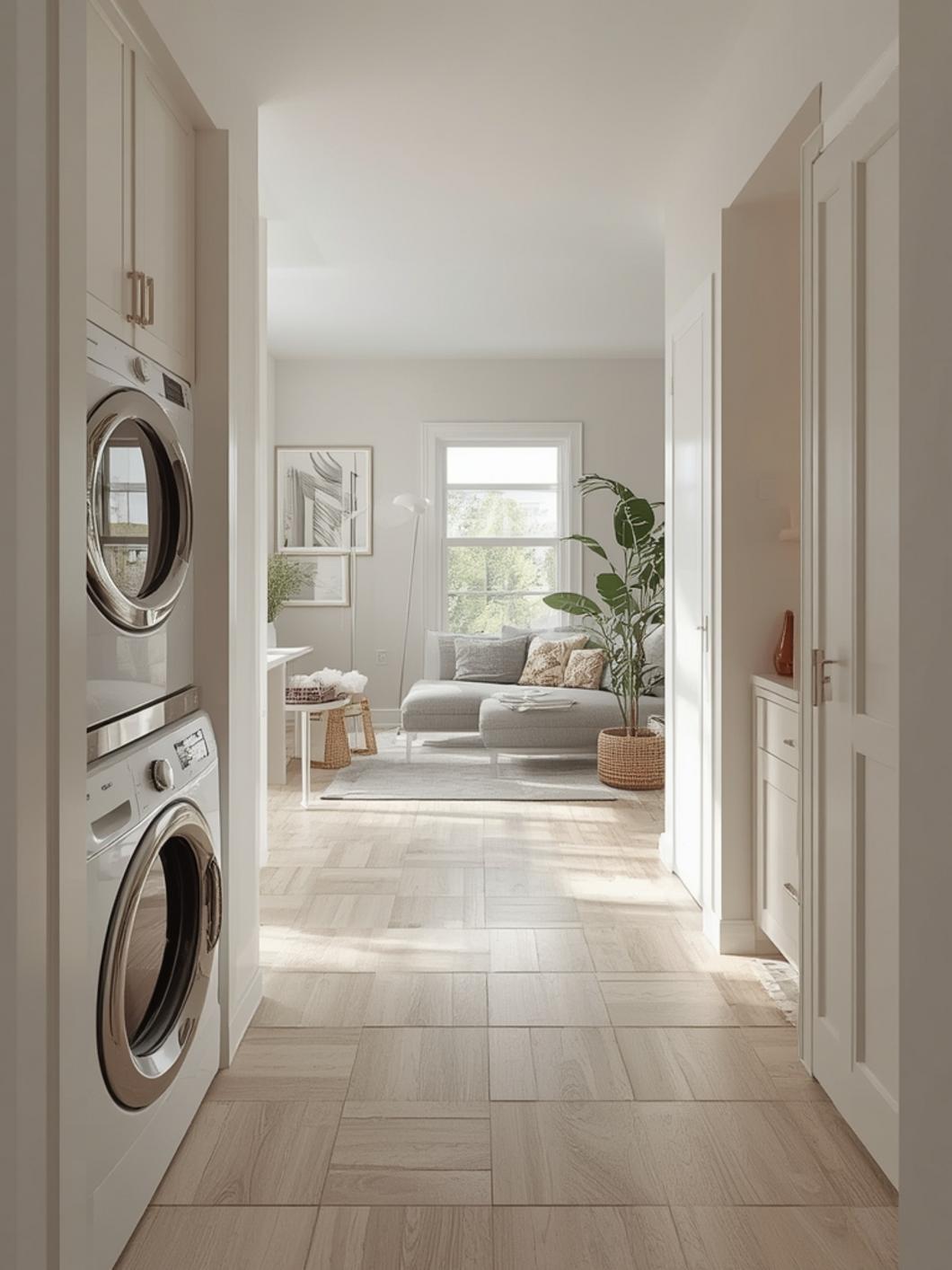
Choosing tiles that are too small for your space makes it feel even more cramped. Stick with subway size (3×6 inches) as your minimum, or go larger with 4×12 inch or 12×24 inch formats for the most spacious feel.
Forgetting about grout color until installation day leads to regret later. Test grout samples on your actual tile in your actual lighting before committing—grout can make or break the entire look.
Tiling only behind the appliances leaves you with an awkward partial look. Extend tile to at least one full wall, preferably two, for a finished appearance that doesn’t look like you ran out of materials halfway through.
Skipping grout sealer invites permanent stains from detergent and fabric softener. Seal grout 72 hours after installation and reseal annually to keep it looking fresh.
Ignoring your lighting situation when choosing tile color creates a dreary cave. If your laundry room has no windows, skip dark tile entirely and focus on light-reflective options in white, cream, or pale gray.
Maintenance and Upkeep Tips
Your tiled laundry room will stay beautiful with minimal effort if you establish simple habits.
Wipe down walls weekly with a microfiber cloth and warm water. This prevents detergent residue from building up on tile surfaces. For stubborn spots, add a drop of dish soap to your water—nothing harsher is needed.
Clean grout lines monthly with a paste of baking soda and water applied with an old toothbrush. Scrub gently, rinse, and dry. This keeps grout looking fresh without the harsh chemicals that can damage or discolor it over time.
Check grout sealer annually by dripping water on a grout line. If water beads up, your sealer is still working. If water soaks in, it’s time to reseal. This five-minute task prevents years of staining issues.
Address cracks immediately if they appear. Small grout cracks let water seep behind tiles, which can lead to bigger problems. Remove damaged grout with a grout saw, vacuum the line, and reapply fresh grout.
Ventilate your laundry room during and after use by running an exhaust fan or cracking a window. This prevents moisture buildup that can compromise grout and create mildew issues even on tile surfaces.
Make Your Laundry Room Work Harder for You
The tile you choose for your small laundry room sets the tone for how you’ll feel about this essential space every single day. Whether you go bold with patterned cement tiles or keep it classic with white subway, the right choice makes your room feel bigger, brighter, and more intentional.
Start by testing samples in your actual space, pay attention to how grout color affects the overall look, and don’t be afraid to extend tile further than strictly necessary for water protection. Ready to explore more ways to upgrade your hardworking spaces? DecorKingdom has dozens more ideas to help you create a home you genuinely love living in.
FAQs
What color tile is best for a small laundry room?
White, light gray, or cream tiles work best because they reflect light and make the space feel larger. Avoid dark tiles unless you have excellent natural light and high ceilings, or your room will feel like a cave. If you want color, use it as an accent wall rather than covering the entire space.
Should I use the same tile on walls and floors in a small laundry room?
Not necessarily—using slightly different tiles can actually add visual interest without making the space feel busy. Try large-format tiles on the floor with subway tiles on walls, or use the same tile in different orientations. Just keep colors within the same family for a cohesive look.
How high should I tile the walls in my laundry room?
For maximum impact in a small space, tile at least one full wall from floor to ceiling, preferably the wall behind your appliances. If budget is tight, tile 4–5 feet high (backsplash height) where water splashes most, but extend it wide enough that it doesn’t look like you ran out of materials.
Can I install laundry room tile myself or do I need a professional?
Confident DIYers can absolutely handle subway tile or peel-and-stick tile installation in a small space. Large-format tiles require more skill to keep level, and intricate patterns like herringbone might frustrate beginners. If you’ve never tiled before, start with a simple pattern or hire a pro for complex layouts.
How do I make tile work in a rental laundry room?
Peel-and-stick tiles are your best friend for rentals since they remove cleanly without damaging walls. Apply them to a single accent wall or even just to the front panels of your appliances for a removable backsplash effect. Always test removal in a hidden corner first to ensure they won’t pull paint when you move out.
—
Meta Title: Small Laundry Room Tile Ideas That Maximize Space 2026
Meta Description: Transform cramped laundry spaces with smart small laundry room tile ideas. From subway to hexagon, find styles that make tiny rooms feel bigger.