10 Simple Entryway Decor Ideas to Transform Your Space
Your entryway is the first thing you see when you walk in the door after a long day. It’s also the first impression guests get of your home. But if your entryway feels cramped, cluttered, or just plain forgettable, you’re not alone—most homes struggle with this transitional space.
The good news? With the right entryway decor ideas, you can turn even the smallest, most awkward space into something special. You don’t need a massive foyer or a big budget to create an entryway that feels both beautiful and functional.
Whether you’re working with a narrow hallway or a tiny landing, smart decor choices can make all the difference. Your entryway should work hard for you—holding keys, corralling shoes, and making your home feel put-together from the moment you step inside.
Table of Contents
What You’ll Need to Get the Look
The beauty of decorating an entryway is that you can start with just a few key pieces and build from there. Here’s what works best for creating that welcoming first impression:
Furniture pieces:
– Console table or narrow entryway table
– Bench with storage underneath
– Wall-mounted coat rack or standing coat tree
– Shoe rack or decorative basket for footwear
Decorative elements:
– Mirror (wall-mounted or leaning)
– Table lamp or wall sconces
– Artwork or framed prints
– Decorative bowl or tray for keys and mail
– Fresh flowers or faux greenery
– Area rug or runner
Functional additions:
– Wall hooks for bags and jackets
– Umbrella stand
– Storage baskets or bins
– Floating shelves
You don’t need everything on this list. Start with the pieces that solve your biggest pain points—whether that’s a place to sit while taking off shoes or somewhere to toss your keys so you’re not searching every morning.
Finding Your Style and Season
Your entryway decor should reflect your personal style while staying practical for everyday life. Think about what mood you want to create the moment you walk through the door.
Consider your home’s overall aesthetic. If your living room is filled with cozy farmhouse touches, carry that warmth into your entryway with rustic wood pieces and woven baskets. If you love clean, modern lines, stick with simple furniture and minimal accessories.
Seasonal changes keep things fresh. Swap out smaller decor elements throughout the year—spring florals, autumn pumpkins, or winter greenery. This keeps your entryway feeling current without requiring a complete overhaul.
Lighting sets the entire tone. A well-lit entryway feels welcoming, while a dark one feels forgotten. If you don’t have overhead lighting, a table lamp or plug-in wall sconces can completely transform the space.
Your entryway is also the perfect place to showcase your personality through artwork, family photos, or collected treasures. Just keep it balanced—too many personal items can quickly feel cluttered.
7 Ideas to Try in Your Home
1. Create a focal wall with a statement mirror
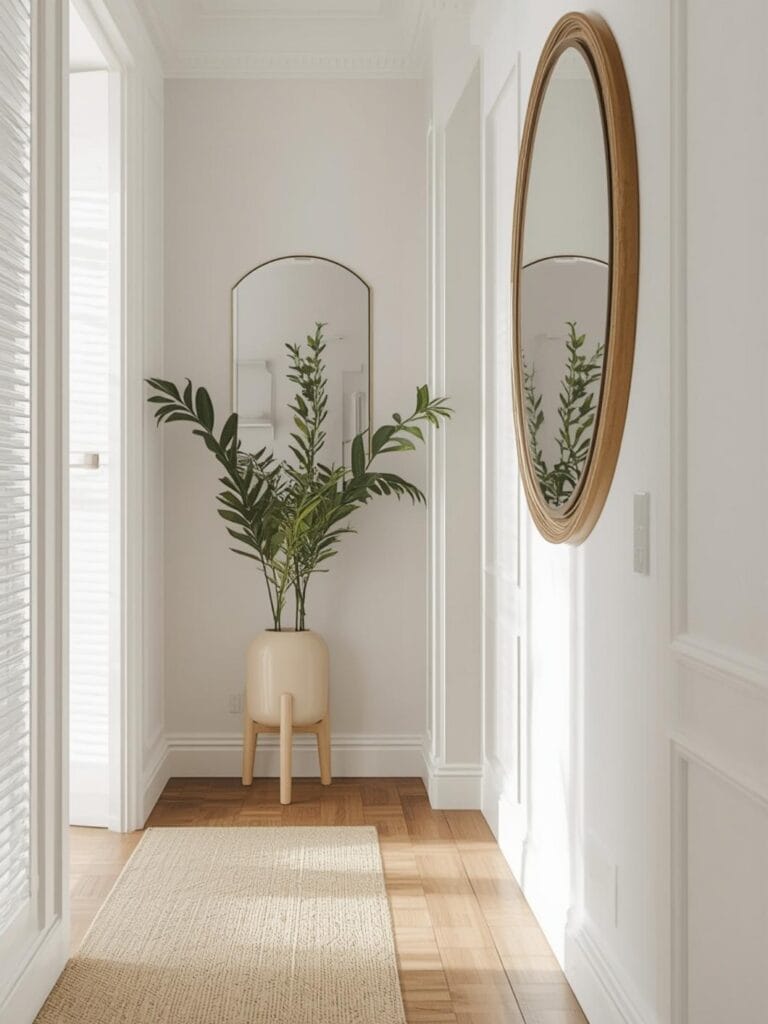
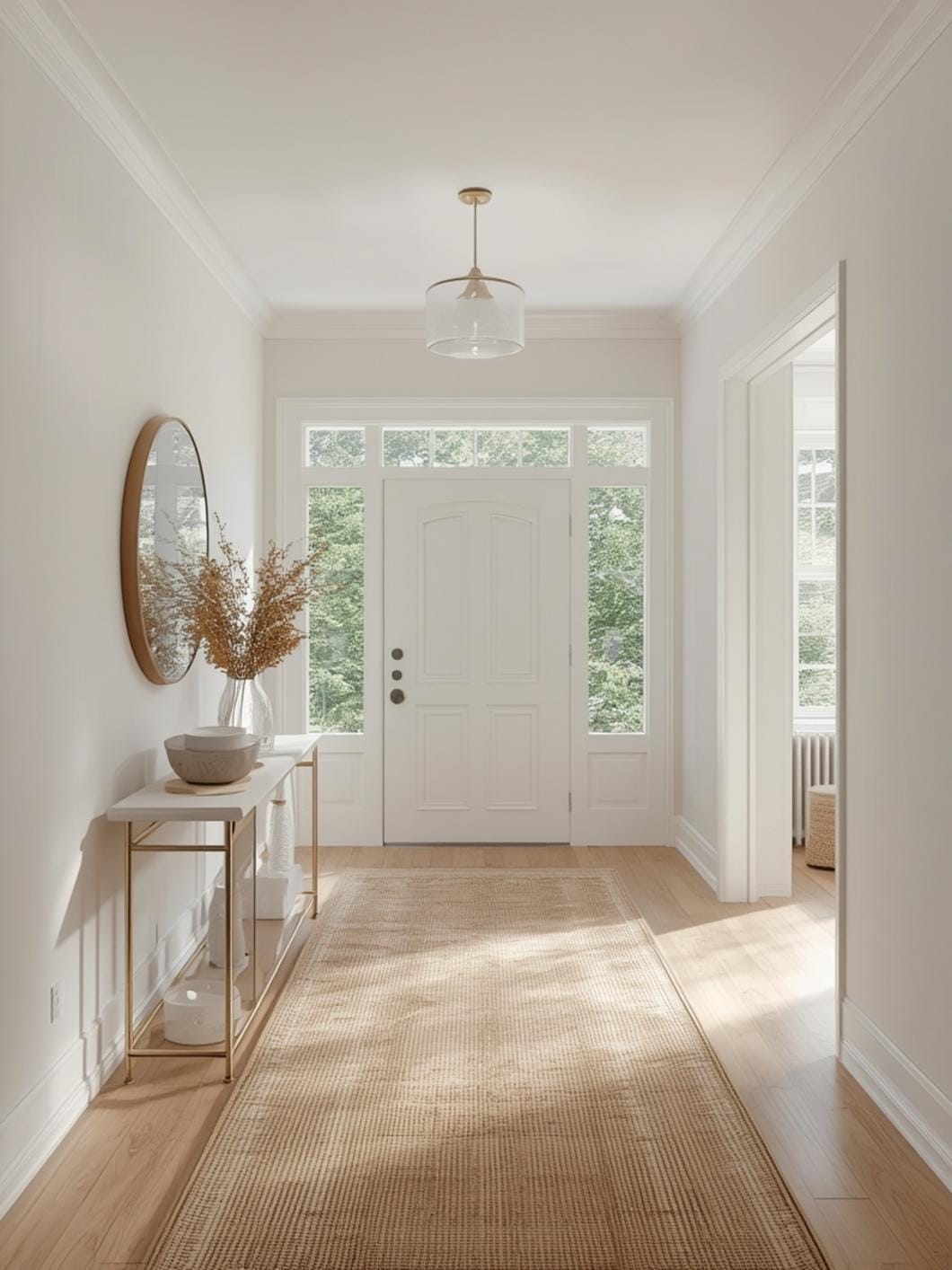
A large mirror instantly makes any entryway feel more spacious and brighter. Position it above a console table to create a natural styling spot. Round mirrors soften angular spaces, while rectangular mirrors complement narrow hallways beautifully.
Choose a frame that matches your style—gilded for traditional homes, sleek black for modern spaces, or distressed wood for farmhouse charm.
2. Build a mini mudroom with wall hooks
Even without a dedicated mudroom, you can create functional storage. Install a row of sturdy wall hooks at varying heights for adults and kids. Add a bench underneath for putting on shoes, and slide baskets beneath for hiding away scarves and gloves.
This setup keeps everything organized while preventing the dreaded coat pile on the nearest chair.
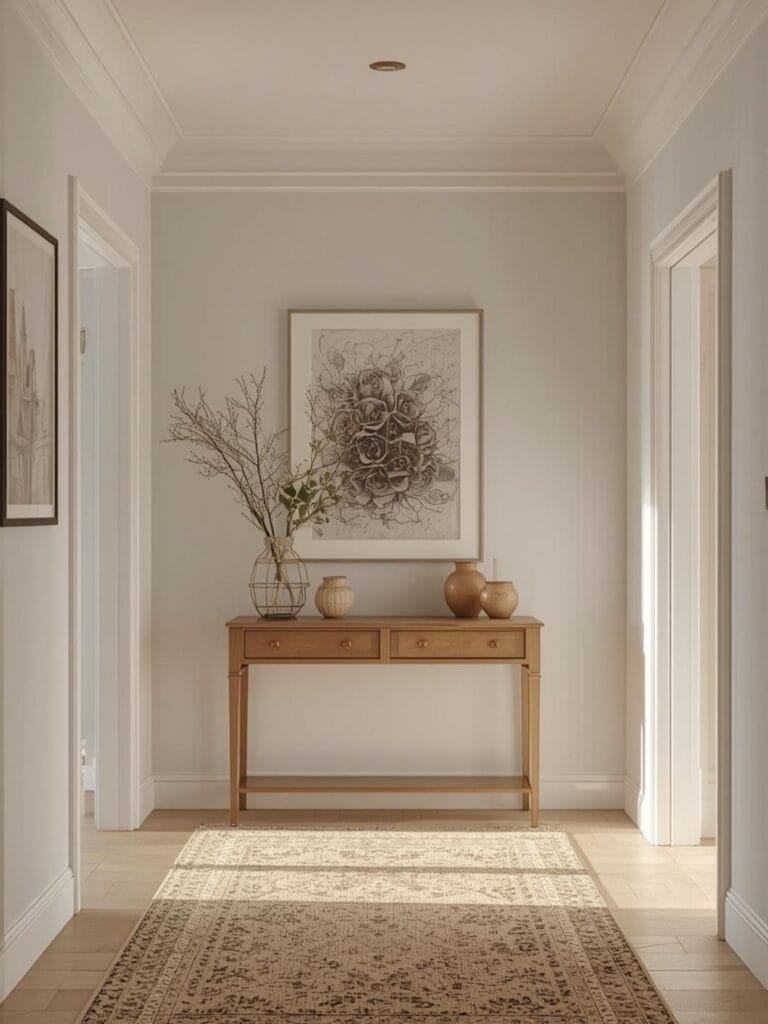
3. Style a console table in layers
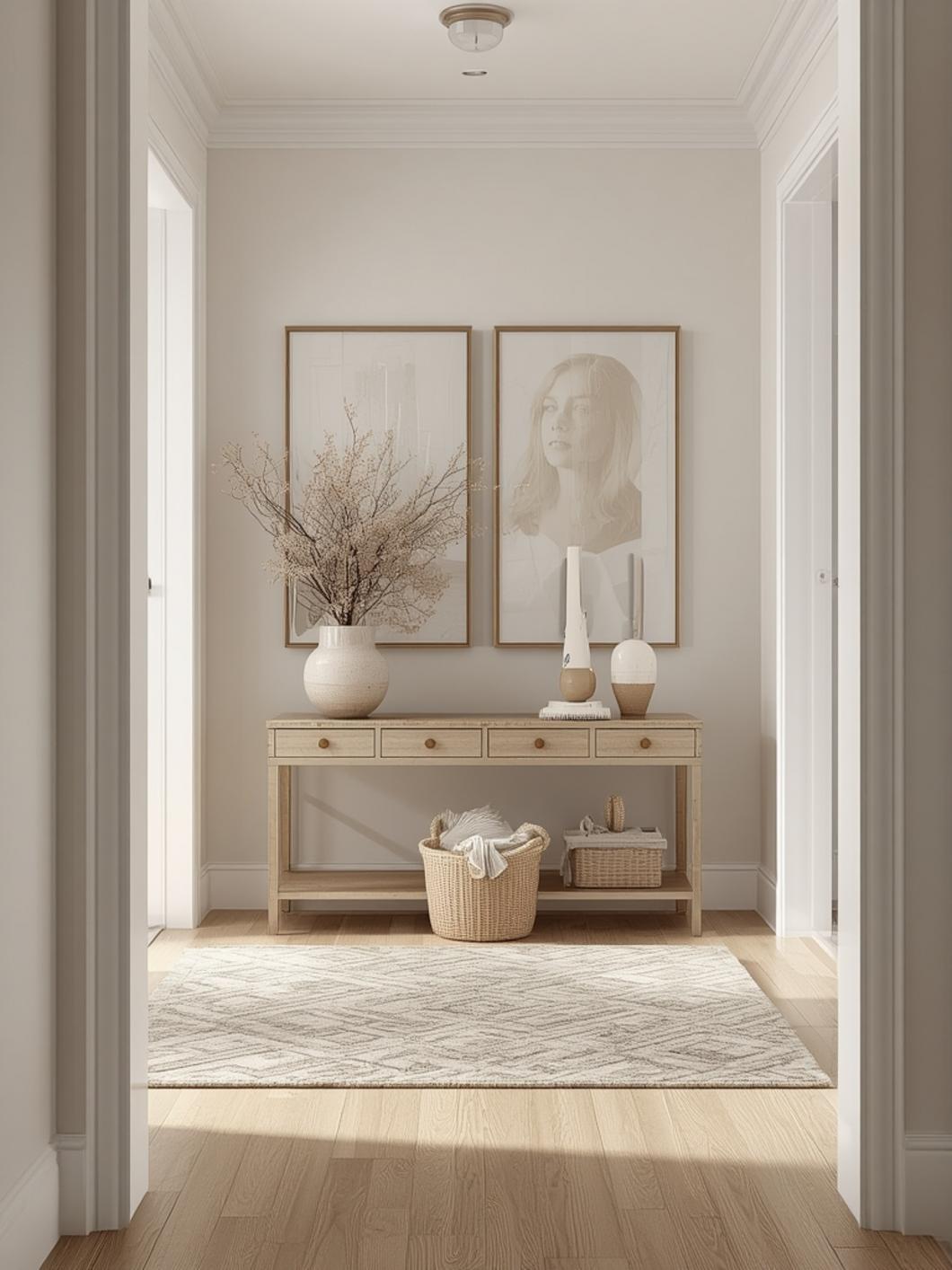
Start with a table lamp on one side for lighting. Add a decorative tray with your everyday essentials—keys, sunglasses, lip balm. Prop a piece of artwork or mirror behind these elements to create depth.
Finish with something living—fresh flowers, a potted plant, or a bowl of seasonal fruit. This layered approach looks collected rather than staged.
4. Use a narrow bench with hidden storage
Benches serve double duty in entryways. They give you a place to sit while dealing with shoes, and the storage underneath keeps clutter hidden. Look for benches with lift-top seats or pull-out baskets.
Position the bench under a window if you have one, or against the longest wall. Top it with a cozy cushion and a throw pillow for extra comfort.
5. Maximize vertical space with floating shelves
When floor space is tight, look up. Floating shelves create display space without eating into your walkway. Style them with small plants, candles, or decorative objects that make you smile.
Keep the bottom shelf at least 60 inches from the floor so you don’t bump your head. This is also where how to make a small entryway look bigger really comes into play—vertical elements draw the eye upward, creating the illusion of height.
6. Define the space with an area rug
A rug grounds your entryway and makes it feel intentional. Choose something durable that can handle foot traffic and occasional wet shoes. Natural fiber rugs like jute work beautifully in casual homes, while patterned rugs hide dirt better in high-traffic households.
Make sure your rug is large enough—too small looks like an afterthought. It should extend beyond your console table or bench on all sides.
7. Add personality with a gallery wall
A collection of framed prints, photos, or artwork turns a blank wall into a conversation starter. Mix frame sizes and styles for an eclectic look, or keep everything matching for a more formal feel.
Start by laying out your arrangement on the floor before hammering any nails. Take a photo with your phone and reference it while hanging.
Benefits of a Well-Decorated Entryway
A thoughtfully decorated entryway does more than look pretty—it improves your daily routine in surprising ways. When everything has a designated spot, you spend less time searching for lost items and more time enjoying your morning coffee.
You’ll feel calmer coming and going. Walking into an organized, attractive space sets a positive tone for your day. No more tripping over shoes or digging through coat piles to find what you need.
Guests feel immediately welcome. Even if the rest of your house isn’t perfectly tidy, a put-together entryway suggests you have it all under control. First impressions really do matter, especially in your own home.
Your home feels more cohesive. When your entryway reflects your overall style, it creates a visual flow from the moment someone steps inside. The design story of your home starts right at the front door.
An inviting entryway also encourages better habits. When you have a pretty bowl for keys and a designated hook for bags, you’re more likely to use them. Function wrapped in beauty is the secret to a home that actually works.
Tips, Alternatives, and Styling Advice
Budget-friendly option: Start with what you have. Repurpose a bookshelf as a console table, use a kitchen stool as a small bench, or hang a thrifted mirror. A fresh coat of paint on existing furniture can completely transform the look for under $30.
Add personality through inexpensive accessories—a plant from the grocery store, candles from the dollar store arranged on a tray, or framed art prints you can download and print at home.
Mid-range option: Invest in one quality furniture piece like a solid wood console table or upholstered bench. These anchor pieces last for years and can move to other rooms as your needs change.
Supplement with a good rug and properly sized mirror. These make the biggest visual impact and are worth spending a bit more to get right.
Premium option: Custom built-ins create a seamless, high-end look while maximizing every inch of space. Built-in benches with coat storage, drawers, and cubbies turn your entryway into a true mudroom.
Pair custom storage with designer lighting fixtures and high-quality artwork. Consider hiring an interior designer for a professional layout if your entryway has unusual angles or challenging dimensions.
Small space adaptation: In tiny entryways, every choice matters. Skip the console table and mount a narrow floating shelf instead. Use a wall-mounted coat rack rather than a floor-standing option.
Choose furniture with slim profiles—a bench no deeper than 14 inches won’t block the walkway. Stick to light, neutral colors on walls and floors to keep the space feeling open rather than cramped.
Common Mistakes to Avoid
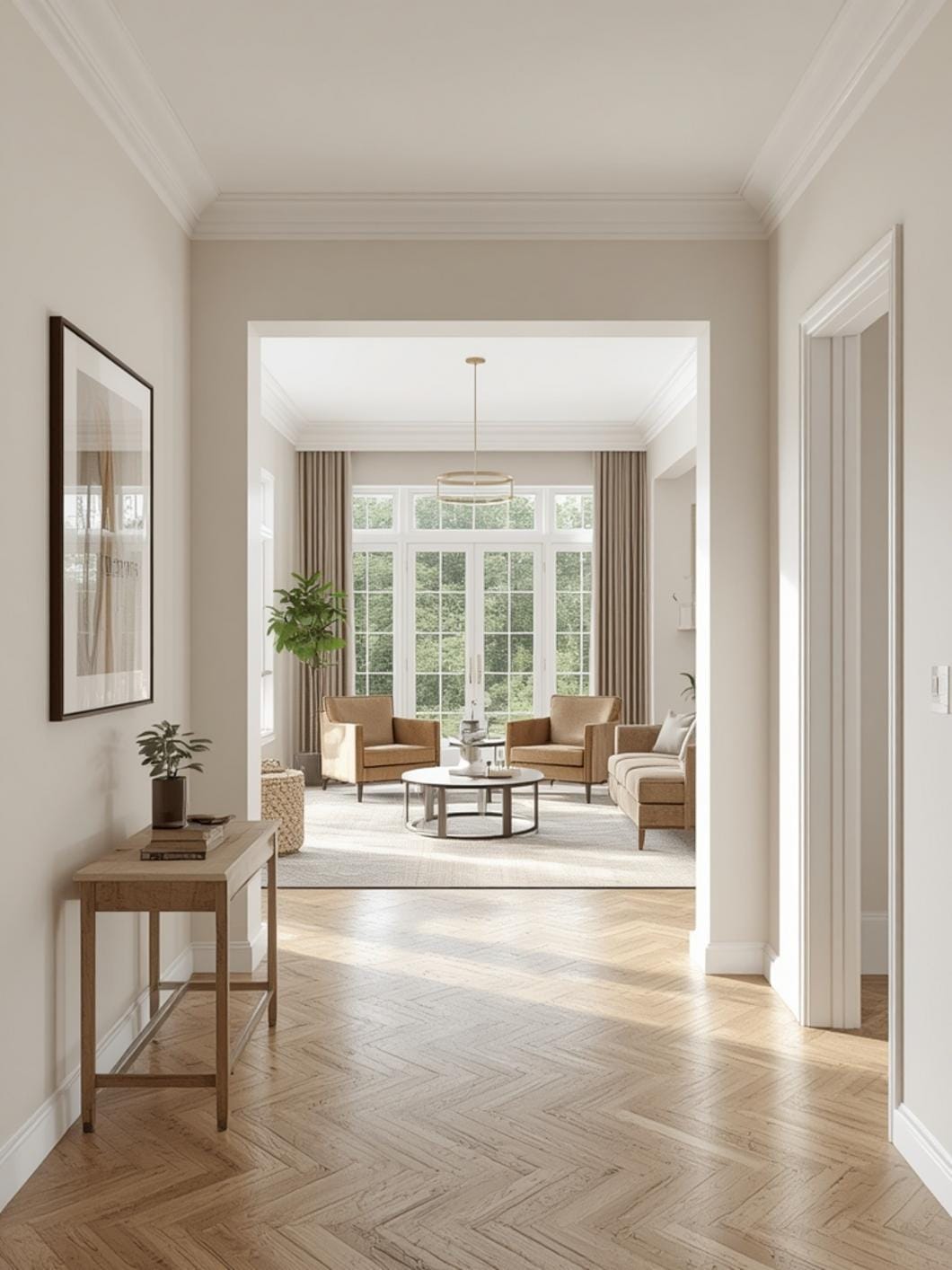
Choosing furniture that’s too large for the space. An oversized console table might look beautiful in the store, but if you’re constantly squeezing past it, it’s wrong for your entryway. Measure your space carefully and leave at least 36 inches of walkway clearance.
Forgetting about lighting completely. Dark entryways feel uninviting no matter how beautifully decorated they are. Add a table lamp, plug-in wall sconces, or even battery-operated picture lights if you can’t install overhead fixtures.
Skipping the rug because of maintenance concerns. Yes, entryway rugs get dirty, but they also hide dirt better than bare floors and make the space feel complete. Choose washable rugs or durable natural fibers you can easily vacuum and spot-clean.
Hanging the mirror too high. Your mirror should be positioned so you can actually see yourself in it when standing naturally. The center of the mirror should be roughly 57-60 inches from the floor—the same height galleries use for artwork.
Letting clutter take over beautiful surfaces. Even the most gorgeous console table looks messy when buried under mail, random shopping bags, and things that should live elsewhere. Implement a daily five-minute reset to keep surfaces clear.
Maintenance and Upkeep Tips
Entryways take more abuse than almost any other room, so regular maintenance keeps them looking fresh. Sweep or vacuum weekly to prevent dirt from being tracked through the rest of your house.
Wipe down your console table and mirror every few days with a microfiber cloth. Dust and fingerprints show up quickly on these surfaces, especially in high-traffic homes.
Rotate seasonal decor every few months to keep things interesting. Store off-season items in labeled bins so they’re easy to swap out. This also gives you a chance to dust and clean thoroughly behind furniture.
Check wall hooks and floating shelves monthly to ensure they’re still secure. The constant weight of coats and bags can loosen hardware over time. Tighten any loose screws before things come crashing down.
Refresh your rug by taking it outside and shaking it out thoroughly, or running it through the washing machine if it’s machine-washable. Deep clean or replace your rug once a year depending on wear.
Conclusion
Your entryway deserves the same attention and care as any other room in your home. With a few thoughtful furniture pieces, smart storage solutions, and personal touches that reflect your style, you can create a space that’s both beautiful and hardworking.
The key is starting with function and layering in personality. Whether you have a grand foyer or a tiny landing, these ideas adapt to your space and budget.
Ready to tackle more home decor projects? Explore more inspiration and practical tips here at DecorKingdom, where we help you create a home you truly love.
FAQs
What’s the best color to paint a small entryway?
Light, neutral colors like soft white, pale gray, or warm beige make small entryways feel larger and brighter. If you love bold color, paint just one accent wall or the inside of a closet door to add personality without overwhelming the space. Lighter floors and ceilings also help bounce light around.
How do I keep my entryway from looking cluttered?
The secret is having a designated spot for everything that typically lands in your entryway. Use a tray for keys, hooks for coats and bags, and a basket for shoes. Do a quick five-minute reset each evening to clear surfaces and put away items that migrated from other rooms. Out-of-season items should be stored elsewhere.
Can I have an entryway if my front door opens right into my living room?
Absolutely! Create a visual entryway by defining the space with a rug, even if there’s no physical separation. Add a narrow console table against the wall near the door, or use a decorative room divider to create the feeling of a separate zone. Wall hooks and a small bench can establish an entryway feeling anywhere.
What size console table should I get for my entryway?
Your console table should be 10-12 inches narrower than your entryway width to allow comfortable passage. Most entryway tables range from 12-18 inches deep—anything deeper blocks the walkway. Length depends on your wall space, but a 36-48 inch table works well in most homes.
How can I make my dark entryway brighter without major renovations?
Start with a large mirror to reflect existing light sources. Add a table lamp or plug-in wall sconces for instant illumination. Paint walls and ceilings in light colors, and choose a light-colored rug. Remove heavy curtains if you have a window, or replace solid doors with glass-panel options to borrow light from adjacent rooms.
—
Meta Title: Entryway Decor Ideas That Actually Work (2026 Guide)
Meta Description: Discover entryway decor ideas that make your space welcoming and functional. Transform any size entry with smart furniture, mirrors, and storage.