How to Choose Solid Wood Dining Room Sets
There’s something magical about gathering around a beautiful dining table with the people you love. Whether it’s a Tuesday night family dinner or a festive holiday meal, your dining room sets the stage for connection and memories.
If you’ve been dreaming of a dining space that feels warm, inviting, and built to last, Solid Wood Dining Room Sets deserve your attention. Unlike particle board or veneer alternatives, genuine wood furniture brings natural beauty and durability that actually improves with age. You’re not just buying furniture — you’re investing in a piece that could serve your family for decades.
The best part? Solid wood dining sets work with almost any style, from cozy farmhouse to sleek contemporary. Your dining room can finally feel like the heart of your home.
Table of Contents
What You’ll Need to Get the Look
Creating your dream dining space starts with choosing the right pieces and complementary decor elements that work together beautifully.
Essential Furniture Pieces:
– Solid wood dining table in your preferred size and shape
– Matching or coordinating dining chairs (upholstered seats add comfort)
– Buffet or sideboard for storage and serving
– China cabinet or hutch for display (optional but classic)
Styling Elements:
– Area rug sized to fit under table and chairs when pulled out
– Statement chandelier or pendant lighting
– Table runner or placemats in complementary fabrics
– Centerpiece items like vases, bowls, or candlesticks
– Wall art or mirror to anchor the space
– Window treatments that balance privacy and natural light
Wood Types to Consider:
– Oak: durable with prominent grain patterns
– Walnut: rich, dark tones with sophisticated appeal
– Cherry: warm reddish hues that deepen over time
– Maple: light, smooth finish perfect for modern spaces
– Reclaimed wood: eco-friendly with unique character marks
The wood species you choose affects not just appearance but also price point and maintenance needs. Harder woods like oak and maple resist scratches better in busy households.
Finding Your Style and Season
Your dining room should reflect how you actually live, not just look pretty in photos. Think about when and how you’ll use this space most.
Everyday Family Living:
If your dining table doubles as homework central and craft headquarters, prioritize durability. Harder wood species with protective finishes handle daily wear beautifully. A rectangular table seats more kids comfortably than round options.
Entertaining and Holidays:
Love hosting dinner parties? Consider an extendable table that grows with your guest list. You’ll appreciate the flexibility during Thanksgiving without sacrificing space the rest of the year.
Small Space Solutions:
Round or oval tables work wonders in compact dining areas. They create better flow and often seat more people than you’d expect. Drop-leaf designs offer even more flexibility.
Seasonal Refresh Potential:
One advantage of natural wood furniture is how easily you can refresh the look with seasonal decor. Summer linens, fall table runners, or winter greenery all pop against rich wood tones. Your base investment stays constant while the mood changes with the calendar.
The best time to shop for dining sets is typically late winter and mid-summer when furniture stores clear inventory for new collections. You’ll find better selection and prices during these periods.
7 Ideas to Try in Your Home
1. Classic Farmhouse Charm
Choose a chunky oak table with turned legs and pair it with Windsor-style chairs. Add a vintage-inspired chandelier and white ceramic accents. This timeless look never goes out of style and works in both traditional and modern farmhouse homes.
2. Mid-Century Modern Appeal
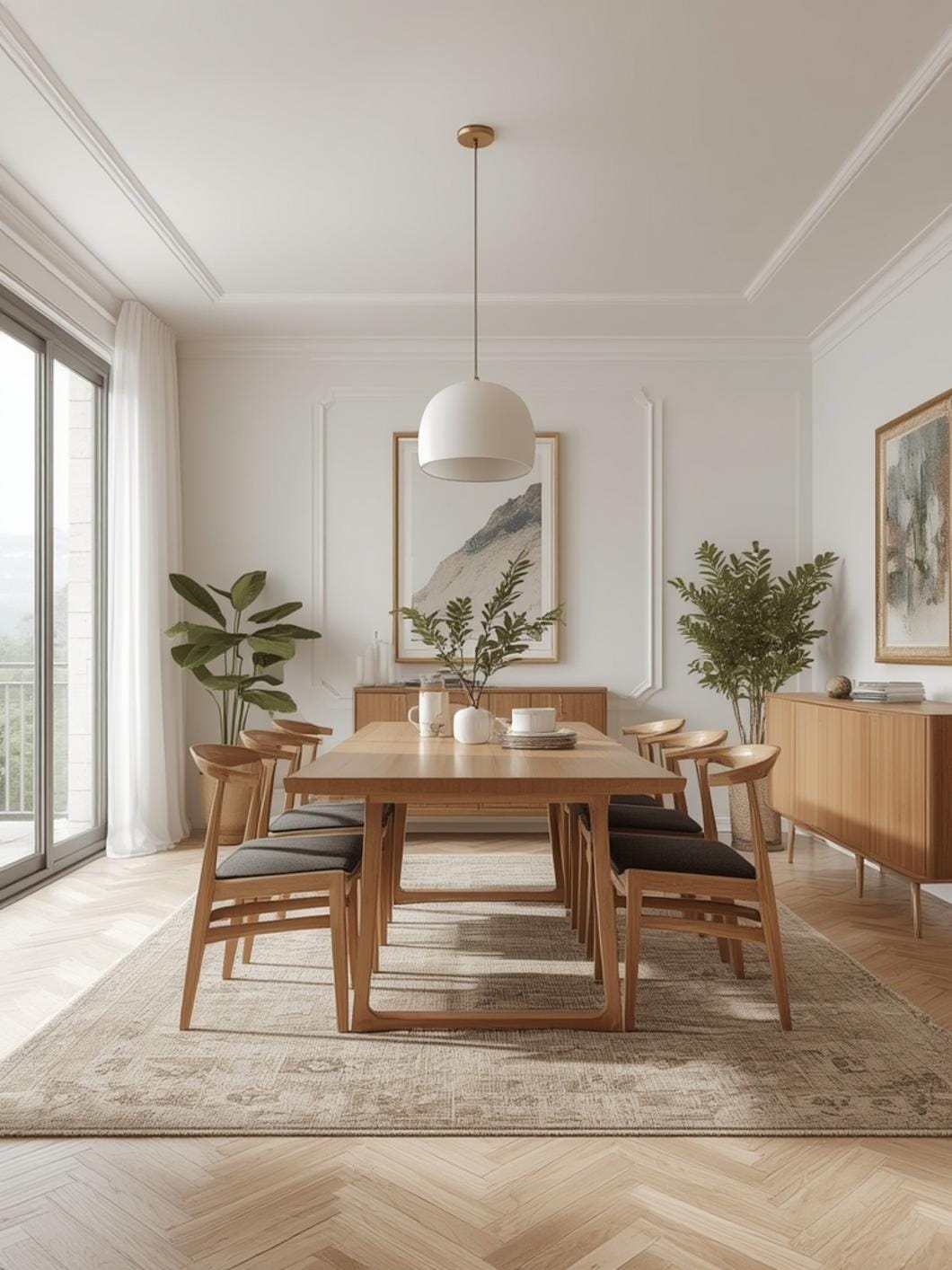
Look for walnut dining sets with tapered legs and clean lines. Mix in upholstered chairs in rich jewel tones. A geometric pendant light completes the sophisticated retro vibe that’s perfect for open-concept spaces.
3. Rustic Industrial Mix
Combine a reclaimed wood table with metal-frame chairs for an edgy, urban feel. Expose the natural imperfections in the wood — they add character. Edison bulb lighting and concrete or brick accent walls amplify this aesthetic.
4. Coastal Casual Dining
Light maple or whitewashed oak creates an airy, beachy atmosphere. Pair with woven seating and blue-toned textiles. Natural fiber rugs and driftwood accents bring the shoreline home, even if you’re miles from the ocean.
5. Traditional Elegance
Rich cherry or mahogany sets with carved details and upholstered chairs create formal dining rooms that impress. Add a crystal chandelier and silk draperies. This works beautifully in homes with period architecture or classic bones.
6. Scandinavian Simplicity
Choose light wood tones like ash or beech with minimalist design. Keep lines simple and add texture through natural linens and greenery. This approach feels calm and uncluttered — perfect if you crave breathing room in your home.
7. Eclectic Gathered Look
Mix a solid wood table with chairs in different styles for personality. The wood table grounds the space while mismatched seating adds collected-over-time charm. This works wonderfully for creative spirits who resist matching sets.
How to care for and maintain solid wood dining tables keeps them looking gorgeous for generations. Dust regularly with a soft cloth and clean spills immediately with a damp (not wet) microfiber cloth. Use coasters and placemats to prevent water rings and heat damage. Polish with quality furniture wax every few months to nourish the wood and maintain its protective finish.
Benefits That Last a Lifetime
Choosing authentic wood furniture for your dining room delivers advantages you’ll appreciate every single day.
Exceptional Durability:
Well-made wooden dining sets withstand decades of use. Unlike cheaper alternatives that wobble or break within years, quality wood furniture actually becomes more stable as joints settle. You might pass this set down to your children someday.
Timeless Beauty:
Natural wood grain patterns mean no two pieces look exactly alike. Your dining set has unique character that particle board simply can’t replicate. As wood ages and develops a rich patina, it becomes more beautiful rather than worn out.
Investment Value:
While solid wood costs more upfront, calculate the cost per year of ownership. A $2,000 set that lasts 30 years costs about $67 annually. Cheaper sets you replace every 5-7 years actually cost more over time.
Health and Safety:
Solid wood emits fewer volatile organic compounds (VOCs) than furniture made with glues and synthetic materials. Your indoor air quality stays cleaner, especially important if anyone in your family has allergies or sensitivities.
Repair-Friendly:
Scratches and dings in real wood can be sanded and refinished. You can’t say the same for veneer over particle board — once damaged, it’s permanent. This repairability extends your furniture’s lifespan considerably.
Tips, Alternatives, and Smart Shopping
Budget-Friendly Approach:
Start with a quality solid wood table and mix in more affordable seating. You can always upgrade chairs later while the table remains your lasting centerpiece. Look for unfinished pieces you can stain yourself for significant savings.
Mid-Range Sweet Spot:
Oak and maple dining sets offer excellent value without premium price tags. These hardwoods deliver impressive durability at moderate cost. Factory-direct retailers often provide better pricing than traditional furniture stores.
Premium Investment:
Walnut, cherry, and hand-crafted custom pieces represent the luxury tier. You’re paying for exceptional wood quality, artisan craftsmanship, and often domestic production. These sets become genuine heirloom pieces worth the investment.
Small Space Wisdom:
Bench seating on one side of your table saves floor space and tucks completely underneath when not in use. Armless chairs also create a less bulky visual footprint. Measure your room carefully — you need at least 36 inches of clearance around the table for comfortable chair movement.
Style Flexibility:
Choose a classic table style and swap out chairs as your taste evolves. This approach lets you refresh your look without replacing everything. Neutral wood tones work with almost any chair style or fabric.
Common Mistakes to Avoid
Buying the Wrong Size Table:
Many homeowners choose tables too large for their space, creating cramped, uncomfortable dining rooms. Measure your room and ensure 36-48 inches of clearance on all sides before you shop.
Ignoring Wood Expansion:
Natural wood expands and contracts with humidity changes throughout the year. Avoid placing your table directly against heating vents or in direct sunlight, which accelerates this movement and can cause cracking.
Skipping Protection:
Even durable wood needs defense against daily life. Use trivets under hot dishes and coasters under all beverages — heat and moisture are wood’s biggest enemies. Taking simple precautions prevents damage you’ll regret later.
Mixing Incompatible Finishes:
Combining a glossy table with matte chairs (or vice versa) creates visual confusion. Coordinate finish sheens even if you’re mixing wood tones. This creates cohesion without requiring exact matches.
Overlooking Seat Height:
Standard dining tables stand 28-30 inches tall, requiring chairs with seat heights of 17-19 inches. Always test the combination before buying — uncomfortable seating ruins even the most beautiful table.
Maintenance That Protects Your Investment
Keeping your wooden dining set beautiful doesn’t require special skills or expensive products.
Daily Care:
Wipe up spills immediately with a soft, slightly damp cloth. Avoid harsh cleaners or abrasive scrubbers that strip protective finishes. A quick daily dusting prevents buildup that can dull the wood’s natural shine.
Weekly Cleaning:
Use a mild soap solution (dish soap and warm water) with a wrung-out cloth for deeper cleaning. Always dry immediately with a clean towel to prevent water damage. This simple routine keeps your table sparkling.
Seasonal Maintenance:
Apply furniture polish or paste wax every 3-4 months to nourish the wood and maintain water resistance. Follow the grain direction when polishing. This protective layer helps prevent scratches and moisture penetration.
Long-Term Protection:
Rotate placemats and centerpieces regularly so sun exposure stays even across the surface. Use furniture pads under decorative items to prevent scratching. If you notice the finish wearing thin in high-use areas, consider professional refinishing before bare wood gets exposed and damaged.
Humidity control matters more than you might think. Aim for 40-50% relative humidity in your home. Too dry causes cracking; too moist causes swelling. A whole-home humidifier or dehumidifier protects all your wood furniture simultaneously.
Create Memories Around Quality Furniture
Your dining room deserves furniture that matches its important role in your home. Solid wood dining sets bring natural beauty, exceptional durability, and timeless style that synthetic alternatives simply can’t match.
Whether you love traditional elegance or modern simplicity, there’s a wooden dining set that fits your vision perfectly. The investment you make today creates a gathering place your family will treasure for decades.
Ready to explore more ways to make your house feel like home? Browse DecorKingdom for inspiration that fits real life and real budgets.
Frequently Asked Questions
How much should I expect to spend on a quality solid wood dining set?
Quality solid wood dining sets typically range from $1,200 to $4,000 depending on size, wood species, and craftsmanship. Oak and maple options fall on the lower end, while walnut and cherry cost more. Custom or heirloom pieces can exceed $5,000 but last for generations.
Can solid wood dining tables handle everyday family use with kids?
Absolutely! Solid wood tables are incredibly durable and actually improve with age when properly maintained. Choose harder woods like oak or maple for the best scratch resistance. Just use placemats and coasters to protect the finish, and teach kids to respect the furniture — it’s tough enough for daily homework, crafts, and meals.
What’s the difference between solid wood and wood veneer furniture?
Solid wood means the entire piece is made from real wood throughout. Veneer furniture has a thin layer of real wood glued over particle board or plywood. Solid wood lasts much longer, can be refinished multiple times, and develops beautiful character over decades. Veneer can’t be sanded or repaired if damaged.
How do I know if a dining set is actually solid wood or just veneer?
Check the underside of the table and chair edges where you can see exposed material. Solid wood shows continuous grain patterns and natural color throughout. Veneer reveals a different core material or perfectly repeating grain patterns (a sign of printed veneer). Weight also helps — solid wood feels substantially heavier.
Do I need to refinish my solid wood dining table regularly?
Most solid wood tables don’t need refinishing for 10-20 years with proper care. Regular polishing and protection from heat and moisture maintain the original finish beautifully. You’ll only need professional refinishing if the protective coating wears through or you want to change the color or sheen.
—
Meta Title: Solid Wood Dining Room Sets Guide 2026 | Best Picks
Meta Description: Discover stunning Solid Wood Dining Room Sets that last generations. Expert tips on styles, care, and choosing the perfect set for your home.