How to Choose Wooden Dining Room Sets
You walk into your dining room and imagine family dinners, holiday gatherings, and quiet Sunday mornings with coffee and the newspaper. The right dining set can turn those moments into memories that last a lifetime.
Wooden Dining Room Sets bring warmth, character, and durability to your home in ways that metal or glass simply can’t match. They age beautifully, adapt to multiple decor styles, and create an inviting atmosphere that makes everyone want to linger a little longer at the table.
Choosing the perfect wooden set means understanding your space, your lifestyle, and how to keep that beautiful wood looking gorgeous for years to come. This guide walks you through everything you need to know to make the best choice for your home.
Table of Contents
Key Terms and Elements to Know
Before you start shopping, it helps to understand what actually goes into a quality wooden dining set and what makes one piece different from another.
Wood Types:
– Oak: Dense, durable, and features prominent grain patterns
– Walnut: Rich dark tones with elegant grain, naturally sophisticated
– Maple: Light-colored and exceptionally hard-wearing
– Cherry: Deepens beautifully with age, develops warm red undertones
– Pine: Budget-friendly softwood with rustic charm
Construction Details:
– Solid wood: Carved from single pieces of timber, most durable option
– Veneer: Thin wood layer over engineered core, more affordable
– Joinery: Look for mortise-and-tenon or dovetail joints, not just glue and screws
Finish Types:
– Natural oil: Brings out grain beauty, requires periodic reapplication
– Lacquer: Protective glossy coating, easy to clean
– Wax: Traditional finish with soft sheen, needs regular maintenance
Your set typically includes a table and four to eight chairs, though some come with benches or a mix of seating options. Buffets and hutches often coordinate with sets but usually sell separately.
Common Misconceptions to Clear Up First
Many homeowners worry that wood dining sets are too formal or old-fashioned. That couldn’t be further from the truth today.
Modern wooden sets come in farmhouse styles with distressed finishes, sleek minimalist designs with clean lines, and everything in between. You’re not locked into your grandmother’s formal dining room aesthetic unless that’s exactly what you want.
Another myth is that wood requires constant fussing and special care. While wood does need some attention, basic maintenance takes just minutes and keeps your set looking beautiful for decades. Most damage comes from neglect or misinformation, not from daily use.
Some people also assume all wooden sets look basically the same. The variety is actually stunning when you start exploring different wood species, stain colors, leg styles, and design elements. Two oak sets can look completely different based on finish and construction.
Price confusion runs rampant too. Yes, solid hardwood sets cost more upfront, but they last 20 to 30 years or longer with proper care. Cheap particleboard sets might seem budget-friendly but often need replacement within five years, costing you more in the long run.
How It Works in Real Homes
Understanding how wooden dining sets perform in actual living spaces helps you make smarter decisions about what works for your lifestyle.
Everyday Durability
Hardwood tables handle the daily chaos of family life surprisingly well. Kids doing homework, adults working from the dining table, and regular meal service don’t typically damage quality wood. The key is choosing the right finish for your use level and knowing basic protection methods.
Families with young children often worry unnecessarily. A good lacquer or polyurethane finish creates a barrier against most spills and minor impacts. How to protect wood dining tables from scratches and stains becomes second nature once you establish simple habits like using placemats and wiping spills promptly.
Heat and Moisture Response
Wood expands and contracts with humidity changes throughout the year. This is completely normal and doesn’t indicate a problem with your furniture. You might notice small gaps appearing between table leaves in winter when indoor heating dries the air.
Hot dishes placed directly on wood can leave white rings or marks, but trivets and hot pads prevent this entirely. Many homeowners use table runners or placemats during meals as both protection and decoration.
Weight Capacity and Stability
Quality wooden dining sets support significant weight without wobbling or sagging. The table should hold your heaviest holiday spread plus decorations without concern. Chairs should feel solid when you sit down, with no creaking or shifting.
Check how the table legs attach to the apron and tabletop. The best construction uses thick wood blocks and multiple screws rather than thin metal brackets. This prevents the annoying wobble that develops in cheaper sets after a few years.
Finish Aging Process
Natural wood finishes develop patina over time, adding character rather than looking worn. Cherry darkens to deep reddish-brown, walnut mellows slightly, and oak’s grain becomes more pronounced. This aging process is actually desirable and increases the piece’s charm.
Oil-finished tables require reapplication every six to twelve months but allow you to repair minor scratches easily by spot-treating with more oil. Lacquered finishes need less frequent attention but require complete refinishing if they get damaged.
Real Family Scenarios
A family in Ohio with three kids under ten uses their oak farmhouse table for everything from art projects to holiday dinners. They keep a vinyl table pad on during homework hours and remove it for meals. After five years, their table shows minimal wear because they established these simple routines early.
Another couple in their fifties chose a live-edge walnut table for their newly empty nest. They love that it makes even casual dinners feel special and have never regretted investing in quality. The natural edge gives each meal an artisanal restaurant feel right at home.
Benefits of Choosing Wooden Dining Sets
The advantages of wood extend far beyond just looking beautiful in your dining room. These sets transform how your family uses and enjoys the space.
Wood creates warmth that other materials simply can’t replicate. When you touch a wooden table, it feels inviting rather than cold like glass or metal. This subtle difference affects how comfortable people feel gathering around it for extended periods.
Quality wooden sets become family heirlooms. Your children might actually want to inherit your dining table someday, which isn’t true for most modern furniture. The emotional value grows as the piece witnesses family milestones and everyday moments.
Versatility ranks among wood’s greatest strengths. You can completely change your dining room’s look by switching chairs, adding different textiles, or updating light fixtures while keeping the same table. The wood serves as a neutral foundation that adapts to evolving tastes.
Repair and refinishing options give wooden furniture multiple lives. Scratched or damaged surfaces can be sanded and refinished to look brand new. You can even change the stain color completely if you decide you want a different look years down the road.
Environmental considerations matter to many homeowners today. Sustainably harvested solid wood is renewable and biodegradable, unlike synthetic materials that sit in landfills forever. Quality wooden furniture reduces consumption by lasting decades instead of needing replacement every few years.
Choosing the Right Set for Your Budget and Space
Different price points offer distinct advantages depending on your current situation and long-term plans.
Budget-Friendly Approach
Pine or rubberwood sets with veneer construction start around $400 to $800 for a table and four chairs. These work well for first apartments, rental homes, or families who expect to upgrade in five years. Look for solid wood legs and aprons even if the tabletop is veneer—this extends the set’s useful life significantly.
Mid-Range Quality
Oak, maple, or cherry sets with solid wood construction and quality joinery run $1,200 to $2,500. This sweet spot delivers excellent durability and timeless style without the premium price of exotic woods. Most families find this range offers the best value for long-term use.
Premium Investment
Walnut, teak, or reclaimed wood sets with exceptional craftsmanship and hand-finished details cost $3,000 to $6,000 or more. These pieces justify their price with superior materials, unique character, and construction quality that ensures they’ll still look stunning in 30 years.
Small Space Adaptations
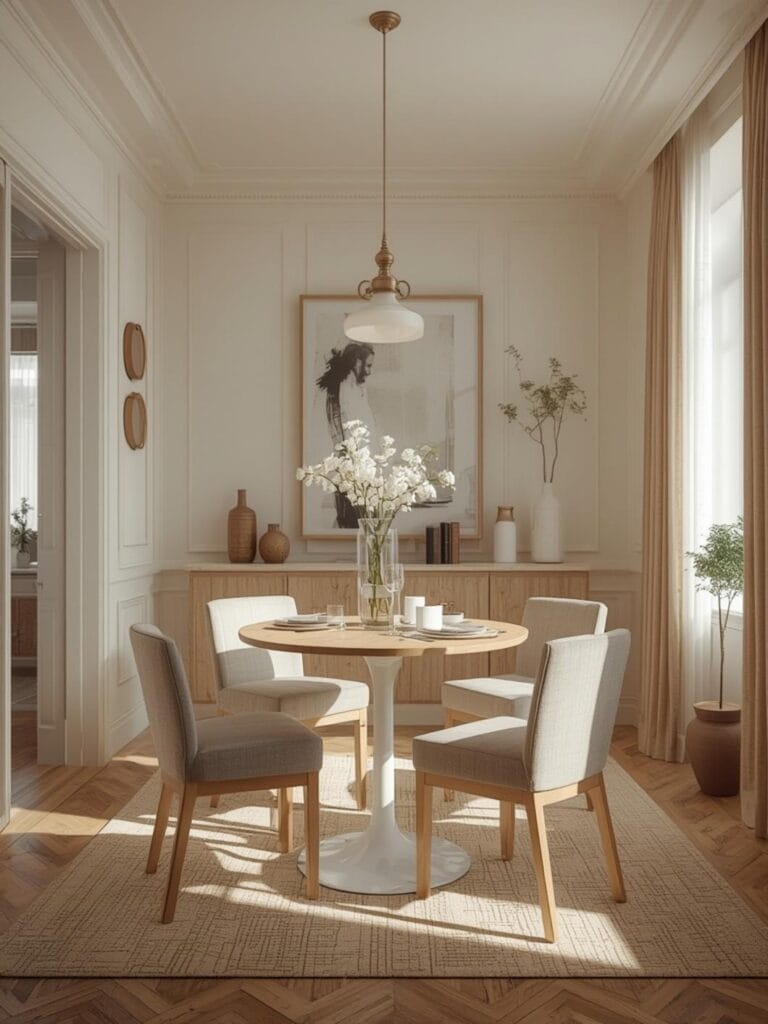
Round or oval wooden tables work beautifully in compact dining areas because they eliminate sharp corners and create easier traffic flow. Drop-leaf tables provide flexibility—extend them for dinner parties and fold them down for daily use.
Consider benches instead of chairs on one or both sides. Benches tuck completely under the table to free up floor space and can seat more people when needed. A 48-inch round table fits four comfortably in spaces where a rectangular table would feel cramped.
Common Mistakes to Avoid
Many homeowners damage their wooden dining sets through simple oversights that are easy to prevent with the right knowledge.
Buying the wrong size for your room creates frustration every single day. Always measure your space and ensure at least 36 inches of clearance on all sides of the table so chairs can pull out comfortably.
Skipping protective measures from day one leads to avoidable damage within months. Start using coasters, placemats, and trivets immediately rather than waiting until you notice the first water ring or heat mark.
Cleaning with harsh chemicals or excessive water dulls finishes and can damage wood fibers. Use slightly damp cloths for regular cleaning and products specifically formulated for wood furniture, not all-purpose sprays.
Placing your table in direct sunlight causes uneven fading and can dry out the wood excessively. Position your set away from south-facing windows or use window treatments to filter harsh afternoon sun.
Neglecting humidity control in your home affects wooden furniture significantly. Use a humidifier in winter and dehumidifier in summer to maintain 40 to 50 percent relative humidity and prevent warping or cracking.
Maintenance and Care That Actually Works
Keeping your wooden dining set looking beautiful requires consistency rather than complicated procedures or expensive products.
Wipe the table after every meal with a slightly damp microfiber cloth to remove crumbs and light spills. This 30-second habit prevents buildup that dulls the finish over time and keeps the surface clean for the next use.
Apply furniture polish or conditioner once a month, following the direction of the wood grain with a soft cloth. This replenishes moisture and creates a protective layer against everyday wear. Use products that match your finish type—oil for oil-finished wood, commercial polish for lacquered pieces.
Address spills immediately by blotting rather than wiping to prevent liquids from spreading. Water, wine, and acidic foods like tomato sauce can damage finishes if left sitting for hours. Keep a dedicated cloth in your dining room sideboard for quick response.
Tighten screws and bolts every six months to prevent wobbling that worsens over time. Check where chair legs meet the seat and where table leaves connect to the main surface. This five-minute inspection prevents major repairs later.
Rotate table pads, runners, and centerpieces periodically so sunlight and air exposure remains even across the entire surface. This prevents patchy aging where protected areas look noticeably different from exposed wood.
Creating Your Perfect Dining Room
Your wooden dining set forms the foundation of a room that brings people together and creates lasting memories.
The natural beauty of wood needs little competition from overly busy decor. Choose complementary elements that enhance rather than overwhelm—simple artwork, subtle window treatments, and lighting that highlights the wood’s grain and color.
Mix your wooden table with different chair styles for collected charm or match everything for formal elegance. Both approaches work beautifully depending on your personal taste and the overall mood you want to create.
Remember that your dining set will likely outlast your current home and decor preferences. Choose a style that feels timeless to you rather than following trendy designs that might look dated in five years.
The right wooden dining set becomes the heart of your home—a place where ordinary meals feel special and special occasions become truly memorable. Take time to choose thoughtfully, care for it properly, and you’ll enjoy this investment for decades to come.
Explore more dining room inspiration and practical decorating advice here at DecorKingdom, where we help you create spaces that truly feel like home.
FAQs
What type of wood is most durable for a dining table?
Oak and maple rank as the most durable hardwoods for dining tables, with exceptionally dense grain that resists dents and scratches from daily use. Walnut and cherry offer excellent durability too, though they’re slightly softer than oak. All four hardwoods will easily last 20 to 30 years with basic care, far outlasting engineered wood or veneer options.
How often should I refinish my wooden dining table?
Most wooden dining tables need complete refinishing every 10 to 15 years depending on use level and care quality. Tables with lacquer or polyurethane finishes might go even longer before showing significant wear. If you maintain the finish properly with regular cleaning and conditioning, you can extend the time between major refinishing projects significantly.
Can I mix different wood finishes in my dining room?
Yes, mixing wood finishes adds depth and interest to your dining room when done thoughtfully. Pair your dining table with a buffet or chairs in a complementary but different wood tone, keeping undertones similar—warm with warm or cool with cool. Avoid matching too precisely, which can look forced, but ensure the pieces share a common style element.
What size dining table do I need for six people?
A rectangular table measuring 72 inches by 36 inches comfortably seats six people with proper elbow room. Round tables should be at least 54 inches in diameter for six people. Always verify your room has adequate space—you need at least 36 inches of clearance around all sides for chairs to pull out and people to walk behind seated guests.
Are wooden dining sets worth the higher price compared to other materials?
Quality wooden dining sets justify their price through decades of use, repair potential, and timeless appeal that never goes out of style. While glass, metal, or laminate tables cost less initially, they rarely last more than five to ten years and can’t be refinished when damaged. Wooden sets often become family heirlooms, making them excellent value when you calculate cost per year of use.
—
Meta Title: Wooden Dining Room Sets: Ultimate Guide 2026
Meta Description: Wooden Dining Room Sets transform your space with warmth and durability. Get expert tips on choosing, protecting, and styling wood tables perfectly.