Smart Space Planning for Dining Room Furniture (2026 Guide)
You’ve just bought the perfect dining table, but something feels off when you place it in the room. The chairs feel cramped, the flow to the kitchen is awkward, and suddenly your beautiful piece of furniture makes the space feel smaller instead of welcoming.
Space Planning for Dining Room Furniture isn’t just about fitting pieces into a room—it’s about creating a space where your family actually wants to gather. When you get the layout right, everything changes: meals feel more relaxed, conversations flow naturally, and even a modest dining area can feel surprisingly spacious.
The good news? You don’t need an interior designer to nail this. With a few smart measurements and some thoughtful furniture placement, you can transform your dining area into the heart of your home.
Table of Contents
Key Terms and Elements to Know
Understanding the right furniture pieces and measurements makes space planning much simpler. Here’s what you’re working with:
Dining Tables: Round tables (36–60 inches diameter) work beautifully in square rooms and promote conversation. Rectangular tables (60–96 inches long) fit traditional spaces and accommodate more guests. Extendable versions give you flexibility without permanently eating up floor space.
Seating Options: Standard dining chairs need 24–26 inches of width per person. Bench seating along one side saves space and creates a casual vibe. Upholstered chairs add comfort but require slightly more clearance.
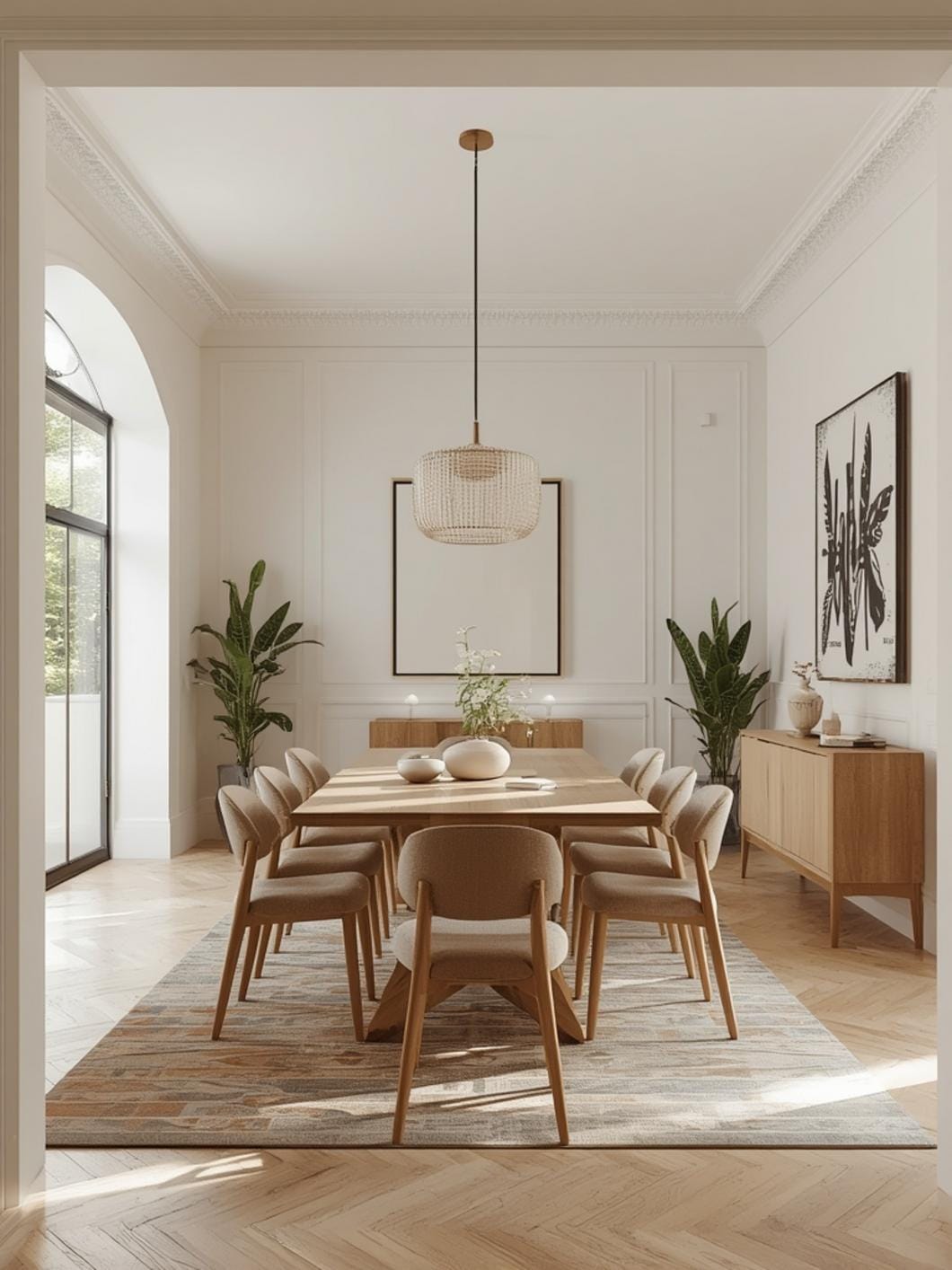
Circulation Space: You need 36 inches minimum between the table edge and wall or furniture for chairs to pull out comfortably. Bump this to 42–48 inches in high-traffic areas where people walk behind seated diners.
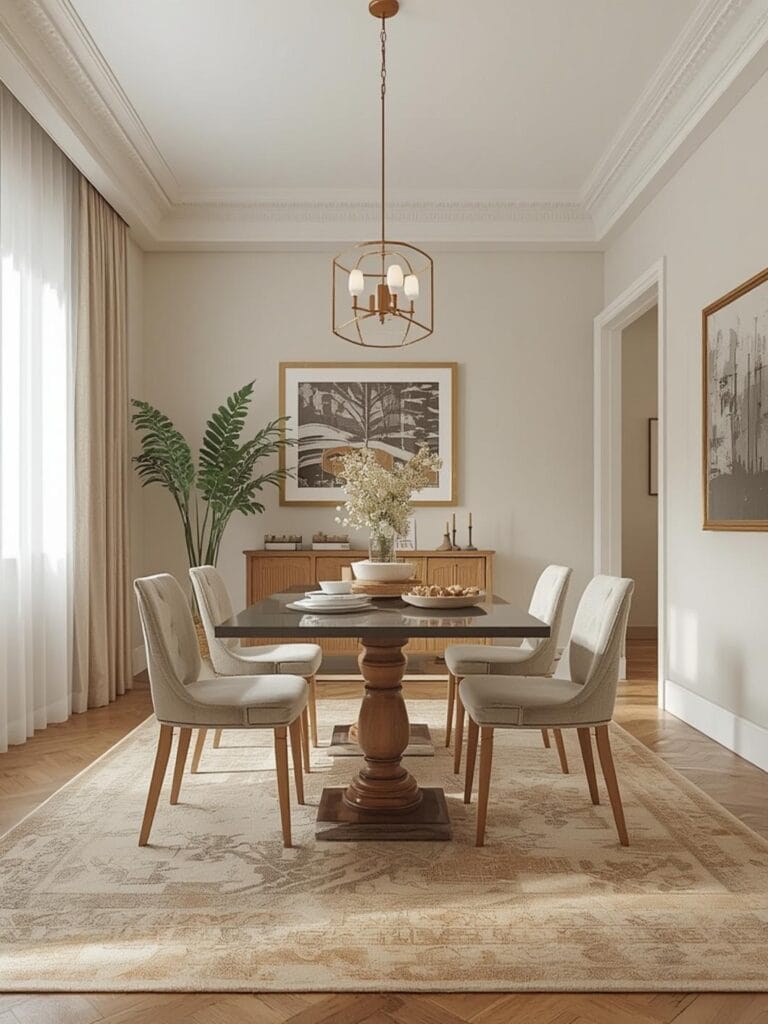
Lighting Fixtures: Chandeliers or pendants should hang 30–36 inches above the table surface. The fixture diameter should be about half to two-thirds the table width for proper visual balance.
Area Rugs: Your rug should extend at least 24 inches beyond the table on all sides so chairs remain on the rug even when pulled out. This prevents that annoying chair-tilting situation.
Storage Pieces: Sideboards, buffets, or china cabinets typically need 18–24 inches of clearance in front for drawer and door access.
Common Misconceptions to Clear Up First
Many homeowners make the same assumptions when planning their dining room layout. Clearing these up now saves you from expensive mistakes later.
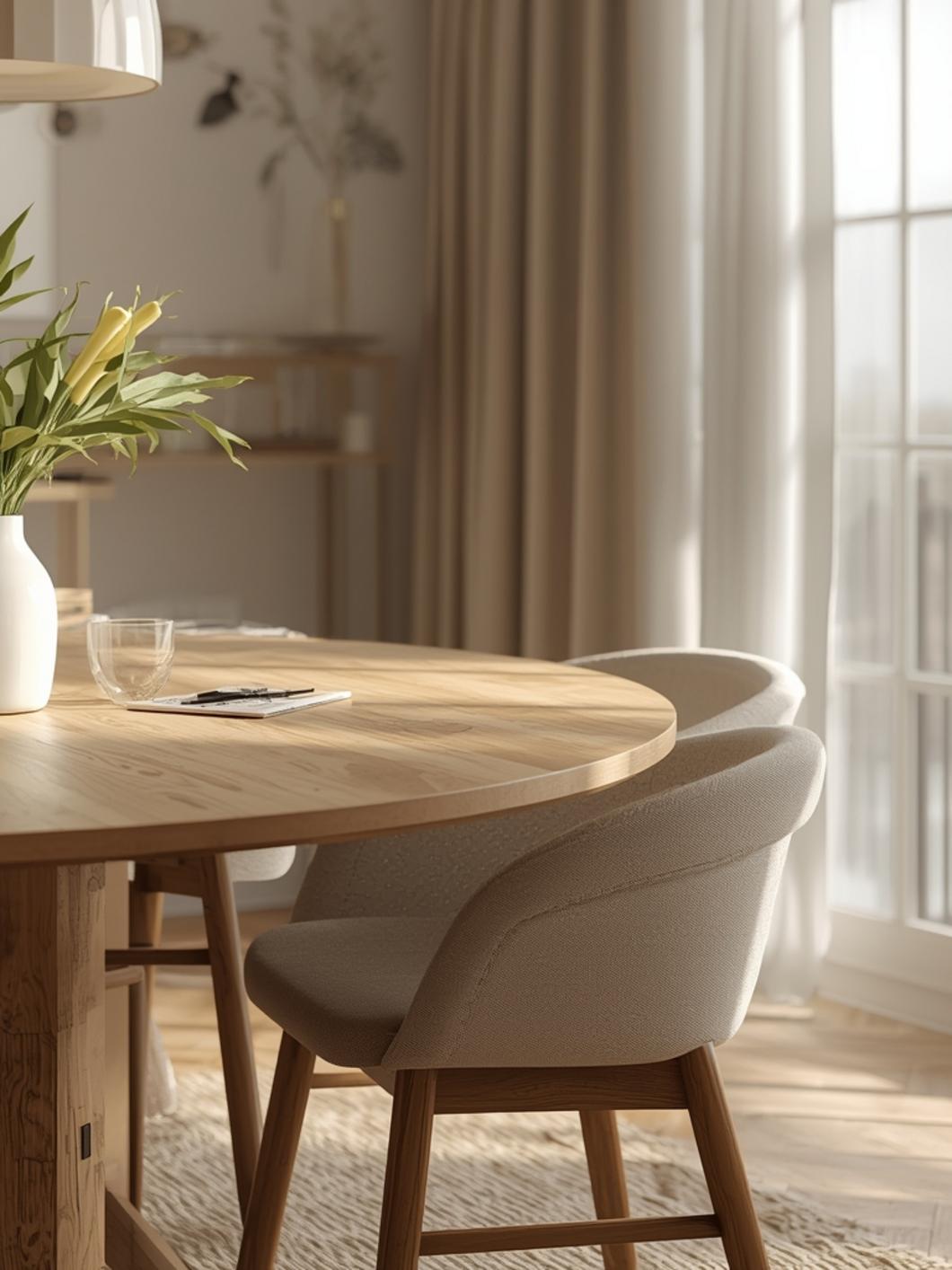
“Bigger tables always look more impressive.” Actually, an oversized table in a small room makes everything feel cramped and awkward. A properly scaled table that allows comfortable circulation creates a much more elegant impression than a massive piece that dominates the space.
“I need matching chairs for all sides.” Mixing bench seating on one side with chairs on the other actually maximizes seating capacity while creating visual interest. This approach works especially well in compact spaces where flexibility matters more than formality.
“The table should be centered in the room.” Not necessarily. In open-concept spaces or rooms with architectural features like bay windows, off-center placement often creates better traffic flow and takes advantage of natural light.
“Round tables waste too much space.” Round and oval tables actually maximize seating efficiency in square rooms because they eliminate corner dead zones. They’re also safer in homes with young children since there are no sharp corners.
“I need a formal dining room to do this right.” The principles of good space planning work just as well in a dining nook, kitchen corner, or multipurpose room. It’s about proportions and flow, not square footage.
How It Works in Real Homes
Understanding how to apply space planning principles transforms theory into a dining room you’ll actually love using. Here’s how real homeowners make it work.
Measuring Your Available Space: Start by measuring your room’s length and width, noting any architectural features like doors, windows, radiators, or built-ins. Mark out the clearance zones—those 36–48 inches around the table—on the floor using painter’s tape. This visual exercise immediately shows you what table size actually fits.
Walk through these taped boundaries several times. Can you move comfortably? Does the path to the kitchen feel natural? If you’re bumping into imaginary furniture, the space is too tight.
Choosing the Right Table Size: How to arrange dining room furniture in a small space starts with selecting a table that leaves breathing room. For rectangular tables, aim for at least 36 inches of clearance on all sides. A 60-inch table works well in a 10×12 room, while an 84-inch table suits a 12×14 space.
Round tables need slightly less linear clearance since there are no corners. A 48-inch round fits comfortably in spaces where a 60-inch rectangular might feel tight.
Positioning for Traffic Flow: Place your table considering how people move through the space. In open-concept homes, position the table so it doesn’t block the natural path between living areas and the kitchen. If your dining room has multiple doorways, avoid placing the table directly in line with any entrance.
The goal is creating clear, intuitive pathways. Family members shouldn’t need to squeeze behind seated diners to access other parts of the house during meals.
Selecting and Placing Seating: Mix seating types to maximize capacity without overwhelming the space. Try armless chairs for easier tucking under the table, or place a bench along the wall-facing side where it can double as extra seating for other rooms when needed.
In tight spaces, consider chairs with low backs or even backless stools that visually disappear under the table when not in use. This creates the illusion of more floor space.
Adding Supporting Furniture: Place storage pieces along walls rather than floating them in the room. A slim console behind the seating area provides serving space without encroaching on circulation paths. In small rooms, wall-mounted shelving eliminates floor space concerns entirely.
Keep at least 18 inches between the table and any sideboard or buffet. This ensures you can access drawers and serve from the buffet without disturbing diners.
Lighting Your Layout: Hang your fixture centered over the table, not centered in the room. This distinction matters in spaces where the table isn’t perfectly centered. The light should illuminate the dining surface, creating an intimate focal point regardless of where walls and doorways fall.
Use a dimmer switch to adjust ambiance from bright family dinners to softer evening entertaining. This single upgrade makes your space planning feel more intentional and polished.
Testing Before Committing: Before buying furniture, create a full-scale mockup using cardboard, bedsheets, or even newspaper taped together. Live with this setup for a few days, setting the table and having meals there. You’ll quickly discover if the proportions work for your household’s actual usage patterns.
Benefits of Proper Space Planning
Getting your dining room furniture arrangement right creates benefits that ripple through your daily life. These advantages go far beyond just aesthetics.
Improved Daily Function: When you’ve planned the space correctly, every meal feels easier. You can move freely between kitchen and table, serve dishes without awkward reaches, and clean up efficiently. Your dining area becomes a space you naturally gravitate toward instead of one that feels like an obstacle course.
Better Entertaining Experience: Guests feel more comfortable in well-planned spaces. Proper circulation means people can join or leave the table without disrupting everyone else. Adequate elbow room prevents that cramped feeling that makes dinner parties stressful instead of enjoyable.
Visual Spaciousness: Strategic furniture placement actually makes rooms look larger. When you can see clear floor space around properly scaled pieces, your eye registers the room as more generous. This psychological trick works even in genuinely small spaces.
Flexibility for Different Occasions: Smart planning accommodates both intimate family dinners and larger gatherings. An extendable table with proper clearance can expand when needed, while bench seating allows you to squeeze in extra guests without adding permanent chairs.
Increased Home Value: Thoughtfully arranged rooms photograph better and show more impressively during home tours. Future buyers immediately recognize functional layouts, making your home more memorable and marketable.
Tips and Alternatives for Every Budget
Your budget shouldn’t limit your ability to create a well-planned dining space. These options work at different price points while maintaining good design principles.
Budget-Friendly Approach: Start with a simple rectangular table and mix-match chairs from secondhand sources. Unify mismatched pieces with identical seat cushions or a coat of paint in the same color. Use a large area rug to define the dining zone in open spaces. Position a narrow bookshelf along one wall for serving and storage instead of buying a formal buffet.
Mid-Range Strategy: Invest in an extendable table with clean lines that won’t date quickly. Choose four quality chairs for the long sides and add a bench for one end—this combination offers flexibility and visual interest. Add a simple pendant light on a dimmer switch. Include a mid-century style sideboard that provides storage while maintaining an open, airy feel.
Premium Investment: Consider a custom-sized table built specifically for your space dimensions—this ensures perfect proportions. Upholstered chairs with performance fabric offer comfort and durability. Install a statement chandelier with adjustable height functionality. Add a built-in banquette along one wall to maximize seating while creating architectural interest.
Small Space Adaptation: Choose a round pedestal table that eliminates corner bulk and leg interference. Mount a fold-down table to the wall for ultra-compact spaces—it disappears when not in use. Use transparent acrylic chairs that take up physical space without visual weight. Hang a large mirror on one wall to reflect light and create depth perception.
Multipurpose Room Solution: Define your dining zone with a bold area rug even in a shared living space. Choose a table height that works with your existing chairs so pieces can serve double duty. Use a narrow console table that functions as both dining storage and living room display. Select lighting that coordinates with your overall room scheme rather than screaming “dining room only.”
Common Mistakes to Avoid
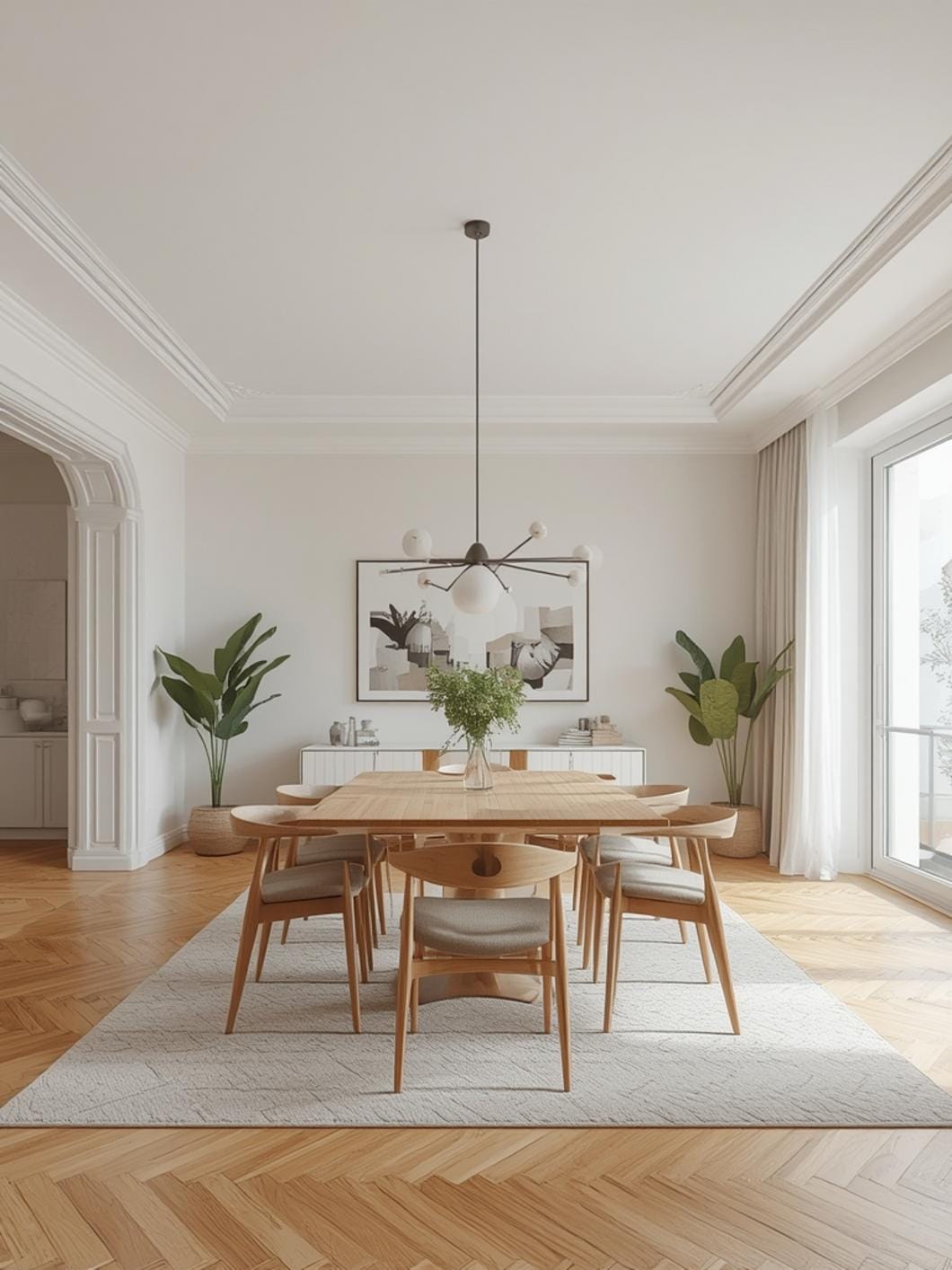
Even design-savvy homeowners make predictable mistakes when arranging dining furniture. Catching these early saves you from living with layouts that never quite work.
Buying furniture before measuring the space. That gorgeous table looks very different in your dining room than it did on the showroom floor. Always measure your space, subtract clearance zones, then shop for furniture that fits those remaining dimensions.
Forgetting to account for chair depth. Chairs need 24–30 inches from table edge to wall when pulled out. Many people measure the table dimensions but forget this critical clearance. Your chairs will hit the wall or make standing impossible if you skip this step.
Pushing all furniture against the walls. This actually makes rooms feel smaller and more awkward. Floating your table with proper clearance on all sides creates better flow and makes the space feel more intentional and designed rather than like an afterthought.
Choosing a rug that’s too small. When chair legs hang off the rug edge, they catch and tilt every time someone sits down. Your rug should extend at least 24 inches beyond the table on all sides—this seems excessive until you experience how much better it functions.
Ignoring the room’s natural light sources. Positioning your table away from windows wastes natural light during daytime meals. Consider how sunlight moves through your space throughout the day when deciding on table placement, not just where it fits geometrically.
Maintenance and Layout Adjustments
A well-planned dining room evolves with your needs while maintaining its functional foundation. These simple practices keep your space working beautifully.
Seasonal Furniture Rotation: Swap heavy upholstered chairs for lighter cane or wooden styles in summer to create a breezier feel. Store the off-season chairs in a basement or garage. This rotation prevents wear patterns and lets you refresh your space without buying new furniture.
Regular Furniture Checks: Every few months, test that chairs still glide smoothly and don’t catch on the rug. Tighten any loose screws in table legs or chair joints. This prevents small issues from becoming structural problems that affect your layout’s functionality.
Rug Care: Vacuum under the table weekly, rotating the rug 180 degrees every six months to ensure even wear patterns. This maintenance keeps your space looking intentional rather than tired. When the rug shows wear, it disrupts the entire visual balance you’ve created.
Flexibility Planning: Keep your original room measurements and clearance tape marks in a home folder. When you want to rearrange or add furniture, you’ll know exactly what dimensions work without starting from scratch. This saves hours of frustration and prevents impulse purchases that don’t fit.
Adapting for Life Changes: As your family grows or lifestyle shifts, reassess your layout annually. The arrangement that worked for two people might need adjustment when kids arrive. The formal setup might relax into something more casual as your entertaining style evolves. Good space planning isn’t static—it adapts while maintaining core functional principles.
Bringing Your Dining Room Together
Creating a beautifully planned dining space doesn’t require professional help or a massive budget. It requires thoughtful measurement, realistic assessment of how you actually use the space, and willingness to prioritize function alongside aesthetics.
Your dining room should invite people to linger over meals, not rush through them because the space feels uncomfortable. When you plan properly from the start, every element works together to create exactly that welcoming atmosphere.
Ready to explore more ways to make your home both beautiful and functional? Browse DecorKingdom for room-by-room inspiration that helps you create spaces you’ll love living in every single day.
FAQs
What’s the minimum room size needed for a dining table that seats six people?
A 10×12 foot room comfortably accommodates a 60-inch rectangular table with six chairs, providing the recommended 36 inches of clearance on all sides. If your room is slightly smaller, consider a 48-inch round table which seats six while requiring less linear space. The key is maintaining that clearance zone for comfortable movement around seated diners.
How do I arrange dining furniture when my room has an odd shape?
Work with the room’s geometry rather than fighting it. In L-shaped spaces, position the table in the larger section with the sideboard in the smaller leg. For narrow rooms, choose an oval table that provides length without excessive width. Diagonal placement sometimes works in square rooms with multiple doorways, creating better traffic flow around all sides.
Can I fit a dining table in my open-concept kitchen and living area?
Absolutely. Use an area rug to define the dining zone within the larger space, creating a visual boundary that signals the shift in function. Position the table to create a natural buffer between cooking and relaxing areas rather than placing it directly in the traffic path. This arrangement actually improves open-concept flow by giving each activity its own designated territory.
What’s the best lighting height if my ceiling is unusually high or low?
The standard 30–36 inch distance between table surface and fixture bottom works for 8-foot ceilings. For higher ceilings, you can increase this to 36–40 inches while ensuring the fixture still provides adequate task lighting. In rooms with low ceilings under 8 feet, choose flush-mount or semi-flush fixtures that provide light without hanging into head space.
Should I buy my dining furniture all at once or piece by piece?
Purchase your table first since it determines everything else about your layout. Measure your space around this anchor piece before adding chairs, which don’t all need to match or arrive simultaneously. This staged approach lets you test the layout, adjust if needed, and spread costs while ensuring each piece genuinely fits both physically and stylistically with your evolving vision.
—
Meta Title: Space Planning for Dining Room Furniture Guide 2026
Meta Description: Smart Space Planning for Dining Room Furniture makes meals better. Learn measurements, layouts & arrangement tricks for any size space.