How to Choose L Shaped Laundry Room Ideas for Your Space
You’ve got an L-shaped laundry room that feels more like a puzzle than a functional space. One wall dead-ends into another, and suddenly you’re trying to squeeze in a washer, dryer, storage, and maybe a folding station without creating a cramped maze.
The good news? That corner layout is actually a gift waiting to be unwrapped. L shaped laundry room ideas can transform that awkward angle into zones that make laundry day surprisingly manageable. You just need to approach the layout strategically instead of jamming everything against the walls and hoping for the best.
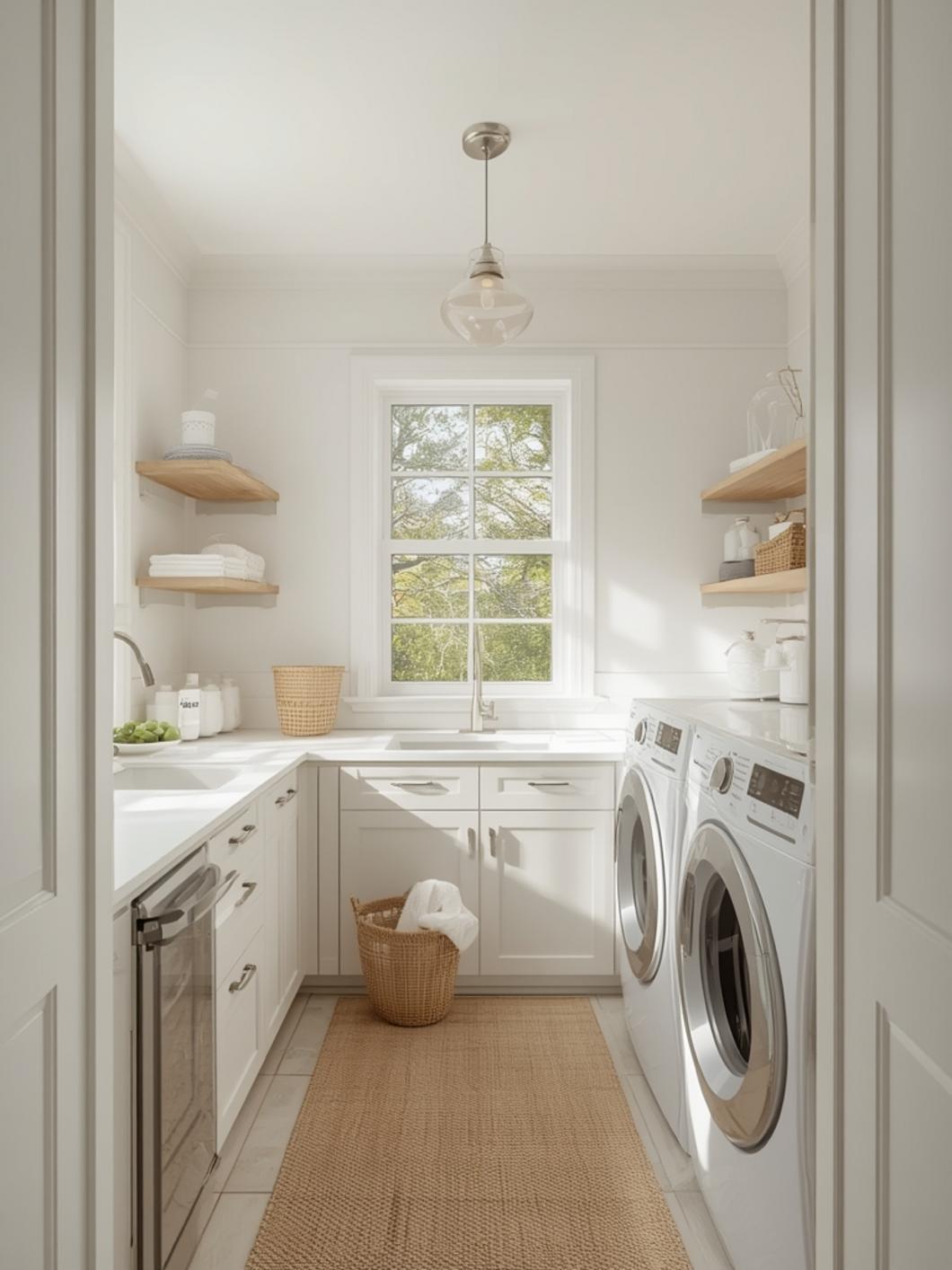
Whether you’re working with a generous corner space or a tight nook, the L-shape gives you natural separation for different tasks. One leg can handle washing and drying while the other becomes your folding, sorting, or storage headquarters. The corner itself? That’s prime real estate for creative solutions that make every inch count.
Table of Contents
What You’ll Need to Get the Look
Creating a functional L-shaped laundry room starts with the right mix of essentials and smart additions. You’re not renovating from scratch here—you’re working with what you have and adding pieces that earn their keep.
For the washing zone, you’ll obviously need your washer and dryer, but consider adding a pull-out laundry hamper or rolling cart that tucks between or beside them. A slim cart on wheels can hold detergent, stain removers, and dryer sheets without eating up counter space.
Storage elements include:
– Wall-mounted shelving or floating shelves above your machines
– A tension rod for air-drying delicates
– Stackable bins or baskets labeled by family member or fabric type
– Cabinet doors or curtains if you want to hide open shelving
– Hooks for brooms, ironing boards, or mesh laundry bags
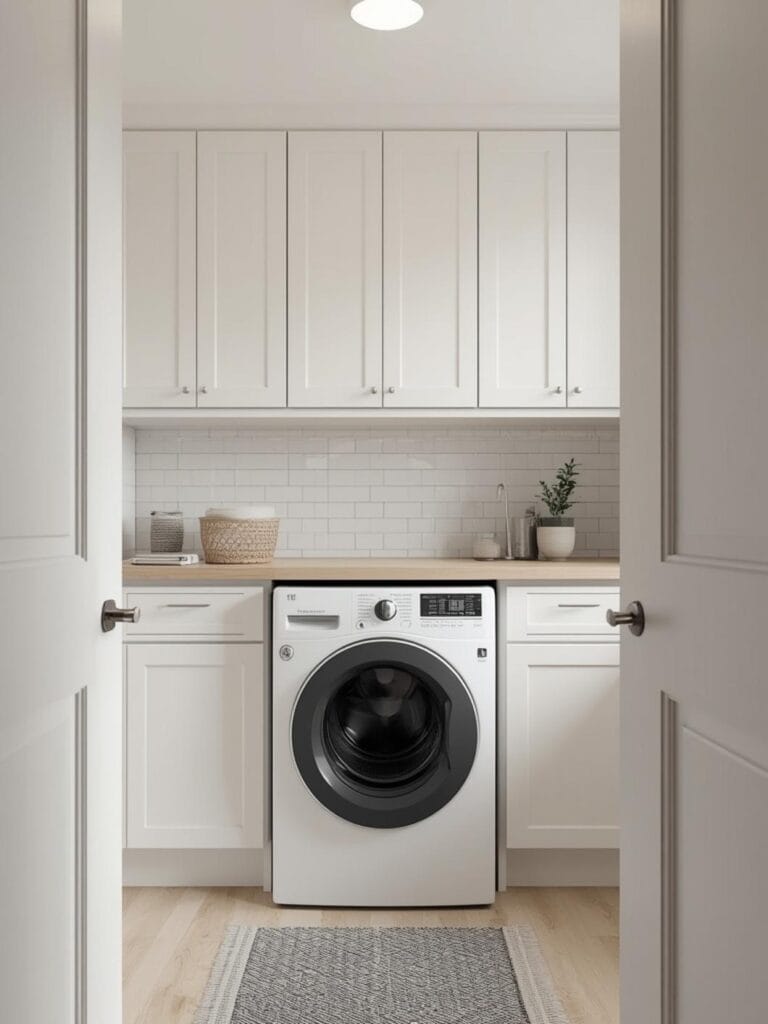
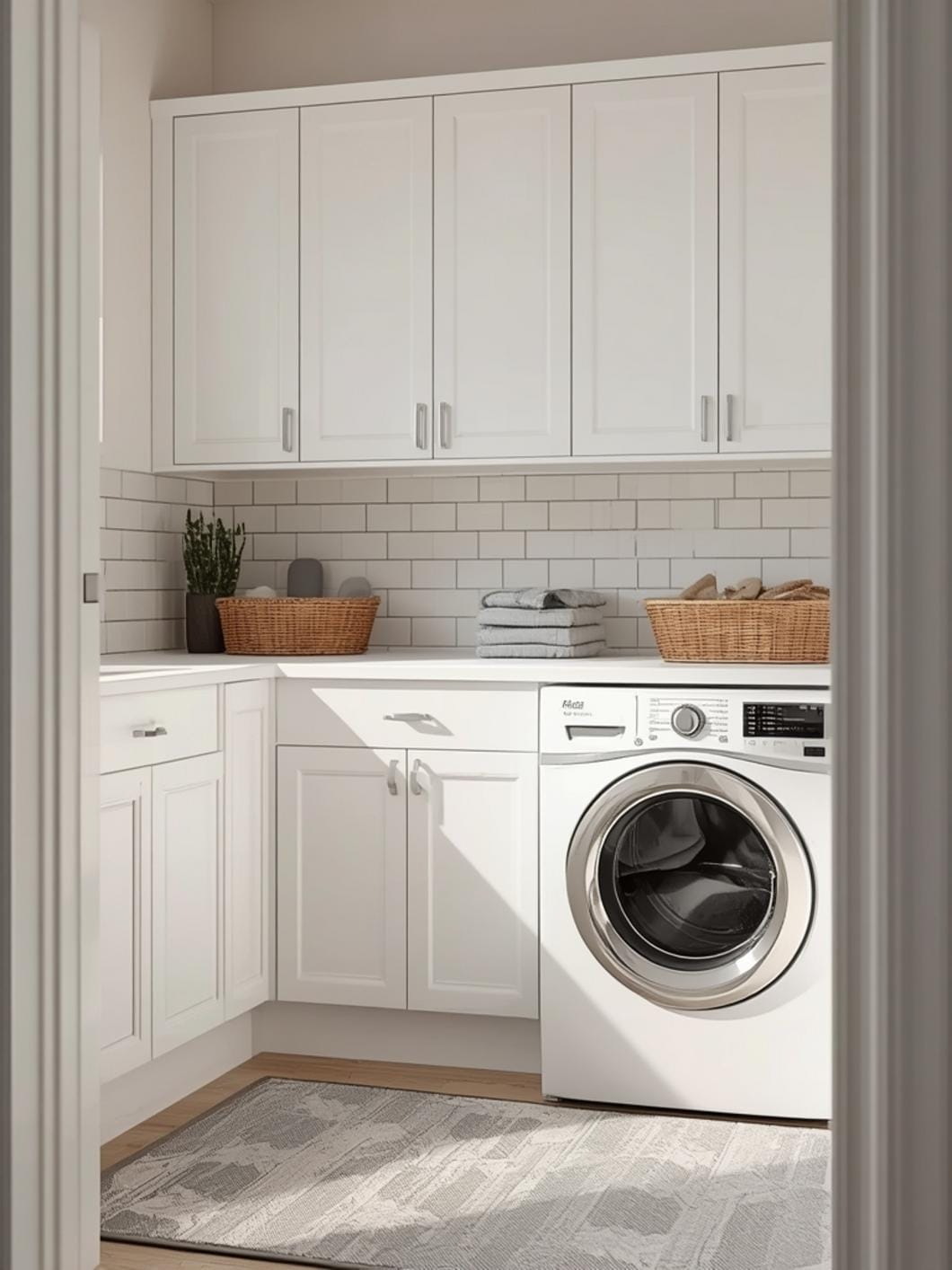
For the folding and sorting area, a countertop installed above one set of machines or along the second wall creates instant workspace. If built-in counters aren’t an option, a narrow console table or butcher block cart works beautifully. Add a cushioned stool if you’ve got floor space—sitting while folding makes the task infinitely more pleasant.
Lighting matters more than you think. Under-cabinet LED strips brighten work surfaces, while a stylish flush-mount ceiling fixture keeps the whole room evenly lit. Don’t forget a small step stool for reaching high shelves and a wastebasket for dryer lint and empty detergent bottles.
Finding Your Style and Season
Your laundry room doesn’t need to match your living room’s vibe, but it should feel like part of your home rather than a forgotten utility closet. The best time to reimagine this space is when you’re already thinking about home organization—usually during spring cleaning or when you’re preparing for a busy season ahead.
Late winter and early spring are natural moments to refresh your laundry setup. You’re swapping heavy bedding for lighter linens, and suddenly the lack of storage or folding space becomes painfully obvious. Summer is another prime window, especially if you’ve got kids heading to camp or sports that generate mountains of gear to wash.
Think about your family’s rhythm too. If you’re juggling multiple people’s schedules, you need a system that accommodates quick turnarounds and prevents bottlenecks. Your L-shaped layout can support this by creating distinct stations—one person sorts while another folds, and nobody’s stepping over each other.
Budget-wise, you can tackle this project in phases. Start with organizational basics like shelves and bins one month, then add aesthetic touches like paint or wallpaper later. The corner configuration means you’re working with two shorter walls instead of one long one, so even paint goes further than you’d expect.
7 Ideas to Try in Your Home
1. Stack Your Machines to Free Up Floor Space
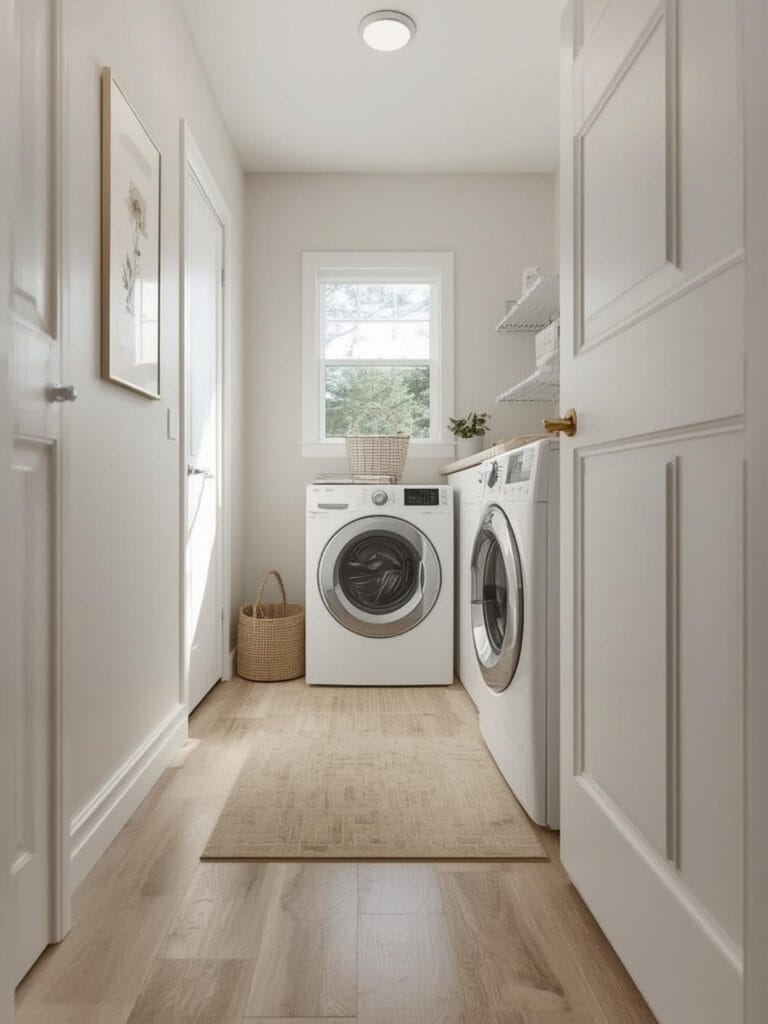
If you’re tight on square footage, stacking the washer and dryer along one leg of the L instantly gives you room to breathe. The vertical arrangement opens up floor space for a rolling cart, a drying rack, or even a small utility sink. Mount a shelf or cabinet above the stacked units for detergent and supplies. This setup works especially well when how to maximize storage in narrow laundry rooms becomes your top priority—you’re building up instead of spreading out.
2. Create a Folding Station in the Corner
The corner where your two walls meet is perfect for a small countertop or floating desk. Install a butcher block corner shelf at waist height, and suddenly you’ve got a dedicated folding zone that doesn’t block access to your machines. Tuck a cushioned ottoman underneath when you’re not using it, or add a small basket for clothespins and stain sticks.
3. Install Floor-to-Ceiling Shelving on the Short Wall
Use the shorter leg of your L for vertical storage that doesn’t interfere with machine doors. Open shelving displays pretty baskets and glass jars filled with detergent pods, while closed cabinets hide less photogenic items like bleach and cleaning rags. Paint the back wall of the shelving a contrasting color to add visual interest without overwhelming the space.
4. Add a Rolling Hamper Station Between the Machines
A slim rolling cart that fits in the gap between your washer and dryer—or beside them—creates an instant sorting system. Choose one with multiple compartments so you can separate lights, darks, and delicates as you go. When laundry day arrives, you just wheel the cart to the machines instead of hauling multiple baskets back and forth.
5. Hang a Tension Rod for Air-Drying
Mount a sturdy tension rod across the corner or along one wall, positioned high enough that clothes won’t drag but low enough for you to reach comfortably. This simple addition gives you a place to hang dress shirts, swimsuits, and anything else that shouldn’t tumble dry. When you’re not using it, the rod stays out of the way and costs almost nothing to install.
6. Use the Corner for a Utility Sink
If plumbing access allows, tucking a small utility sink into the corner gives you a spot to pre-treat stains, hand-wash delicates, or rinse muddy shoes. Corner sinks take up less room than traditional models and make efficient use of that often-wasted angle. Add a gooseneck faucet for easier maneuvering and a small shelf underneath for cleaning supplies.
7. Paint Each Wall a Different Shade
Give each leg of your L its own personality with coordinating but distinct paint colors. A soft gray on one wall and a crisp white on the other creates visual separation between your washing zone and your folding area without requiring major renovations. It’s a renter-friendly update that costs under fifty dollars and takes a weekend afternoon.
Benefits of an L-Shaped Layout
The L-configuration naturally divides your laundry room into zones, which means you’re not doing everything in one cramped corner. You wash on one side, fold on the other, and suddenly the process feels less chaotic. This separation also helps when multiple people need the space—one person can sort while another transfers loads without bumping elbows.
Storage becomes more intuitive in an L-shape because you’ve got two walls to work with instead of trying to cram everything onto one surface. You can dedicate one wall to cleaning supplies and the other to folding essentials, making it easier to find what you need mid-task.
The corner itself often becomes the most valuable spot in the room. Whether you install a countertop, add a sink, or simply place a tall cabinet there, that meeting point offers opportunities you wouldn’t have in a rectangular or galley layout. It’s the anchor that holds your whole system together.
For homes with limited square footage, the L-shape maximizes what you have by encouraging vertical thinking. When floor space is tight, you build upward with shelving, cabinets, and hanging rods that keep supplies accessible without cluttering walking paths.
Budget-Friendly to High-End Options
Budget-Conscious Approach
Start with adhesive hooks, tension rods, and stackable plastic bins from your local home goods store. Paint existing shelves or cabinets instead of replacing them, and use contact paper to refresh worn countertops. A simple rolling cart with three tiers costs under forty dollars and instantly improves organization. Add a vinyl peel-and-stick floor runner if your existing floor feels dingy—it’s removable and protects the surface underneath.
Mid-Range Makeover
Invest in custom-cut laminate countertops for your folding station and install basic IKEA cabinet systems along one wall. Upgrade to matching woven baskets instead of plastic bins, and add a decorative pendant light fixture to replace the builder-grade dome light. Include under-shelf LED lighting for better visibility and a more polished look. This tier typically runs between five hundred and twelve hundred dollars depending on your room size.
Premium Transformation
Commission built-in cabinetry that wraps both walls of your L-shape with soft-close drawers, pull-out hampers, and a fold-down ironing board. Add quartz or butcher block countertops with an undermount utility sink in the corner. Install stylish tile flooring and a matching backsplash behind the machines. Upgrade to a stacked washer-dryer set with smart features if your current units are due for replacement. This level starts around three thousand dollars and can climb depending on finishes.
Small Space Adaptation
When you’re working with a narrow L-shape, every vertical inch counts. Mount a fold-down drying rack that flips up against the wall when not in use. Choose slimmer machines if you’re replacing appliances—compact models save six inches or more in depth. Install narrow pull-out cabinets in gaps between appliances, and use the back of the door for an over-the-door organizer that holds spray bottles and small supplies.
Common Mistakes to Avoid
Ignoring the corner’s potential. That angle where your walls meet often becomes dead space filled with dust bunnies and forgotten socks. Instead, install a corner shelf unit, add a lazy Susan for cleaning supplies, or position a tall narrow cabinet there to make the spot functional.
Blocking machine doors with furniture or storage. You’ll regret placing that beautiful cabinet right where the washer door swings open. Measure door clearances before committing to any layout, and remember that front-loading machines need extra space to open fully.
Skipping adequate lighting in the folding zone. Overhead lighting alone creates shadows right where you’re trying to spot stains or match socks. Add task lighting above your folding counter or under cabinets so you’re not squinting at every load.
Overloading one wall while leaving the other bare. Balance is everything in an L-shaped room. If all your storage clusters on one side, you’ll create a lopsided flow that feels cramped. Distribute shelving, hooks, and workspace across both walls for a more comfortable layout.
Forgetting ventilation in enclosed spaces. Moisture builds up quickly in laundry rooms, especially when you’re drying loads back-to-back. If your room doesn’t have a window, add a small exhaust fan or keep the door open after finishing loads to prevent mildew and musty smells.
Keeping Your Space Fresh
Wipe down your machines monthly with a damp cloth and all-purpose cleaner, paying special attention to detergent dispensers where residue builds up. Run an empty hot water cycle with white vinegar every few months to clean the washer drum and prevent odors.
Vacuum or sweep behind and beside your machines quarterly—lint and dust accumulate faster than you’d expect in these tight spots. If you can’t move the machines yourself, use a long-handled duster or vacuum attachment to reach what you can.
Empty dryer lint traps after every single load, and vacuum out the lint trap housing every few weeks. This simple habit prevents fires and keeps your dryer running efficiently. Check the exterior vent periodically to make sure it’s not blocked by lint buildup or debris.
Refresh fabric hampers and baskets by emptying them completely and wiping down with a disinfectant spray. Machine-wash any removable fabric liners every month or two, especially if you’re storing dirty gym clothes or pet bedding.
Reorganize your shelves seasonally. Rotate heavy-duty stain removers to the front during muddy spring months, and move delicate fabric wash to eye level when you’re washing summer linens. This keeps frequently used items accessible without permanent clutter.
Making Your L-Shape Work Harder
Your laundry room’s awkward corner layout isn’t a limitation—it’s an opportunity to create a space that actually supports how you live. When you treat each wall as its own zone and make smart use of that connecting corner, you’ll wonder how you ever managed with a basic rectangular setup.
The beauty of these ideas is that you don’t need a contractor or a massive budget to see real improvement. Start with one wall, add storage where it makes sense for your family’s habits, and build from there. Your laundry routine deserves a space that works as hard as you do.
Ready for more ways to make every inch of your home more functional and beautiful? Explore the rest of DecorKingdom for room-by-room inspiration that fits real life.
FAQs
What’s the best way to arrange machines in an L-shaped laundry room?
Place your washer and dryer along the longer wall if possible, leaving the shorter wall for storage and folding space. If both walls are similar lengths, position machines based on where your plumbing and electrical connections already exist—relocating these is expensive and usually unnecessary. Side-by-side machines work well when you’ve got adequate width, while stacking saves floor space for other functions.
How do I keep an L-shaped laundry room from feeling cramped?
Use light colors on walls and cabinets to make the space feel larger, and install adequate lighting in both zones. Keep floors clear by mounting storage on walls rather than adding freestanding furniture. A mirror on one wall can visually expand the room, and removing cabinet doors from upper storage creates an airier feel without sacrificing function.
Can I fit a folding station in a small L-shaped laundry room?
Absolutely. Install a fold-down wall-mounted table that flips up when not in use, or add a narrow countertop above your machines that extends just far enough to fold clothes comfortably. Even a 12-inch deep surface gives you enough workspace for folding without overwhelming the room. Position it along the shorter wall where it won’t interfere with machine access.
What should I store in the corner of my L-shaped laundry room?
The corner is ideal for a tall narrow cabinet that holds less frequently used items like seasonal linens or extra cleaning supplies. Alternatively, install a lazy Susan on a shelf to corral smaller bottles and supplies so they’re accessible but organized. If you have plumbing access there, a corner utility sink maximizes the space beautifully.
How much does it cost to organize an L-shaped laundry room?
Basic organization with shelves, bins, and tension rods runs between one hundred and three hundred dollars for most homeowners. Mid-range updates including laminate countertops and cabinet systems typically cost five hundred to twelve hundred dollars. A full renovation with built-in cabinetry and upgraded appliances starts around three thousand dollars depending on your location and finish choices.
—
Meta Title: L Shaped Laundry Room Ideas That Maximize Every Corner 2026
Meta Description: Transform awkward corners into hardworking zones with l shaped laundry room ideas that create storage and style without wasting an inch.