10 Bookshelf Ideas to Transform Your Shelves Into a Showstopper
You stare at your bookshelf and see chaos. Books piled horizontally, stacks leaning awkwardly, dust collecting on forgotten spines. Your shelves could be a beautiful focal point in your living room or home office, but right now they just look cluttered and uninspired.
The good news? With the right approach to decorative bookshelf ideas, you can turn those same shelves into an eye-catching display that reflects your personality and elevates your entire room. You don’t need expensive furniture or a degree in interior design—just a clear plan and a little creativity.
In this guide, we’ll walk through everything from styling approaches to practical arrangement tips that will help you create bookshelves worth showing off to guests.
Table of Contents
What You’ll Need to Get the Look
Before you start rearranging, gather a few key elements that will help you create a polished, designer-worthy display:
Books and Reading Materials:
– Hardcover books in various sizes
– Coffee table books with beautiful covers
– Magazines in coordinating colors
– Vintage books with interesting spines
Decorative Objects:
– Small sculptures or figurines
– Ceramic vases or pottery
– Framed photos in complementary frames
– Decorative boxes for hidden storage
Natural and Textural Elements:
– Small potted plants or succulents
– Woven baskets in neutral tones
– Natural wood accessories
– Decorative bowls filled with objects
Functional Styling Pieces:
– Bookends in metal, marble, or wood
– Small table lamps for ambient lighting
– Decorative trays to group small items
– Canvas bins for concealing clutter
You likely already own many of these items. The key is selecting pieces that share a color palette or design aesthetic so your shelves feel cohesive rather than cluttered.
Finding Your Style and Season
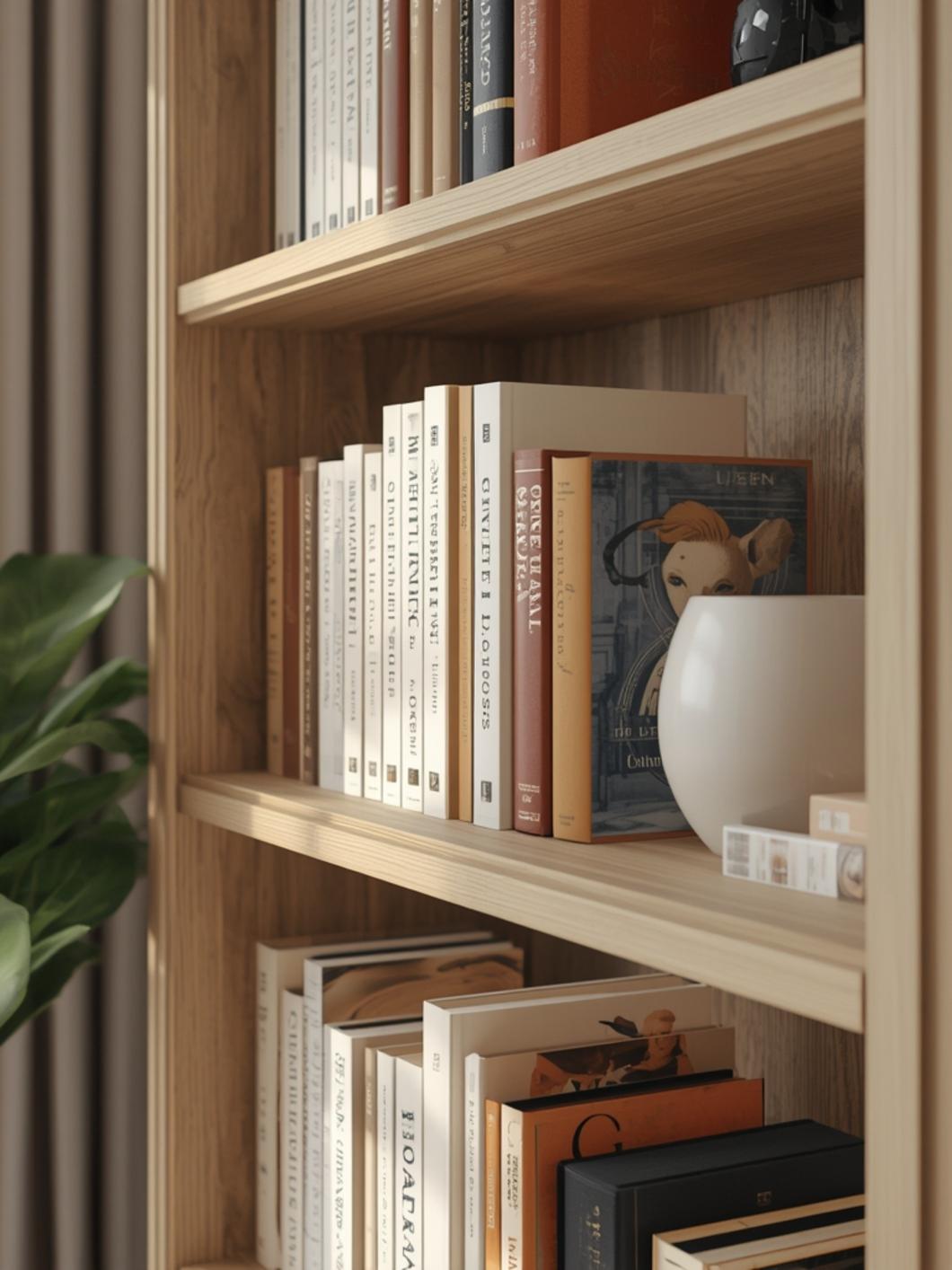
Your bookshelf styling should feel authentic to your home’s overall aesthetic. Take a moment to identify which design direction resonates with you before diving into the arrangement process.
Minimalist Modern: If your home features clean lines and neutral colors, your shelves should follow suit. Stick to a limited color palette—whites, blacks, and natural wood tones work beautifully. Leave generous negative space between objects, and choose sculptural pieces with interesting shapes rather than busy patterns.
Cozy Traditional: Warmer homes with rich wood tones and comfortable fabrics call for shelves filled with character. Mix old and new books, incorporate family photos in classic frames, and add warm metallic accents like brass bookends or copper planters.
Seasonal Refresh: One advantage of thoughtful bookshelf styling is how easily you can update it throughout the year. Swap in autumn leaves and pumpkins in fall, evergreen branches and pinecones in winter, fresh flowers in spring, and bright ceramics in summer. These small changes keep your space feeling current without requiring a complete overhaul.
Think about the lighting in your room too. Shelves near windows can showcase plants and transparent glass objects that catch natural light. Darker corners might benefit from metallic finishes or lighter-colored books that brighten the space.
7 Ideas to Try in Your Home
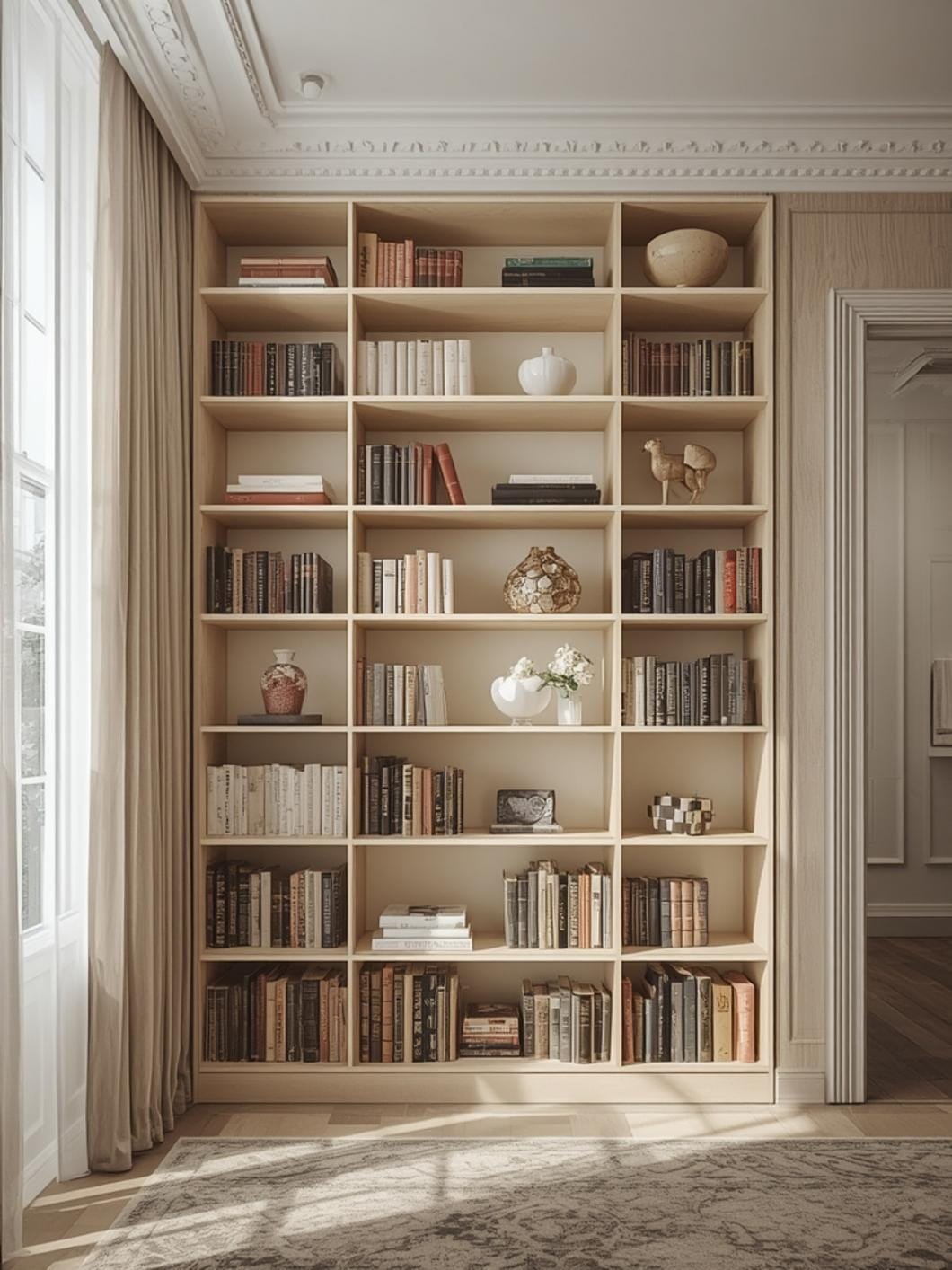
Ready to start styling? Here are seven proven approaches that work beautifully in real homes.
1. The Rainbow Method
How to arrange books on shelves by color and size creates an instantly Instagram-worthy look that guests always notice. Start by sorting all your books by color family. Arrange them from left to right in rainbow order: red, orange, yellow, green, blue, purple. Within each color section, place taller books on the outside edges and shorter ones toward the middle for a pleasing visual flow.
This method works especially well in modern or eclectic spaces. The uniform color progression brings order to chaos and makes even mismatched book spines look intentional.
2. The Balanced Asymmetry Approach
Instead of making each shelf identical, create visual balance across the entire bookcase. Place a tall stack of books on the left side of one shelf, then echo that height with a decorative object on the right side of the shelf above or below it. Your eye travels across the entire unit rather than stopping at each individual shelf.
Break up horizontal rows of books with vertical stacks every few feet. This rhythm prevents your shelves from looking too rigid while maintaining structure.
3. The Styled Sections Method
Divide your bookshelf into distinct zones. Dedicate one section to books organized by size with spines facing out. Use another section for decorative objects grouped in odd numbers (three candlesticks, five small vases). Reserve a lower shelf for practical storage in matching baskets or boxes.
This approach works beautifully in family homes where you need both beauty and function. The styled areas provide visual interest while the practical sections hide toys, office supplies, or other necessities.
4. The Layered Look
Don’t push everything against the back wall of your shelves. Place some books flat against the back, then layer smaller decorative items in front of them. Position a small plant or sculpture at the front edge of the shelf, creating depth and dimension.
This technique makes your shelves feel curated and collected rather than simply stuffed with books. It also lets you display more objects without the shelves looking overcrowded.
5. The Horizontal Stack Strategy
While most books naturally stand vertically, placing some horizontally adds valuable visual variety. Create stacks of two to four books lying flat, then top them with a decorative object. These horizontal elements give your eyes a place to rest and create useful surfaces for displaying smaller treasures.
Mix horizontal stacks throughout your shelving unit rather than clustering them all together. The variation keeps things interesting across the entire display.
6. The Monochromatic Moment
For a sophisticated, gallery-like feel, remove all colorful dust jackets and display your books in their natural cloth or paper covers. Most hardcover books underneath their jackets are neutral tones—cream, gray, tan, or burgundy. This instantly cohesive look works beautifully in traditional or transitional spaces.
Add warmth with wood or brass decorative objects. The neutral book backdrop makes everything else on your shelves pop.
7. The Personal Collection Showcase
Use your shelves to tell your story. Group items by theme—travel souvenirs on one shelf, your vintage camera collection on another, family heirlooms on a third. Intersperse these personal collections with books related to each theme.
This method feels the most authentic and creates natural conversation starters when guests visit. Your shelves become a three-dimensional scrapbook of your life and interests.
Benefits of Thoughtfully Styled Shelves
When you invest time in arranging your bookshelves with intention, the benefits extend far beyond aesthetics.
Creates a Focal Point: A beautifully styled bookshelf naturally draws the eye and can serve as the anchor for an entire room. Instead of your attention scattering across various furniture pieces, one stunning bookshelf grounds the space and gives it purpose.
Reflects Your Personality: Unlike generic store-bought wall art, your bookshelf tells guests who you are. The titles you display, the objects you’ve collected, and the way you arrange everything all speak to your unique taste and experiences.
Improves Daily Mood: Walking into a room with organized, beautiful shelves simply feels better than facing chaos. That small mood boost happens every single day, making the effort worthwhile.
Encourages You to Read More: When your books are displayed attractively rather than hidden away or stacked haphazardly, you’re more likely to actually pick one up. A well-organized system also helps you rediscover forgotten favorites.
Makes Small Spaces Feel Larger: Vertical styling draws the eye upward, making ceilings feel higher. When done right, even a single bookshelf can make a small room feel more spacious and intentionally designed.
Tips, Alternatives, and Styling Advice
Not every bookshelf project requires the same investment. Here’s how to approach styling at different budget levels and space constraints.
Budget-Friendly Approach:
Shop your own home first. Gather decorative items from other rooms that you can rotate onto your shelves. Use items from nature—branches, stones, or pinecones—which cost nothing but add organic texture. Paint old book spines with chalk paint in coordinating colors to create a custom look. Stack books you already own in new arrangements rather than buying decorative objects.
Mid-Range Option:
Invest in a few quality pieces that will anchor your design. Purchase matching storage baskets in a natural material like seagrass or rattan. Add two or three sculptural objects in materials like ceramic or wood. Include one or two small plants in attractive pots. This combination of purchased pieces mixed with items you already own creates a polished look without breaking the bank.
Premium Investment:
Consider custom bookends in marble or brass that become signature pieces. Invest in art books with stunning covers that serve as both reading material and decor. Purchase matching picture frames for a cohesive gallery wall effect across your shelves. Add designer pottery or small sculptures that reflect serious style investment.
Small Space Adaptation:
If you’re working with limited shelf space, embrace a curated approach. Display only your most beautiful books and favorite objects. Use slim, vertical storage to maximize every inch. Consider floating shelves instead of a full bookcase if floor space is tight. Mount them at varying heights to create visual interest without consuming precious square footage.
Common Mistakes to Avoid
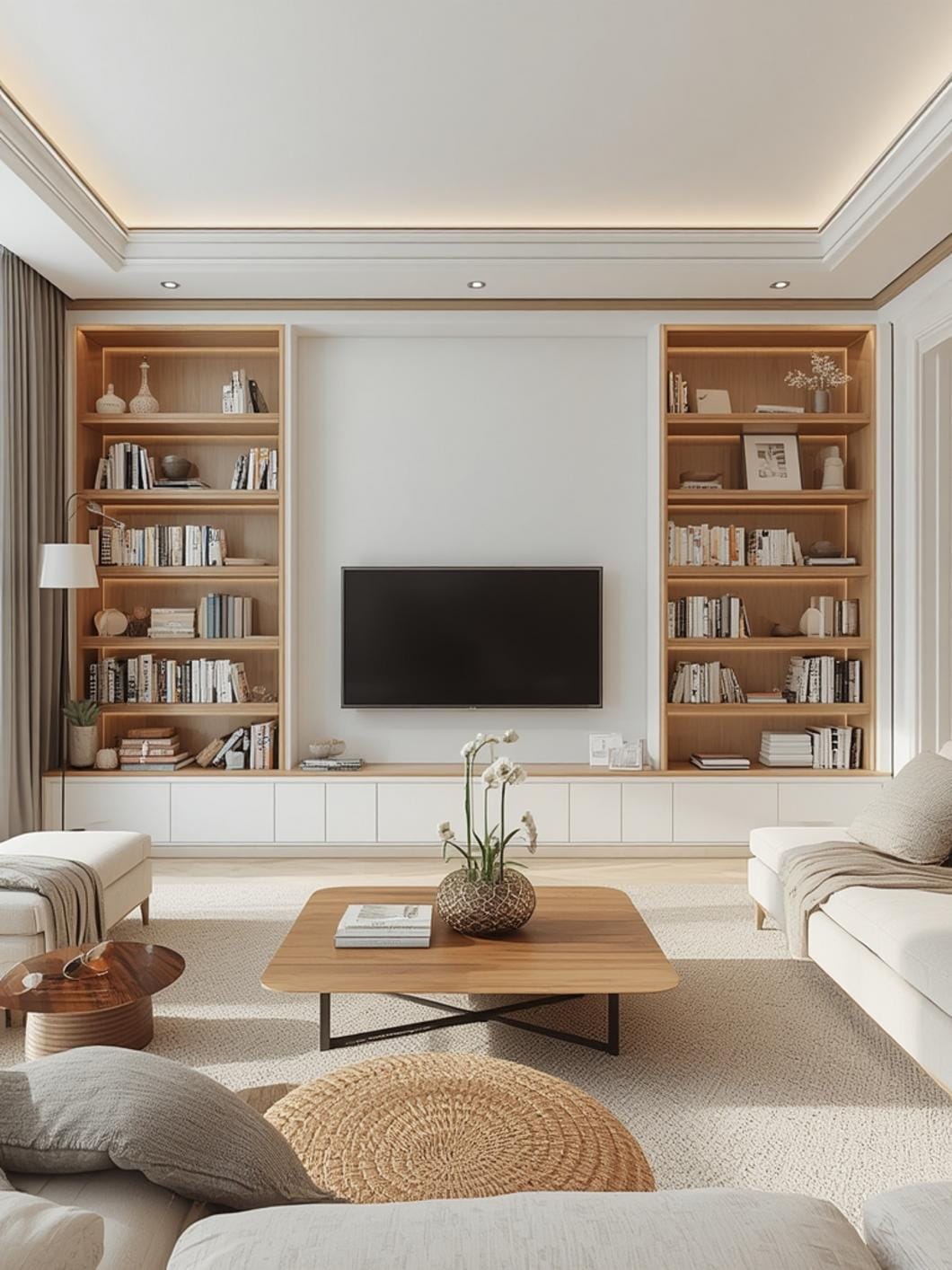
Even with the best intentions, certain missteps can undermine your bookshelf styling efforts.
Overcrowding Every Inch: Filling every available space makes your shelves look cluttered rather than curated. Leave at least 20-30% of your shelf space empty—that negative space lets your eye rest and makes each item stand out.
Ignoring Scale and Proportion: Placing all tiny objects together looks fussy, while grouping only large items feels heavy. Mix different sizes within each shelf to create visual interest and balance.
Pushing Everything to the Back Wall: When every item sits flush against the back of the shelf, the display looks flat and one-dimensional. Layer items at different depths to add dimension and sophistication.
Using Too Many Different Colors: While a rainbow arrangement can work beautifully, randomly scattered colors create visual chaos. Limit your color palette to three or four main hues that work together harmoniously.
Forgetting About Lighting: Books and objects displayed in dark corners disappear completely. Add a small lamp, position your shelves near windows, or install subtle LED strips to make your styling efforts actually visible.
Neglecting Regular Editing: Your shelves aren’t meant to be permanent. As you acquire new books and objects, remove others to maintain balance. Rotate items seasonally to keep your display feeling fresh.
Maintenance and Upkeep Tips
Once you’ve created your beautiful display, simple maintenance keeps it looking pristine.
Weekly Dusting Routine: Run a microfiber cloth across shelves and book spines once a week. This prevents dust buildup that can damage books and make decorative objects look dingy. For hard-to-reach spots, use a soft paintbrush to gently remove dust.
Monthly Editing Session: Spend fifteen minutes each month assessing your shelves. Remove items that no longer work, straighten stacks that have shifted, and adjust anything that looks off-balance. This quick refresh prevents small issues from becoming major overhauls.
Seasonal Deep Clean: Four times a year, remove everything from your shelves completely. Wipe down the shelves themselves with appropriate cleaner for your material (wood polish for wood shelves, all-purpose cleaner for painted surfaces). Check books for any damage and reorganize as needed before returning items.
Plant Care Attention: If you’ve included live plants in your display, check their water needs twice weekly. Remove dead leaves promptly and rotate plants occasionally so all sides receive adequate light. Replace struggling plants before they become eyesores.
Book Condition Checks: Inspect books periodically for signs of damage from humidity, sunlight, or pests. Move valuable or delicate books away from direct sunlight to prevent fading. Use dehumidifier packets in humid climates to protect paper from moisture damage.
Conclusion
Your bookshelves hold incredible potential to become one of the most impactful design elements in your home. Whether you choose the rainbow method, embrace asymmetrical balance, or showcase personal collections, the key is creating an arrangement that feels authentic to your style while maintaining visual interest.
Start with one shelf if the whole project feels overwhelming. Perfect that single shelf, then move to the next. Before you know it, you’ll have transformed an overlooked storage solution into a stunning focal point that makes you smile every time you walk into the room.
Ready to explore more ways to elevate your living spaces? Browse DecorKingdom for endless inspiration that turns your house into the home you’ve always imagined.
FAQs
How many decorative items should I place on each bookshelf?
Aim for a ratio of about 70% books to 30% decorative objects on each shelf. This proportion keeps the space functional for book storage while adding enough visual interest to make it decorative. Group decorative items in odd numbers (three, five, or seven) rather than even numbers, which feels more natural and dynamic to the eye.
Should I arrange books by color or by author and genre?
This depends on whether you prioritize aesthetics or functionality. Arranging by color creates a stunning visual display that photographs beautifully and impresses guests. Organizing by author or genre makes finding specific books easier when you want to read them. Many homeowners compromise by organizing most shelves by color but keeping frequently referenced sections (like cookbooks or reference books) grouped by topic.
What’s the best way to style bookshelves if I don’t own many books?
Use decorative storage boxes, baskets, and bins to fill space while concealing practical items. Display collections of objects you love—vintage cameras, ceramic pottery, or travel souvenirs. Incorporate plants at varying heights to add life and color. Mix in a few coffee table books with beautiful covers that serve as both reading material and decorative elements.
How do I keep my bookshelf styling from looking too cluttered?
Embrace negative space by leaving some areas completely empty. Stick to a limited color palette of three to four main colors throughout your display. Remove items that don’t serve the overall aesthetic, even if you love them individually. Step back every few minutes while styling to view the shelves from across the room—this distance reveals clutter that you miss up close.
Can I mix vertical and horizontal book arrangements on the same shelf?
Absolutely, and you should. Mixing orientations creates visual rhythm and prevents your shelves from looking too rigid. Place two to four books horizontally to create a flat surface, then top them with a small decorative object. This technique works especially well at the ends of shelves or to break up long rows of vertical spines.
—
Meta Title: Decorative Bookshelf Ideas That Wow (2026 Guide)
Meta Description: Turn chaotic shelves into stunning displays with decorative bookshelf ideas that work. Color arrangements, styling tips & mistakes to avoid inside.