How to Choose Dining Room Sets for Your Space
You walk past your dining room and feel a twinge of frustration. The mismatched chairs don’t quite work with the table. The whole setup feels cramped, or maybe too sparse. You know something needs to change, but where do you even start?
Choosing Dining Room Sets can feel overwhelming with so many styles, sizes, and configurations available. But the right set can completely change how your family gathers, how you entertain guests, and how much you actually enjoy that space in your home.
The good news? You don’t need a designer’s eye or a massive budget to get it right. You just need to know what to look for and how to make smart choices that fit your space and lifestyle.
Table of Contents
Key Terms and Elements to Know
Before you start shopping, it’s helpful to understand what actually comes in a typical dining set and what variations you might encounter.
Standard Set Components:
– Dining table (rectangular, round, square, or oval)
– Matching chairs (usually 4, 6, or 8)
– Optional bench seating
– Coordinating buffet or sideboard
– China cabinet or hutch (in traditional sets)
Common Materials:
– Solid wood (oak, maple, walnut, cherry)
– Engineered wood with veneer finish
– Metal frames with wood or glass tops
– Upholstered chair seats and backs
– Leather or faux leather seating options
Style Categories:
– Farmhouse (rustic wood, distressed finishes)
– Modern (clean lines, minimalist design)
– Traditional (ornate details, rich wood tones)
– Mid-century (tapered legs, warm woods)
– Industrial (metal accents, reclaimed wood)
Most sets come in standard heights of 28-30 inches for the table, with chairs designed to provide 10-12 inches of clearance between the seat and table underside. Counter-height sets sit at 34-36 inches and create a more casual, contemporary feel.
Common Misconceptions to Clear Up First
Many homeowners make the same assumptions when shopping for dining furniture, and these misconceptions can lead to disappointing purchases.
Misconception: Bigger is always better. Actually, an oversized table in a small room makes the entire space feel cramped and difficult to navigate. You need at least 36 inches of clearance on all sides for people to walk comfortably and pull out chairs.
Misconception: All sets come fully assembled. Most dining furniture arrives requiring some assembly, especially chairs. Factor in a few hours for setup, or check if the retailer offers assembly services when budgeting your time.
Misconception: Matching everything perfectly is essential. While coordinated sets create visual harmony, mixing a different style of chairs with your table or adding a contrasting bench can add character and personality to your space.
Misconception: You should buy based on current family size only. Think about how you’ll use the space in 3-5 years. Can the table extend for holidays? Will you host dinner parties? Planning ahead saves you from replacing furniture too soon.
How It Works in Real Homes
Understanding How to measure dining room space before buying furniture makes all the difference between a purchase you’ll love and one that creates daily frustration.
Measure Your Room Dimensions:
Start by measuring the length and width of your dining area. Write these numbers down and bring them with you when shopping, either on paper or saved in your phone. Don’t rely on memory—you’ll be glad to have exact figures when comparing table sizes.
Calculate Walking Space:
Subtract 6 feet (72 inches) from both your room length and width. This accounts for the 36 inches of clearance needed on each side. The resulting numbers show you the maximum table size that will fit comfortably. For example, a 12×14-foot room can accommodate a table up to 6×8 feet.
Consider Door Swing and Traffic Flow:
Stand in the doorway and visualize the path people take through the space. Will they need to walk around the table to reach other rooms? Make sure your table placement doesn’t block natural traffic patterns or prevent doors from opening fully.
Test Seating Capacity:
Each person needs about 24 inches of table width to eat comfortably. A 60-inch round table seats 6 people, while a 72-inch rectangular table seats 6-8. Account for how you typically use the space—daily family dinners need less seating than holiday gatherings.
Factor in Chair Depth:
Chairs require 24-30 inches of space when pulled out from the table. Measure this from the table edge to ensure you have adequate room. Armchairs need slightly more space than armless designs.
Plan for Extensions:
If you’re considering an extendable table, measure with the leaves fully extended. Make sure your room can accommodate the table at its maximum size, even if you’ll only extend it occasionally.
Account for Additional Furniture:
Will you add a buffet, bar cart, or china cabinet? Measure these pieces too and mark their positions on your room sketch. They shouldn’t crowd the table or block access to seating.
Benefits of Choosing the Right Set
The right dining furniture does so much more than just fill a room. It shapes how your family connects and how comfortable you feel in your own home.
Creates Natural Gathering Points:
A well-chosen dining set becomes the heart of your home where family naturally congregates. Morning coffee, homework sessions, game nights—all happen more easily when the space feels inviting and proportional.
Simplifies Decorating Decisions:
When your major furniture pieces coordinate, everything else falls into place more easily. You’ll spend less time second-guessing paint colors, rug choices, and window treatments because you already have a cohesive foundation.
Increases Home Value:
Potential buyers notice when a dining room is thoughtfully furnished with quality pieces. A complete, attractive set helps them envision entertaining and family meals in the space, which can positively influence their offer.
Adapts to Your Lifestyle:
The flexibility of extendable tables, removable leaves, and mix-and-match seating means your dining set grows with your needs rather than limiting how you use the space.
Tips, Alternatives, Styling Advice
Different budgets and spaces call for different approaches. Here’s how to make any dining set work beautifully in your home.
Budget-Friendly Option:
Look for solid construction in a simple design rather than trendy details that might date quickly. A basic wood table with clean-lined chairs costs less and works with more decor styles. You can always upgrade seating later or add decorative elements through textiles and centerpieces.
Mid-Range Option:
Invest in a quality table with a durable finish and choose chairs with some upholstered comfort. This price point often includes extension mechanisms and allows you to select from several wood finishes and styles that reflect your personal taste.
Premium Option:
Custom or semi-custom sets let you choose every detail—wood species, finish color, chair fabric, and exact dimensions. These pieces often feature superior construction with dovetailed drawers, solid wood throughout (no veneers), and chairs built to withstand decades of daily use.
Small Space Adaptation:
Round or oval tables work better in tight quarters because they eliminate sharp corners. A 42-inch round table fits in spaces where a rectangular table would overwhelm. Consider a drop-leaf design that expands only when needed, or choose a bench on one side to tuck completely under the table.
Multi-Functional Approach:
If your dining room doubles as a workspace or kids’ homework station, look for tables with durable, easy-to-clean surfaces like sealed wood or laminate. Chairs with some cushioning make long sitting sessions more comfortable without sacrificing style.
Common Mistakes to Avoid
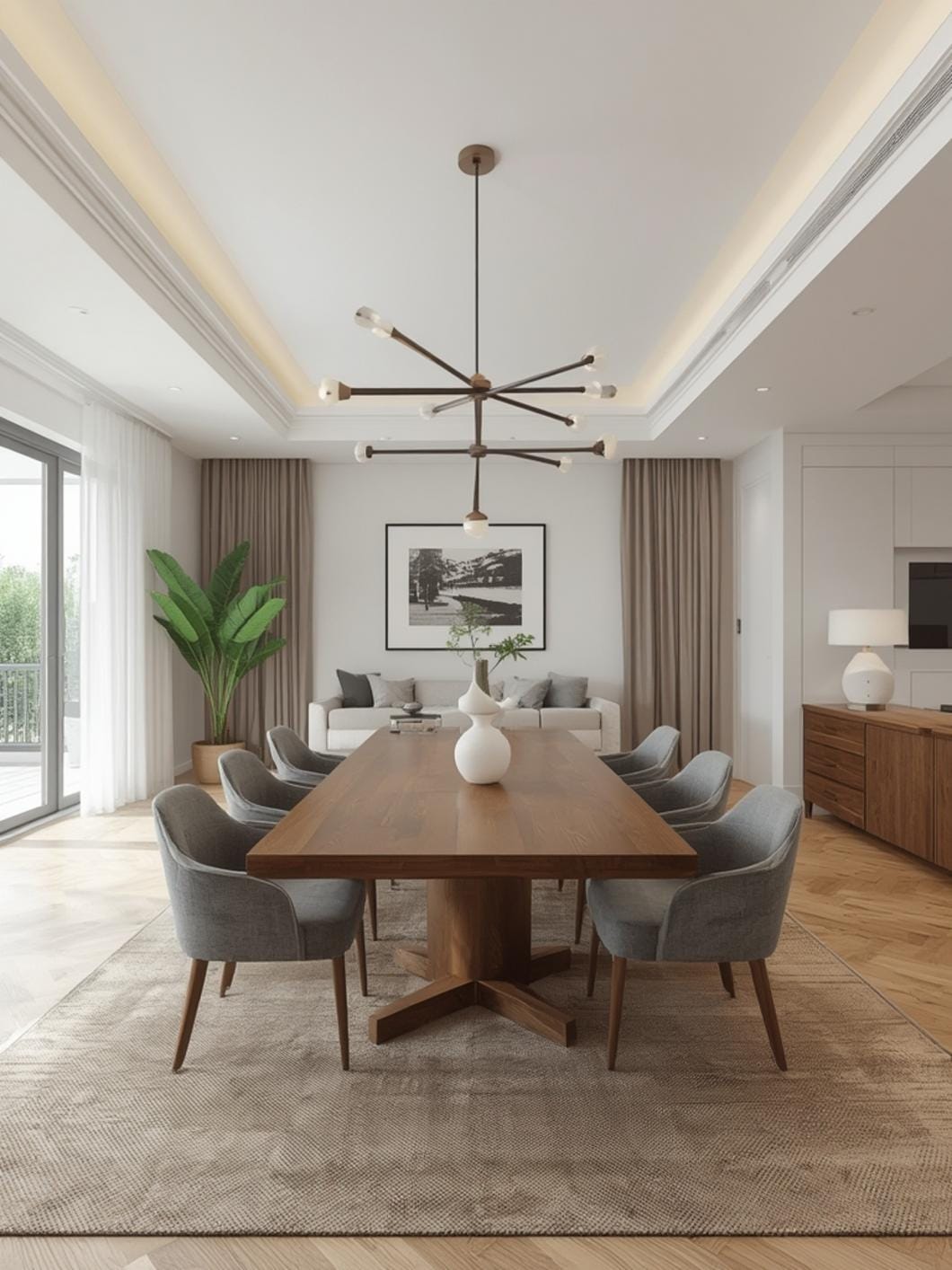
Even experienced homeowners make these errors when selecting dining furniture. Here’s how to sidestep the most common pitfalls.
Buying based on showroom lighting rather than your actual space. That dark wood that looked rich and elegant in the brightly-lit store might make your room feel cave-like. Request wood samples to view in your home’s natural light before committing.
Choosing style over comfort for chairs. Gorgeous chairs that hurt after twenty minutes will discourage everyone from lingering at the table. Always sit in chairs for several minutes and lean back to test lumbar support before purchasing.
Forgetting about cleaning and maintenance. Light-colored upholstery might look stunning now, but if you have young kids or entertain frequently, darker fabrics or leather-look materials will hide stains better and reduce your stress.
Ignoring your room’s architectural style. An ultra-modern glass table can clash with traditional crown molding and wainscoting. Your dining set should complement your home’s existing character, not fight against it.
Skipping the protection plan for upholstered pieces. Spills happen, especially around dining tables. A quality furniture protection plan typically costs 10-15% of your purchase price but can save you from costly reupholstering or replacement.
Maintenance and Upkeep Tips
Keep your dining set looking beautiful for years with these simple care routines that take just minutes.
Daily Care:
Wipe your table with a soft, dry cloth after meals to remove crumbs and prevent scratches. For wood tables, use coasters under all glasses to prevent water rings. Shake out chair cushions and spot-clean any spills immediately with a barely damp cloth.
Weekly Cleaning:
Dust all surfaces including chair legs and rungs where dust accumulates. For wood tables, use a cleaner specifically designed for your finish type—oil-based for natural wood, spray polish for sealed finishes. Vacuum upholstered seats with a brush attachment to remove trapped dirt.
Monthly Deep Clean:
Check all screws and bolts on chairs and tighten any that have loosened with regular use. Apply wood conditioner or polish to maintain the finish and prevent drying. Treat leather seats with appropriate conditioner to prevent cracking.
Seasonal Protection:
During humid summer months, use a dehumidifier in your dining room to prevent wood from swelling. In dry winter, a humidifier prevents cracking and splitting. Rotate chair positions occasionally so sunlight exposure and wear patterns stay even across all pieces.
Addressing Damage:
For minor scratches on wood, try a color-matched furniture marker before considering refinishing. Water rings often disappear with a paste of baking soda and water gently rubbed in circular motions. Small tears in fabric can be spot-repaired with fabric glue to prevent further unraveling.
Make Your Dining Room Work for You
Your dining room should feel like the welcoming, functional space you need it to be, whether that means cozy family dinners or elegant entertaining.
The perfect dining set isn’t about following trends or spending the most money. It’s about finding pieces that fit your actual space, support how you really live, and make you happy every time you walk into the room.
Ready to explore more ways to create a home you love? Browse more inspiration and practical advice at DecorKingdom, where beautiful living is always within reach.
FAQs
How much should I spend on a quality dining room set?
Expect to invest $800-$1,500 for a budget-friendly set that will last 5-7 years, $1,500-$3,000 for mid-range quality lasting 10-15 years, and $3,000+ for heirloom-quality pieces built to last decades. Your budget should reflect how often you’ll use the set and how long you plan to keep it.
Can I mix different chair styles with my dining table?
Absolutely! Mixing chair styles adds visual interest and personality to your dining room. Try using two armchairs at the table ends with four side chairs, or alternate between two complementary chair designs. Just keep one unifying element like wood tone, seat height, or color consistent.
What’s the best table shape for a small dining room?
Round tables work best in small spaces because they eliminate corners that bump into walls and traffic paths. A 42-48 inch round table seats four comfortably and takes up less visual space than a rectangular table. Pedestal bases provide more legroom than four-legged designs.
How do I know if a dining set will fit through my doorway?
Measure your doorway width and height, then check the dimensions of the table and chairs in their packaged state. Most tables ship with removable legs, so measure just the tabletop. If measurements are close, many retailers provide specific packaging dimensions to verify clearance before delivery.
Should I choose upholstered or non-upholstered dining chairs?
Upholstered chairs offer more comfort for long meals and conversation but require more cleaning maintenance. Non-upholstered chairs (wood, metal, or plastic) are easier to wipe clean and work better in households with young children or frequent entertainers. Consider upholstered seats with non-upholstered backs as a practical compromise.
—
Meta Title: Dining Room Sets Guide 2026: Choose the Perfect Fit
Meta Description: Find the ideal Dining Room Sets for your space. Learn to measure, compare styles, and avoid costly mistakes with our homeowner-friendly guide.