How to Choose Home Office Flooring Ideas That Boost Productivity
Working from home has become your new reality, and your feet are feeling it. Maybe you’re standing on cold tile that makes every morning feel like a shock to the system, or that old carpet is holding onto dust and making your allergies flare up during important video calls.
Your home office deserves flooring that works as hard as you do. The right home office flooring ideas can reduce fatigue during long work days, improve your room’s acoustics for clearer virtual meetings, and create a space that genuinely motivates you to sit down and get things done.
From cushioned comfort to professional polish, your floor sets the foundation for everything else in your workspace. The good news? You have more options than you might think, and many are surprisingly budget-friendly and renter-approved.
Table of Contents
What You’ll Need to Get the Look
The beauty of home office flooring is that most options don’t require professional installation. You’ll want to start by measuring your office space accurately—length and width in feet will help you calculate square footage and order the right amount of material.
For preparation, keep these essentials on hand:
– Tape measure and notepad for recording dimensions
– Utility knife or heavy-duty scissors for cutting material
– Level or straight edge for ensuring proper alignment
– Double-sided tape or adhesive squares for temporary installations
– Cleaning supplies appropriate for your subfloor type
Depending on which flooring style calls to you, you might also want furniture pads to protect your new surface, an anti-fatigue mat for additional comfort, or area rugs to define different zones within your office space.
Most homeowners find they can complete a home office flooring project in a weekend, making this one of the more approachable room updates you can tackle on your own.
Finding Your Style and Season
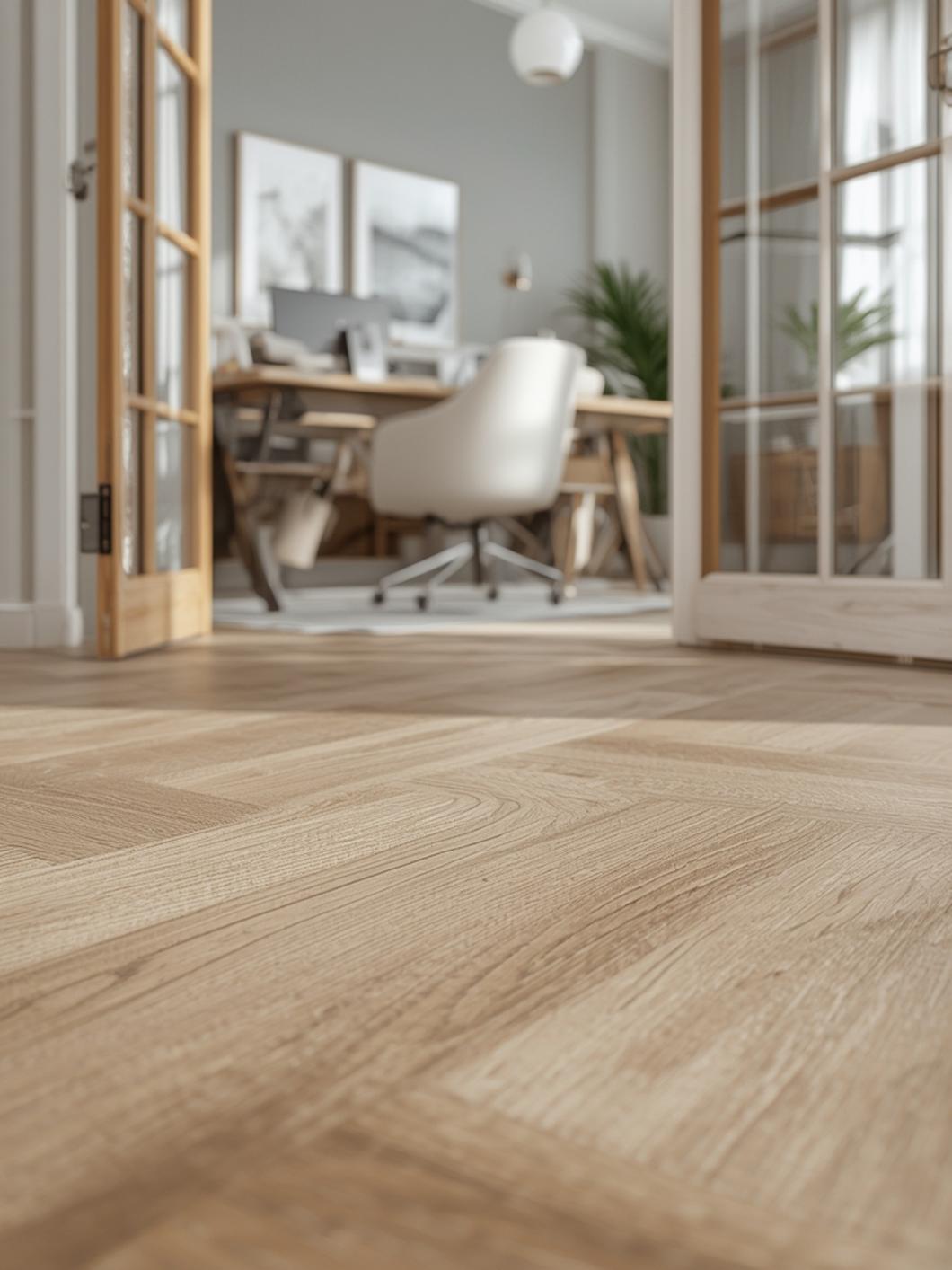
Your office flooring choice should reflect both your work style and your home’s existing aesthetic. If you’re someone who spends eight hours a day on Zoom calls, you’ll want something that looks polished in that bottom corner of your video frame.
Consider your work schedule when planning this update. Many floating floor options can be installed room by room, meaning you could work in your office in the morning and update the flooring in the afternoon. Peel-and-stick tiles are even faster—some homeowners complete their entire office during a single Saturday.
Season matters too, especially if you’re considering materials that need time to acclimate to your home’s temperature and humidity. Wood-look products typically need 48 hours to adjust before installation, so plan your project around a comfortable weather window.
Think about how your office connects to the rest of your home. If your workspace opens directly into your living area, you might want flooring that complements what’s already there rather than creating a jarring transition.
7 Ideas to Try in Your Home
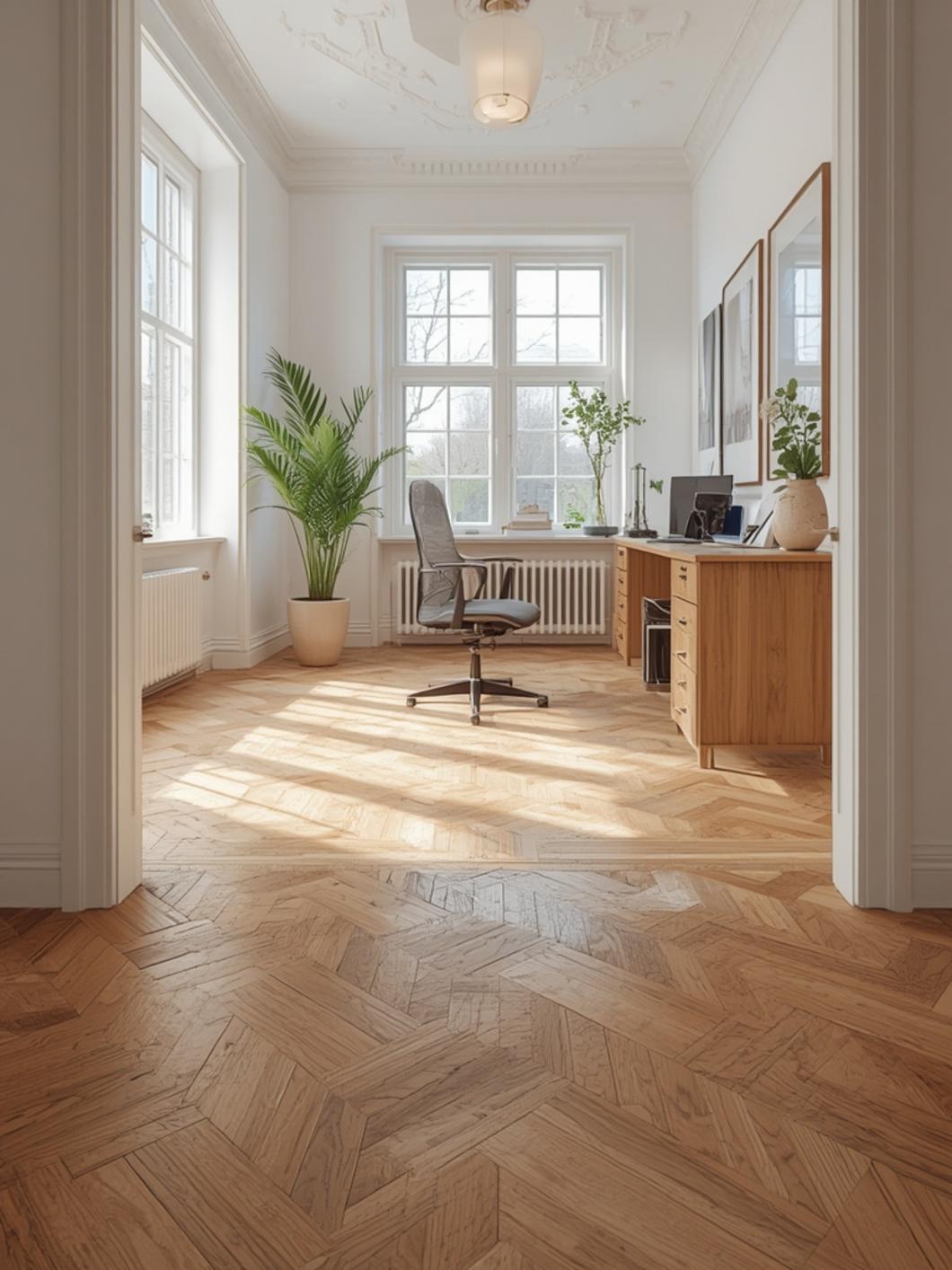
Luxury Vinyl Plank for the Look of Hardwood
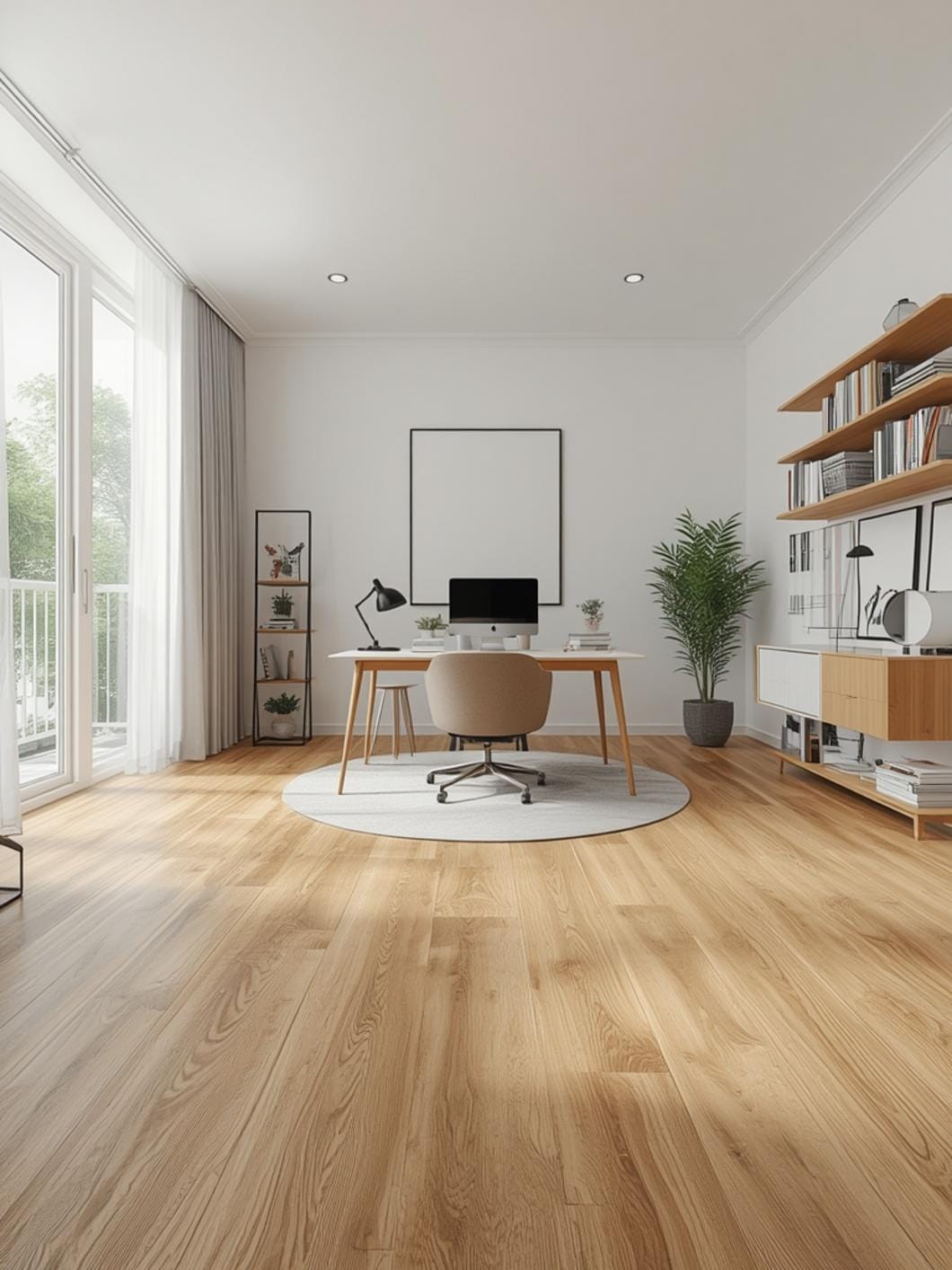
Luxury vinyl planks give you the warmth and character of real wood without the price tag or maintenance headaches. These click-together planks float over your existing floor, making them perfect for renters or anyone who wants flexibility. They’re water-resistant, so your coffee spills won’t turn into disasters, and they come in dozens of wood tones from light oak to rich walnut.
Cork Flooring for Natural Comfort
Cork offers natural cushioning that your feet will thank you for, especially during those marathon work sessions. This renewable material provides gentle give underfoot while staying firm enough to support your desk chair without creating permanent dents. Cork also dampens sound beautifully—your typing won’t echo, and household noise from other rooms won’t disrupt your concentration as easily.
Carpet Tiles for Customizable Warmth
Carpet tiles let you create exactly the look you want with the added bonus of easy replacement if one section gets stained or damaged. You can mix colors to create patterns, define your desk area with a different shade, or keep everything uniform. They’re especially wonderful if your home office tends to run cold, and they make dropped pens and pencils much easier to retrieve than hard surfaces do.
Bamboo for Sustainable Style
Bamboo brings an eco-conscious choice that doesn’t sacrifice durability or good looks. This rapidly renewable grass grows back quickly, making it a responsible choice that also happens to be incredibly hard-wearing. The natural grain patterns add visual interest without overwhelming your space, and bamboo works beautifully in both modern and traditional office designs.
Rubber Flooring for Active Workspaces
If you use a standing desk or like to take movement breaks throughout your day, rubber flooring deserves serious consideration. Originally designed for gyms and commercial spaces, home-friendly rubber tiles now come in attractive finishes that don’t scream “fitness center.” The best flooring for standing desks provides cushioning that reduces leg fatigue while offering enough stability for your chair to roll smoothly when you want to sit.
Laminate for Budget-Friendly Appeal
Laminate technology has come incredibly far from those obviously fake floors of the past. Today’s laminate options mimic stone, wood, and even concrete with impressive realism, all at a fraction of the cost of the real materials. Installation is straightforward for most homeowners, and the surface resists scratches from chair wheels better than many pricier alternatives.
Polished Concrete Overlay for Industrial Chic
If your home office sits in a basement or you’re drawn to modern industrial aesthetics, a polished concrete overlay can transform boring gray slab into a design statement. While this option typically requires professional application, the maintenance afterward is minimal—just occasional mopping keeps it looking sharp. The thermal mass of concrete helps regulate temperature naturally, keeping your office cooler in summer.
Benefits That Go Beyond Good Looks
The right office flooring does more than just please your eyes. It actively improves your work-from-home experience in ways you’ll notice every single day.
Better floors reduce physical fatigue. When you’re standing at your desk or moving between your chair and filing cabinet, cushioned or resilient flooring absorbs impact and takes pressure off your joints. Many remote workers report less lower back pain and fewer tired legs after upgrading from hard tile or thin carpet.
Sound quality improves dramatically with appropriate flooring choices. Cork and carpet naturally absorb sound waves, meaning your virtual meetings come through more clearly and household noises don’t interrupt your concentration as much. Even hard surfaces like vinyl and laminate create less echo than tile or concrete.
Your mood gets a boost too. Walking into a workspace that feels intentionally designed rather than thrown together changes your mindset. Professional-looking flooring helps you shift into work mode mentally, creating that important boundary between home life and work life even when they happen in the same building.
Tips, Alternatives, Styling Advice
Budget-Friendly Approach
Foam floor tiles designed for home gyms cost just pennies per square foot and come in neutral colors that work surprisingly well in offices. Layer an attractive area rug over top for visual appeal, and you’ve created comfortable, affordable flooring for under two hundred dollars in most home offices.
Mid-Range Sweet Spot
Peel-and-stick vinyl tiles offer impressive bang for your buck, typically running between two and four dollars per square foot. Choose a pattern that mimics more expensive materials like marble or terrazzo, and most visitors won’t realize you didn’t spend a fortune. The adhesive backing makes installation completely doable in an afternoon without special tools.
Premium Investment
Engineered hardwood brings authentic wood beauty with better moisture resistance than solid hardwood. Expect to invest five to eight dollars per square foot, but you’re getting flooring that can last decades and adds real value to your home. The warmth and richness of real wood makes every workday feel a bit more special.
Small Space Adaptation
In tight home offices, lighter flooring colors make the room feel more spacious and reflect more natural light. Consider running planks or tiles diagonally rather than parallel to the walls—this creates visual interest and tricks the eye into perceiving more square footage than actually ex
Common Mistakes to Avoid
Many homeowners skip the acclimation period for their flooring materials, leading to gaps or buckling later. Always let your new flooring sit in the room where it’ll be installed for at least 48 hours so it can adjust to your home’s temperature and humidity levels.
Choosing flooring without considering your desk chair type causes frustration down the line. Hard plastic wheels on plush carpet create rolling resistance that makes every movement feel like a workout, while soft rubber wheels might leave marks on some hard surfaces. Match your flooring choice to your existing furniture or plan to upgrade chair wheels at the same time.
Forgetting about transition strips where your office floor meets hallway or other room flooring creates tripping hazards and looks unfinished. These simple pieces cost just a few dollars and make your installation look professionally done while protecting floor edges from damage.
Installing dark flooring in a north-facing room without adequate lighting turns your workspace gloomy. If your office doesn’t get much natural light, stick with lighter floor colors and plan to add extra task lighting to keep the space feeling energized rather than cave-like.
Neglecting the subfloor condition leads to disappointing results no matter how nice your surface flooring looks. Take time to repair squeaky spots, fill in gaps, and create a level surface before laying down your new floor—this preparation makes everything that goes on top look and perform better.
Maintenance That Keeps Your Floor Looking Fresh
Most home office flooring needs nothing more than regular sweeping or vacuuming to stay beautiful. Chair wheels pick up surprising amounts of dust and debris, so a quick once-over every few days prevents particles from scratching your floor’s surface.
For vinyl, laminate, and bamboo floors, damp mopping with plain water or a manufacturer-recommended cleaner once weekly keeps things looking pristine. Avoid soaking the floor—excess water can seep into seams and cause problems—so wring out your mop thoroughly before each pass.
Cork flooring benefits from resealing every few years to maintain its water resistance. The process takes just an afternoon and dramatically extends the life of your floor, making it well worth the minimal effort involved.
Place mats under your desk chair to distribute weight more evenly and prevent indentations, especially if you’ve chosen softer flooring like cork or carpet. These protective mats are inexpensive and practically invisible once your chair sits on top, but they prevent damage that would otherwise be permanent.
Address spills and stains immediately rather than letting them set. Even water-resistant flooring performs better when liquids get wiped up quickly, and you’ll avoid discoloration or material breakdown that comes from prolonged exposure to moisture.
Your Workspace Deserves This Upgrade
Great home office flooring grounds your entire workspace, literally and figuratively. When your feet feel comfortable and your room looks pulled together, you’ll find yourself more focused, more productive, and genuinely happier to clock in each morning.
The options available today mean you don’t need a contractor’s budget or skills to create professional results. Whether you choose the warmth of cork, the practicality of vinyl, or the sustainability of bamboo, you’re investing in the space where you spend a significant portion of your life.
Ready to explore more ways to make your home office work harder for you? Browse our complete collection of workspace design ideas at DecorKingdom for inspiration that fits your style and budget.
FAQs
What is the most comfortable flooring for a home office where I stand all day?
Cork and rubber flooring provide the most cushioning for standing work, with cork offering a more residential look and rubber delivering maximum fatigue reduction. Both materials have natural give that reduces stress on your legs, knees, and lower back during extended standing periods. If you prefer the look of hard flooring, add an anti-fatigue mat in front of your standing desk for similar comfort benefits.
Can I install home office flooring over existing carpet?
Most floating floor options like vinyl planks and laminate should not go directly over carpet because the soft, uneven surface underneath will cause your new floor to flex and potentially break apart at the seams. Your best approach is either removing the carpet first or choosing interlocking foam tiles specifically designed to go over low-pile carpet. Removing carpet is easier than most homeowners expect and creates better long-term results.
How do I choose flooring color for a home office with little natural light?
Lighter flooring colors reflect available light and make dim spaces feel more open and energized, so look for pale wood tones, light grays, or cream colors rather than dark browns or black. Consider flooring with subtle pattern or texture variation rather than solid color—this hides dust and wear better while still keeping the space bright. Pair light floors with warm-toned lighting to prevent your office from feeling cold or sterile.
Will desk chair wheels damage my new home office floor?
Hard plastic wheels can scratch and scuff most flooring types over time, while soft rubber wheels are gentler on hard surfaces but may leave marks on some vinyl. The simplest solution is placing a clear chair mat under your desk area to protect your floor regardless of wheel type. Choose a mat specifically designed for your flooring type—carpet mats have gripping teeth underneath while hard floor mats are smooth.
What’s the most affordable home office flooring that still looks good?
Peel-and-stick vinyl tiles offer the best combination of low cost and attractive appearance, typically running two to three dollars per square foot with designs that convincingly mimic expensive materials. Foam floor tiles cost even less but look more casual, while laminate flooring falls in the middle price range and offers excellent durability for the investment. All three options install easily without professional help, saving you even more money on labor costs.
—
Meta Title: Home Office Flooring Ideas That Actually Work (2026)
Meta Description: Discover home office flooring ideas that reduce fatigue and boost productivity. From cork to vinyl, find your perfect workspace floor today.