Small Living Room Ideas with TV: Space-Saving Solutions
You love curling up on the couch for movie night, but your TV setup feels awkward. Maybe your screen sits too high on the wall, or your furniture crowds around it in all the wrong ways.
Finding small living room ideas with TV that actually work can transform how you enjoy your favorite space. You don’t need a massive room to create a comfortable, stylish setup that brings everyone together.
Your living room should feel inviting, not cramped or cluttered. With the right approach, even the tiniest space can accommodate your TV beautifully while leaving room for conversation, play, and relaxation.
Table of Contents
What You’ll Need to Get the Look
Creating a TV-friendly small living room starts with choosing the right pieces. You’ll want furniture that serves multiple purposes and doesn’t overwhelm your space.
Consider these essential elements:
– A low-profile media console or floating shelf unit
– Compact seating like a loveseat, apartment-size sofa, or sectional designed for small spaces
– Slim side tables or nesting tables that tuck away when not needed
– A small area rug to define your viewing zone
– Wall-mounted TV bracket or slim TV stand
– Cable management boxes or cord covers
– Lightweight accent chairs that you can easily move
– Storage baskets or decorative boxes for remotes and accessories
Light-colored furniture helps your space feel more open. Dark pieces can work too, but they need careful balance with lighter walls and textiles.
Your media console should be proportional to your TV size. A 50-inch screen looks best on a stand that’s at least 50 inches wide, while smaller TVs work beautifully on narrower consoles.
Finding Your Style and Season
Your small living room TV setup doesn’t need to change with the seasons, but your styling approach might shift based on how you live throughout the year.
During winter months, you’ll probably spend more time watching movies and shows. This makes cozy throws, extra cushions, and warm lighting especially important around your TV area.
Summer brings more natural light, which means you might need blackout curtains or adjustable blinds to reduce screen glare. You’ll also want to ensure your viewing area stays cool and comfortable.
Spring and fall are perfect times to rethink your layout entirely. The moderate temperatures make moving furniture less exhausting, and you can experiment with different arrangements without committing to a major overhaul.
Consider your daily routine too. If you watch TV mostly at night, prioritize ambient lighting that reduces eye strain. Morning news watchers need window treatments that control bright sunlight without darkening the entire room.
7 Ideas to Try in Your Home
Transform your compact living room with these proven layout and styling approaches that maximize every inch.
Corner Angle Placement
Position your TV in the corner at a 45-degree angle instead of flat against the wall. This opens up wall space for other furniture and creates better viewing angles from multiple seats. A corner TV stand with open shelving adds storage without bulk.
Gallery Wall Integration
Mount your TV as part of a larger gallery wall arrangement. Surround it with artwork, photos, and decorative objects in matching frames. This approach makes your screen feel like an intentional design element rather than a dominant focal point.
Behind-the-Sofa Console
If your sofa floats in the room rather than sitting against a wall, place a slim console table behind it with your TV on top. This furniture arrangement trick for awkward TV placement works beautifully in studio apartments or open-concept spaces where traditional setups don’t fit.
Vertical Storage Focus
Use tall, narrow shelving units on either side of your TV to draw the eye upward. This vertical emphasis makes your ceiling feel higher and your room feel larger. Store books, plants, and decorative items on these shelves to add personality.
Multi-Functional Room Divider
Mount your TV on a pivoting wall mount attached to a bookshelf or room divider. You can angle the screen toward your seating area for viewing, then turn it away when you want to focus on conversation or other activities.
Low and Wide Arrangement
Keep your TV and console low to the ground and extend your media furniture wider rather than taller. This horizontal emphasis makes small rooms feel more spacious. Add floor cushions or a low ottoman for flexible seating options.
Minimalist Wall Mount
Mount your TV directly on the wall with no visible console beneath it. Install floating shelves below for your media devices and use a cable management system to hide all cords. This ultra-clean approach works especially well in modern or Scandinavian-inspired spaces.
Hidden TV Cabinet
Invest in a media cabinet with doors that close to conceal your TV when you’re not watching. This traditional furniture piece doubles as a credenza or buffet, making your living room feel more like a refined sitting room than a media center.
Window Wall Placement
If you have a small window wall, mount your TV on the adjacent wall perpendicular to the window. This prevents glare issues while keeping your window area open for natural light and curtains. Position your sofa across from the TV rather than directly under the window.
Benefits for Your Daily Life
A well-planned TV setup in your small living room does more than just look good. It fundamentally changes how you experience your home.
You’ll enjoy better posture and less neck strain when your screen sits at proper eye level. Most people mount their TVs too high, creating an uncomfortable viewing angle that becomes painful during longer viewing sessions.
Your room will feel more spacious and less cluttered when everything has a designated spot. Hidden cable management and smart storage solutions eliminate the visual chaos that makes small spaces feel even smaller.
Family time becomes more enjoyable when everyone can see the screen comfortably. Strategic furniture placement ensures no one ends up with a awkward side view or blocked sightline.
Your space becomes more versatile too. When your TV isn’t the overwhelming focal point, you can easily shift the room’s purpose from entertainment to conversation, work, or play.
Budget-Friendly to Premium Solutions
Budget-Friendly Approach
Start with what you have and make small improvements. A basic wall mount costs between $20-50 and instantly frees up floor space. Use adhesive cable clips to manage cords for just a few dollars, and repurpose a bookshelf as a media console.
Affordable furniture risers can adjust your existing console to the perfect height. Paint or refinish old pieces to match your vision instead of buying new.
Mid-Range Investment
Quality media consoles designed specifically for small spaces typically range from $200-600. These pieces often include built-in cable management and storage solutions that cheaper options lack.
Consider a good swivel or tilting wall mount in the $75-150 range that gives you flexibility in viewing angles. Invest in one or two custom-built floating shelves that fit your exact wall dimensions.
Replace your old TV with a newer model that’s thinner and lighter. Modern screens look better on walls and in tight spaces than bulky older models.
Premium Experience
High-end media furniture systems from $800-2000 offer sophisticated hidden TV options, integrated lighting, and premium materials that elevate your entire room.
Custom built-ins designed around your specific space and TV create a seamless look worth the investment if you plan to stay in your home long-term. Professional installation ensures perfect placement and concealed wiring.
Smart home integration with automated shades, ambient lighting systems, and universal remotes creates a luxury viewing experience. Frame TVs that display art when not in use completely transform how your television integrates into your decor.
Common Mistakes to Avoid
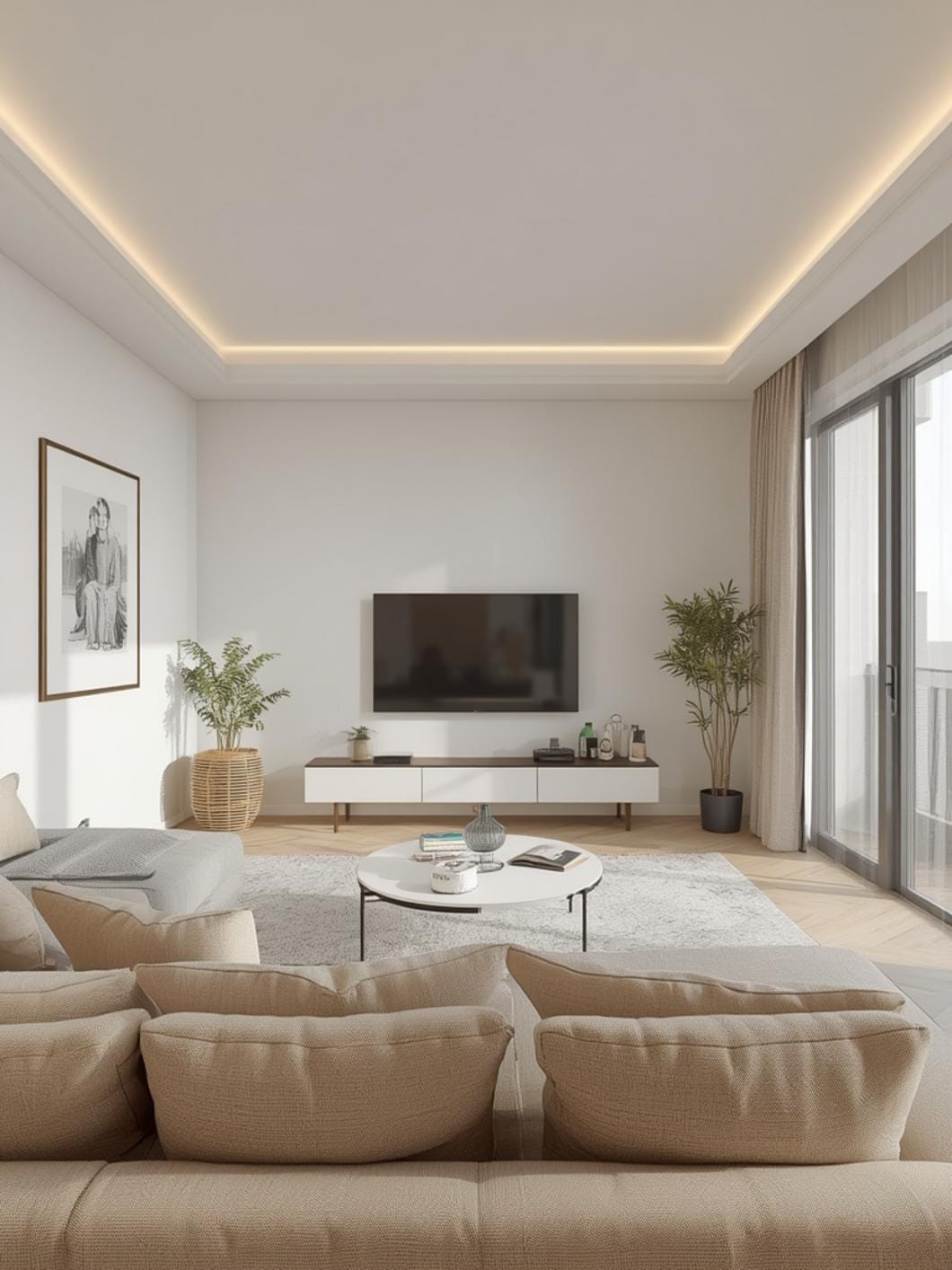
Mounting the TV too high on the wall. Your screen’s center should sit at eye level when you’re seated, typically 42-48 inches from the floor. Measure while sitting on your actual furniture to get this right.
Choosing furniture that’s too large for the viewing distance. You need about 1.5 to 2.5 times your screen’s diagonal measurement between your TV and seating. A 50-inch TV requires 6-10 feet of viewing distance for comfortable watching.
Ignoring the room’s natural light sources. Placing your TV directly across from a bright window creates terrible glare that ruins daytime viewing. Position your screen perpendicular to windows or invest in proper window treatments.
Pushing all furniture against the walls. This actually makes small rooms feel smaller and creates awkward TV viewing angles. Float your sofa a few inches from the wall to create depth and better flow.
Forgetting about sound quality. Built-in TV speakers sound terrible in small rooms where sound bounces off nearby walls. A simple soundbar improves your experience dramatically without taking up much space.
Simple Care and Maintenance
Keep your small living room TV area looking fresh with minimal effort. Dust your screen weekly with a microfiber cloth designed for electronics, never paper towels or rough fabrics.
Vacuum around and behind your media console monthly to prevent dust buildup on cables and devices. This simple habit also reduces fire risk from overheated electronics.
Check cable connections every few months to ensure nothing has worked loose. Reorganize cords if they’ve become tangled or messy, as visible cable chaos makes your whole room feel disorganized.
Rearrange your furniture seasonally to prevent carpet indentations and uneven wear patterns. This also gives you a chance to try new viewing angles and refresh your space without spending money.
Clean your TV screen properly when needed using a solution made specifically for flat screens. Spray the cleaner on your cloth, never directly on the screen, and wipe gently in circular motions.
Make Your Small Space Work Hard
Your small living room can absolutely accommodate your TV beautifully without sacrificing style or comfort. The key lies in thoughtful furniture arrangement, smart storage solutions, and creative placement strategies.
Start with one idea from this guide that resonates with your space and lifestyle. Even small changes in TV placement or furniture positioning can make a dramatic difference in how your room feels and functions.
Explore more inspiring room solutions and practical decorating advice here at DecorKingdom, where we help you create a home you’ll love living in every single day.
FAQs
What’s the ideal TV size for a small living room?
For most small living rooms, a 43-50 inch TV provides the best balance between viewing experience and space proportion. Measure your viewing distance first, then choose a screen size that fits within the 1.5-2.5 times that measurement. Anything larger can overwhelm your space and strain your eyes.
Should I mount my TV on the wall or use a stand in a small room?
Wall mounting typically works better in small spaces because it frees up valuable floor space and creates a cleaner look. However, if you rent or can’t drill into walls, a low-profile TV stand works fine as long as it’s properly proportioned to your screen size. Choose whichever option gives you the correct viewing height.
How do I hide TV cords in a small living room without calling an electrician?
Use adhesive cord covers that run along your wall from the TV to your outlet, or install a cable management kit with paintable channels. Furniture placement can also hide cords if you position a console or plant strategically. For wall-mounted TVs, in-wall cord concealment kits require no electrical work and simply guide cables behind drywall.
Can I put my TV in front of a window if I have no other walls?
Avoid placing your TV directly in front of a window if at all possible, as backlight creates viewing problems and damages screens over time. If you absolutely must use that wall, invest in blackout curtains or cellular shades that you can close during viewing. Consider the perpendicular wall as a better option even if the layout feels less conventional.
What’s the best furniture arrangement for a narrow rectangular living room with a TV?
In narrow rooms, place your TV on one of the short walls and angle your seating toward it. Use a loveseat or apartment sofa rather than a full-size sectional, and add one accent chair perpendicular to create conversation space. Avoid lining all furniture along the long walls, which creates a bowling alley effect and poor viewing angles.
—
Meta Title: Small Living Room Ideas with TV: 9 Smart Layouts (2026)
Meta Description: Transform tight spaces with small living room ideas with TV. Get furniture arrangement tricks for awkward TV placement that actually work.