Stop Tripping Over Your Bike: The Slat Wall Fix Every Garage Needs
Your garage floor is crowded with bikes leaning against walls, tangled handlebars, and that constant worry someone will knock them over. You want your bikes stored safely and off the ground, but you also want your garage to look organized and intentional.
Garage slat wall organizers bikes offer a smart solution that turns your garage wall into a functional storage system. These systems use horizontal slats mounted to your wall, accepting various hooks and accessories that hold bikes securely at any height you choose.
The beauty of slat wall systems is their flexibility. You can rearrange bike hooks whenever your storage needs change, add accessories for helmets and gear, and create a custom setup that works for your family’s collection of bikes.
Table of Contents
Materials & Decor Elements
Before you start organizing your bikes on a slat wall system, you’ll need these essential items:
– Slat wall panels in your preferred finish (typically 4×8 feet sheets)
– Bike hooks designed for slat walls (horizontal or vertical styles)
– Wall studs or wall anchors rated for the combined weight
– Level and measuring tape for accurate installation
– Pencil for marking stud locations and panel placement
– Drill with basic bits for pilot holes
– Screws or heavy-duty anchors appropriate for your wall type
– Helmet hooks and accessory baskets for complete bike gear storage
– Rubber padding or foam to protect bike frames where they contact hooks
Choose slat wall panels in colors that complement your garage aesthetic. Gray, black, and natural wood tones are popular because they hide dirt and create a clean backdrop for your bikes.
The hooks themselves come in different weight capacities, so match them to your heaviest bike. Most quality bike hooks support 50-75 pounds each, which handles everything from kids’ bikes to adult mountain bikes.
Timing / Project Planning
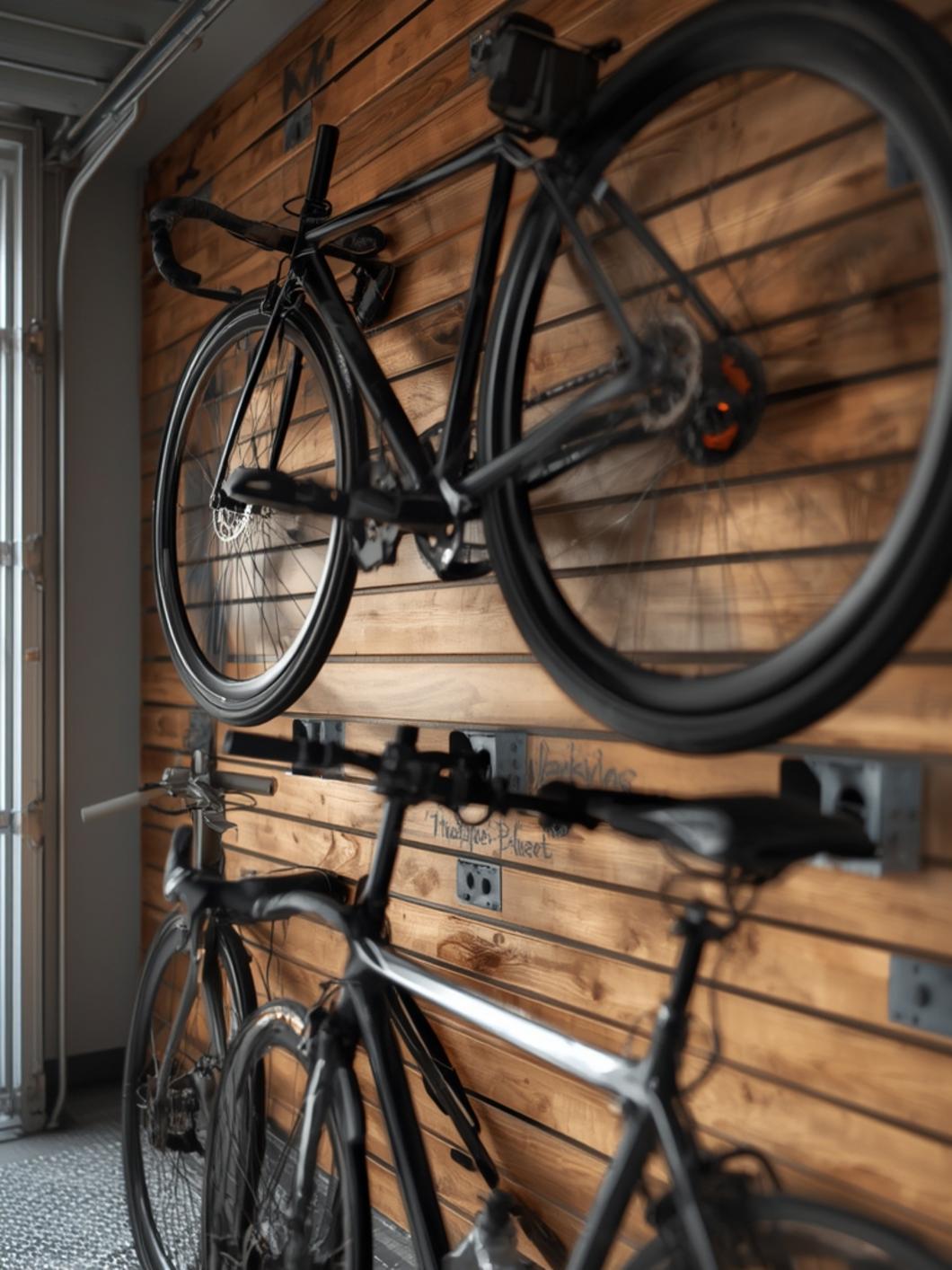
Installing a slat wall system and organizing your bikes typically takes 3-5 hours for an average two-car garage wall. This includes measuring, mounting the panels securely, and arranging your bikes with proper spacing.
Budget considerations:
– Entry-level approach: $150-300 for basic slat wall panels and simple bike hooks
– Mid-range setup: $300-600 for higher-quality panels, multiple accessories, and professional-grade hooks
– Premium investment: $600-1200 for extensive wall coverage, designer finishes, and complete bike storage systems
Plan this project for a weekend when you can work without rushing. You’ll want good lighting and comfortable temperatures since you’ll be working in your garage for several hours.
Spring and fall are ideal seasons for this project because moderate temperatures make garage work pleasant. You’ll also want to avoid extreme heat or cold that might affect your focus during installation.
If you’re organizing multiple bikes for a family, measure each bike’s width and height before starting. This prevents cramped spacing and ensures every bike has its dedicated spot without handlebars overlapping.
Step-by-Step Instructions
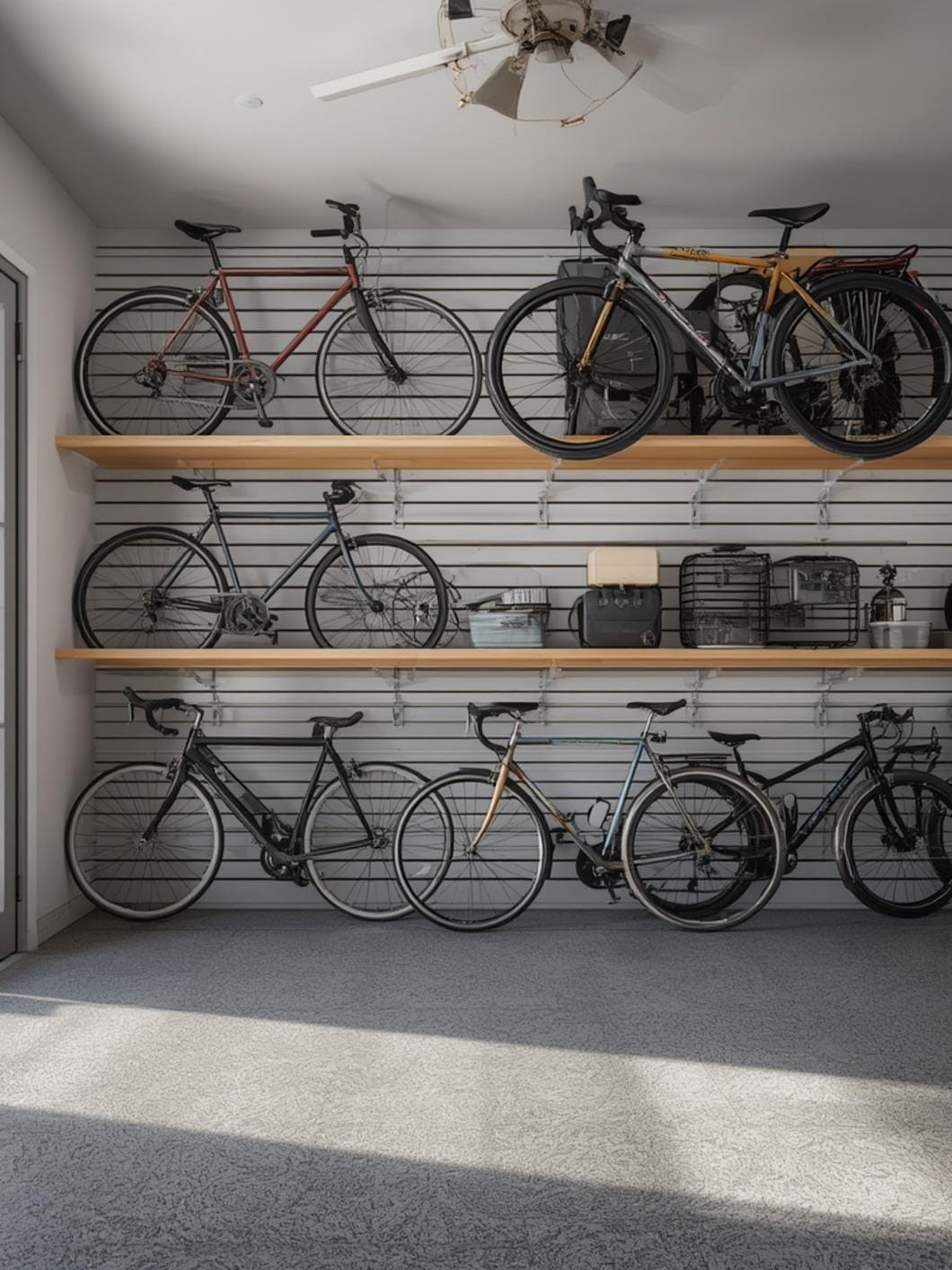
Step 1: Measure and plan your wall layout
Stand in your garage and identify which wall offers the most convenient access for bikes. Measure the wall width and height, then sketch where each bike will hang based on its size.
Leave at least 18-24 inches between bikes to prevent handlebars from touching. Taller adult bikes should hang higher, while kids’ bikes can occupy lower positions for easier access.
Step 2: Locate and mark wall studs
Use a stud finder to locate vertical studs in your garage wall. Mark each stud location with light pencil marks from floor to ceiling.
Your slat wall panels must attach directly to these studs for proper weight support. Panels attached only to drywall will pull away when loaded with bikes.
Step 3: Install slat wall panels
Position your first panel so its edges align with stud centers. Use a level to ensure perfect horizontal alignment before drilling pilot holes.
Secure panels to studs with screws every 12-16 inches vertically. Work across the wall, adding panels until you’ve covered your planned storage area.
Step 4: Insert bike hooks into slat channels
How to mount bikes on garage slat walls starts with choosing the right hook style. Horizontal hooks hold bikes parallel to the wall by the front wheel, while vertical hooks position bikes perpendicular to the wall.
Slide each hook into the slat channel at your planned height. Most hooks simply drop into the channel and lock in place when you pull down slightly.
Step 5: Adjust hook positions for each bike
Lift your first bike and test the hook position. The front wheel should settle into the hook securely without the bike tilting awkwardly.
Adjust the hook up or down in the slat channels until you find the perfect height. The bike should feel stable and balanced when hanging.
Step 6: Add protective padding
Wrap foam or rubber padding around any contact points where the bike frame touches hooks or walls. This prevents paint scratches and frame damage over time.
Small adhesive-backed foam strips work perfectly for this purpose and cost just a few dollars at hardware stores.
Step 7: Organize remaining bikes and accessories
Hang each bike from lightest to heaviest, checking that weight is distributed across multiple studs. Add helmet hooks, basket accessories, and gear storage between bikes.
Label each bike’s spot if you have multiple family members sharing the space. This maintains organization and ensures everyone returns bikes to their correct positions.
Benefits / Advantages
Slat wall bike storage transforms your garage from cluttered chaos to organized efficiency. Your bikes hang safely above the floor, protecting them from accidental damage and creating valuable floor space for cars or workspace.
The flexibility of slat systems means your storage adapts as your family grows. Add hooks for new bikes, remove accessories you no longer need, and rearrange everything without reinstalling panels.
Kids can reach their own bikes when hooks are positioned at appropriate heights, building independence and responsibility. You’ll spend less time untangling bikes and more time actually riding them.
Your bikes stay cleaner when hanging vertically because dirt and dust settle on the floor instead of accumulating on frames. Tires don’t develop flat spots from prolonged floor contact either.
The visual impact of organized bikes creates a garage you’re proud to show guests. Well-arranged bikes on matching hooks demonstrate intentional home care and attention to detail.
Tips, Alternatives, Styling Advice
Budget-friendly approach: Install a single 4×8 panel in your most convenient wall section and hang 2-3 bikes there. Start with basic utility hooks from hardware stores, then upgrade accessories gradually. This focused approach costs $150-200 and dramatically improves bike storage.
Mid-range solution: Cover 8-12 feet of wall with matching slat panels and invest in specialty bike hooks designed for the system. Add coordinating baskets for helmets, locks, and repair tools. Budget $400-500 for a polished, comprehensive setup that handles a family’s bike collection.
Premium installation: Cover an entire garage wall with high-end slat panels in wood-grain or metallic finishes. Install professional bike hooks with adjustable arms, LED lighting strips in the slat channels, and custom accessory combinations. This $800-1000 investment creates showroom-quality bike storage.
Small garage adaptation: Even in tight spaces, a 4-foot section of slat wall can organize 2-3 bikes vertically. Mount panels on the wall opposite your garage door where bikes won’t interfere with car access. Use vertical bike hooks that position bikes perpendicular to the wall, minimizing the space they occupy.
Choose hook colors that complement your bike frames for a cohesive look. Black hooks work with any bike color, while chrome hooks add a sporty, modern feel.
Consider installing slat panels at different heights if you store both adult and children’s bikes. Lower panels make it easy for kids to hang their own bikes without assistance.
Common Mistakes to Avoid
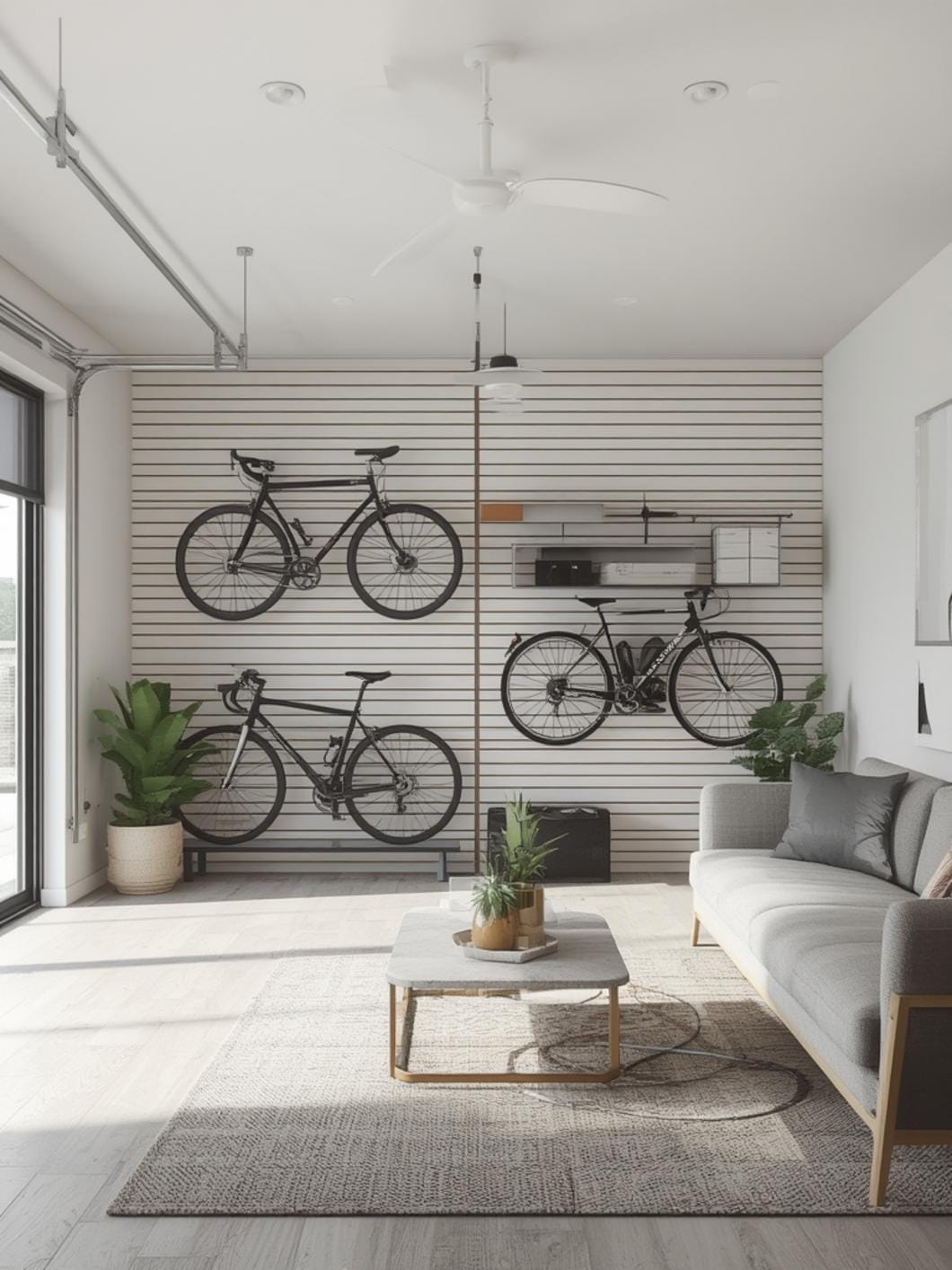
Hanging bikes too close together creates frustration when you need to remove one bike from the middle of the group. Maintain 20-24 inches between bikes so handlebars and pedals don’t interfere with neighboring bikes.
Skipping stud attachment causes panels to pull away from walls under bike weight. Always secure panels directly to wall studs, using multiple screws per stud for maximum stability.
Using hooks not rated for bike weight leads to bent hooks and dropped bikes. Check each hook’s weight capacity and confirm it exceeds your heaviest bike by at least 10 pounds for safety margin.
Positioning hooks too high makes lifting bikes difficult, especially for shorter family members or when handling heavy mountain bikes. Place hooks at comfortable lifting height, typically 5-6 feet high for adult bikes.
Forgetting protective padding allows metal hooks to scratch bike frames and paint. Apply foam padding wherever bikes contact hooks or walls to preserve your bikes’ appearance.
Maintenance / Upkeep Tips
Inspect hook connections monthly by gently tugging each bike to ensure hooks remain locked in slat channels. Vibrations from garage door operation can gradually loosen accessories over time.
Wipe slat panels quarterly with a damp cloth to remove dust and cobwebs that accumulate in the channels. Clean panels maintain their appearance and make it easier to slide hooks into new positions.
Tighten panel mounting screws twice yearly, especially if you live in areas with significant temperature fluctuations. Expansion and contraction can gradually loosen fasteners.
Check protective padding every few months and replace worn foam that no longer cushions contact points. Fresh padding costs just a few dollars and prevents expensive frame damage.
Rearrange bike positions seasonally based on usage patterns. Bikes you ride frequently should occupy the most accessible hooks, while seasonal bikes can move to less convenient positions.
Conclusion
Organizing bikes with slat wall systems brings order to your garage while protecting your investment in quality bikes. The flexibility of these systems grows with your family’s changing needs, making them a smart long-term storage solution.
Start with the basics—panels, hooks, and proper mounting—then expand your system as you discover how much easier bike storage becomes. Your garage will look better, function better, and make cycling more enjoyable for everyone.
Ready to organize more than just bikes? Explore additional garage storage inspiration and practical advice throughout DecorKingdom to transform your entire space.
FAQs
How much weight can garage slat wall organizers hold per bike?
Quality slat wall systems support 50-75 pounds per bike hook when properly installed into wall studs. This capacity handles most adult bikes comfortably, including heavier mountain bikes and e-bikes. Always check the specific weight rating on your chosen hooks and distribute multiple bikes across different studs rather than clustering them in one area.
Can I install slat wall panels on concrete garage walls?
Yes, you can mount slat walls on concrete using heavy-duty concrete anchors rated for the total weight you’ll hang. Drill holes, insert anchors, then secure panels with appropriate fasteners. Concrete installations often provide even stronger support than wood stud walls because the entire surface bears the weight evenly.
What’s the best hook style for storing kids’ bikes?
Horizontal hooks work best for children’s bikes because kids can simply lift the front wheel into the hook without complicated maneuvering. Position these hooks 3-4 feet high so children can independently hang and retrieve their bikes. Choose hooks with wider cradles that accommodate smaller wheel sizes securely.
Do slat wall systems damage garage walls when removed?
Slat wall removal leaves screw holes in your wall, similar to removing any shelving system. These holes are easily filled with spackling compound and touched up with paint. The panels themselves don’t damage drywall or studs, making them a less permanent option than built-in bike storage systems.
How many bikes can I store on an 8-foot slat wall section?
An 8-foot section typically accommodates 3-4 adult bikes comfortably with proper spacing between handlebars. You can fit 5-6 children’s bikes in the same space due to their smaller width. The exact number depends on your bikes’ handlebar width and whether you use horizontal or vertical hook orientations.
—
Meta Title: Garage Slat Wall Organizers Bikes: Smart Storage 2026
Meta Description: Stop tripping over bikes! Garage slat wall organizers bikes create flexible storage that grows with your family. Simple setup, zero clutter.