7 Black Accent Wall Ideas for a Living Room That Feels Bold, Not Cold
You walk into your living room and something feels… safe. Beige walls, neutral furniture, and a vibe that whispers “I’m afraid of making a mistake.” There’s nothing wrong with neutrals, but maybe you’re craving something that makes a real statement—something dramatic and confident without swallowing your space whole.
That’s where black accent wall living room ideas come in. A single black wall can anchor your entire room, create depth, and give your furniture and decor something bold to play against. It’s not about making your space feel smaller or darker—it’s about adding intentional drama that actually makes everything else look better.
The trick is knowing which wall to paint, how to balance the darkness with light, and which styling choices will make your black accent wall feel like a design choice instead of a decorating accident.
Table of Contents
What You’ll Need to Get the Look
Creating a stunning black accent wall starts with the right materials and a few thoughtful decor choices. Here’s what you’ll want to gather before you start:
Paint and Application Supplies:
– Matte or eggshell black paint (glossy finishes can look harsh)
– High-quality primer in gray or white
– Painter’s tape and drop cloths
– Quality paint roller and angled brush
– Paint tray and liner
Lighting Elements:
– Table lamps with warm bulbs for layered lighting
– Wall sconces or picture lights to prevent a cave-like feel
– Floor lamp for the opposite corner
– Dimmer switches if your overhead lighting allows
Furniture and Decor:
– Light-colored sofa or chairs to create contrast
– Gold, brass, or copper accent pieces
– Textured throw pillows in cream, tan, or soft gray
– Large mirror or metallic-framed artwork
– Area rug with light tones to reflect light upward
Finding Your Style and Season

Your black accent wall can work year-round, but the mood shifts depending on how you style it. Think of black as your backdrop—the stage where your seasonal decor gets to shine.
During spring and summer, balance the darkness with fresh whites, soft linens, and greenery. Add potted plants, white ceramic vases, and natural wood furniture to keep things airy. The black wall makes those organic textures pop instead of getting lost in an all-neutral space.
Fall and winter are when black accent walls truly come alive. Layer in velvet throw pillows, chunky knit blankets, and metallic candle holders. The darkness feels cozy instead of stark, especially when you add warm lighting and rich jewel tones like emerald or deep burgundy.
If you’re planning this project around a specific event or holiday, give yourself at least two weeks before guests arrive. You’ll want time to paint, let it cure properly, and adjust your decor without rushing.
7 Ideas to Try in Your Home
1. The Fireplace Feature Wall
Paint the wall behind your fireplace black to turn it into an instant focal point. This approach works beautifully because the fireplace already draws the eye, and the dark background makes the mantel and hearth stand out dramatically. Style your mantel with white or cream ceramics, brass candlesticks, and a large mirror to reflect light back into the room.
2. The Gallery Wall Statement
Turn your black accent wall into a gallery backdrop for your favorite art and photos. Mix frame finishes—gold, white, natural wood—to create visual interest against the darkness. The black makes every frame pop, and you can change out your artwork seasonally without repainting. This is where knowing how to paint a black accent wall without it looking too dark becomes crucial: proper lighting above and below your gallery wall prevents that cave effect.
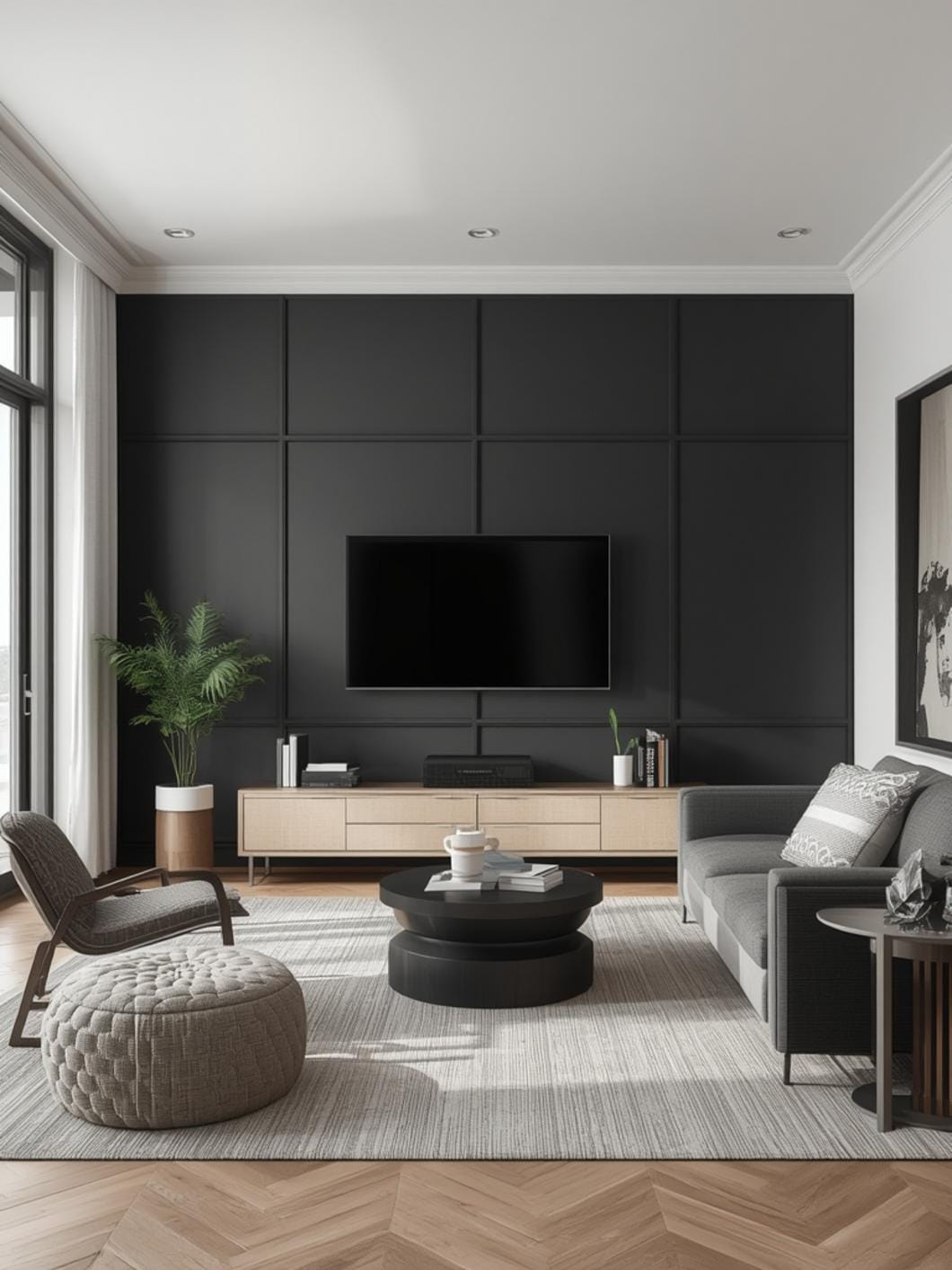
3. The TV Console Wall
Painting the wall behind your TV black creates a theater-like experience and makes the screen visually disappear when it’s off. Add floating shelves on either side styled with light-colored books, plants, and decorative objects. This approach is especially smart in smaller living rooms because it creates depth instead of breaking up the space with color blocks.
4. The Behind-the-Sofa Drama
Your sofa wall is prime real estate for a black accent wall, especially if your couch is light gray, cream, or white. The contrast makes your furniture look more expensive and intentional. Add a large piece of abstract art above the sofa and flank it with matching table lamps on side tables.
5. The Window Wall Surprise
This sounds counterintuitive, but painting the wall with your largest window black actually frames the view and makes the outdoors feel brighter. The darkness recedes, and suddenly your window becomes a living piece of art. Keep your window treatments light and minimal—sheer white curtains or natural woven shades work beautifully.
6. The Architectural Detail Highlight
If your living room has built-in shelving, wainscoting, or decorative molding, painting that architectural feature wall black makes every detail stand out. The shadows created by the molding add dimension you never noticed before. Style built-in shelves with a mix of light-colored books, white vases, and small plants.
7. The Entryway View Wall
Paint the wall you see first when entering your living room. This creates an immediate “wow” moment while keeping the other walls light to maintain overall brightness. Position your best furniture piece—a statement chair, credenza, or bookshelf—against this wall to complete the vignette.
Benefits of Adding a Black Accent Wall
A black accent wall changes how you experience your living room on a fundamental level. It creates visual weight that makes your space feel grounded and intentional instead of floating and uncertain. When you walk in, your eye knows exactly where to land.
The darkness actually makes your room feel larger in certain ways. Dark walls recede visually, creating the illusion of depth, while light-colored furniture and decor pop forward. This layering effect adds dimension that all-light rooms often lack.
Your decor becomes easier to style because the black provides a strong foundation. That collection of travel photos you’ve been afraid to hang? They’ll look cohesive and curated against black. Those gold accessories collecting dust? They’ll suddenly look expensive and intentional. The black wall does the heavy lifting so your styling looks effortless.
Black hides imperfections better than light colors. Minor wall dings, texture inconsistencies, and shadows from furniture all blend into the darkness instead of standing out under light paint.
Tips, Alternatives, and Styling Advice
Budget-Friendly Approach:
Use regular black paint from your local hardware store, but invest in quality primer and take your time with two coats. Skip the wall sconces for now and use affordable plug-in picture lights ($20-30 each) to add targeted lighting. Style with thrifted white ceramic pieces, DIY black and white printable art in inexpensive frames, and plants you already own repositioned for maximum impact.
Mid-Range Option:
Choose a designer black paint with subtle undertones—charcoal with blue undertones or warm black with brown tones ($50-70 per gallon). Add one or two hardwired wall sconces ($80-150 each) for permanent lighting. Invest in a large statement mirror ($150-300) to bounce light around. Update throw pillows and add a new light-colored area rug to complete the transformation.
Premium Investment:
Select luxury paint with a specialized finish like matte velvet or soft sheen ($90-120 per gallon). Install custom picture molding or board-and-batten before painting to add architectural interest. Hire an electrician to install multiple sconces and add dimmer switches throughout the room. Commission a large custom piece of art or invest in a designer mirror as your focal point.
Small Space Adaptation:
In smaller living rooms, paint the narrowest wall black instead of the longest wall. This draws the eye across the shorter dimension, making the room feel wider. Keep furniture low-profile and legs exposed so the floor shows through—this prevents the space from feeling cramped. Use glossy or metallic accessories to reflect maximum light, and hang a large mirror on an adjacent wall angled to reflect the window.
Common Mistakes to Avoid
Skipping the primer step makes black paint look streaky and uneven. Always prime first with gray-tinted primer, which provides better coverage and truer color than white primer under dark paint.
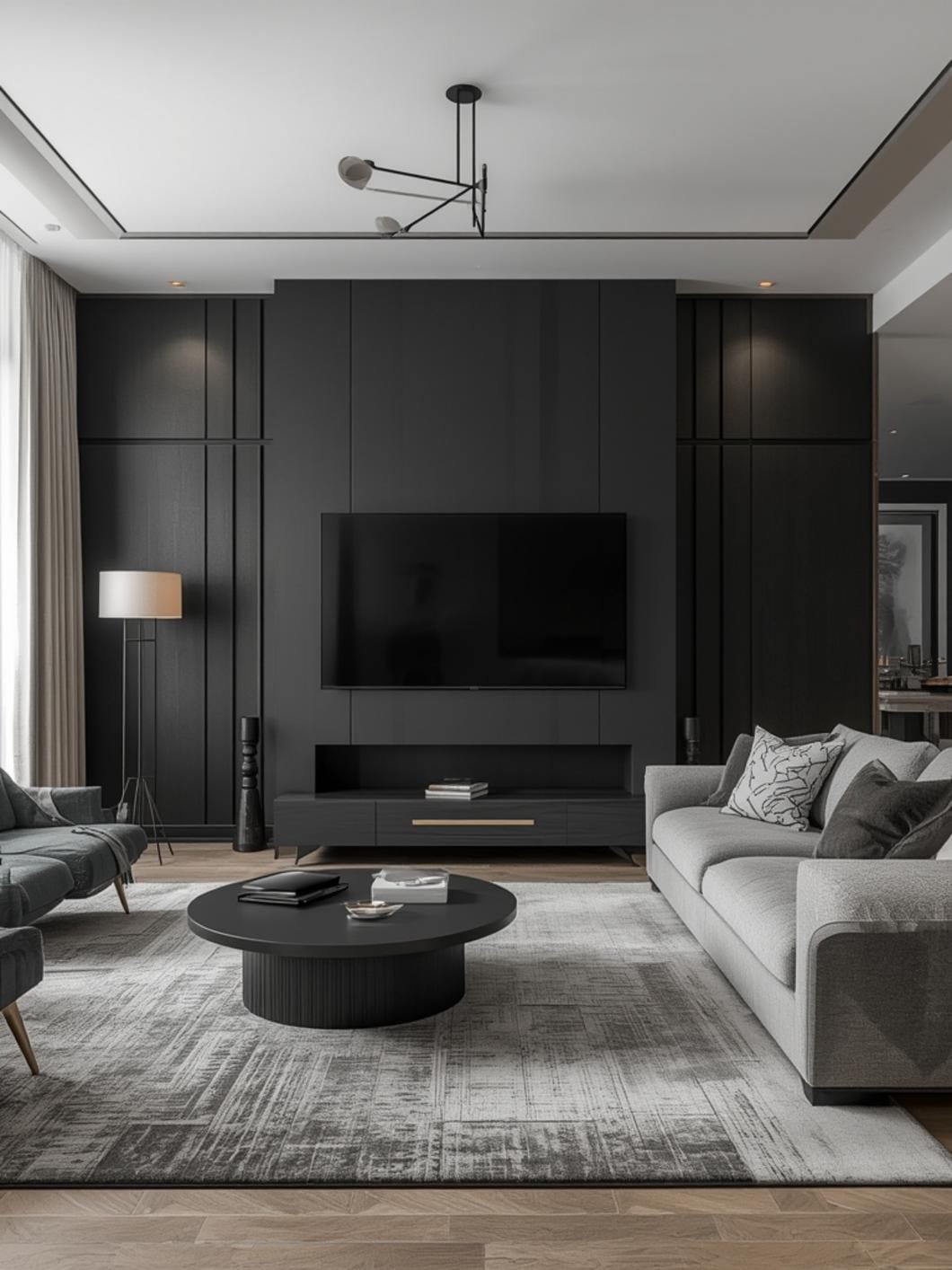
Painting all four walls black in a typical living room creates a dark cave instead of a statement. Stick to one accent wall and keep the other three walls in light neutrals like soft white, warm cream, or pale gray.
Using cool-toned overhead lighting makes the black look harsh and uninviting. Replace any daylight or cool white bulbs with warm white (2700-3000K) to create a cozy atmosphere that complements the black.
Choosing all-black or all-dark furniture against a black wall erases your design statement. Aim for at least 70% light-colored furniture and textiles to create the contrast that makes black walls work.
Neglecting to add multiple light sources leaves the room feeling dim and unwelcoming. Plan for at least three light sources: overhead, task lighting on tables, and accent lighting on or near the black wall itself.
Maintenance and Upkeep Tips
Black walls show dust, pet hair, and fingerprints more obviously than lighter colors, but maintenance is simpler than you’d think. Keep a microfiber duster handy and run it over your black wall weekly—the static charge picks up dust without scratching the paint.
For scuff marks or smudges, use a slightly damp microfiber cloth with a drop of mild dish soap. Wipe gently in a circular motion, then immediately dry with a clean cloth to prevent water marks. Matte black shows marks more easily but is also easier to touch up without the repair showing.
Keep a small container of your original paint and a small foam brush for quick touch-ups. Matte finishes blend seamlessly, so you can fix minor damage without repainting the entire wall. Just feather the edges and the repair disappears.
Every few months, check behind furniture and artwork for cobwebs, which show up dramatically against black. A long-handled duster makes this easy without moving heavy pieces.
Protect the area behind frequently used furniture with clear furniture pads that prevent scuff marks when pieces shift during cleaning.
Conclusion
A black accent wall stops being scary when you understand it’s not about making your living room dark—it’s about creating contrast that makes everything else look better. The darkness becomes a canvas where your light furniture, metallic accents, and personal style finally have room to breathe and make an impact.
Your living room deserves to feel intentional and confident. Explore more bold design ideas and practical styling advice right here on DecorKingdom, where we help you create spaces you’ll actually want to spend time in.
FAQs
Will a black accent wall make my small living room look even smaller?
Not if you paint the right wall and balance it properly. Paint your narrowest wall or the wall behind your sofa, keep the other three walls light, and add plenty of warm lighting. The darkness actually recedes visually, creating depth rather than closing in the space.
What’s the best type of black paint finish for living room walls?
Matte or eggshell finishes work best for accent walls because they absorb light softly without harsh reflections. Flat matte hides wall imperfections beautifully, while eggshell is slightly easier to clean if you have kids or pets. Avoid glossy or semi-gloss finishes, which can look severe in living spaces.
How do I prevent my black accent wall from looking like a chalkboard?
Choose a true black paint rather than chalkboard paint, which has a different texture and finish. If you want the chalkboard function, designate a smaller area or frame rather than the entire wall. Regular black paint in matte finish looks sophisticated, not classroom-utilitarian.
Can I add a black accent wall if my living room doesn’t get much natural light?
Yes, but you’ll need to compensate with layered artificial lighting. Add wall sconces directly on or near the black wall, use table lamps with warm bulbs, and install dimmer switches so you can adjust the mood. The right lighting setup makes a black wall work in any room, regardless of window size.
What colors work best with a black accent wall for furniture and decor?
Light neutrals create the most dramatic contrast—think cream, soft gray, white, and tan for large furniture pieces. Then layer in metallic accents like gold, brass, or copper, and add texture with natural wood, linen, and greenery. Jewel tones like emerald or deep burgundy work beautifully as accent colors in pillows and artwork.
—
Meta Title: Black Accent Wall Living Room Ideas That Actually Work 2026
Meta Description: Bold black accent wall living room ideas that add drama without darkness. Get styling tips, paint advice, and design inspiration now.