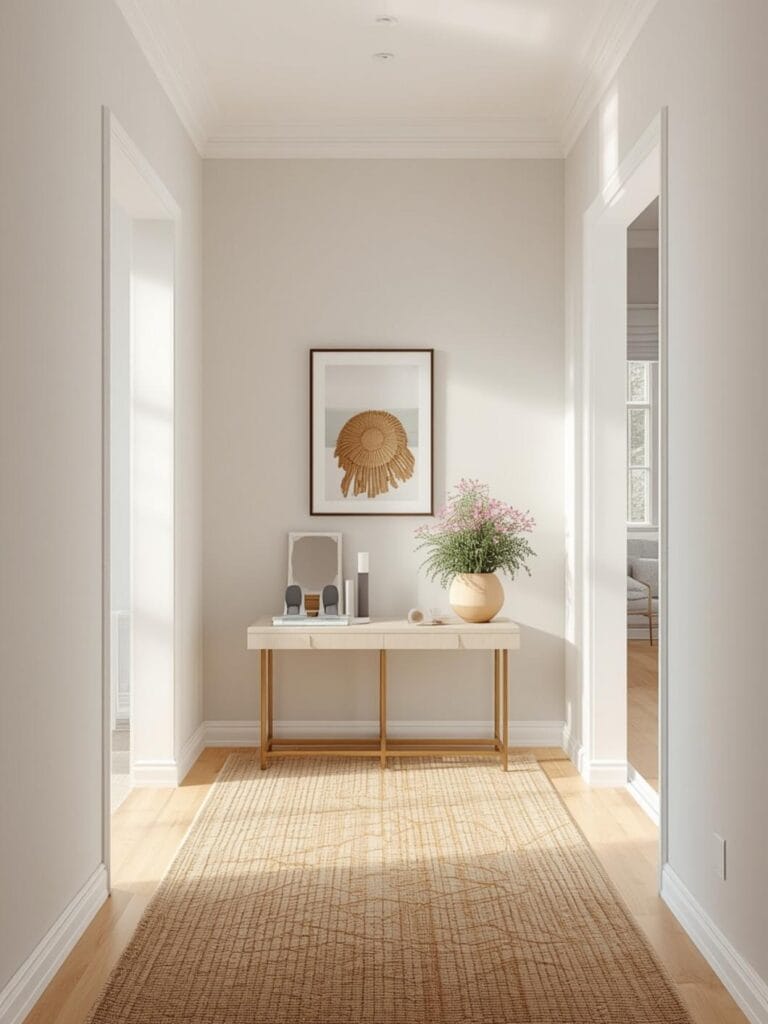
How to Choose Mid Century Modern Living Room Furniture
You’ve been scrolling through those gorgeous living room photos with sleek wooden legs, low-profile sofas, and that effortlessly chic retro look. You know the one — clean lines, warm wood tones, and a vibe that feels both nostalgic and refreshingly modern at the same time.
Mid Century Modern Living Room Furniture brings exactly that aesthetic to your home, and the best part? You don’t need to hunt through dusty vintage shops or spend a fortune to get the look. Whether you’re starting from scratch or just want to add a few statement pieces, this style works beautifully in homes of any size.
Let’s walk through everything you need to know to bring authentic mid-century style into your space — from choosing the right pieces to spotting the real deal.
Table of Contents
What You’ll Need to Get the Look
Creating an authentic mid-century modern living room starts with understanding the core furniture pieces and materials that define this timeless style.
Essential Furniture Pieces:
– Low-profile sofa with tapered wooden legs (typically walnut or teak)
– Accent chairs with organic curves and angled legs
– Coffee table with clean lines and exposed wood grain
– Media console or credenza with sliding doors or drawer fronts
– Floor lamp with tripod base or arc design
– Side tables in geometric shapes (round, oval, or kidney-shaped)
Key Materials to Look For:
– Solid wood construction (walnut, teak, oak, or rosewood)
– Leather or textured fabric upholstery in neutral or jewel tones
– Metal accents in brass, chrome, or brushed steel
– Glass tabletops with wooden bases
– Natural fiber area rugs in geometric patterns
Decorative Elements:
– Abstract wall art or large-scale prints
– Ceramic vases and sculptural objects
– Indoor plants in simple planters
– Throw pillows in bold colors or geometric prints
– Starburst or sunburst wall clocks
The beauty of this style is its simplicity — each piece should have a purpose and presence without cluttering your space.
Finding Your Style and Season
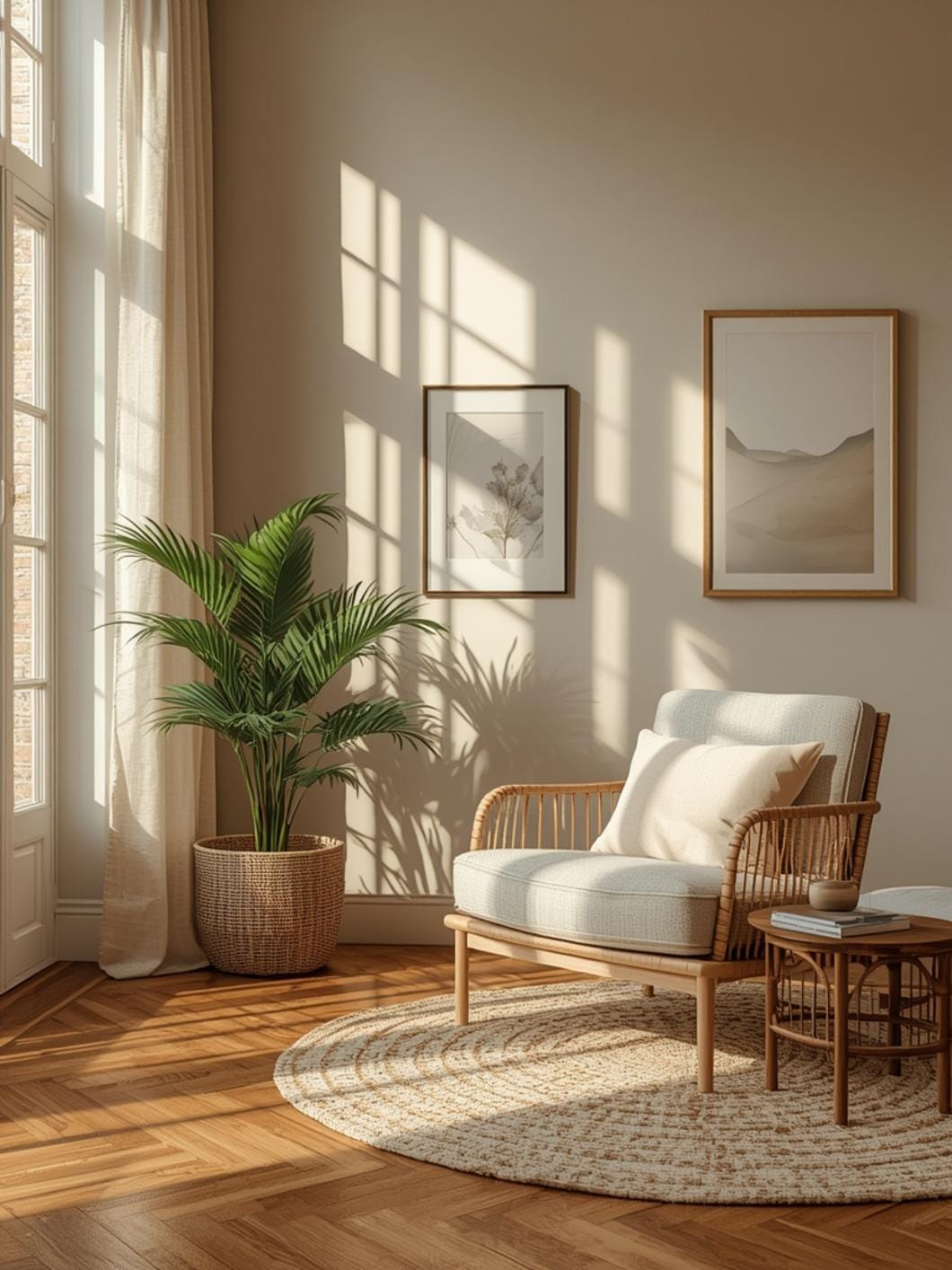
Mid-century modern furniture works year-round, but certain seasons inspire different approaches to styling this look in your home.
Spring and Summer Approach:
These warmer months are perfect for embracing the lighter side of mid-century design. Think airy spaces with minimal accessories, crisp white or cream upholstery, and plenty of natural light flowing through sheer curtains. This is when you can introduce those bright accent colors — mustard yellow, teal, or coral — through pillows and small decor items.
Fall and Winter Styling:
Cooler months invite you to layer in richer textures and deeper tones. This is when walnut and rosewood pieces really shine, paired with leather seating and warm wool throws. The cozy factor comes from maintaining those clean lines while adding warmth through materials rather than clutter.
Budget Timing Considerations:
If you’re shopping for authentic vintage pieces, estate sales and auctions tend to heat up in spring and fall. For reproduction furniture, major sales typically happen during holiday weekends and end-of-season clearances. Don’t rush — mid-century pieces are investments that last decades, so it’s worth waiting for the right piece at the right price.
Room Assessment Before You Shop:
Measure your space carefully and note your ceiling height. Mid-century furniture sits lower than contemporary pieces, which can actually make rooms feel more spacious. However, you’ll want to ensure your room can accommodate the horizontal emphasis of sofas and consoles without feeling cramped.
7 Ideas to Try in Your Home
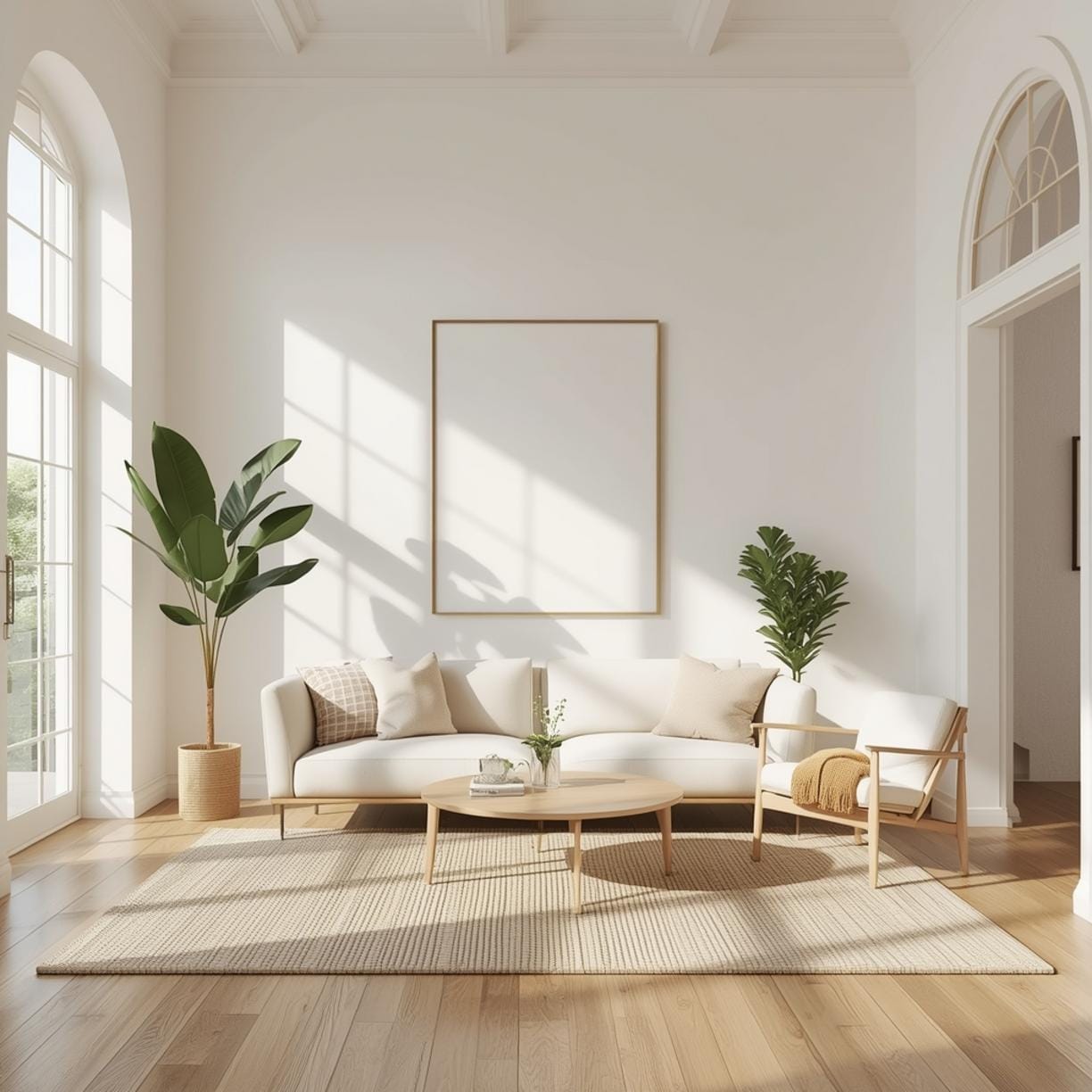
1. The Classic Conversation Area
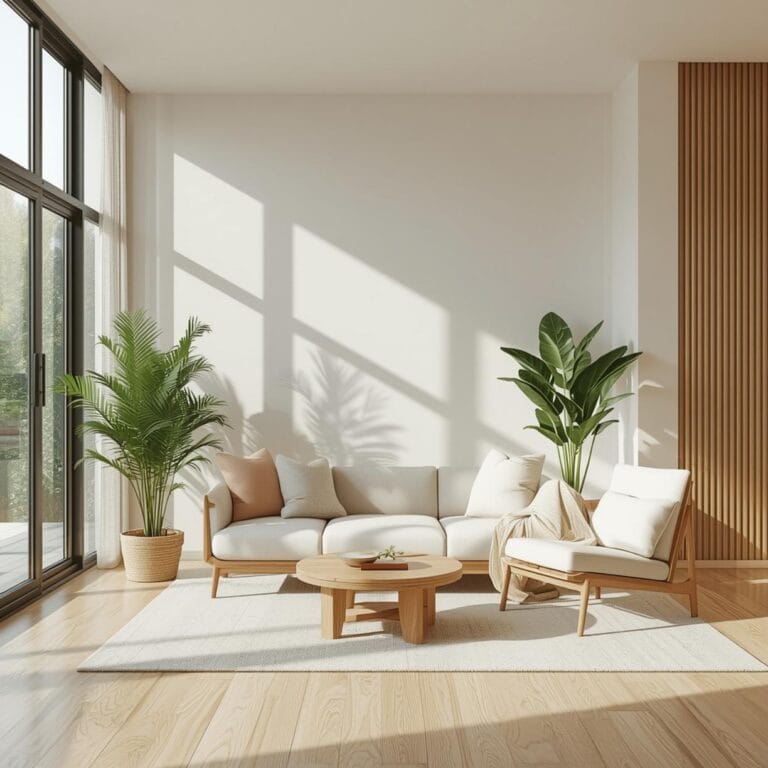
Anchor your room with a low-slung sofa facing two sculptural accent chairs. Position a kidney-shaped coffee table between them to create an intimate gathering space. This layout emphasizes the horizontal lines that make mid-century design so appealing. Keep the background simple with a neutral wall color that lets your furniture become the focal point.
2. The Media Wall Statement
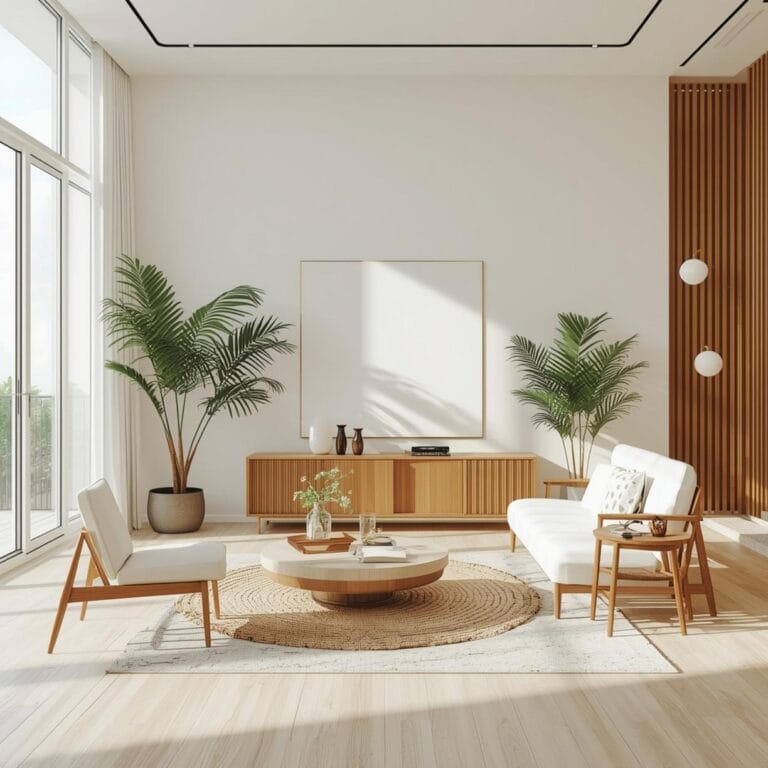
Invest in a beautiful mid-century credenza as your media console. These pieces were originally designed for records and televisions, so they’re perfectly proportioned for modern screens. How to identify authentic mid century modern furniture becomes crucial here — look for dovetail joints, solid wood construction, and maker’s marks on drawer bottoms. The best pieces feature those signature sliding tambour doors or angled drawer fronts.
3. The Reading Nook Corner
Transform an unused corner with a single Eames-style lounge chair, an arching floor lamp, and a small side table. Add a textured throw and a few books on the table. This small vignette captures the entire mid-century aesthetic in just a few square feet and creates a personal retreat within your larger living space.
4. The Gallery Wall Approach
Rather than filling every wall, create one statement wall with large-scale abstract art above your sofa. Mid-century homes celebrated art, and this look embraces that philosophy. Keep the rest of your walls relatively bare to maintain that clean, uncluttered feeling.
5. The Split-Level Seating Mix
Combine a standard sofa with lower occasional chairs and floor cushions for flexible seating. This creates visual interest through varying heights while maintaining the low-profile aesthetic. It’s especially practical for families who need versatile seating arrangements for different activities.
6. The Minimalist Monochrome
Choose furniture in varying shades of one wood tone — all walnut or all teak — and pair with neutral upholstery. Add interest through texture rather than color: a boucle sofa, leather chair, and wool rug all in cream or gray tones. This sophisticated approach lets the furniture design shine without competing elements.
7. The Pop of Color Statement
Keep most pieces in natural wood and neutral upholstery, but introduce one bold furniture piece in a jewel tone. A burnt orange accent chair or a teal velvet sofa becomes your room’s personality piece. This approach feels authentic to the era when colorful plastics and vibrant fabrics first became widely available.
Benefits of Mid-Century Modern Living Room Furniture
The enduring popularity of this style isn’t just about aesthetics — these pieces genuinely improve how you live in your space day to day.
Timeless Design That Ages Well
Unlike trendy furniture that looks dated in a few years, mid-century pieces maintain their appeal across decades. That sofa you buy today will still look current twenty years from now. This makes it a smarter financial investment than disposable furniture that needs replacing every few years.
Easier to Clean and Maintain
Those elevated legs and streamlined designs mean no dust bunnies hiding underneath low-skirted sofas. You can vacuum or sweep around and under pieces effortlessly. The lack of fussy details and tufting makes upholstery cleaning straightforward, and quality wood pieces just need occasional dusting and polish.
Creates a Sense of Space
The low profiles and open bases make rooms feel larger and more airy than bulky contemporary furniture. Your ceilings appear higher, your floors more expansive. This is especially valuable in smaller homes or apartments where every visual trick counts.
Comfortable for Modern Living
Don’t let the sleek look fool you — quality mid-century seating is genuinely comfortable. The angled backs and cushion proportions were designed based on ergonomic studies from that era. You get support where you need it without the overstuffed bulk that can dominate a room.
Mixes Well With Other Styles
Mid-century furniture plays nicely with other design aesthetics. You can pair a mid-century sofa with contemporary art, traditional rugs, or even rustic accessories. This flexibility means you can evolve your style over time without starting from scratch.
Tips, Alternatives, and Styling Advice
Budget-Friendly Option:
Start with reproduction pieces from reliable retailers that specialize in mid-century style. Focus on one statement piece like a coffee table or media console first. Pair it with simple, clean-lined furniture you already own. You can mix authentic vintage accessories from thrift stores with new furniture to build character without the full vintage price tag.
Mid-Range Option:
Invest in one or two authentic vintage pieces for your main seating, then supplement with quality reproductions for accent furniture. An original vintage sofa or pair of chairs establishes authenticity, while reproduction side tables and consoles fill out the room at a reasonable cost. This approach gives you the satisfaction of owning real vintage pieces where they matter most.
Premium Option:
Collect authenticated designer pieces from names like Herman Miller, Knoll, or Danish makers like Hans Wegner. Work with reputable vintage dealers who provide provenance documentation. Budget for professional restoration of upholstery and wood finishes to bring pieces back to showroom condition. This level of investment creates a museum-quality space that only appreciates in value.
Small Space Adaptation:
Choose furniture with exposed legs to maintain sightlines across the room. Select a loveseat instead of a full sofa, and use nesting tables that tuck away when not needed. Wall-mounted shelving in the mid-century style keeps floor space clear. Remember that this aesthetic was designed for the smaller homes of the 1950s and 60s, so authentic pieces often work perfectly in compact spaces.
Apartment-Friendly Approach:
Look for pieces on casters or with lightweight construction that you can easily rearrange. Choose furniture that can serve multiple purposes — a credenza works as both storage and a bar cabinet. Avoid heavy rosewood pieces that are difficult to move and focus on walnut or teak, which offer the look with less weight.
Common Mistakes to Avoid
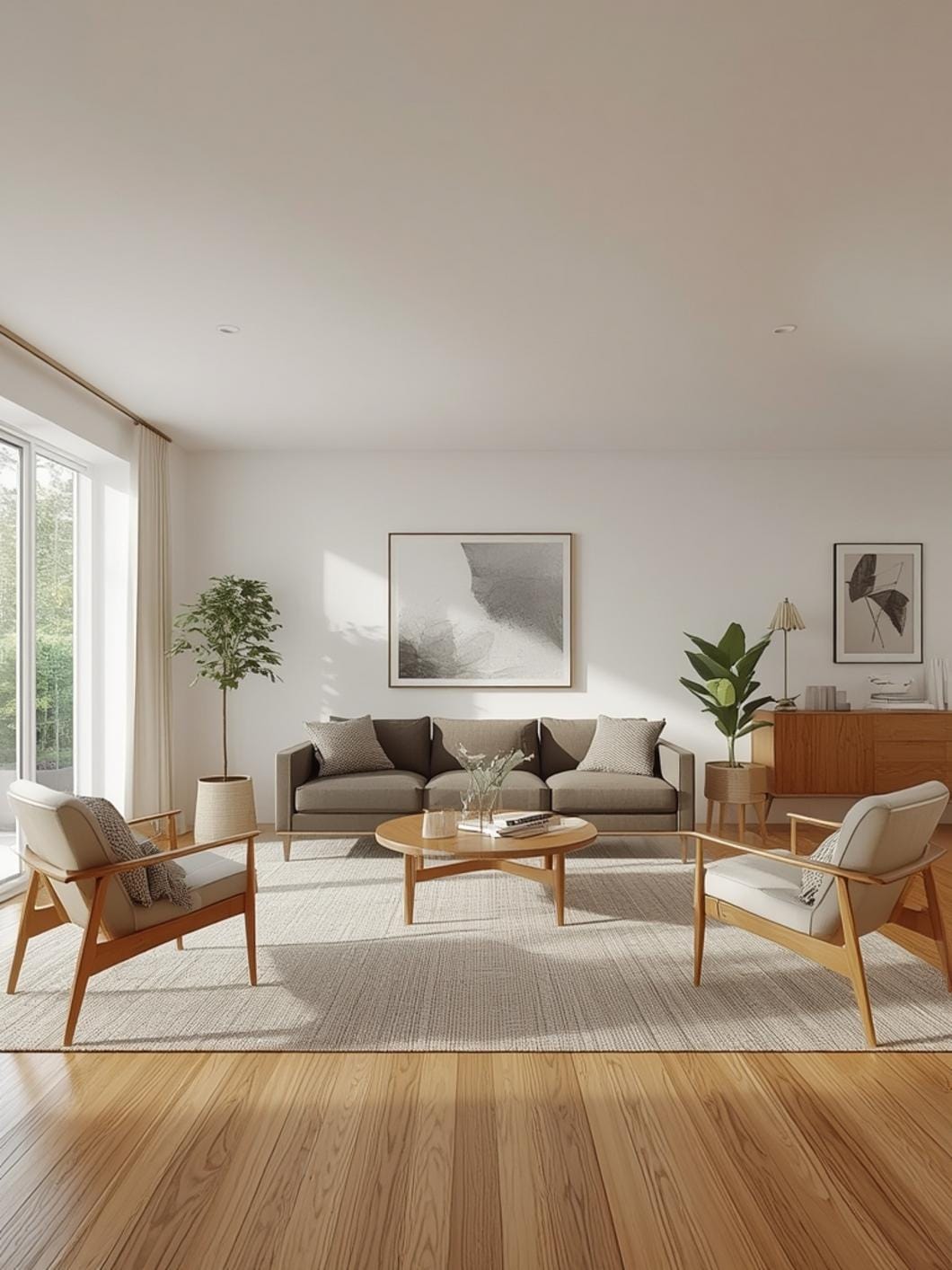
Buying Everything at Once:
Rushing to furnish an entire room with mid-century pieces often leads to mismatched proportions and styles. Take your time to find pieces that work together in scale and wood tone, building your collection gradually over months or even years.
Ignoring Proportions:
Placing a massive sectional in a room designed for mid-century style completely contradicts the aesthetic. Choose appropriately scaled pieces — if something looks oversized for the room, it probably is.
Forgetting About Comfort:
That gorgeous vintage chair might be authentic, but if the cushions are shot and you never sit in it, it’s just taking up space. Either plan for reupholstering or choose pieces that are actually comfortable enough to use daily.
Over-Accessorizing:
Piling on too many decorative objects clutters the clean lines that make this style work. Edit ruthlessly — display only your favorite pieces and give them room to breathe on surfaces.
Mixing Too Many Wood Tones:
Combining walnut, teak, oak, and rosewood in one room creates visual chaos instead of harmony. Stick to one or two wood tones throughout your space for a cohesive look that feels intentional rather than collected randomly.
Maintenance and Upkeep Tips
Keeping your mid-century furniture looking beautiful doesn’t require professional services — just consistent, simple care.
For Wood Pieces:
Dust weekly with a soft, dry cloth, moving in the direction of the grain. Every few months, apply a quality wood polish or conditioner appropriate for your specific wood type. Avoid placing pieces in direct sunlight, which can fade and dry out the wood over time. Use coasters and placemats religiously to prevent water rings and heat damage.
For Upholstery:
Vacuum cushions monthly using the upholstery attachment to prevent dust from settling deep into fibers. Rotate seat cushions regularly to ensure even wear. Address spills immediately by blotting (never rubbing) with a clean cloth. For leather pieces, wipe down with a slightly damp cloth and condition twice a year to prevent cracking.
For Metal Accents:
Brass and chrome legs just need occasional wiping with a damp cloth. For tarnished brass, use a brass cleaner and soft cloth to restore shine. Chrome can be polished with a microfiber cloth and a tiny amount of white vinegar for stubborn spots.
Long-Term Care:
Check all screws and joints annually, tightening any that have loosened. This simple maintenance prevents wobbly legs and structural issues down the road. If you notice any finish damage, address it quickly before it spreads — a furniture touch-up marker can handle small scratches on wood pieces.
Make Your Living Room a Mid-Century Haven
Mid-century modern furniture brings together form and function in a way that few other styles achieve. Those clean lines and quality materials create rooms that feel both sophisticated and genuinely livable.
Start with one or two pieces that speak to you, build your collection thoughtfully, and don’t stress about achieving perfection overnight. The beauty of this style is its timeless flexibility — your living room will evolve naturally into the mid-century haven you’ve been envisioning.
Ready to explore more ways to style your home? Browse DecorKingdom for inspiration and practical advice that helps you create the beautiful spaces you deserve.
FAQs
Is mid-century modern furniture still in style in 2026?
Absolutely — mid-century modern has transcended trend status to become a classic design approach. The style’s emphasis on quality craftsmanship and timeless proportions means it works beautifully alongside contemporary elements. Designers continue to reference mid-century principles in new furniture designs, which speaks to its enduring appeal.
How much should I expect to pay for authentic vintage mid-century furniture?
Prices vary dramatically based on designer, condition, and rarity. A quality vintage coffee table might run $300-$800, while a designer sofa from a known maker could cost $2,000-$10,000. Unsigned pieces in good condition typically fall in the $500-$1,500 range for major furniture items. Reproductions offer similar aesthetics starting around $600-$2,000 for seating pieces.
Can I mix mid-century furniture with my existing traditional or contemporary pieces?
Yes, and it often creates more interesting rooms than strict style adherence. The key is balancing proportions and maintaining a consistent color palette. A mid-century coffee table can ground a room with traditional seating, or a vintage accent chair can add character to a contemporary space. Let your mid-century pieces provide clean lines that balance busier elements.
What’s the difference between mid-century modern and mid-century inspired furniture?
Mid-century modern refers to pieces actually designed and produced between roughly 1945 and 1969, while mid-century inspired describes new furniture designed in that aesthetic. Authentic pieces have vintage construction techniques, original materials, and the natural wear of age. Inspired pieces replicate the look using modern manufacturing but lack the history and often use different materials like engineered wood.
Do I need to refinish vintage mid-century furniture or should I keep original finishes?
Original finishes generally maintain better value, even with some wear, unless the damage is severe. Light scratches, minor fading, and patina actually add character and prove authenticity. Only refinish if the piece has water damage, deep scratches, or significant finish deterioration that affects usability. For valuable designer pieces, always consult a furniture restoration specialist before making changes.
—
Meta Title: Mid Century Modern Living Room Furniture Guide 2026
Meta Description: Create the perfect mid-century modern living room furniture collection with expert tips on authentic pieces, styling ideas, and budget-friendly options.