How to Choose the Best Garage Wall Organization System
Your garage should be more than a dumping ground for sports gear, tools, and seasonal decorations. Right now, you’re probably stepping over bikes and hunting for the extension cord you know is somewhere in that pile. What if your garage walls could actually work for you instead of just collecting dust and old paint cans?
The best garage wall organization system transforms vertical space into storage that makes sense for your life. You’ll know exactly where everything lives, and you can park your car inside again. Whether you’re dealing with a single-car garage or a spacious three-car setup, the right wall system keeps your home running smoothly.
This guide walks you through everything you need to know to choose and set up garage wall storage that actually fits your space and budget.
Table of Contents
What You’re Actually Comparing
When you’re shopping for garage wall organization, you’re really comparing three main system types: slatwall panels, pegboard systems, and track-based storage. Each has different installation requirements, weight capacities, and price points.
Slatwall panels feature horizontal grooves that accept specialized hooks and bins. You’ll find them in heavy-duty PVC, metal, or composite materials. The panels typically measure 4×8 feet and mount directly to wall studs.
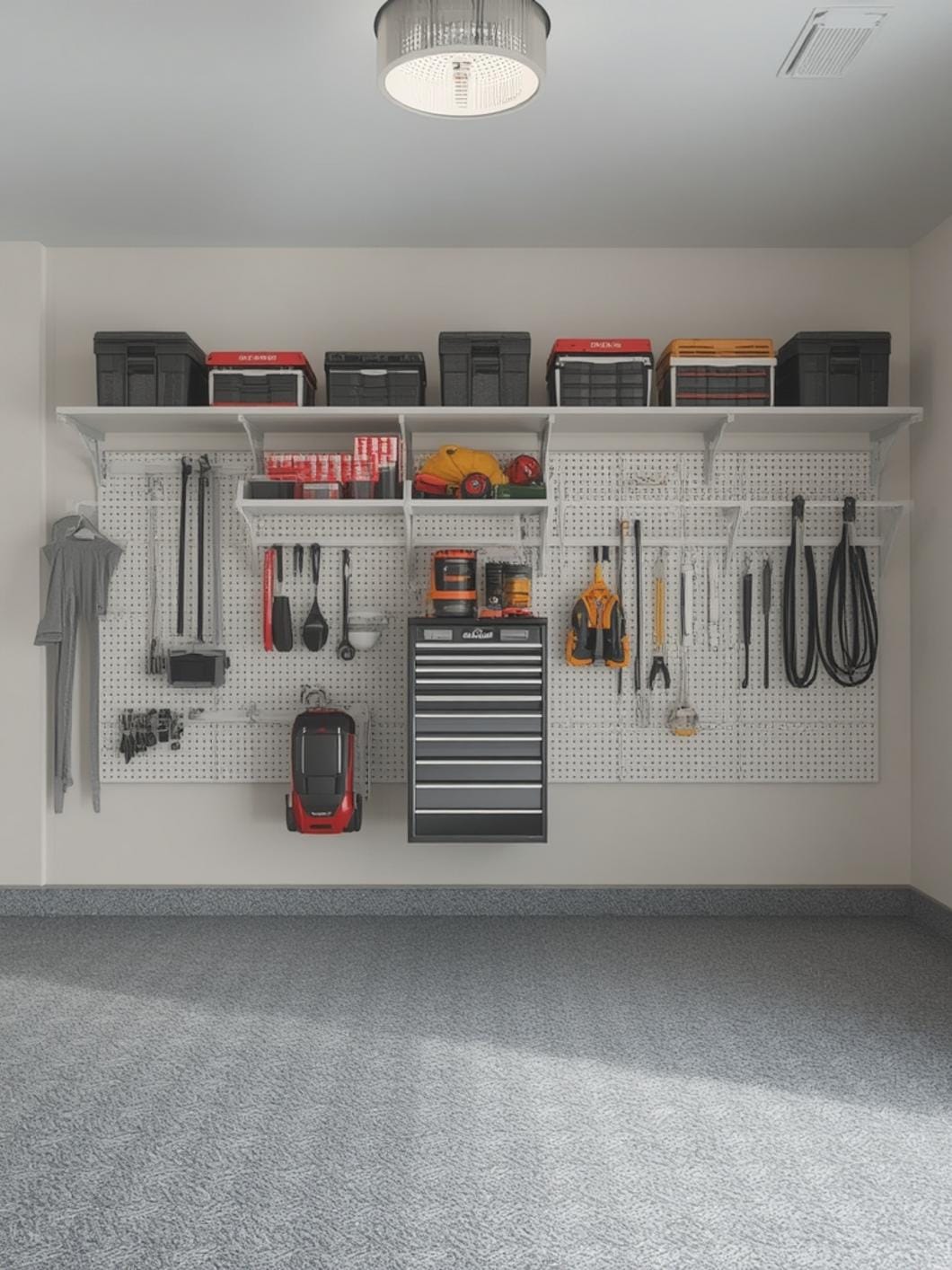
Pegboard systems use the classic perforated board design with metal or plastic hooks. Modern versions come in steel or heavy-duty resin that holds much more weight than your dad’s old pegboard. Panel sizes range from 2×2 feet to 4×8 feet sheets.
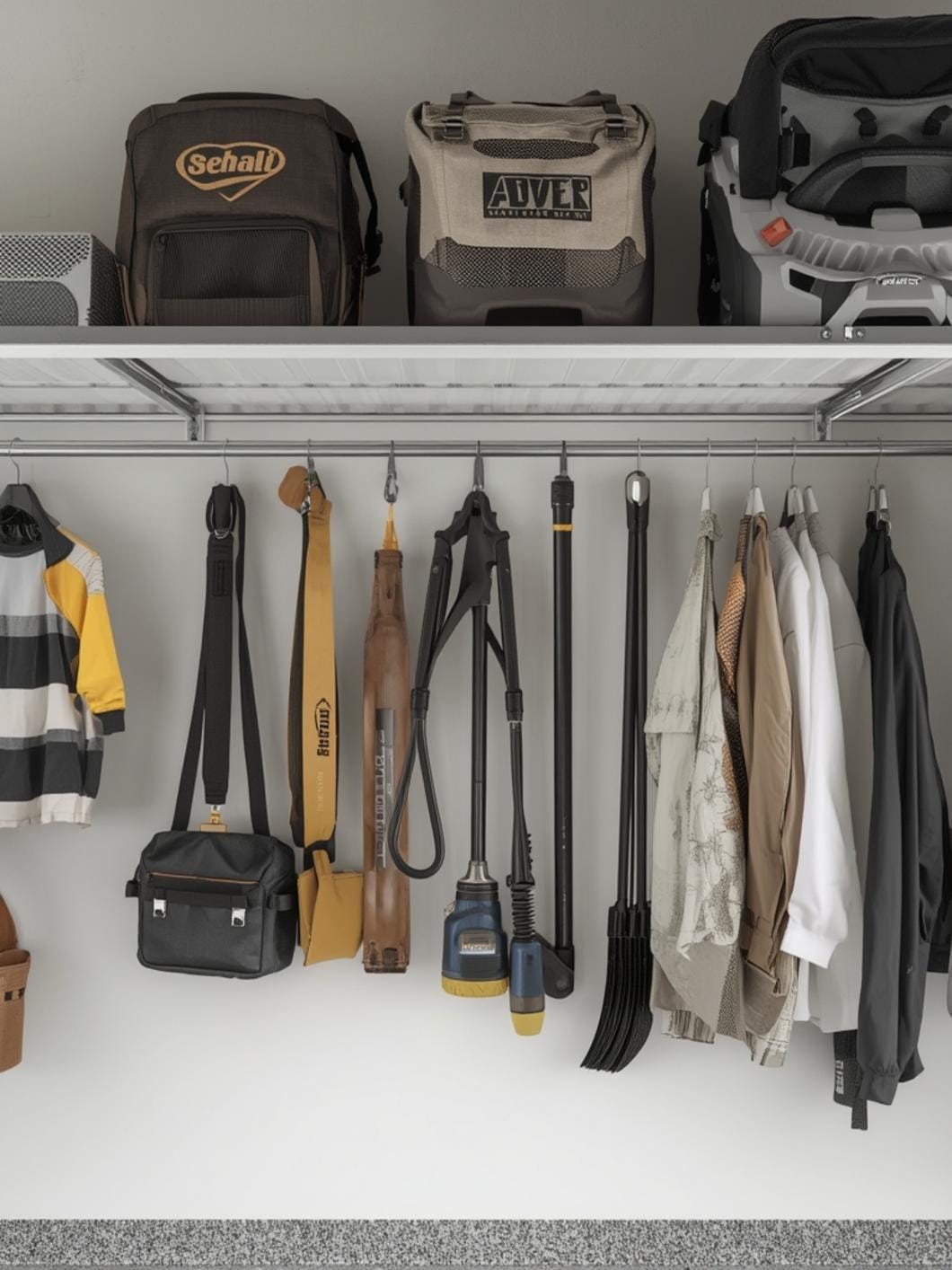
Track-based systems mount horizontal rails to your wall, and you slide in various accessories like shelves, baskets, and tool holders. These systems offer the most flexibility since you can adjust everything without new holes.
You’ll also encounter wire grid systems and French cleat setups as alternatives, though these work best for specific situations rather than whole-wall organization.
How to Decide Before You Buy
Think about what’s currently crowding your garage floor and how often you need to access those items. Your weekend warrior tools deserve different storage than once-a-year holiday decorations.
Weight capacity matters more than anything. Garden tools, ladders, and bike racks require systems rated for at least 50 pounds per square foot. Check the manufacturer’s specifications carefully, because budget options often can’t handle your actual gear.
Measure your wall space honestly. Account for garage door mechanisms, light switches, outlets, and your car’s swing radius when the doors open. You need at least 36 inches of clearance for comfortable access to wall-mounted storage.
Consider your skill level with basic home projects. Some systems require finding wall studs and drilling dozens of holes, while others use simpler mounting methods. If you’ve never used a stud finder or level, choose a system with fewer mounting points to start.
Budget realistically for the full setup. The panels themselves cost $50 to $300 depending on size and material, but you’ll spend another $100 to $400 on hooks, bins, and accessories to make the system functional. Installation tools might add $50 to $100 if you don’t already own a drill and level.
Side-by-Side Comparison
Installation Complexity
Slatwall panels need mounting to wall studs every 16 inches, requiring accurate measurements and multiple drilling points. You’ll spend 4 to 6 hours installing an 8-foot section if you’re working alone.
Pegboard goes up faster because you can mount it to a framework of 1×2 furring strips, which gives easier access for hooks. Expect 3 to 4 hours for a similar section. When you’re figuring out how to install wall mounted garage storage shelves with pegboard, remember you need that spacer gap behind the board for hooks to fit through properly.
Track systems require the most precision during installation since the rails must be perfectly level, but you only drill a few mounting points. Plan for 2 to 3 hours once you’ve located your studs.
Flexibility and Changes
Track-based systems win here because you slide accessories anywhere along the rail without new holes. You can completely reorganize your storage in minutes when your needs change.
Slatwall offers good flexibility with its groove system, letting you move hooks and bins easily. However, you’re limited to accessories designed for that specific groove spacing.
Pegboard gives you unlimited positioning options within the perforated pattern, though moving heavy items means you’re constantly pulling and repositioning hooks.
Weight Capacity Reality
Heavy-duty slatwall systems handle the most weight, with quality metal or thick PVC panels supporting 75 to 100 pounds per square foot. This makes them perfect for storing multiple bikes, heavy tools, and loaded shelves.
Track systems typically hold 50 to 75 pounds per linear foot of rail when properly mounted to studs. Distribution matters—you can’t load all the weight in one spot.
Pegboard works well for hand tools and lightweight items, but even heavy-duty versions max out around 50 pounds per square foot. Overloading causes the board to bow away from the wall.
Long-Term Durability
Metal slatwall lasts decades without warping or fading, though it costs more upfront. PVC versions handle moisture well but can become brittle in extreme temperature swings.
Quality pegboard made from steel or heavy resin holds up indefinitely, while cheaper pressed wood versions deteriorate in humid garages. Metal pegboard resists rust better than painted steel in damp climates.
Track systems with powder-coated aluminum or stainless steel components maintain their strength and appearance for 20-plus years. Plastic track versions work fine for lighter loads but may crack under heavy use.
Cost Breakdown by Wall Coverage
For a standard 8-foot by 8-foot wall section, slatwall systems run $200 to $400 for panels plus $150 to $300 for basic accessories. You’re looking at $350 to $700 total.
Pegboard setups cost $100 to $200 for quality panels and furring strips, plus $75 to $150 for hooks and accessories—roughly $175 to $350 complete.
Track systems land in the middle at $150 to $300 for rails and mounting hardware, then $100 to $250 for shelves, bins, and hooks. Total investment ranges from $250 to $550.
Benefits Beyond Just Storage Space
The right wall organization system gives you back time every single day. You’ll stop hunting for tools and supplies because everything has a visible home that makes sense.
Your garage becomes actually usable again for projects, hobbies, or parking. No more squeezing past piles of stuff or worrying about things toppling over when you grab one item.
Home value improves too—organized garages appeal to buyers and suggest you’ve maintained the whole property well. Even if you’re not selling soon, you’ll enjoy the space more right now.
Good wall systems grow with your needs instead of becoming outdated. You can add new accessories as your hobbies change or your family’s storage needs evolve.
Smart Options for Every Budget and Space
Budget-friendly approach: Start with quality pegboard panels covering your most-used wall section rather than trying to organize everything at once. A 4×8 foot heavy-duty pegboard costs $40 to $70, and a basic hook assortment runs another $30. Mount it on furring strips you can cut from standard lumber for under $20. You’ll have functional storage for under $100 that you can expand over time.
Mid-range sweet spot: Track-based systems from established brands offer the best balance of durability and flexibility around $250 to $400 for an 8-foot section with essential accessories. You get professional-looking results without permanent commitment to a fixed layout. These systems adjust as your storage needs change through the years.
Premium investment: Commercial-grade slatwall with powder-coated metal finish and comprehensive accessory packages ranges from $600 to $1,000 for a full wall. You’re buying a system that handles maximum weight and looks clean for decades. This makes sense if you have an extensive tool collection or want your garage to double as a workshop.
Small single-car garage: Focus on one long wall with a track system that maximizes vertical space. Choose stackable bins and fold-up shelving that tucks away when not needed. Skip the full 8-foot height installation and stop at 6 feet to keep the space feeling open.
Awkward wall sections: Use shorter pegboard panels for the spaces between windows, outlets, or garage door hardware. These odd areas work perfectly for frequently used hand tools and small items that don’t need deep shelving.
Common Mistakes to Avoid
Skipping the stud finder and mounting into drywall alone. Your system will pull away from the wall under the weight of actual storage, potentially damaging both your wall and your belongings. Always locate studs and use appropriate anchors rated for your system’s weight.
Installing too high to actually reach your storage comfortably. The bottom of your system should sit about 4 feet from the floor, with frequently used items between 4 and 6 feet high. Anything above 7 feet becomes inconvenient enough that you won’t maintain the organization.
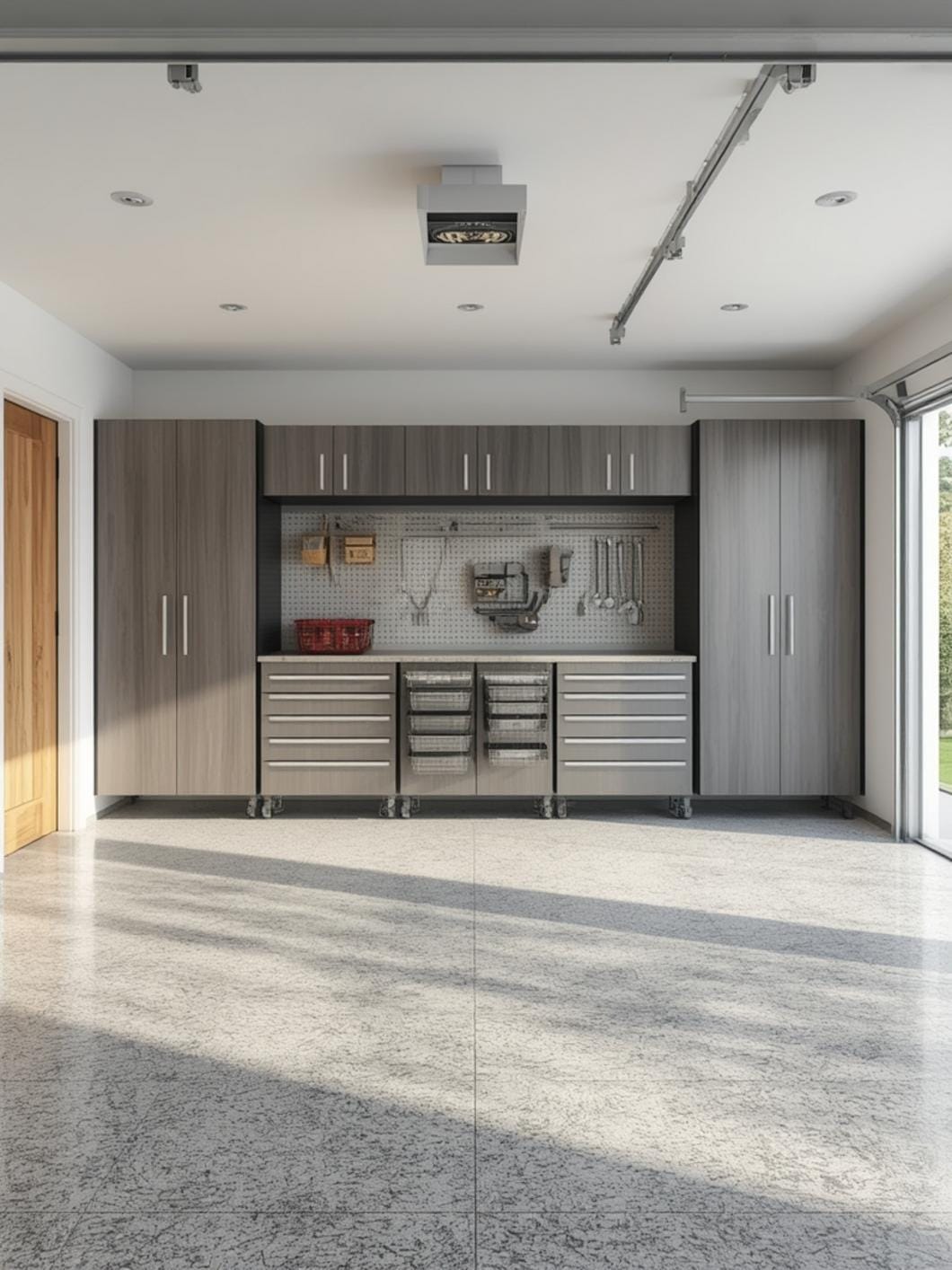
Forgetting to leave space around garage door tracks and openers. You need at least 6 inches of clearance around all moving garage door components. Measure twice before drilling any permanent mounting holes near door mechanisms.
Buying all matching accessories before testing what you actually need. Purchase the basic system first, use it for two weeks, then add specific hooks and bins based on how you really use your space. You’ll waste less money on accessories that seemed useful but never get touched.
Overloading one section while leaving others empty. Distribute weight across your wall system to prevent sagging and maintain structural integrity. Heavy items like bikes and ladders should spread out rather than cluster in one spot.
Keeping Your System Working Smoothly
Wipe down panels and accessories every few months with a damp cloth to remove dust and prevent buildup that makes hooks harder to adjust. Garage grime accumulates faster than you’d think.
Check mounting hardware twice yearly to confirm everything stays tight and secure. Temperature changes cause expansion and contraction that can loosen bolts over time.
Reorganize seasonally to keep current-use items at eye level. Move winter gear up high in summer and swap locations when seasons change so you’re not constantly reaching overhead.
Replace worn or bent hooks immediately rather than forcing them to work. Damaged accessories stress your entire system and risk dropping whatever you’ve stored there.
Clean out and reassess your stored items annually. If you haven’t touched something in two years, it’s taking up space you could use for things you actually need regularly.
Conclusion
The best wall organization system for your garage depends on your specific storage needs, budget, and how much flexibility you want for future changes. Track-based systems work beautifully for most homeowners who want to adjust their setup as life changes, while slatwall handles the heaviest loads for serious tool collections.
Whatever system you choose, mounting it properly to wall studs makes all the difference between storage that lasts decades and a frustrating project that fails in six months. Take your time with installation and you’ll love the results every time you pull into your garage.
Ready to tackle more home organization projects? Explore more practical storage solutions and space-saving ideas here at DecorKingdom.
FAQs
Can I install garage wall organization systems on concrete walls?
Yes, but you’ll need concrete anchors instead of mounting to studs. Use masonry drill bits and anchors rated for at least twice the weight you plan to store. The installation takes longer because concrete drilling requires more care and specialized tools. Powder-actuated fasteners work well for heavy-duty systems if you’re comfortable using them.
How much weight can a typical garage wall organization system hold?
Quality systems hold 50 to 100 pounds per square foot when properly mounted to wall studs, but this varies significantly by brand and material. Always check the manufacturer’s specifications for your specific system and accessories. Proper installation to studs matters more than the rated capacity—poor mounting reduces weight capacity dramatically regardless of what the package claims.
Do I need to paint or seal pegboard before installing it in my garage?
Metal and plastic pegboard needs no treatment, but wood-based pegboard benefits from sealing all sides with paint or polyurethane before installation. This prevents moisture absorption that causes warping and deterioration in garages with humidity fluctuations. One coat on each side takes 30 minutes and extends the life by years.
Can I install garage wall storage systems myself without professional help?
Most homeowners can install these systems with basic tools like a drill, level, stud finder, and measuring tape. The project requires patience and attention to detail rather than advanced skills. If you’ve hung heavy mirrors or shelving before, you have enough experience. Plan for 3 to 6 hours depending on wall size and system type.
Will wall-mounted storage work in a garage that gets very hot or cold?
Quality systems handle temperature extremes well, but choose materials carefully. Metal and heavy-duty PVC hold up better than basic plastic in temperature swings. Avoid cheap pressed wood pegboard in garages without climate control. The accessories and hooks matter too—metal hooks outlast plastic in harsh conditions.
—
Meta Title: Best Garage Wall Organization System Guide 2026
Meta Description: Find the best garage wall organization system for your space. Compare track, slatwall & pegboard options with installation tips for homeowners.